
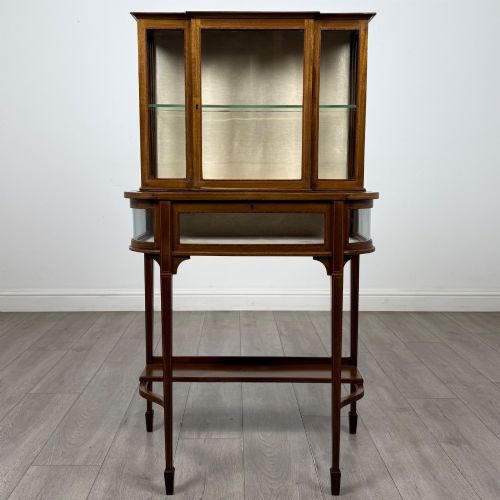
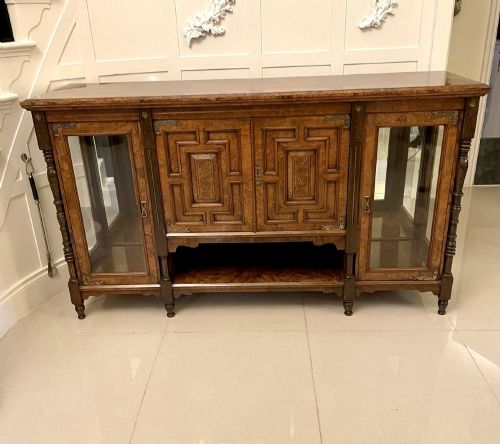
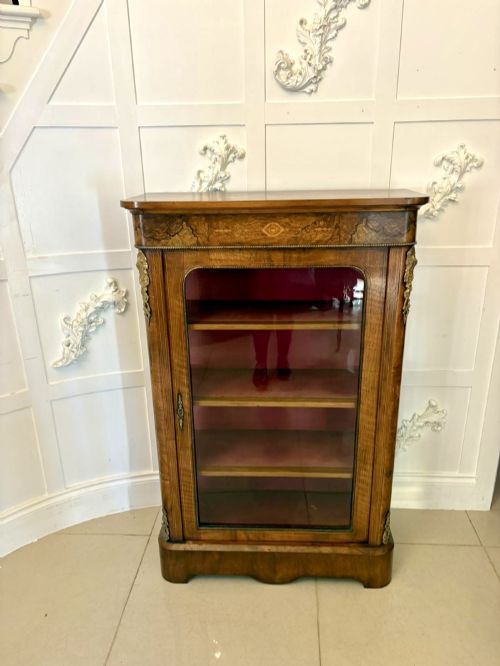

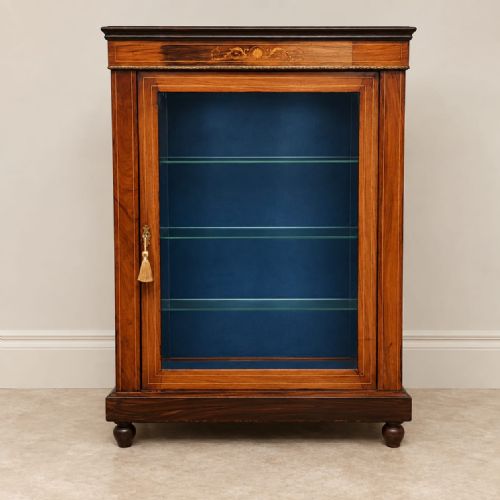
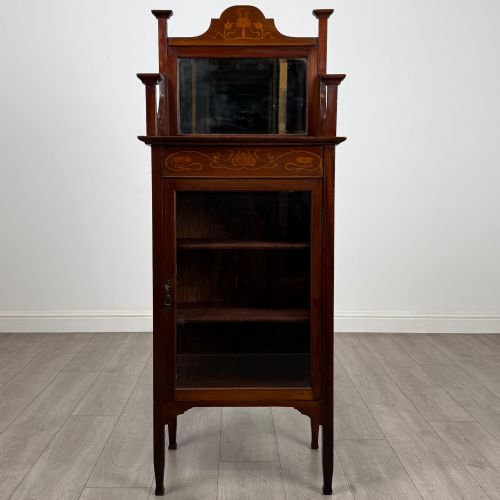
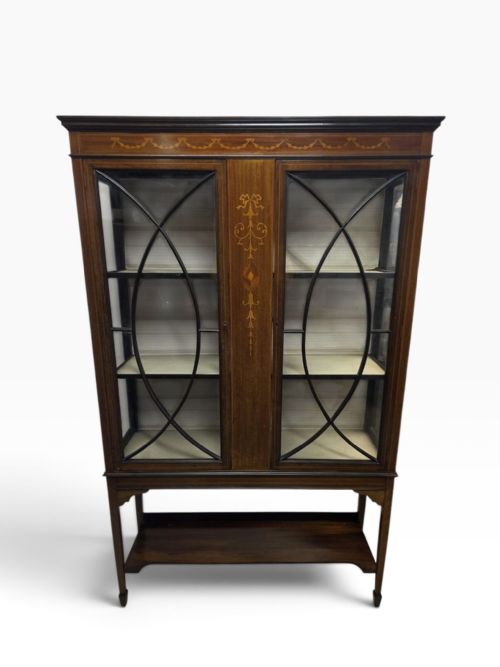
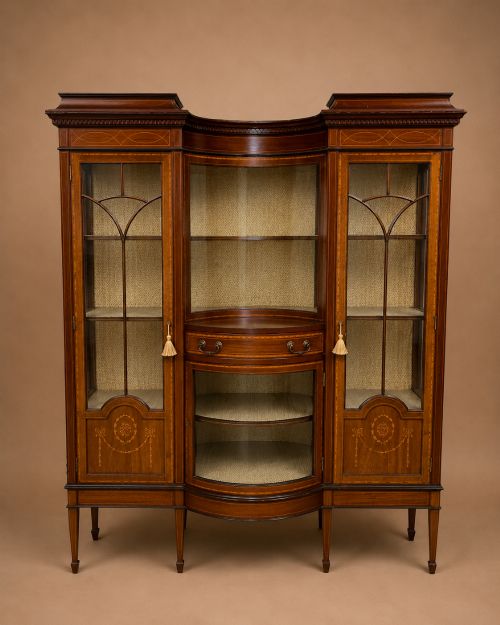
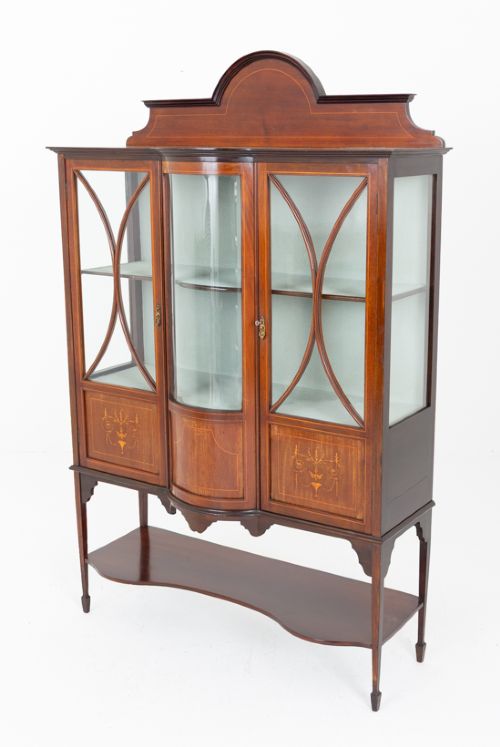
Inlaid Glass Display Case
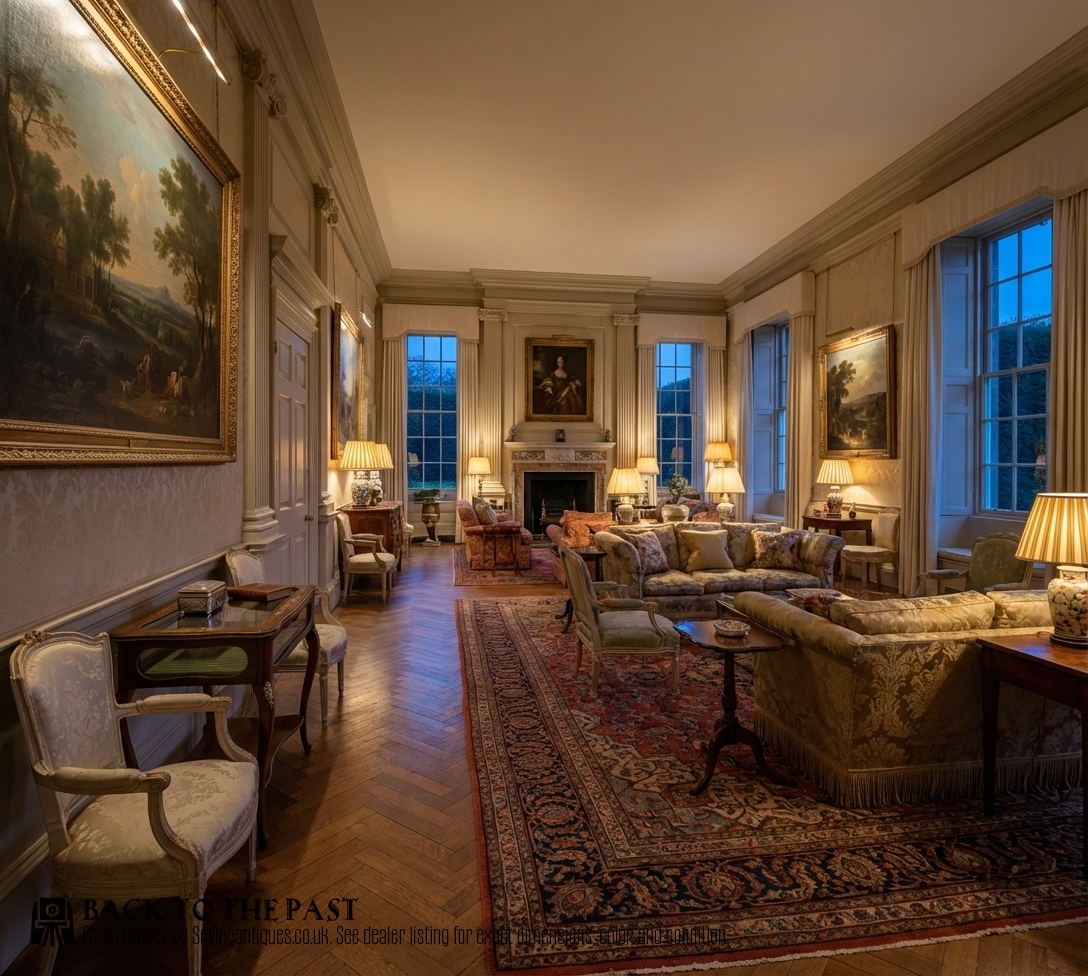
An inlaid glass display case brings elegance to any room while safely exhibiting cherished objects.
Inlaid Glass Display Case
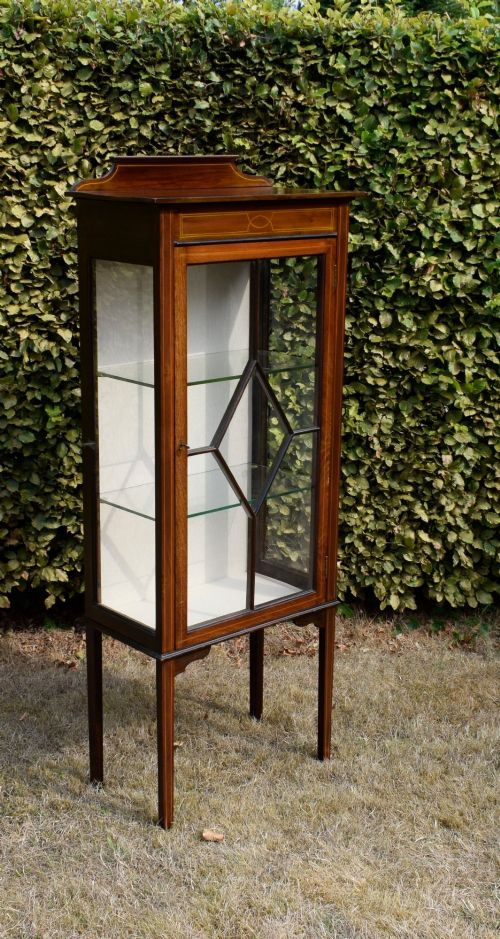
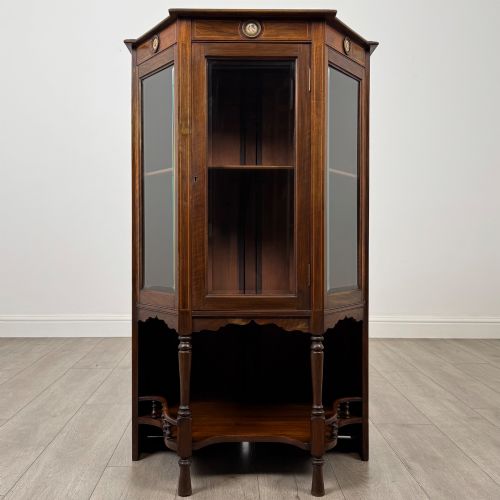
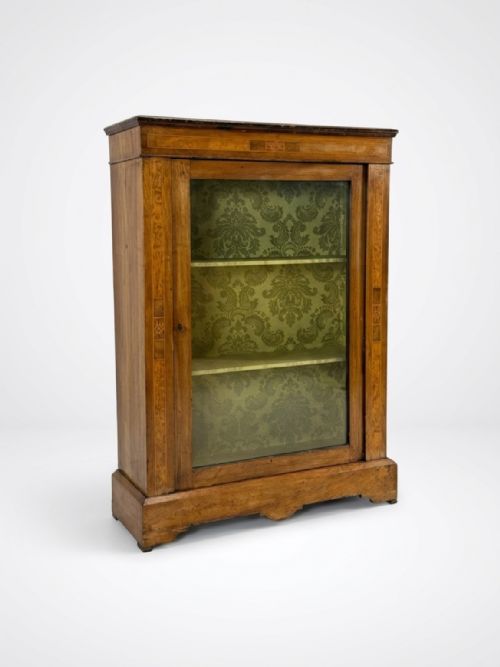
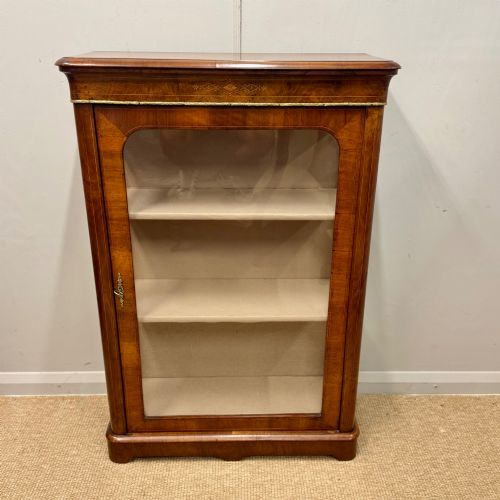
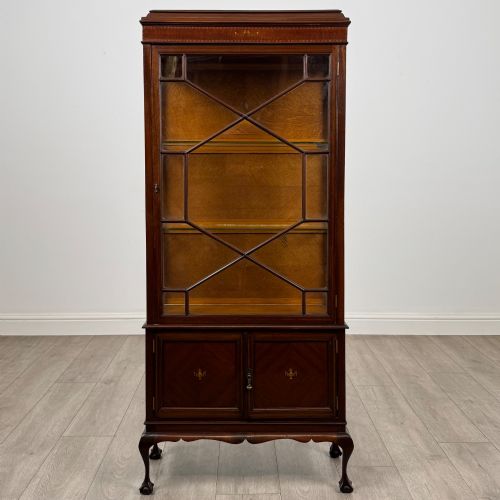
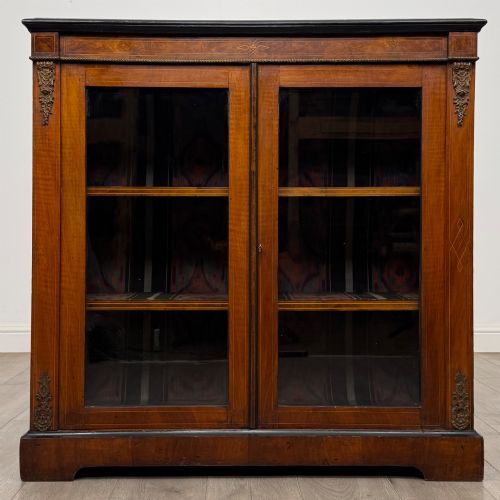
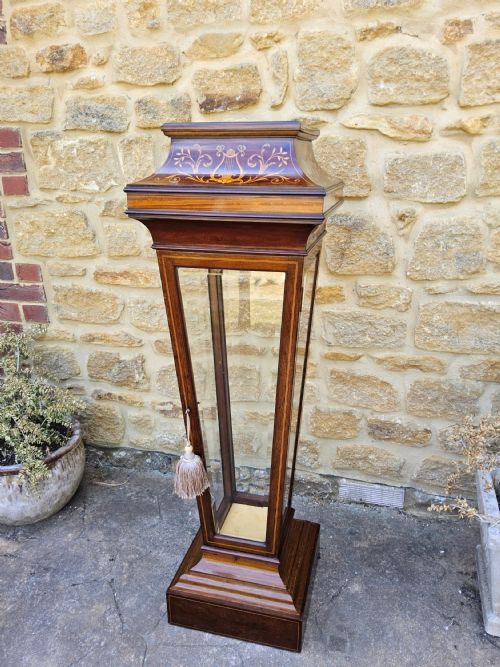
An inlaid glass display case combines visible glazing with decorative woodwork to showcase collections. You will frequently find Edwardian and Victorian examples in forms such as pier cabinets, freestanding display cabinets, and vitrines.
Makers designed these pieces using mahogany, walnut, and satinwood, often enhanced by intricate marquetry. They served to protect fine porcelain and curiosities while reflecting the refined tastes of their original owners.
How they were made
Craftsmen built structural frames from solid timbers like mahogany and walnut, frequently applying fine veneers to create smooth surfaces for inlay work. Satinwood and contrasting woods formed elaborate geometric patterns or floral motifs.
Glazing panels were fitted carefully into wooden doors and frames, sometimes complemented by brass mounts, ormolu, and lined interiors of fabric or velvet to cushion delicate items.
Some Edwardian shop counter cases travelled from bustling high street stores to become rather grand domestic display pieces.
What varies in quality
The refinement of the marquetry inlay and the selection of timber veneers separate the finest pieces from simpler domestic furniture. Burr walnut and figured mahogany with crisp, detailed stringing indicate superior workshop production.
Construction details such as the weight of the brass hardware, the clarity of the glass, and the integration of curved bow-ends reveal the original maker's skill and ambition.
James Hicks
The Inlaid Glass Display Case Glossary
- Inlay
- A technique where contrasting woods or materials are inserted into recessed portions of a wooden base to form a decorative pattern. This defines the primary visual appeal of these cabinets.
- Pier cabinet
- A low freestanding cabinet designed specifically to stand against the wall space between windows. These pieces often feature glass doors and rich walnut construction.
- Vitrine
- A glass-fronted display cabinet used for exhibiting porcelain and small objects. They frequently incorporate delicate legs and refined glazing bars.
- Marquetry
- Elaborate veneer patterns applied to furniture surfaces to create pictorial or decorative designs. Dutch examples often display floral motifs using various exotic timbers.
- Ormolu
- Gilded bronze mounts applied to furniture for decorative enrichment. These metallic accents are common on finer French and Victorian display pieces.
Inlaid Glass Display Case: Frequently Asked Questions
How do I date an inlaid glass display case?
Dating relies on stylistic clues, construction methods, and timber choices recorded across Victorian and Edwardian periods. Edwardian pieces often display lighter satinwood and Sheraton Revival motifs, while Victorian cabinets tend to use heavier burr walnut or ebonised finishes.
Examining the interior woodwork, drawer linings, and hinge types further helps narrow the decade of production.
What is the difference between a pier cabinet and a vitrine?
A pier cabinet is traditionally a lower piece built to sit against a specific wall pier between windows, frequently seen in Victorian homes. A vitrine is generally a more glass-intensive display cabinet designed to show objects from multiple angles.
Both serve to exhibit collections, but their proportions and historical placement differ.
Where should I place a glass display case at home?
These cabinets suit dining rooms, drawing rooms, or hallways where they can safely house porcelain, silver, or curiosities. Positioning them away from direct sunlight protects both the wooden veneers and any fabric or velvet linings inside.
Ensure the floor is level so the glazed doors hang true and open smoothly.
What woods were commonly used for these cabinets?
Mahogany and walnut form the structural backbone for the vast majority of surviving examples. Satinwood frequently appears in Edwardian Sheraton Revival pieces for lighter contrast and detailed panel work.
Secondary timbers like oak and pine often appear inside carcases and drawer boxes.