
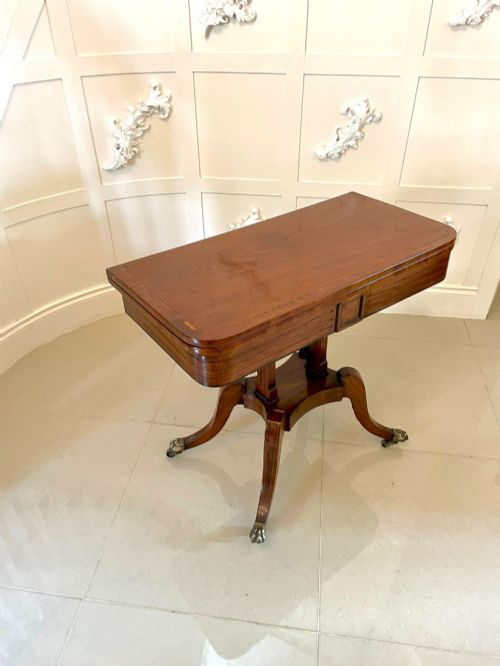
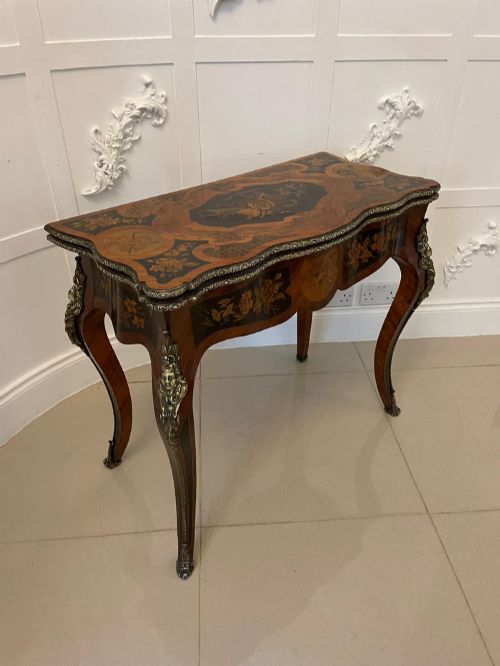


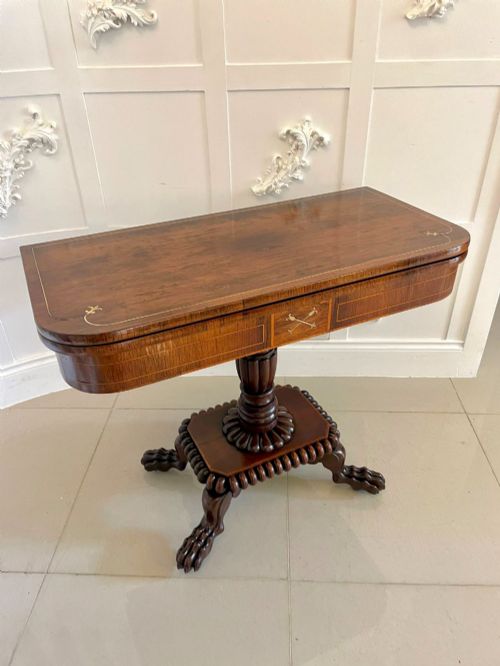
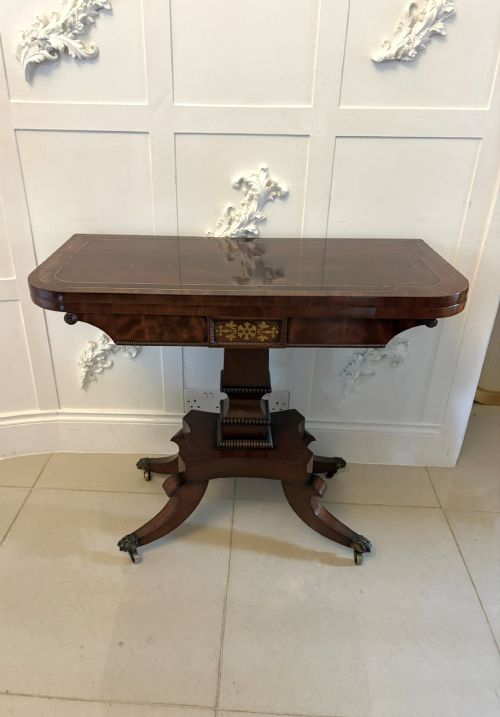
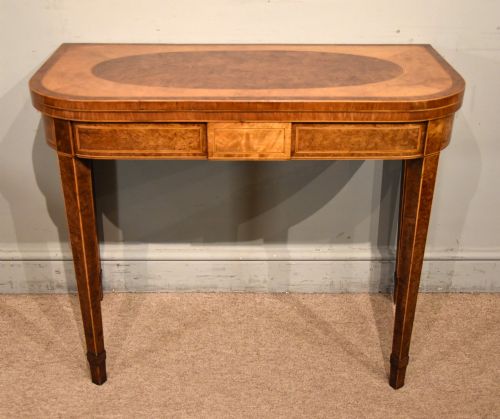
Inlaid Folding Games Table
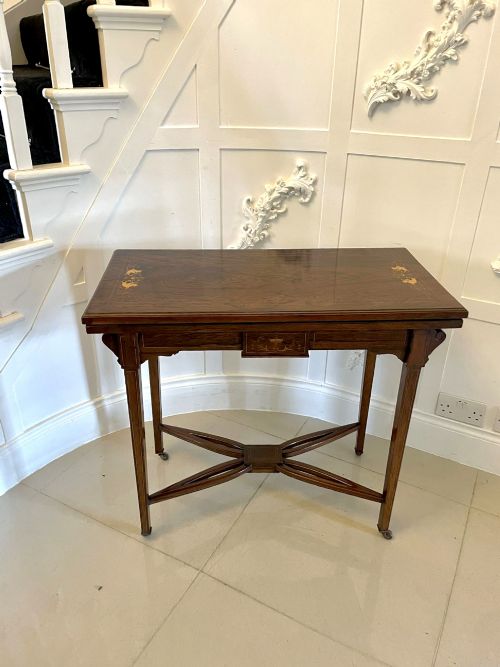
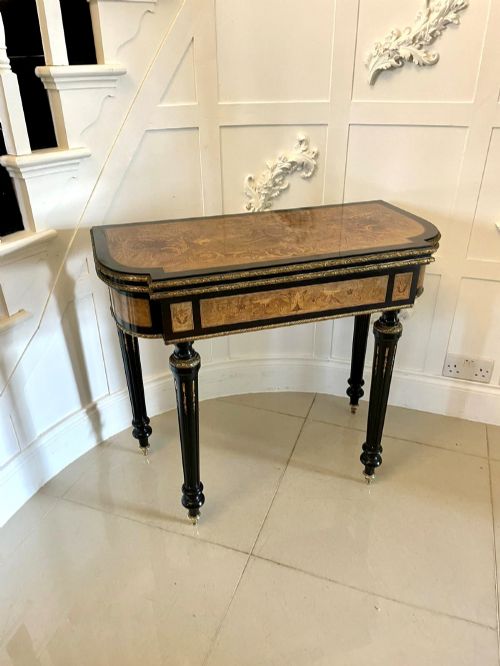
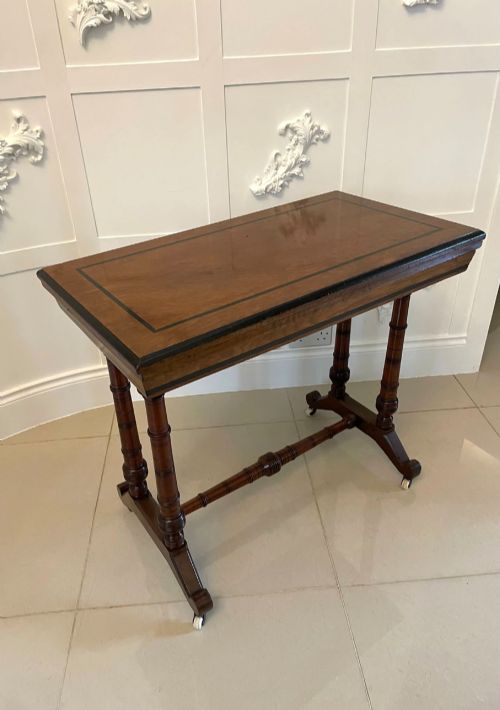
An inlaid folding games table is a convertible piece of furniture designed for leisure, offering a concealed playing surface that folds or swivels open for card and board pursuits.
Inlaid Folding Games Table
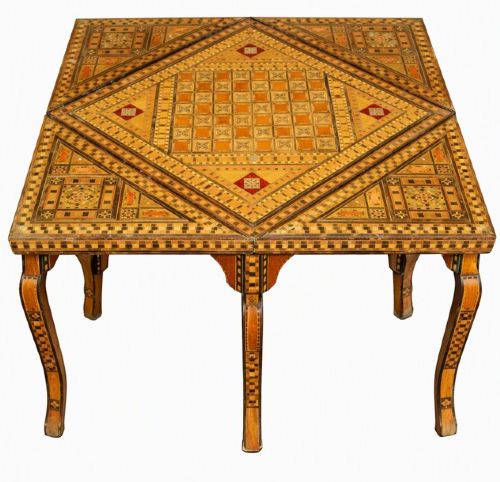
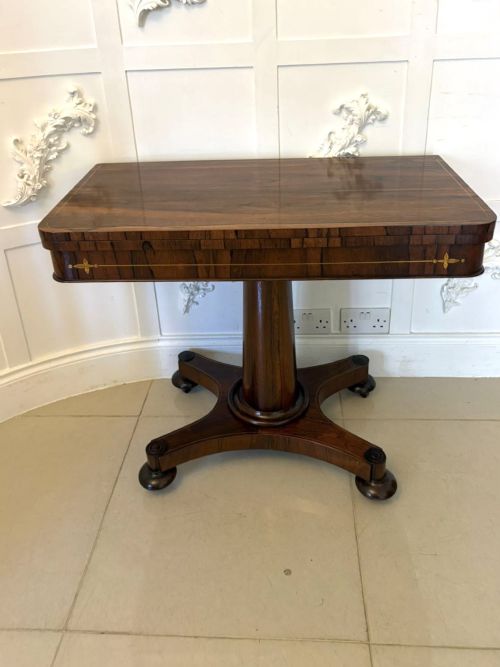
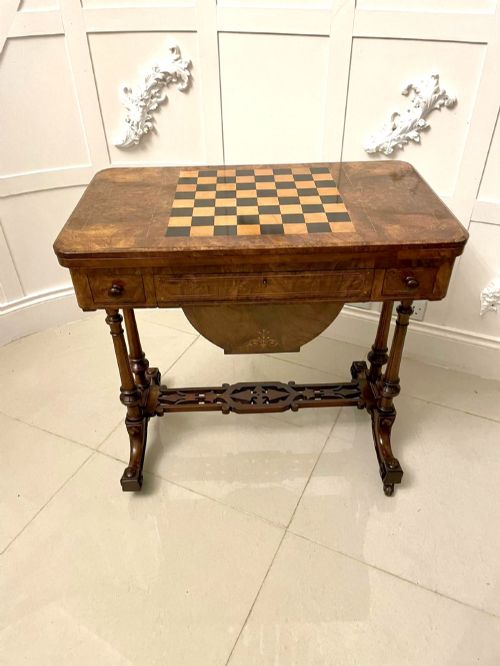
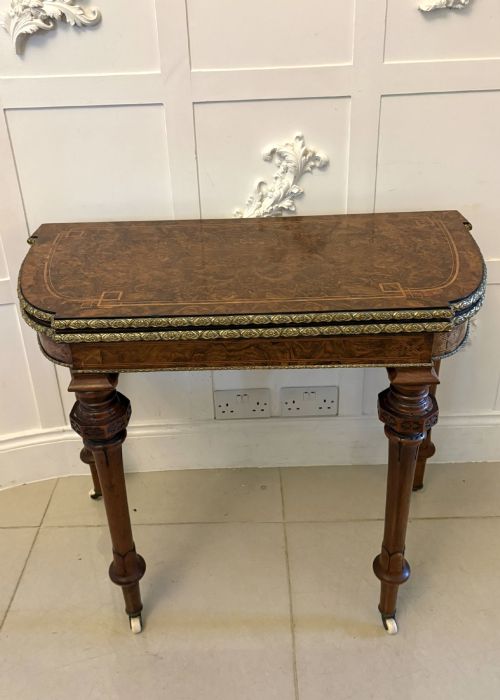
An inlaid folding games table appears primarily across the 18th, 19th and early 20th centuries, spanning Georgian, Regency, Victorian and Edwardian eras. These surfaces take forms such as demi lune card tables, envelope tables, and octagonal occasional tables that open to reveal compartments for cards, chess or backgammon.
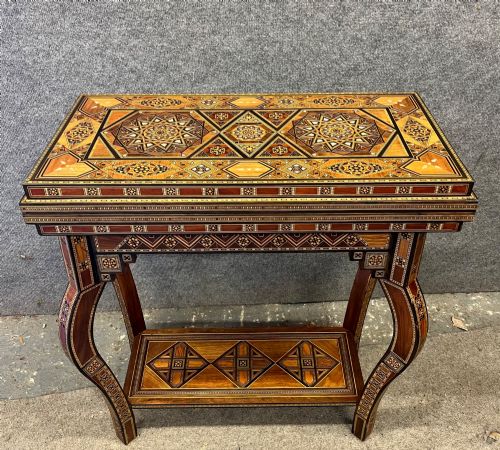
The pieces on this page are most commonly found in mahogany, rosewood and burr walnut, enriched with intricate wood inlay or brass detailing. They bridge the gap between ornamental console or side tables and functional furniture for the parlour.
Materials and Construction
Cabinetmakers utilised dense hardwoods like mahogany, rosewood and kingwood as foundations, often applying delicate veneers of satinwood, boxwood and amboyna to the top surfaces. Marquetry and contrasting wood inlay form geometric patterns or floral motifs across the folding leaves.
Metal elements such as brass stringing, ormolu mounts and specialised hinges support the swivel or fold-over mechanisms. These functional brass components are integrated directly into the construction to stabilise the weight of the hinged tops.
Listings feature tables spanning from the late 18th century through the Edwardian period, utilising mahogany, satinwood, rosewood and brass.
Distinctions in Execution
The standard of an inlaid folding games table rests on the precision of the joinery in the folding mechanism and the crispness of the timber inlay. Superior examples display tight, seamless joints where the leaves meet, alongside carefully selected grain figures in the mahogany or burr walnut.
Meticulous hand-cut marquetry and harmonious contrast between woods like boxwood and rosewood separate high-grade workshop production from standard commercial output. The stability of the turning action when opening the top indicates the original integrity of the internal framing.
George Bullock
The Inlaid Folding Games Table Glossary
- Demi lune
- A half-moon shape utilised for table tops that sit flat against a wall when folded.
- Marquetry
- Decorative patterns created by fitting together thin veneers of various woods onto a solid ground.
- Envelope table
- A square table with four triangular flaps that rotate and fold outward to reveal the playing surface.
- Ormolu
- Gilt-bronze mounts applied for ornamentation along the friezes and legs of tables.
- Stringing
- Thin lines of contrasting wood or metal inlaid into channels cut into the surface of the timber.
Inlaid Folding Games Table: Frequently Asked Questions
What is an inlaid folding games table used for?
These tables function as dual-purpose furniture, serving as side or console tables when closed and opening into dedicated spaces for cards, chess or backgammon.
Historically, they provided an elegant surface for evening entertainment in domestic parlours without dominating the room during the day.
How do you open the top?
Different models use distinct mechanical actions, such as folding leaves that swing open on brass hinges or swivel tops that rotate ninety degrees before unfolding.
Internal pivot mechanisms and folding leaf supports bear the weight of the extended playing surface safely.
Which woods are most common?
Mahogany and rosewood form the primary structure for many 18th and 19th-century examples, complemented by burr walnut and satinwood veneers.
Contrasting details utilise boxwood, ebony and brass stringing to accentuate the geometric or floral designs.
How do I date a table?
Dating relies on combining the stylistic details, such as Regency brass inlay or Edwardian proportions, with the specific veneer choices typical of those decades.
Structural techniques in the framing and the style of the legs offer further clues to the period of manufacture.