

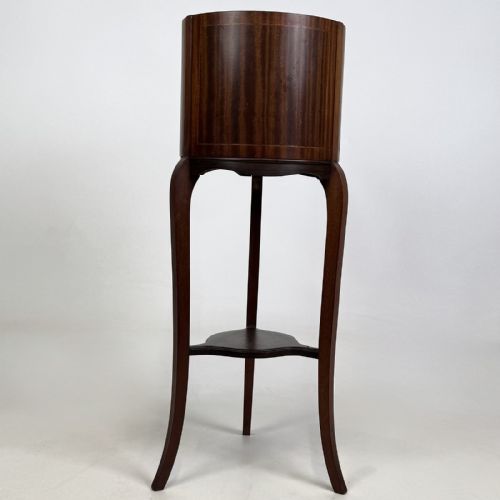
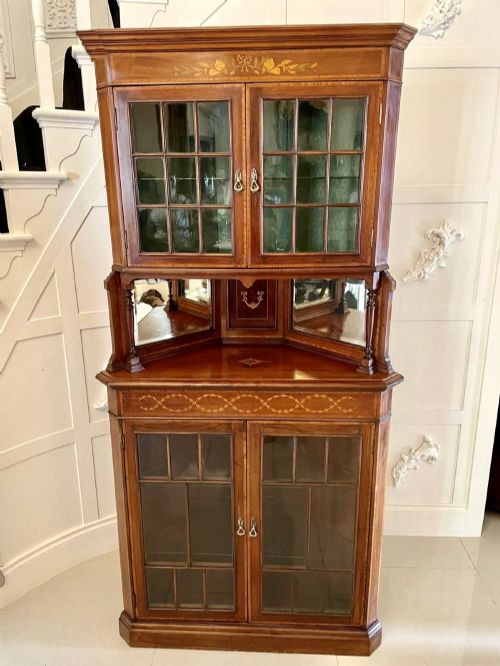
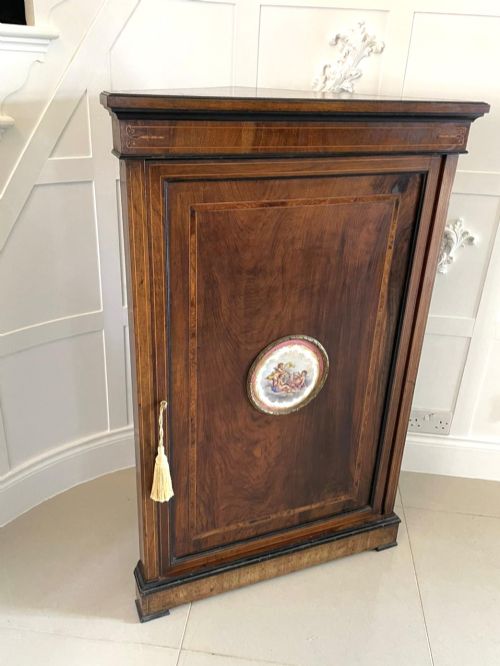
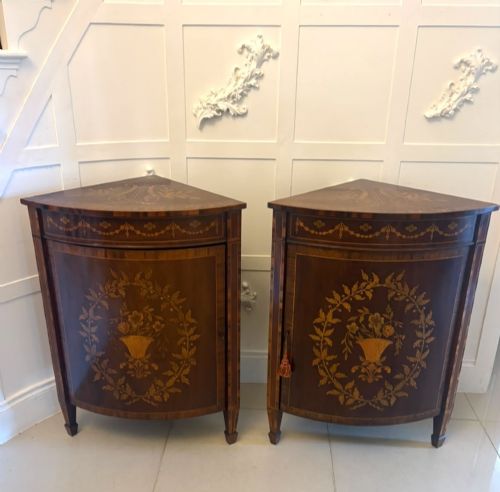




Inlaid Corner Display
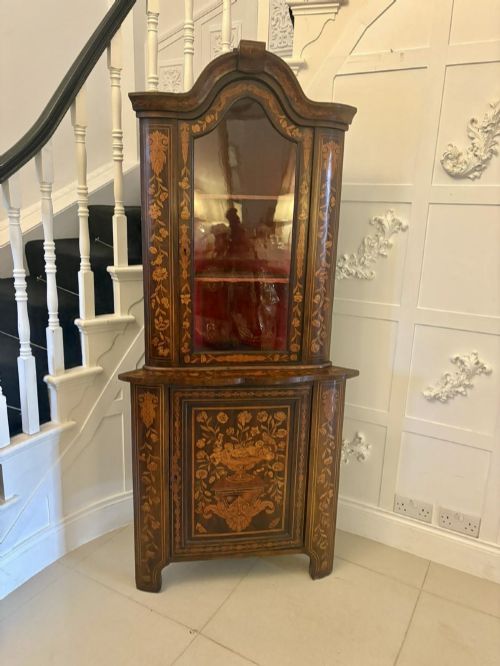
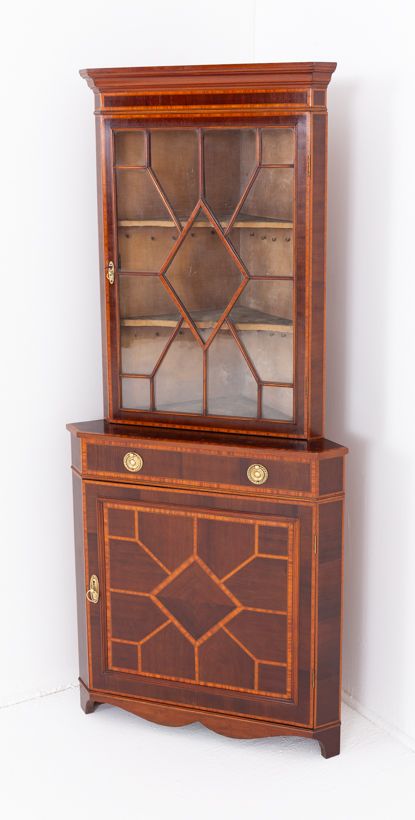
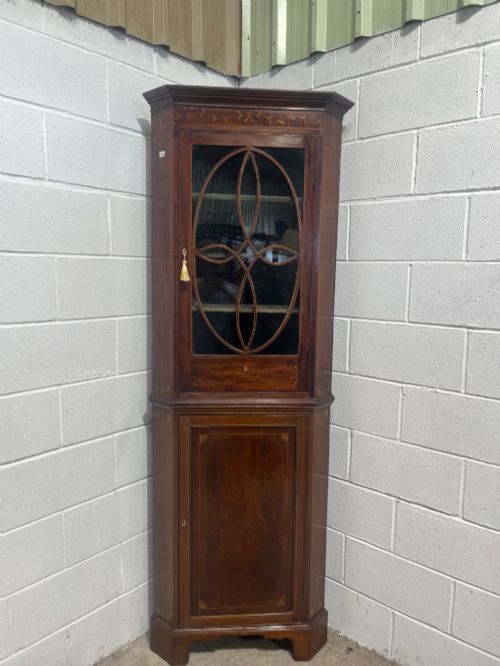
When searching for an inlaid corner display, you are looking at glazed cabinets and cupboards designed to utilise awkward room angles through decorative cabinet-making.
Inlaid Corner Display
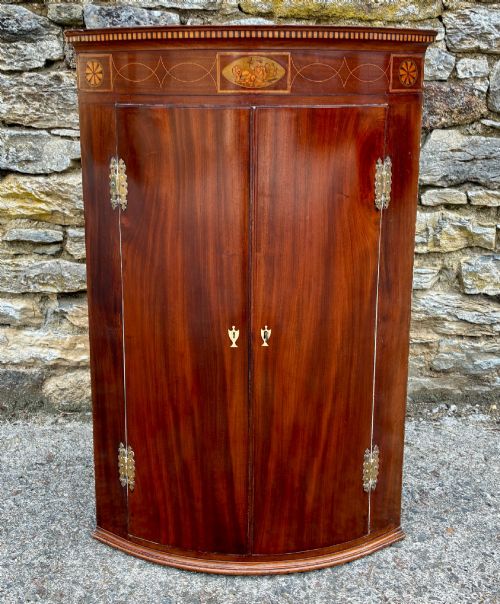
An inlaid corner display serves to turn unused room angles into storage and presentation space, appearing most commonly in Edwardian and Georgian forms on this page.
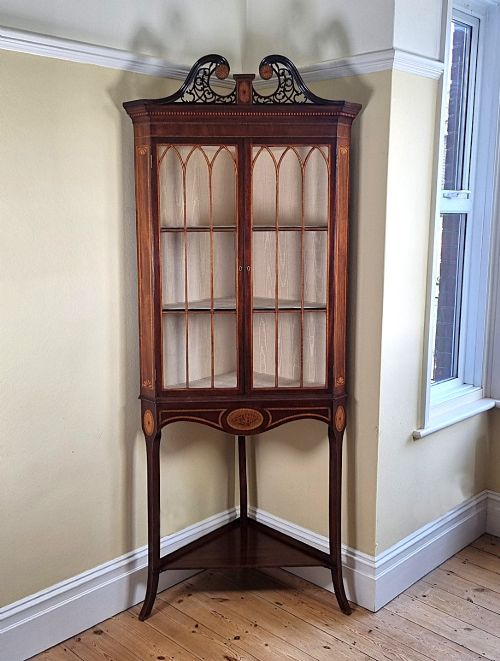
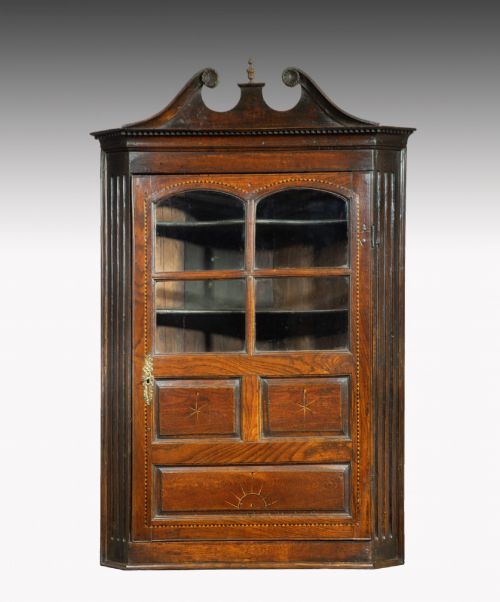
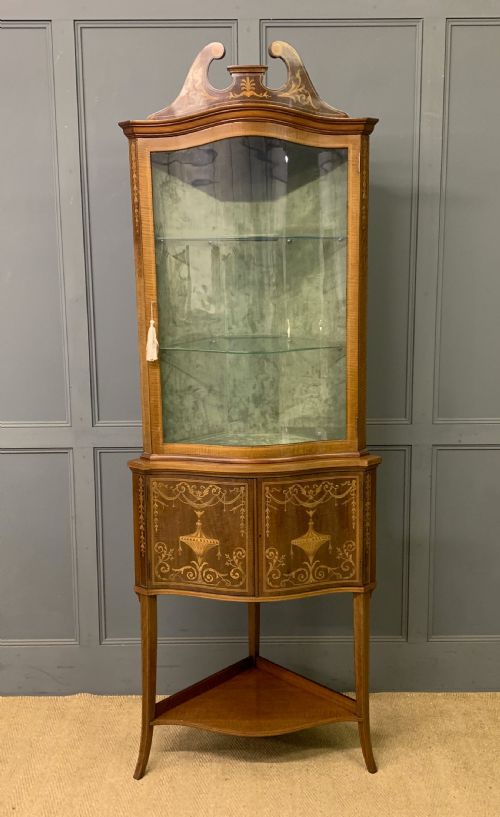
The objects span wall-hanging models, floor-standing units, and glazed cabinets on stands, utilised across centuries to house ceramics and glassware.
The prevailing version met here is the Edwardian mahogany cabinet, often featuring glazed doors and delicate floral or classical inlay work.
Woods and Inlay Techniques
Makers built the primary carcase using timbers such as mahogany, walnut, and oak, applying contrasting veneers to the exterior surfaces.
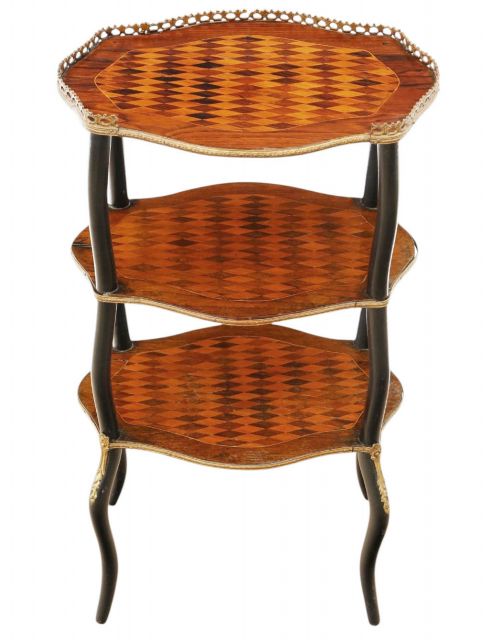
Decorative detailing relies on satinwood, boxwood, and ebonised elements cut into precise marquetry and parquetry patterns.
Glazing takes the form of paned glass doors, sometimes with astragal bars or bowed profiles requiring specialist joinery.
Inlaid Corner Display Retail Price Guide 2026
Typical asking prices for inlaid corner display among the pieces listed under this phrase on Sellingantiques today, from the lower quarter to the upper quarter. They describe what is for sale here now, not the wider market.
Listings feature mahogany, walnut, and oak carcases embellished with satinwood, boxwood, and rosewood inlay across Georgian and Edwardian periods.
Assessing Craftsmanship and Detail
Quality rests in the precision of the cabinet-making, distinguishing standard production carcases from pieces with finely fitted doors and crisp mouldings.
The complexity and sharpness of the marquetry inlay dictate the distinction between simple banded lines and elaborate pictorial motifs.
Proportion and structural integrity define the better examples, ensuring doors hang square and timber movement remains controlled over time.
Edwards and Roberts
The Inlaid Corner Display Glossary
- Astragal glazing
- Timber or metal bars holding small panes of glass within a cabinet door. These divide the window into geometric patterns.
- Marquetry
- Decorative veneer work forming pictorial patterns using various coloured woods. Craftsmen assemble these designs piece by piece before gluing them to the carcase.
- Parquetry
- Geometric wood inlay forming repeating patterns such as cubes or squares. This technique creates a textured visual surface on tabletops and cabinet fronts.
- Bow front
- A convexly curved cabinet facade. This shape softens the hard angles typical of corner furniture.
- Crossbanding
- A border of veneer laid around the main panel with the grain running in a perpendicular direction. It frames the central timber grain.
Inlaid Corner Display: Frequently Asked Questions
How do I hang a wall cabinet?
Wall-hanging corner cupboards require secure fixing to solid masonry or internal wall studs using appropriate brackets. Because these heavy mahogany and oak carcases exert leverage when loaded with glass and china, professional installation is advised.
Ensure the wall plate bears the primary weight rather than relying solely on decorative strap hinges. Levelling the unit carefully prevents the glazed door from binding in its frame.
Where should I place a corner display?
These cabinets fit directly into ninety-degree room intersections, turning dead space into a focal point. They anchor empty wall junctions in dining rooms or drawing rooms without obstructing walkways.
Avoid positioning them in direct sunlight or beside active heat sources, as temperature fluctuations can dry out historic timber and crack antique veneer work.
How do I care for antique mahogany?
Dust the polished surfaces regularly with a soft, dry cloth to prevent grit accumulation. Apply occasional natural wax to nourish the grain and maintain a soft lustre without building up heavy residue.
Keep indoor humidity stable to prevent the solid timber and delicate inlay from shrinking or lifting away from the carcase.
What is the difference between Georgian and Edwardian pieces?
Georgian examples date from the eighteenth and early nineteenth centuries, displaying heavier timber construction, simpler lines, and practical storage intentions. They often utilise solid oak or dense mahogany with minimal decorative banding.
Edwardian pieces, dating around nineteen hundred, favour lighter Sheraton Revival aesthetics with extensive satinwood inlay, delicate bellflower motifs, and refined glass display areas.