




Inlaid Chess Board
An inlaid chess board brings centuries of tactile strategy into a room, offering both a functional playing surface and decorative woodcraft.
Inlaid Chess Board
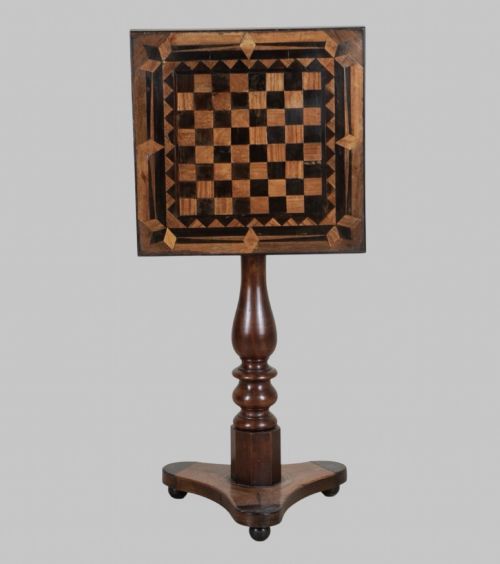
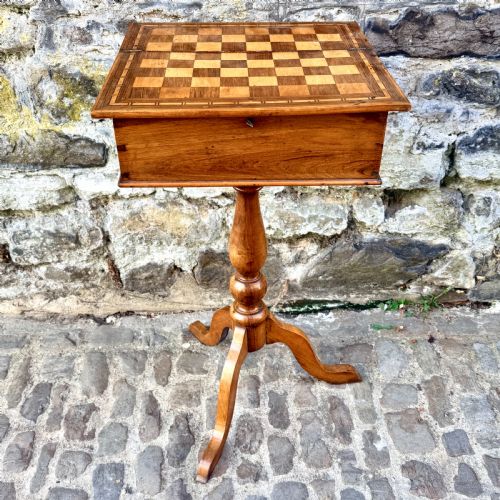
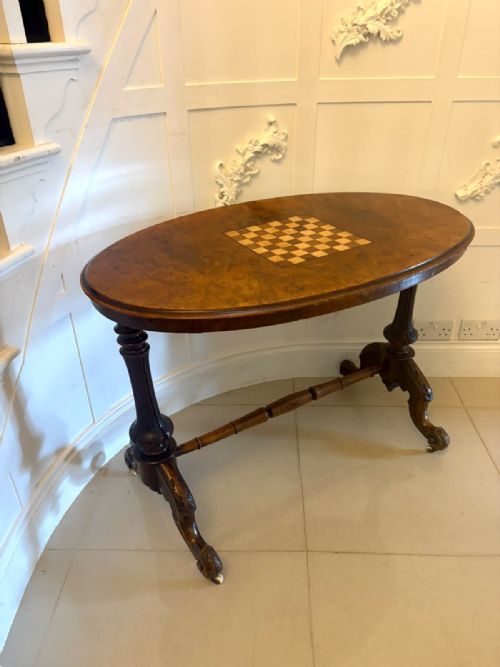
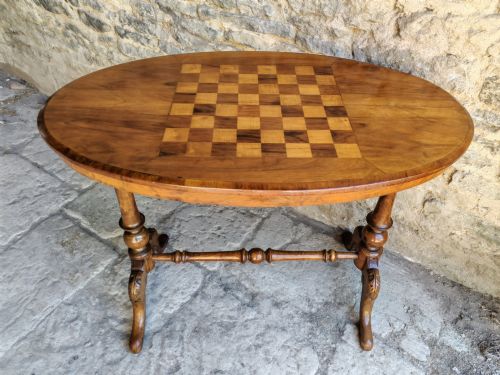
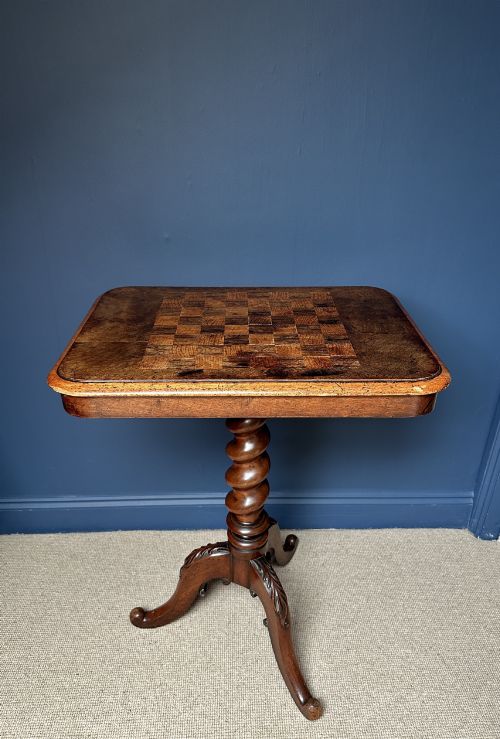
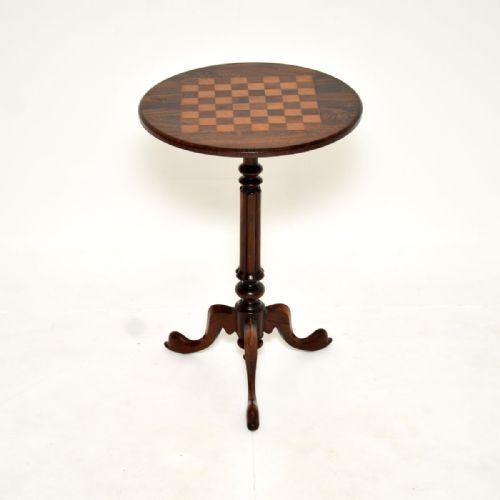
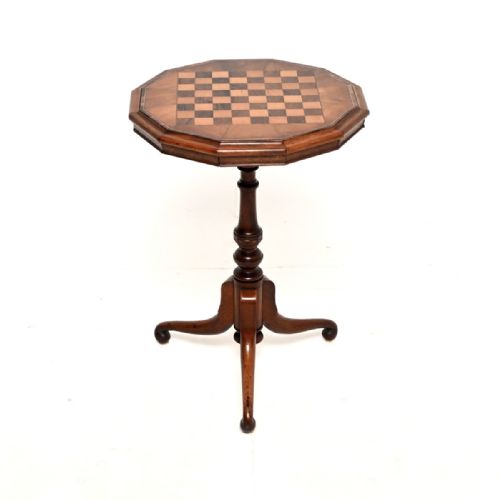
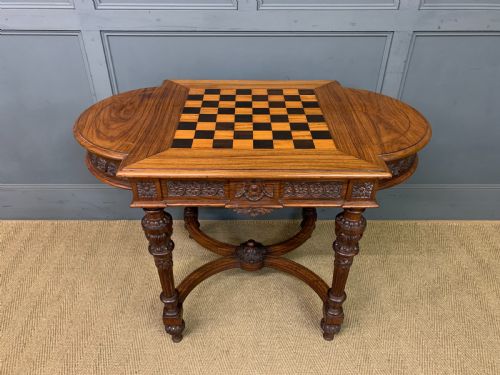
When you search for an inlaid chess board, you find a range of items from standalone folding travel boards and compendiums to larger games tables resting on tripod pedestals or sturdy legs. The version you are most likely to meet on this page is the Victorian walnut or rosewood games table, which frequently integrates a chessboard directly into the top.
Many examples date from the nineteenth century, spanning Georgian, Regency, and Victorian periods, alongside specific regional forms like French Provincial or Anglo-Indian specimens. These surfaces were built to accommodate domestic leisure, often combining chess with backgammon interiors or sewing compartments.
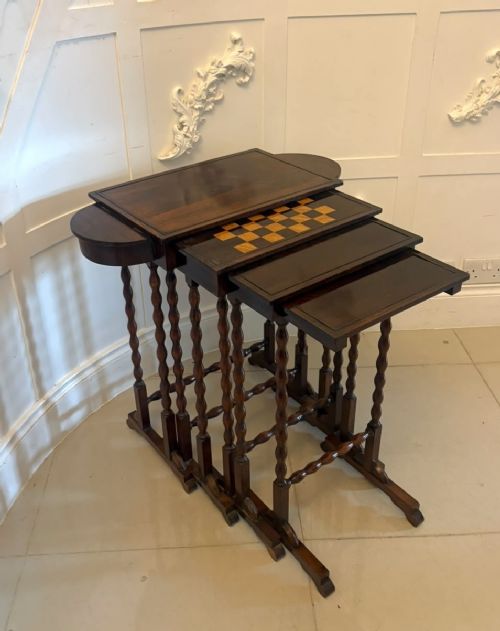
Stand-alone wooden boards also appear regularly, alongside occasional tables designed to serve dual purposes as lamp tables or writing desks while maintaining a chequerboard surface.
How they were made
Cabinet makers utilised dense timbers such as walnut, rosewood, mahogany, and burr walnut for the primary structures and tabletops, selecting woods for their rich grain and natural colour variation. The alternating squares of the board were created using contrasting light and dark woods like boxwood and sycamore, inlaid precisely into the main surface.
More elaborate pieces incorporated wood inlay, marquetry, parquetry, and mother-of-pearl to define borders and enrich the playing field. Brass mounts and delicate stringing occasionally added structural definition and decorative contrast to the timber frames.
The archive records occasional tables featuring integrated chessboards alongside multi-game compendiums housing backgammon and cribbage.
What varies in quality
The degree of refinement in timber selection and the precision of the parquetry determine the visual success of the surface. Burr walnut and figured rosewood command attention through lively grain patterns, while crisp, flush alignment between the contrasting light and dark squares marks superior joinery.
Integrated furniture quality depends on the stability of the pedestal or leg framing, the seamless integration of folding mechanisms or reversible tops, and the condition of secondary interiors like sewing wells or backgammon compartments.
Gillows·British Chess Company
The Inlaid Chess Board Glossary
- Parquetry
- Geometric mosaic woodwork used to create repeating patterns such as the chequerboard surface. It relies on small, precisely cut wood veneers arranged on a solid ground.
- Marquetry
- The art of applying decorative veneer pieces to a structure to form pictorial or ornamental designs. Unlike parquetry, it allows for curved and floral motifs.
- Boxwood
- A dense, pale yellow wood frequently utilised for the light squares on a chessboard. Its fine grain takes sharp, clean edges.
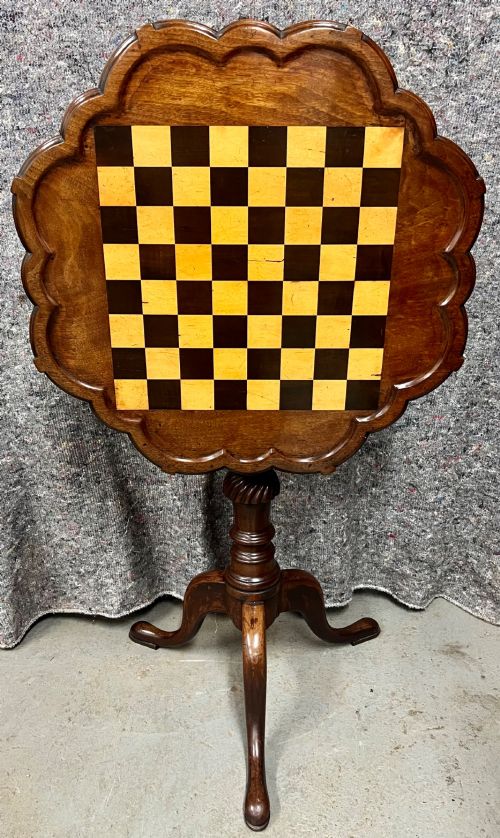
- Tripod table
- A small freestanding table supported by a central pillar above three splayed legs. This form often carried a tilt-top mechanism to display the board upright when not in use.
- Compendium
- A multi-game box housing equipment for several pastimes such as chess, backgammon, and cribbage within a single fitted case.
Inlaid Chess Board: Frequently Asked Questions
What is the difference between a games table and a chess board?
A games table is a piece of furniture incorporating a playing surface, often with drawers, folding leaves, or compartments for pieces. Standalone chess boards are portable panels designed to sit upon existing surfaces or fold for travel.
Many tables include reversible tops or sliding panels that reveal backgammon interiors beneath the inlaid chess surface.
Were these boards meant for playing or display?
These boards served as active centres for domestic evening entertainment while functioning as permanent furniture in parlours and drawing rooms. Their fine timbers and decorative inlays ensured they looked appropriate even when matches were finished.
Many designs prioritized this dual role by folding away or doubling as writing and sewing tables during daylight hours.
What woods were used for the contrasting squares?
Dark squares typically utilised rosewood or walnut, while light squares relied on boxwood or sycamore. Cabinet makers selected these timbers to achieve a sharp visual contrast essential for standard play.
Over decades, natural oxidation deepens the honey tones of boxwood and enriches the dark grains of rosewood.