


Inlaid Bedroom Storage
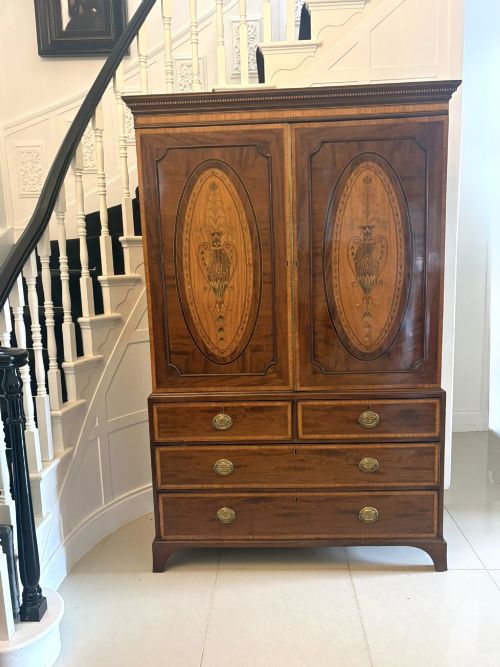
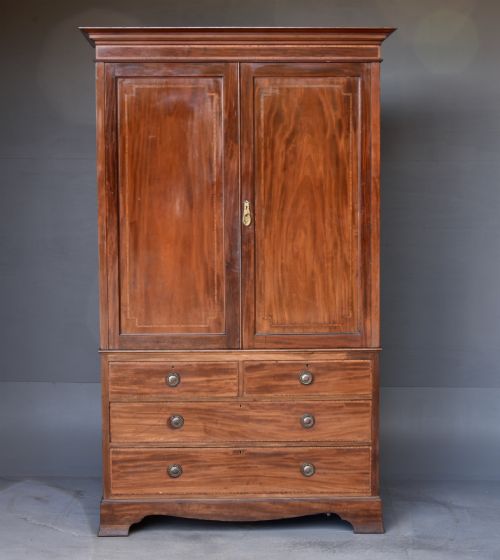
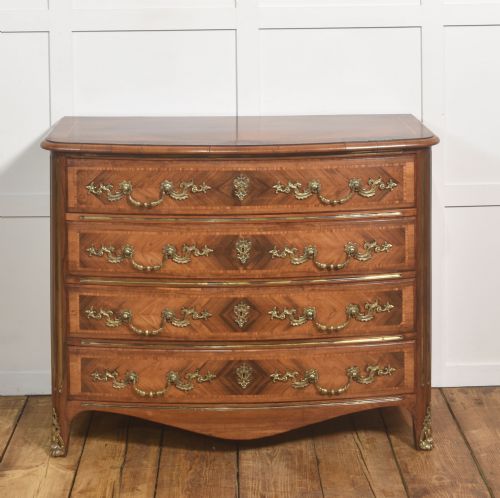
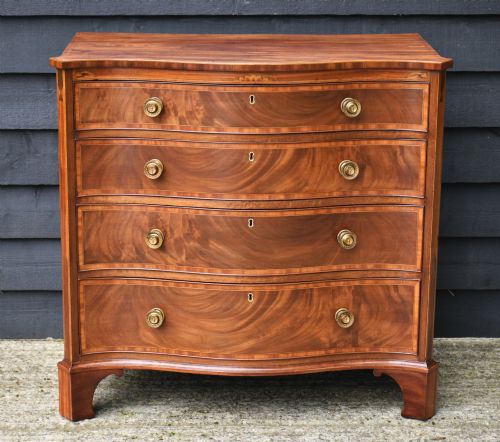
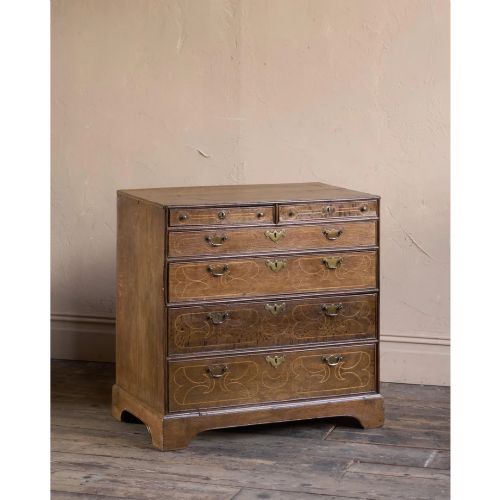
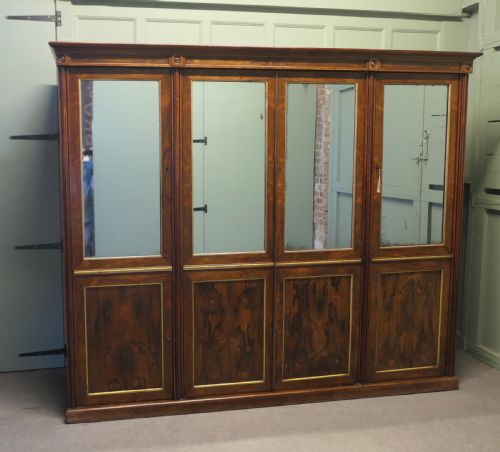
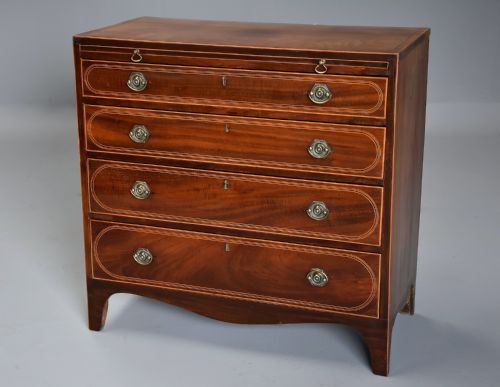
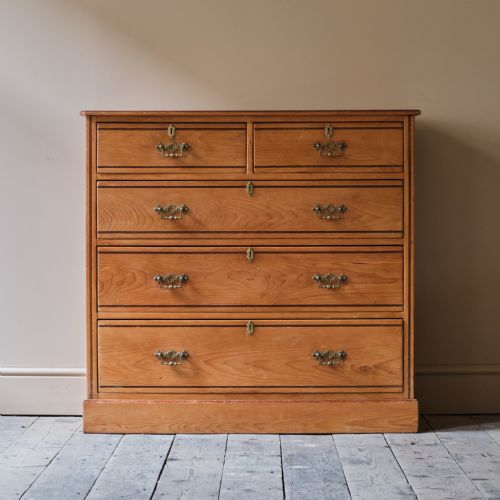
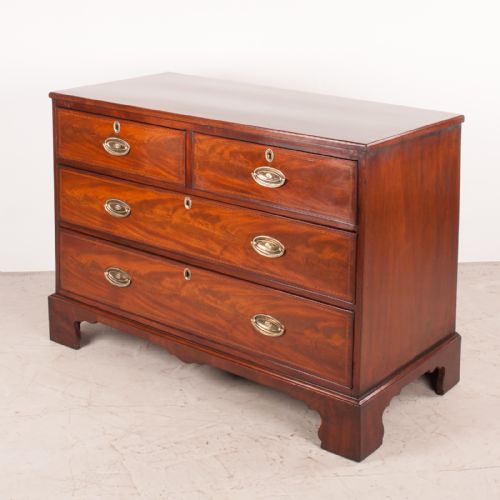
These inlaid bedroom storage pieces bring ornamental woodcraft to practical furniture, offering chests of drawers and wardrobes designed to hold clothes.
Inlaid Bedroom Storage
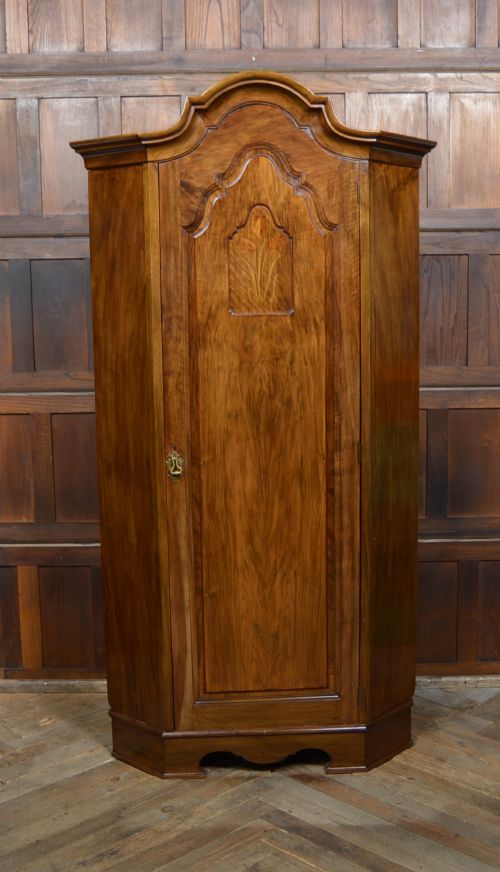
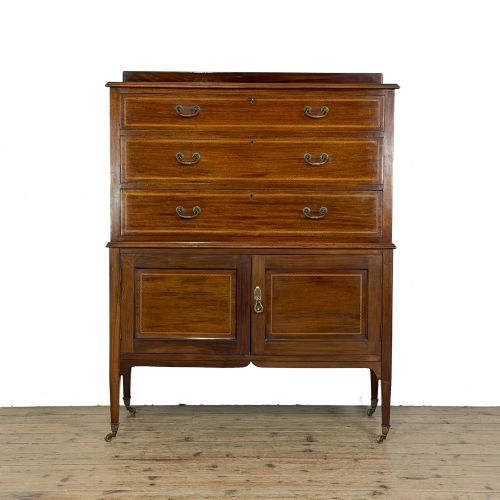
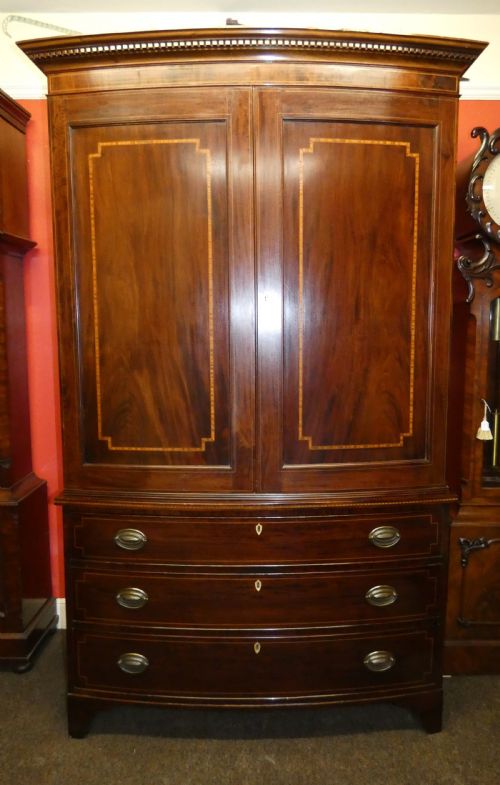
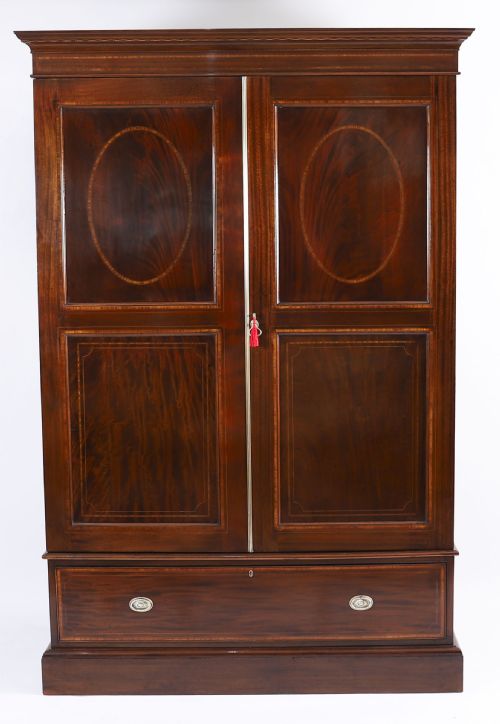
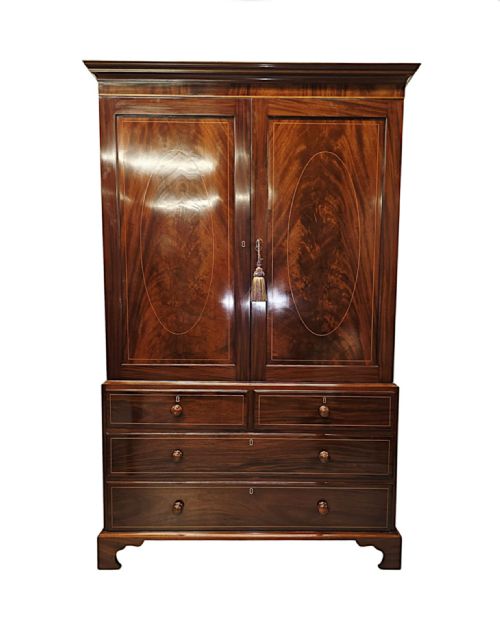
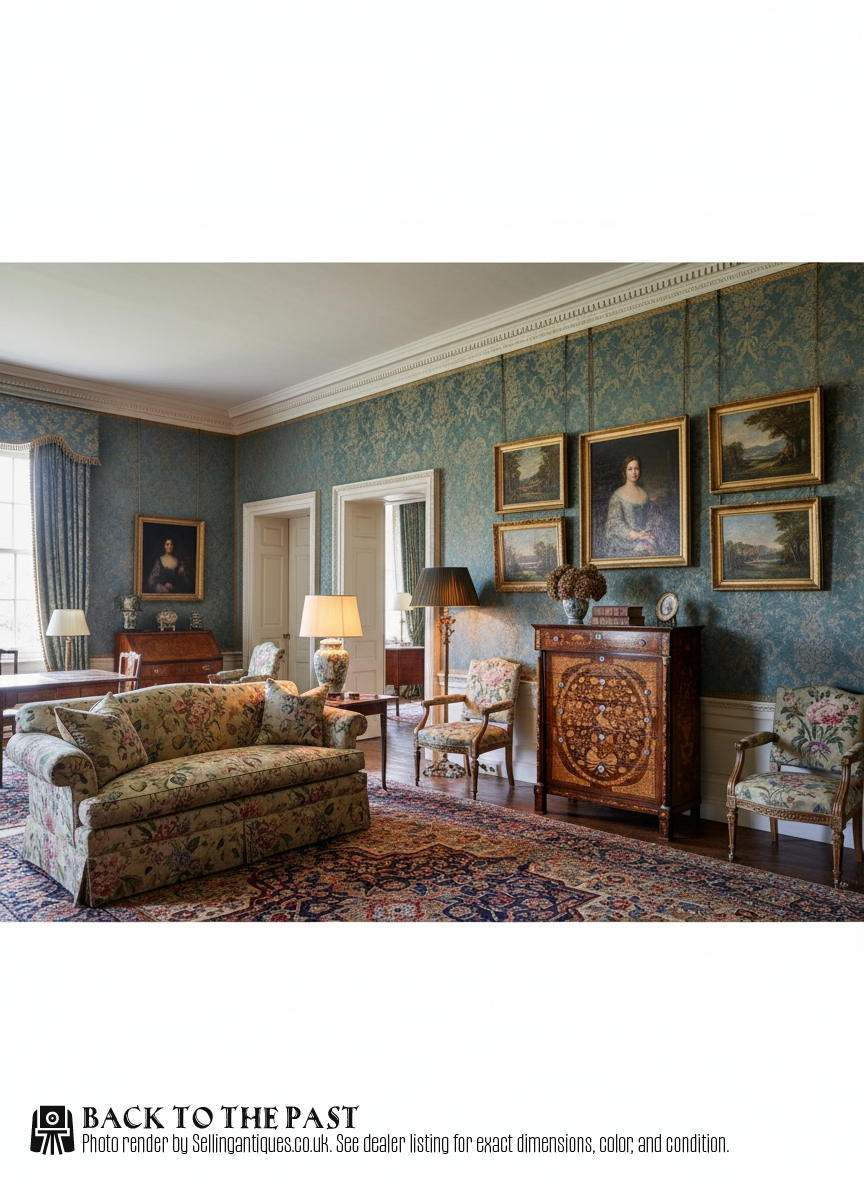
When you examine inlaid bedroom storage, you encounter practical furniture designed for domestic clothes organisation that incorporates decorative wood patterning into its primary surfaces. The selection spans distinct forms, predominantly chests of drawers, wardrobes, linen presses, and bedside cabinets.
The pieces you will most frequently meet on this page originate from the Georgian, Victorian, and Edwardian periods, constructed in mahogany, walnut, oak, and satinwood. These items range from compact bedside tables to substantial housekeepers wardrobes and tallboys.
Makers and workshops across these centuries adapted contemporary styles, moving from George III and Regency formality to Edwardian Sheraton Revival designs. Each era handled storage differently, balancing the need for deep drawer capacity with decorative exterior surfaces.
How they were made
Cabinet makers constructed the foundational carcases of these storage pieces using solid timbers such as mahogany, oak, and walnut, frequently applying fine veneers to large surfaces. Structural integrity depended on traditional joinery, ensuring that heavy drawers and large wardrobe doors remained square over decades of use.
Decorative elements relied on precise cutting of contrasting woods, embedding boxwood, satinwood, and brass into the primary timber ground. Craftsmen sealed these surfaces with traditional polishes, bringing out the natural grain patterns of flame mahogany, kingwood, and rosewood.
Listings feature storage pieces spanning from the 17th century through the Edwardian era, incorporating mahogany, oak, satinwood, and walnut.
What varies in quality
The standard of execution in inlaid bedroom storage rests upon the precision of the cabinet work and the crispness of the decorative details. Superior examples display meticulously fitted drawer linings, smooth running actions, and intact inlay work where contrasting woods meet without noticeable gaps.
Makers who supplied high-end clients invested heavily in choice timber selections, such as figured flame mahogany and well-matched satinwood veneers. Lower tiers relied on simpler construction methods and less intricate surface decoration, reflecting the commercial requirements of their original market.
maples & co·Druce & Co
The Inlaid Bedroom Storage Glossary
- Linen Press
- A tall storage piece combining upper sliding shelves or hanging space with lower drawer storage, historically utilised for household linens. These items often feature substantial panelled doors concealing internal trays.
- Inlay
- A decorative technique where small pieces of contrasting wood or other materials are inserted into recessed cavities on a timber surface. This method creates geometric patterns, floral motifs, or borders.
- Compactum
- A multi-functional wardrobe offering hanging space, drawers, and shelving combined into a single footprint. They represent efficient interior planning for Edwardian and Victorian bedrooms.
- Tallboy
- A tall chest of drawers standing on a base section, providing substantial vertical storage capacity. These pieces maximise bedroom storage while occupying minimal floor space.
- Marquetry
- An elaborate form of inlay where veneer pieces are assembled to form pictorial or decorative patterns across an entire surface. Craftsmen used various coloured woods to achieve tonal depth.
Inlaid Bedroom Storage: Frequently Asked Questions
What is a linen press?
A linen press is a tall storage combination piece featuring upper doors that enclose sliding trays or shelves above a chest of drawers. They were built to store household textiles flat before modern hanging wardrobes became standard.
Over time, many of these pieces were converted internally to take modern clothes hangers while retaining their original exterior appearance and decorative inlay.
How do I date a wardrobe?
Dating requires looking at the timber choices, construction methods, and prevailing decorative styles used in the piece. Georgian and Regency examples often feature solid carcases and subtle stringing, while Edwardian pieces frequently display Sheraton Revival motifs.
Hardware such as locks and handles also offer clues, though original brassware can sometimes be replaced during the working life of the furniture.
Are bedside cabinets matching?
Bedside cabinets frequently appear as matched pairs, though single examples also occur in historical listings. Makers of the Edwardian and Victorian periods designed them to complement the larger wardrobe and chest of drawers in a bedroom suite.
Checking the dimensions, timber grain, and inlay patterns helps confirm whether a pair was manufactured together or assembled later.
How do I care for inlaid wood?
Inlaid bedroom storage requires stable room humidity and protection from direct sunlight to prevent the timber from drying out and the fine inlay work from lifting. Regular dusting with a soft, dry cloth preserves the polished surface.
Applying traditional wax polish occasionally helps nourish the wood and maintain the subtle sheen on satinwood and mahogany surfaces.