




Inlaid Balloon Clock
An inlaid balloon clock brings the fluid curves of the late nineteenth and early twentieth centuries directly onto a mantelpiece.
Inlaid Balloon Clock
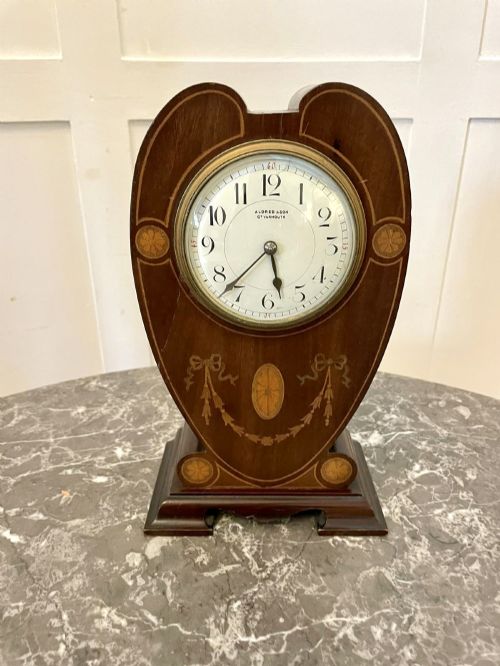
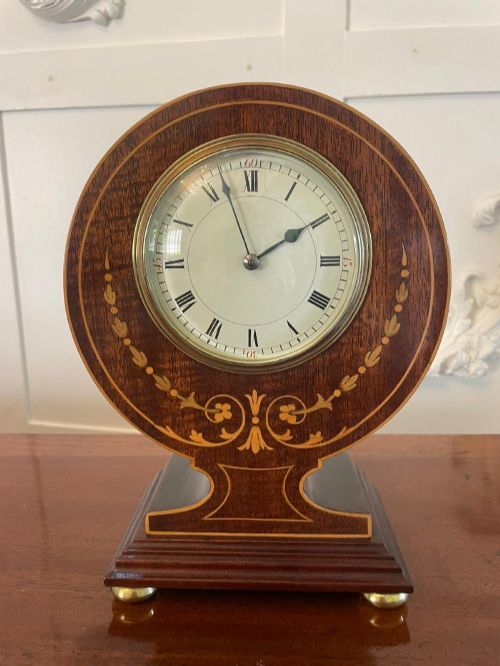
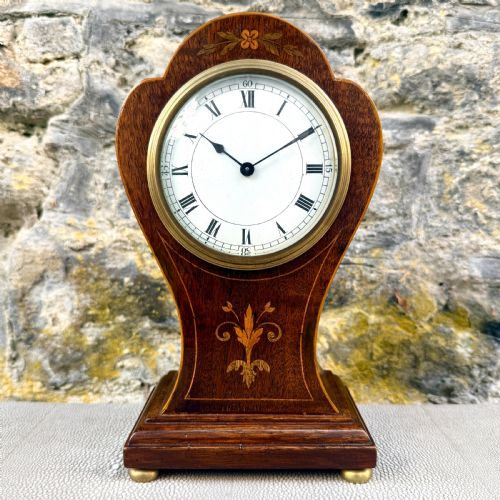
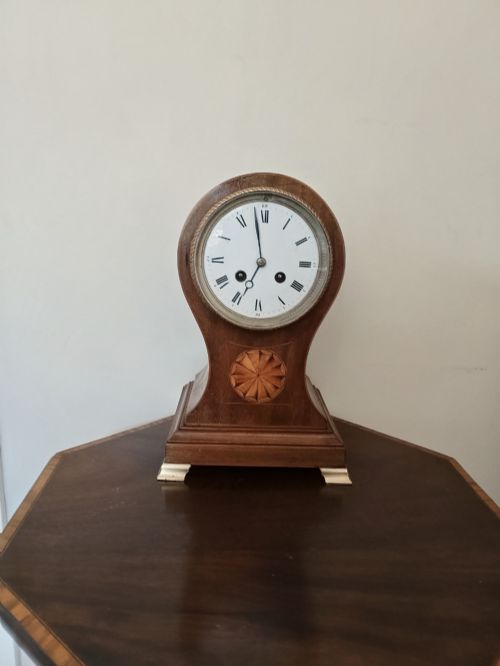
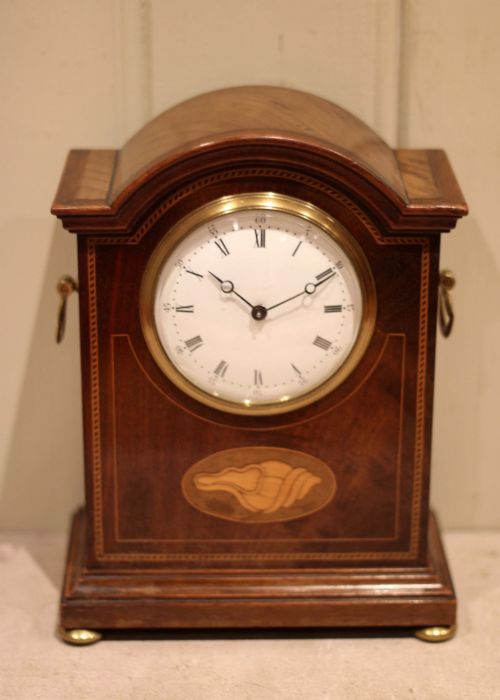
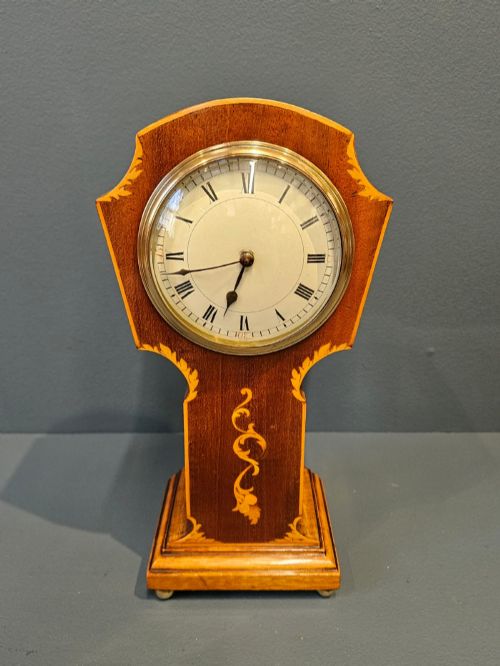
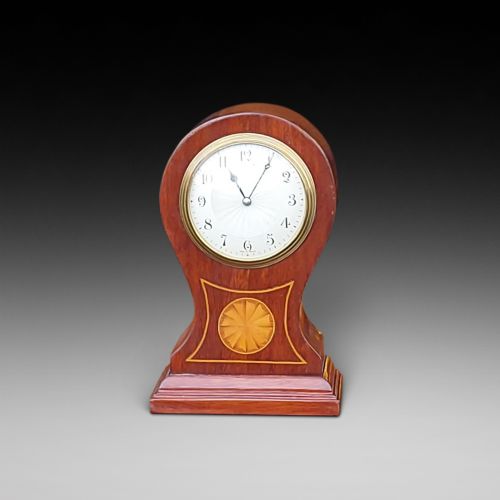
The inlaid balloon clock takes its name from the rounded, swelling profile of its wooden case, reminiscent of early aviation shapes. Standing upright on small feet, these timepieces range from small bedside models to larger bracket clocks designed for a principal room.
Most examples found here date from the Edwardian period or the late nineteenth century, predominantly constructed in mahogany with contrasting wood inlay. Alongside standard mantel clocks, French eight-day movements and single fusee mechanisms appear frequently across the selection.
Variations in style span from restrained Edwardian classical motifs to Art Nouveau curves and occasional Dutch figure marquetry. Buyers select these objects both for their reliable mechanical movements and their decorative woodwork.
Assessing Quality
The distinction between standard examples and superior pieces rests largely on the complexity of the cabinetwork and the sophistication of the movement. Finely executed marquetry using multiple contrasting woods indicates a higher grade of workshop production.
Clockwork mechanisms with single fusee movements or signed maker plates generally command greater attention than simple platform escapement timepieces. Crisp carving, intact original French polish, and well-preserved dials also elevate a piece.
One cheerful Edwardian model depicts a Dutch girl in wood inlay, watching time pass from the mantel.
Joseph Jump of London·Mappin & Webb·Brockbank & Atkins London·Asprey London
The Inlaid Balloon Clock Glossary
- Fusee
- A conical pulley used in spring-driven clocks to ensure even tension as the mainspring unwinds. This mechanical addition helps the clock maintain accurate time over its running period.
- Marquetry
- The art of applying decorative veneer pieces to a structure to form intricate patterns or pictures. Craftsmen utilise different coloured woods to create contrast without using paint.
- Bezel
- The metal ring that holds the glass protecting the clock face in place. It often hinges open to allow hand-setting or winding of the movement.
- Escapement
- The mechanism inside the clock that converts rotational force into controlled impulses for the pendulum or balance wheel. It produces the characteristic ticking sound of the clock.
- Bracket Clock
- A portable mechanical clock originally designed to sit on a wall bracket or table. Many balloon clocks derive their proportions from this earlier tradition.
Inlaid Balloon Clock: Frequently Asked Questions
How do I wind an inlaid balloon clock?
Most models require a specific key inserted into the dial holes to tension the spring every week or eight days. Care must be taken not to overwind the mechanism.
Consult the movement type before adjusting the hands or spring tension to avoid damaging antique gear trains.
Where should I place a balloon clock?
These clocks suit mantelpieces, desks, or shelf surfaces away from direct sunlight and damp conditions. A stable, level base ensures the pendulum or balance wheel keeps even time.
Avoid positioning them near exterior doors or heat sources that cause wood movement and drying.
How do I distinguish Edwardian from Victorian balloon clocks?
Victorian examples often display heavier proportions and darker mahogany finishes with dense shell marquetry. Edwardian pieces tend to feature lighter satinwood inlay and more slender silhouettes.
Art Nouveau variations from the same era introduce whiplash floral motifs into the wood surface.
What is a single fusee movement?
A fusee movement uses a chain and cone-shaped pulley to regulate the power delivered from the mainspring. This keeps the driving force constant as the spring relaxes.
Clocks with fusee movements are typically higher quality productions than standard spring-barrel alternatives.