


Industrial Wooden Cabinet
An industrial wooden cabinet is a functional piece built for hard work, bringing robust storage and utilitarian character into a modern room.
Industrial Wooden Cabinet
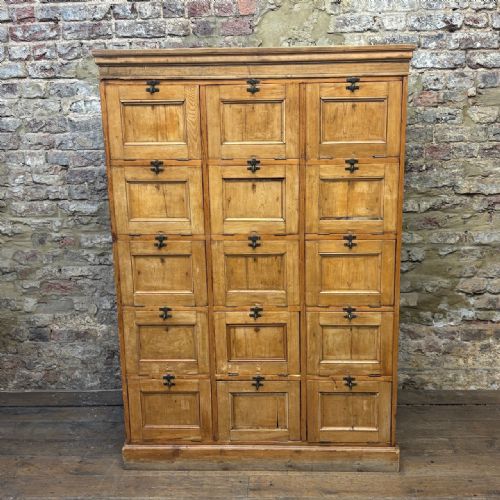
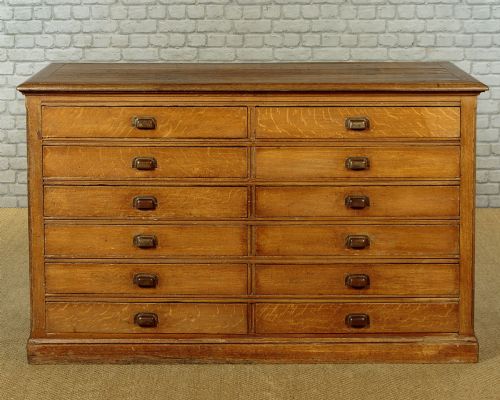
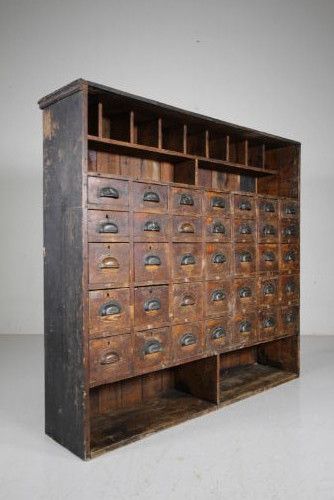
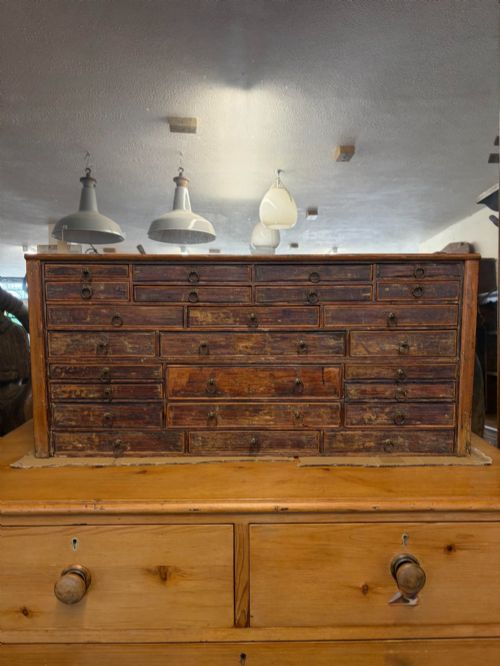
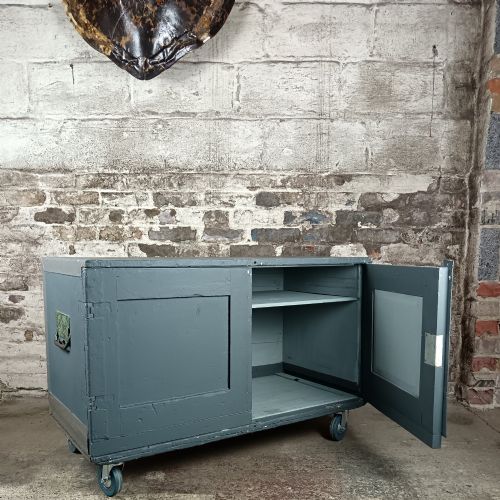
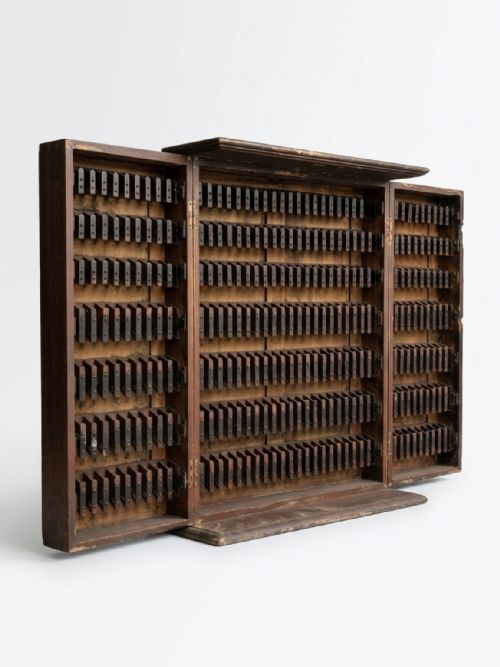
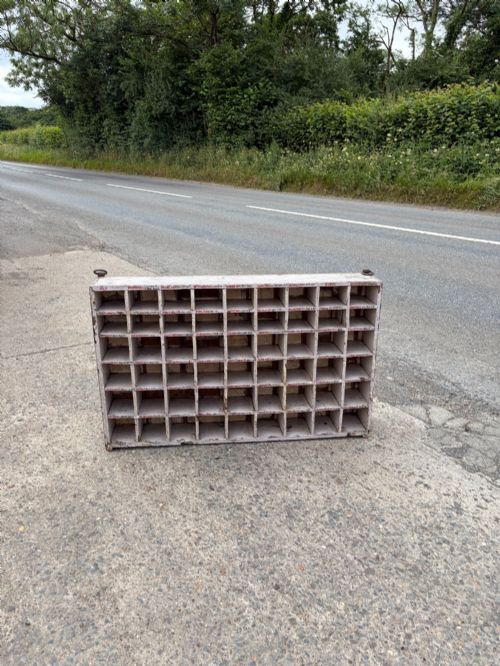
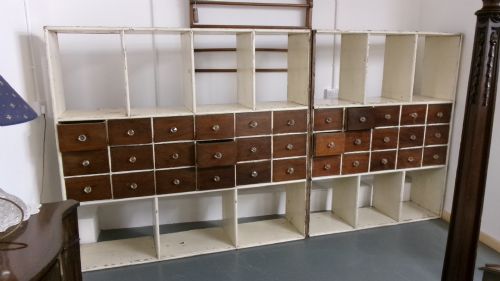
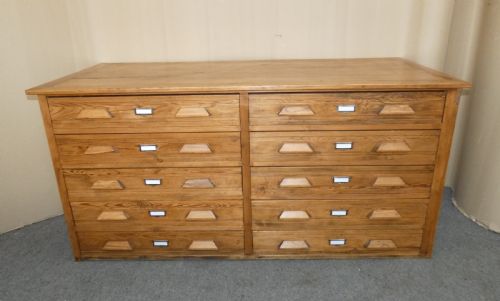
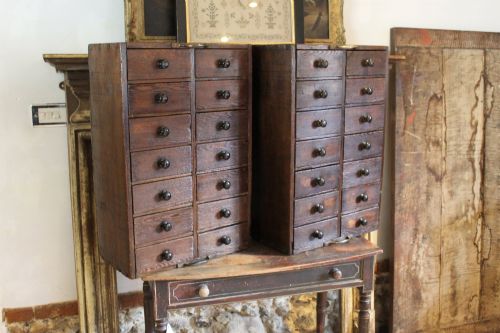
An industrial wooden cabinet covers hardworking storage forms designed for commerce, workshops and offices, spanning the nineteenth century through the early twentieth century. You will encounter banks of drawers, filing chests, pigeon holes and cupboards originally built for chemists, drapers, watchmakers and railway offices.
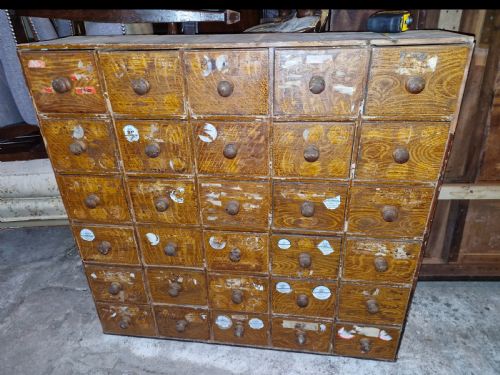
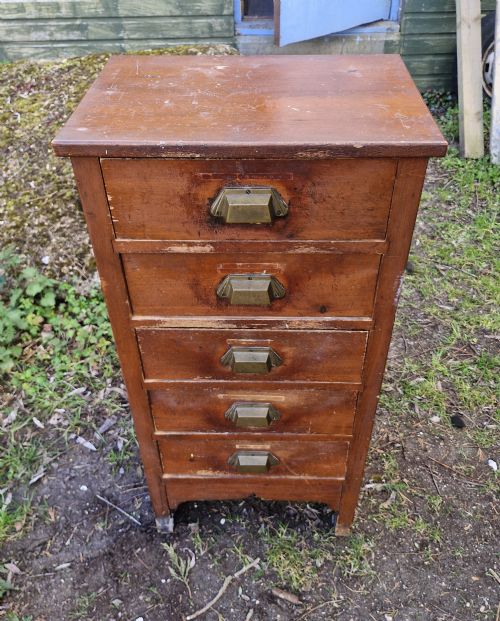
The most common examples on this page are multi-drawer banks and haberdashery chests made in pine, oak or mahogany. These pieces range from compact office cabinets with brass pulls to large workshop storage units with numerous small compartments.
Materials and construction
Construction relies heavily on sturdy timbers such as pine, oak, mahogany and fruitwood, chosen for durability in commercial environments. Joinery is straightforward and strong, designed to withstand heavy daily use in shops and factories.
Metal hardware plays an essential structural and functional role, incorporating iron brackets, brass handles, steel safes and specialised locking mechanisms. Paint finishes and polished surfaces appear alongside natural scrubbed woods, reflecting the practical maintenance of working interiors.
Some cabinets still whisper secrets of old train timetables and forgotten watch parts found tucked behind deep drawers.
Assessing quality
Quality rests in the integrity of the original hardware, the soundness of the timber joints and the retention of authentic factory or shop surfaces. Pieces retaining original brass handles, patent filing mechanisms or maker inscriptions hold greater authenticity.
Proportion and scale dictate the visual impact of the cabinet, where well-configured banks of drawers display balanced layouts without clumsy alterations. The presence of honest wear from decades of trade adds character without compromising the structural solidity of the piece.
Luxmore's of Ilfracombe·Amberg·D Napier & Sons
The Industrial Wooden Cabinet Glossary
- Haberdashery chest
- A multi-drawer cabinet with glass or timber fronts originally used in drapery shops for storing small items. These units feature numerous shallow compartments.
- Bank of drawers
- A large cabinetry form containing many individual drawers stacked in rows, built for sorting and storing documents, hardware or stock. They are typical of offices and trade premises.
- Pigeon holes
- An open grid of small rectangular compartments designed for sorting letters, tickets or paperwork. They are commonly mounted on walls or integrated into larger desks.
- Military campaign chest
- A portable storage chest designed to be dismantled or easily transported for military officers on deployment. These pieces often feature brass corner braces and recessed carrying handles.
- Chemist shop fitting
- Specialised cabinetry and drawer units salvaged from nineteenth-century apothecaries and pharmacies. They frequently incorporate numerous labeled drawers for herbs and compounds.
Industrial Wooden Cabinet: Frequently Asked Questions
What is an industrial wooden cabinet?
An industrial wooden cabinet is a heavy-duty storage unit originally built for commercial, trade or office use during the Victorian and Edwardian eras. These pieces include multi-drawer banks, pigeon holes and workshop cupboards made for intensive daily tasks.
Their robust construction and practical layouts make them popular for modern interiors seeking functional storage with historical character.
How were these cabinets used?
Businesses utilised these cabinets to organise stock, documents, and specialised tools in high-volume environments like drapery shops, railway offices, and watchmaker workshops. Many were custom-fitted to specific trades, holding everything from railway tickets to apothecary supplies.
Today, they adapt easily to domestic settings as kitchen larders, hallway storage, or studio organisation units.
How do I date an industrial wooden cabinet?
Dating relies on identifying construction methods, timber choices, and hardware styles consistent with periods like the Victorian era or the early twentieth century. Patent marks, maker stamps, and specific brass handle designs often provide precise manufacturing decades.
Earlier nineteenth-century pieces generally show heavier timber framing and hand-cut joinery, while 1920s examples lean towards utility and office standardisation.
How do I care for a wooden industrial cabinet?
Maintain the timber by applying natural wax sparingly to nourish the dry wood without sealing historic wear and patina. Keep the pieces away from direct heat sources and excessive moisture to prevent warping.
Metal handles and label holders benefit from gentle cleaning with a soft cloth to preserve their original finish.