

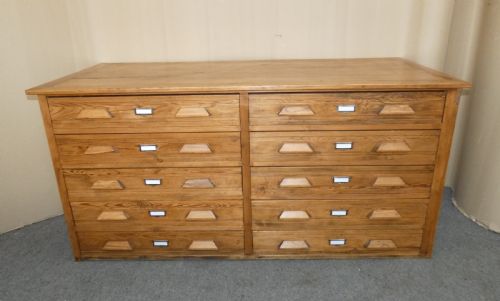


Vintage Map Chest Drawers
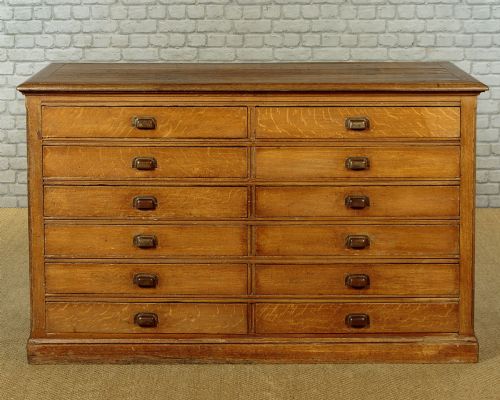
These vintage map chest drawers offer practical storage with multi-drawer layouts suited for organising papers, plans, and small specimens.
Vintage Map Chest Drawers
When you search for vintage map chest drawers, you are looking at large storage units designed to hold flat documents, charts, or specialised collections. The pieces available span several eras, including Victorian, Edwardian, and mid-century utility periods.
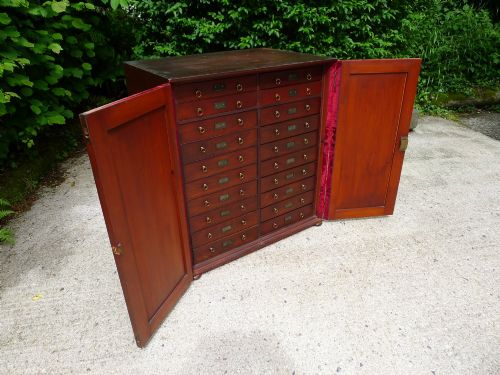
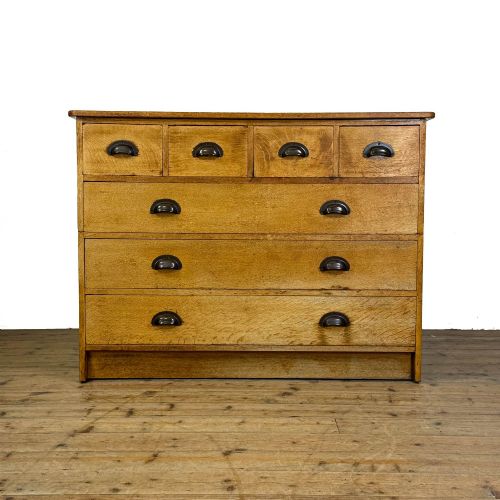
The forms on this page include banks of drawers, plan chests, and collectors cabinets. You are most likely to meet pine, oak, or deal pieces made for artists, offices, or institutional archives.
These items bring functional history into modern rooms, offering numerous shallow or deep compartments. Each piece reflects the utilitarian purpose for which it was originally built.
Materials and construction
Makers utilised sturdy timbers such as pine, oak, mahogany, and deal to build these multi-drawer units. Brass handles and card holders frequently appear on the drawer fronts to assist with organisation.
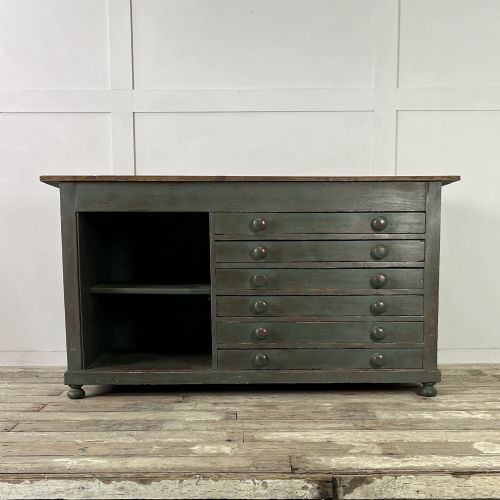
Construction methods focus on durability, featuring solid wood panels and straightforward joinery designed to withstand heavy daily use. Surfaces are often finished with polish, paint, or left in their natural state.
Some cabinets pack up to forty tiny drawers into a single frame, perfectly sized for an obsessive collector.
Assessing quality
Quality in these multi-drawer units rests on the selection of timber and the integrity of the drawer construction. Dense hardwoods like mahogany or well-figured oak sit at the upper end of the range, while deal and painted pine represent more utilitarian workshops.
The refinement of original brass hardware and the smooth operation of numerous drawers distinguish finer pieces from standard utility items.
Brady of Edmonton
The Vintage Map Chest Drawers Glossary
- Plan chest
- A wide, shallow piece of furniture designed specifically for storing architectural drawings and maps flat. These chests feature many stacked drawers.
- Collectors cabinet
- A specialised housing unit with numerous small drawers built for specimens, coins, or insects. These often use fine hardwoods like mahogany.
- Bank of drawers
- A tall or wide assembly containing a large quantity of individual storage compartments. They originate from institutional, shop, or workshop settings.
- Deal
- A softwood timber, typically fir or pine, commonly used in British furniture making. It provides a reliable structure for utilitarian pieces.
- Haberdashers drawers
- Multi-drawer units originally utilised in shops for storing ribbons, threads, and small garments. They often incorporate glass fronts or label holders.
Vintage Map Chest Drawers: Frequently Asked Questions
What were vintage map chest drawers originally used for?
These chests were designed for offices, architects, and artists to store large maps, blueprints, and art flat and protected from light. Many variations were also utilised in shops and institutions to organise small goods or specimens.
Over time, these practical pieces found their way into domestic spaces where their numerous compartments suited modern storage needs.
How do I date a vintage map chest?
Dating relies on observing the timber types, construction methods, and hardware choices present on the cabinet. Pieces from the nineteenth century often feature hand-cut joints and dense hardwoods like mahogany or stained deal.
Later Edwardian and mid-century examples typically utilise pine, oak, or simpler utility designs with standardised metal pulls.
Are these drawers suitable for modern clothes storage?
The shallow drawers found in plan chests and collectors cabinets work well for garments, accessories, or paperwork in contemporary bedrooms and studies. Deeper banks of drawers accommodate bulkier items easily.
Measuring the internal drawer dimensions helps ensure your specific belongings will fit inside the chosen chest.
What is the difference between a plan chest and a collectors cabinet?
Plan chests are built wide and shallow to accommodate large, unrolled sheets of paper, maps, and technical drawings. Collectors cabinets feature much narrower, numerous small drawers designed for tiny specimens and curiosities.
Both fall under the broader category of multi-drawer storage but serve entirely different archival functions.