


Vintage Shop Fitting Drawers
Vintage shop fitting drawers are robust utilitarian storage units built for trade, offering character and practical organisation for modern interiors.
Vintage Shop Fitting Drawers
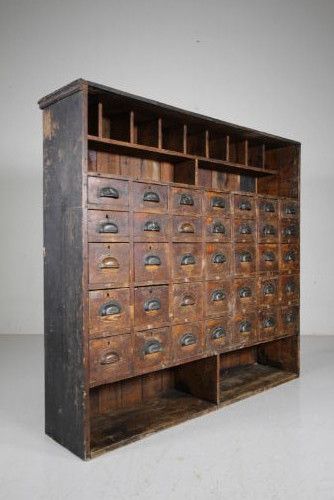
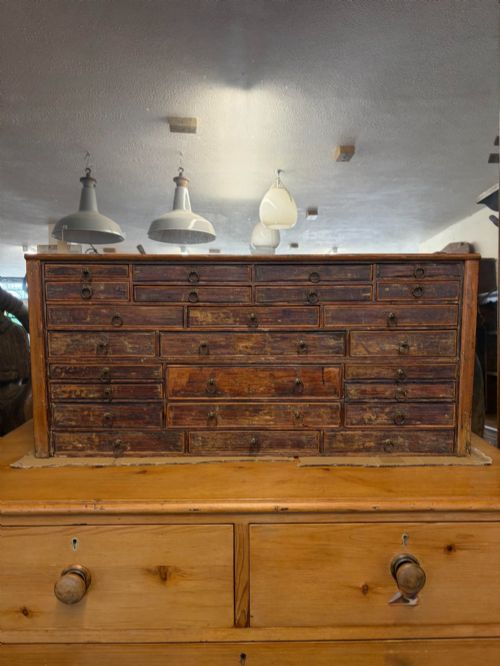
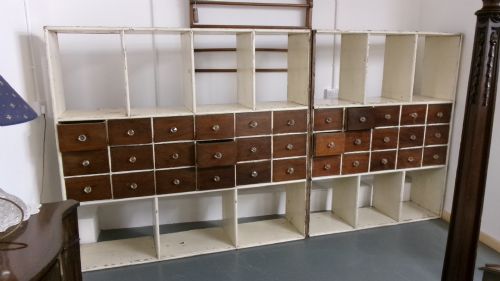
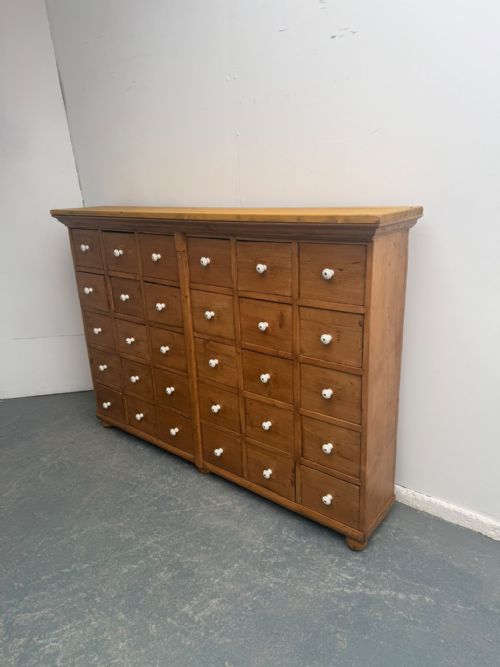
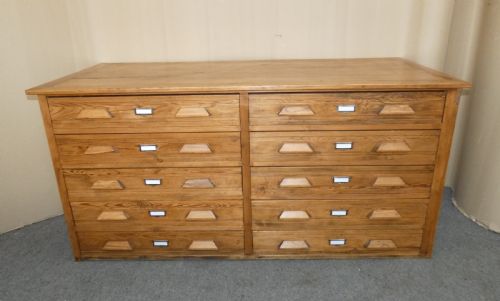
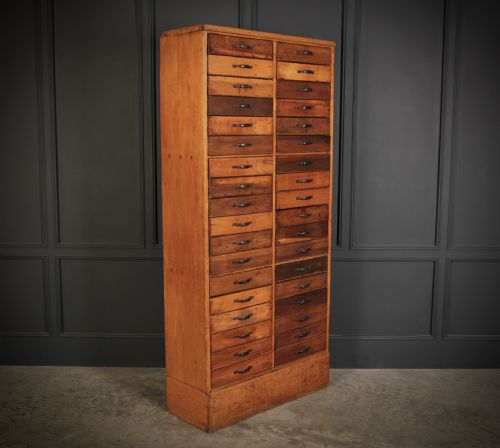
Vintage shop fitting drawers encompass banks of drawers, haberdashery cabinets, shop counters and storage units designed originally for commercial retail environments. Buyers searching for vintage shop fitting drawers frequently encounter tall banks of multi-drawer units and counters originating from the Victorian period through to the 1930s. These pieces include utilitarian workspace furniture built for chemists, drapers, haberdashers and agricultural merchants.
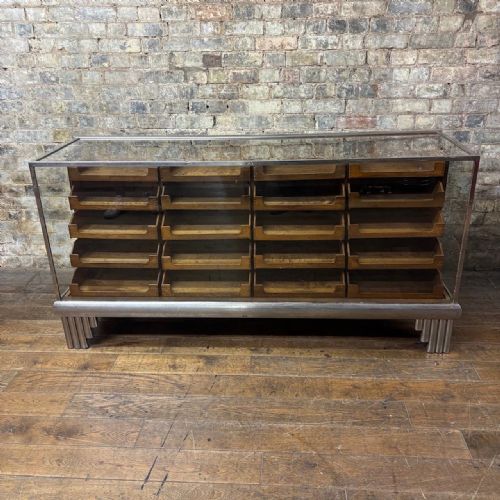
The selection ranges from large multi-drawer banks in pine and oak to glass-fronted display cases and counter-top tills. English, French and Hungarian origins appear across the pieces, reflecting diverse regional commercial uses. Many retain original paint finishes, maker inscriptions or sign-written details from their former trading lives.
How they were made
Constructed primarily from utilitarian timbers such as pine, oak, mahogany, fruitwood, pitch pine and walnut, these commercial units prioritised structural durability. Many feature numerous smaller compartments designed to sort small stock items efficiently, often complemented by metal or brass pulls and iron hardware.
Surface treatments vary from polished hardwood to painted finishes in white, cream, light green and black. Several examples incorporate glass panels for display purposes, chrome detailing, or original sign-writing applied for specific merchants and trades.
One cheerful Victorian pine bank of drawers proudly bears original sign-writing for an agricultural merchant.
What varies in quality
Quality in these commercial units rests upon the integrity of the timber, the complexity of the drawer configuration and the retention of original surface treatments. Larger banks with numerous matching drawers and substantial hardwood construction command attention for their scale and utility.
Provenance and surviving manufacturer details elevate a piece, particularly when combined with untouched original paint or authentic trade sign-writing. The balance between industrial robustness and domestic proportion determines the success of the piece in a modern setting.
Dudley & Co·G H Gledhill Halifax·Luxmore's of Ilfracombe
The Vintage Shop Fitting Drawers Glossary
- Bank of drawers
- A multi-drawer cabinetry unit designed for heavy commercial storage. These pieces typically feature numerous small or medium drawers stacked in large vertical or horizontal frames.
- Haberdashery cabinet
- A retail display and storage unit utilised for sewing supplies, cottons and small drapery goods. They frequently incorporate glass panels or shallow drawers for visible stock sorting.
- Shop counter
- A substantial retail furniture piece combining a display surface with accessible storage drawers or cupboards on the attendant side. They served as the primary transaction point in historic shops.
- Sign-written
- Hand-painted commercial lettering applied to timber surfaces or glass to advertise a specific merchant, trade or contents. This decorative detail records the operational history of the cabinet.
Vintage Shop Fitting Drawers: Frequently Asked Questions
What were vintage shop fitting drawers used for?
These units served as practical storage and display furniture in nineteenth and early twentieth-century retail environments. Merchants utilised them to organise small wares, fabrics, chemist supplies and hardware.
Today, buyers repurpose them in domestic settings for kitchen storage, studio organisation, or hallway furniture where deep multi-drawer capacity is required.
How do I identify a Victorian shop fitting?
Victorian examples typically display solid timber construction in pine, mahogany or walnut, accompanied by period-appropriate brass or iron hardware. Many retain original painted finishes or authentic trade sign-writing from nineteenth-century merchants.
Examining the construction methods inside the drawer boxes and the wear patterns on the drawer pulls helps distinguish nineteenth-century production from later reproductions.
Are haberdashery cabinets suitable for modern homes?
Their substantial depth and multiple shallow compartments make them exceptionally practical for organising clothes, craft materials or kitchen utensils. The distinctive glass fronts and multi-drawer fronts provide a strong visual focal point in a room.
Placement requires careful measurement of floor space and ceiling height, particularly with larger banks of drawers or counters originating from commercial premises.
How should I care for painted shop fittings?
Painted surfaces benefit from gentle dusting with a dry or slightly damp cloth, avoiding harsh chemical cleaners that might lift historic paint layers. Maintaining stable room humidity protects both the underlying timber and any original sign-writing.
Unfinished or waxed pine and oak sections require occasional nourishment with suitable furniture wax to preserve the condition of the wood.