

Industrial Storage Cabinet
An industrial storage cabinet brings utilitarian function and rugged character into a modern interior.
Industrial Storage Cabinet
When searching for an industrial storage cabinet, you encounter heavy-duty furniture designed originally for commercial, workshop, or office use. These pieces span multiple decades and centuries, ranging from the nineteenth century through the early decades of the twentieth century.
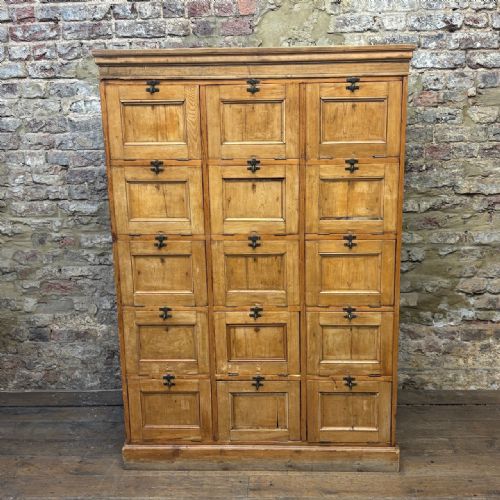
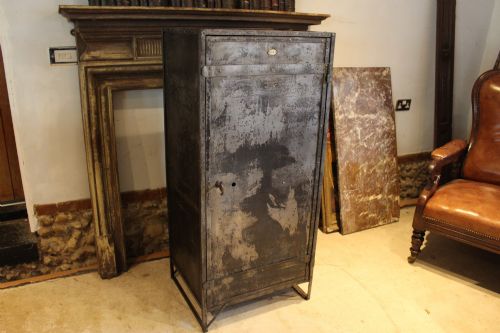
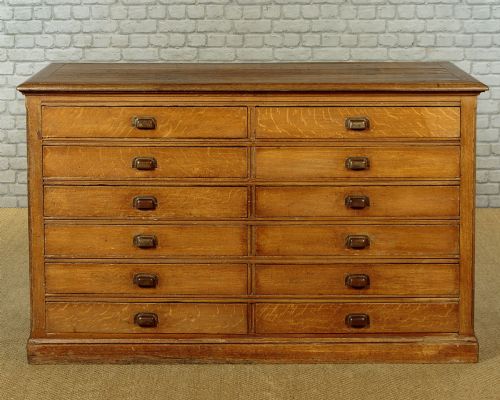
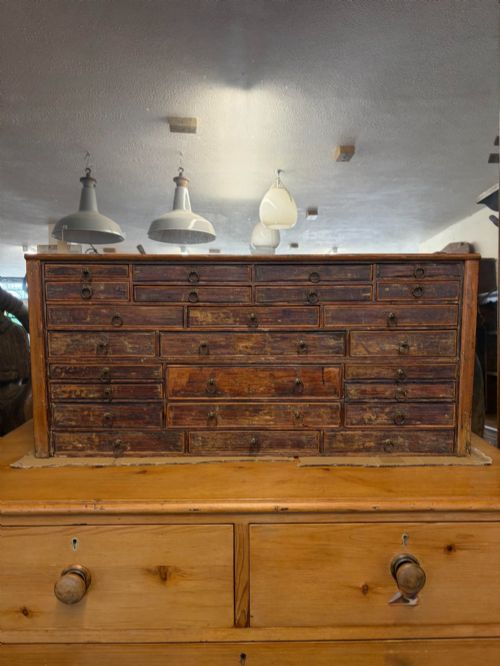
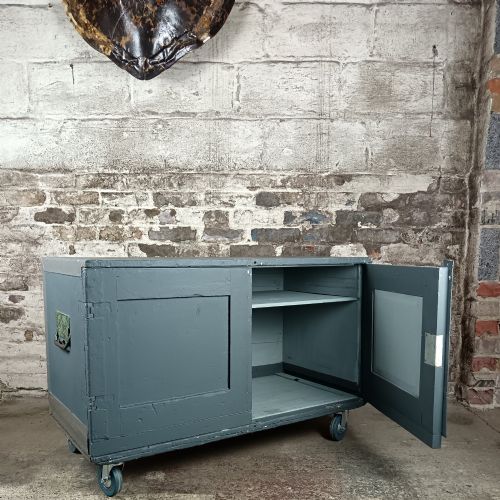
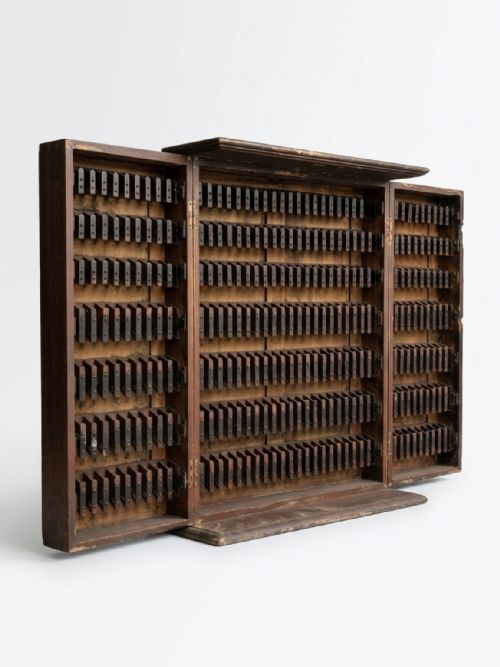
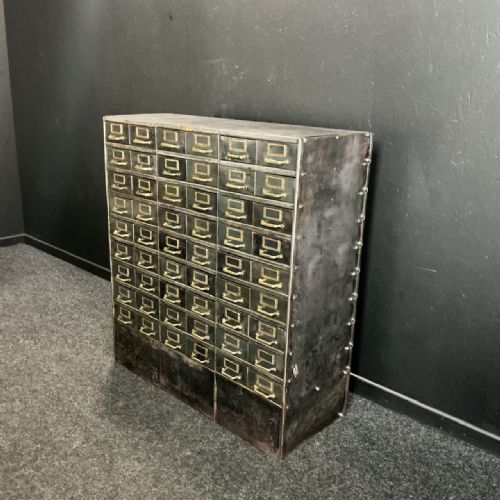
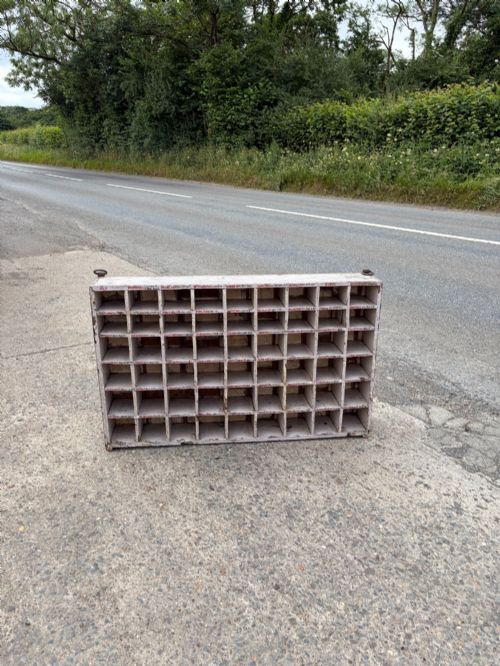
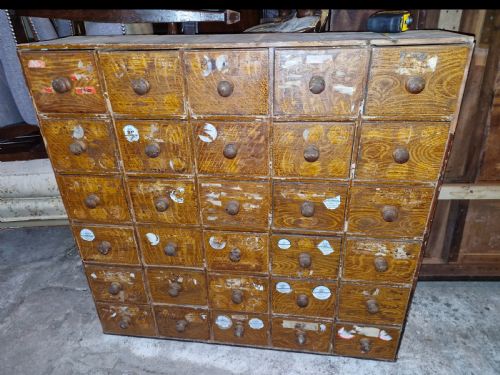
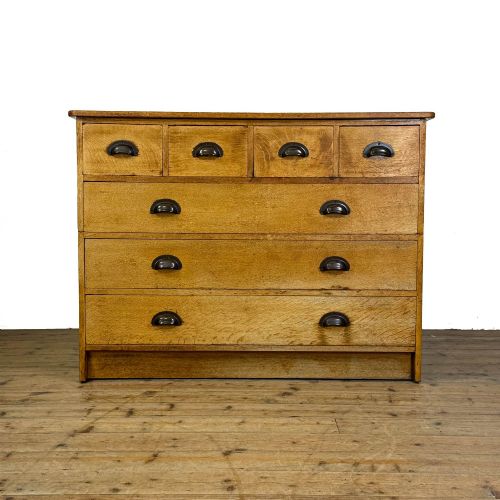
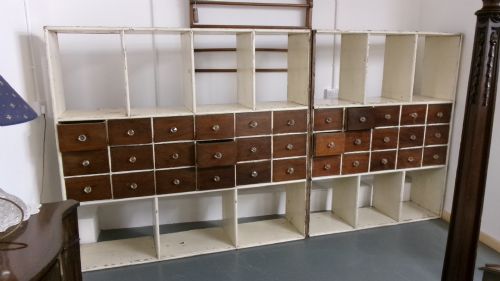
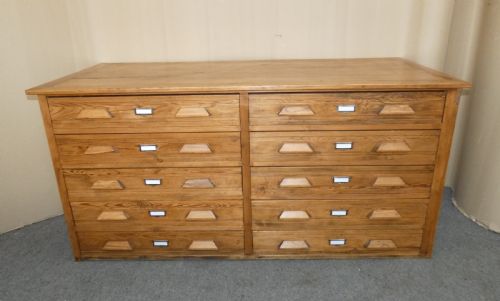
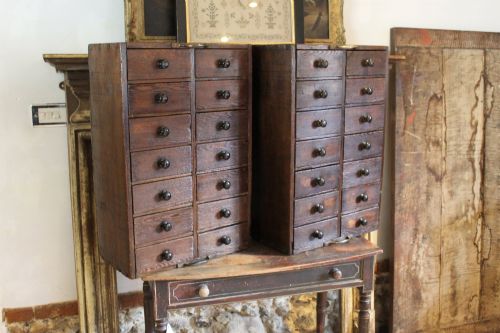
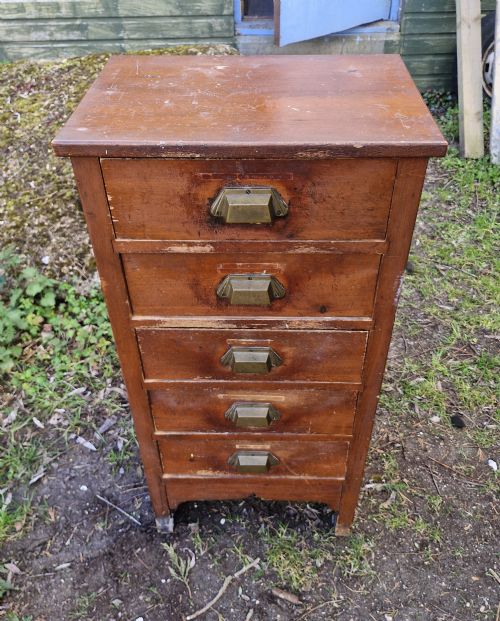
The selections on this page heavily feature banks of drawers, filing cabinets, and storage cupboards. Common configurations include multi-drawer haberdashers and chemists' shop fittings, alongside tall wooden pigeon holes and metal lockers.
Origins vary across British, French, and general commercial workshops. You find specialised items such as plan chests, railway ticket cupboards, and engineers' cabinets constructed for specific trades.
Materials and Construction
Construction relies heavily on durable hardwoods and softwoods like pine, oak, mahogany, fruitwood, and pitch pine. Metal elements incorporate steel, iron, brass, aluminium, and painted sheet metal.
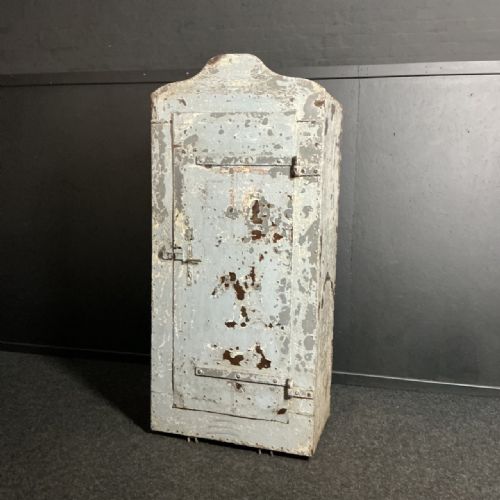
Makers utilised robust joinery alongside functional hardware, fitting pieces with brass handles, lockable cages, and reinforced metal frames. Surfaces frequently retain original paint, distressed finishes, or remnants of hand-painted sign-writing.
Listings combine timber varieties such as pine, oak, and mahogany with industrial metals including steel, iron, and brass across the Victorian and 1930 periods.
Factors of Quality
Quality in these utility pieces rests upon the integrity of the original construction and the scale of the bank. Larger multi-drawer assemblies and complex internal mechanisms like letter filing systems demonstrate superior commercial manufacturing.
The retention of original surfaces, such as untouched paint, authentic period brass handles, and maker-specific stamps or labels, elevates the standing of an individual piece.
Luxmore's of Ilfracombe·D Napier & Sons
The Industrial Storage Cabinet Glossary
- Bank of drawers
- A multi-drawer cabinetry unit designed to hold large quantities of small components or documents. These units are commonly found in workshops, chemists, and drapery shops.
- Plan chest
- A wide, shallow cabinet built specifically for storing architectural plans, maps, or large artworks. They are constructed in sections with numerous thin drawers.
- Pigeon holes
- An open grid of small rectangular compartments used for sorting mail, tickets, or paperwork. They appear as standalone units or integrated into larger desks and cabinets.
- Campaign chest
- A portable storage case or trunk built in sections with recessed handles for ease of transport during military deployment. They are typically fashioned from sturdy timbers with brass reinforcement.
Industrial Storage Cabinet: Frequently Asked Questions
What is an industrial storage cabinet?
An industrial storage cabinet is a heavy-duty utilitarian piece built for commercial, office, or workshop organisation.
These items encompass banks of drawers, steel cupboards, and plan chests originating from the nineteenth and early twentieth centuries.
How do I identify the period?
Dating relies on materials, construction techniques, and hardware styles. Nineteenth-century examples often feature solid pine or oak with hand-cut joins, while twentieth-century versions introduce steel and aluminium.
Patent labels, distinct brass handles, and remnants of trade paint provide further chronological markers.
Where were these cabinets used?
Original locations included chemists, drapery shops, railway stations, workshops, and offices. Each trade required specific storage configurations like shallow plan drawers or numerous small pigeon holes.
Commercial environments demanded durable timber and metal construction to withstand heavy daily use.
How do I care for wooden and metal surfaces?
Preserving the surface involves maintaining stable indoor humidity to protect vulnerable timbers like pine and oak. Gentle cleaning avoids stripping original patinas, distressed paint, and historic sign-writing.
Metal components benefit from light dusting and protection against moisture to prevent oxidation.