



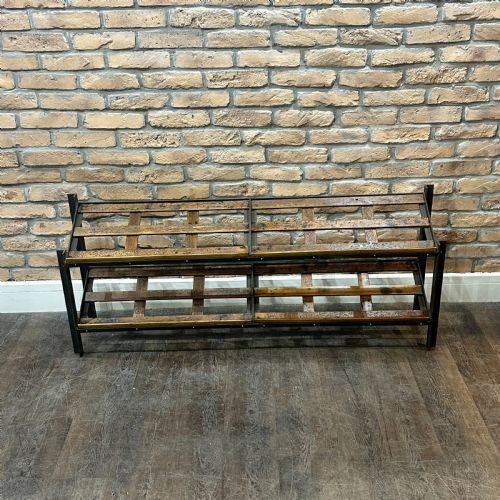


Industrial Shop Display
Industrial shop display pieces are utilitarian commercial fittings from the nineteenth and early twentieth centuries that bring robust character to modern rooms.
Industrial Shop Display
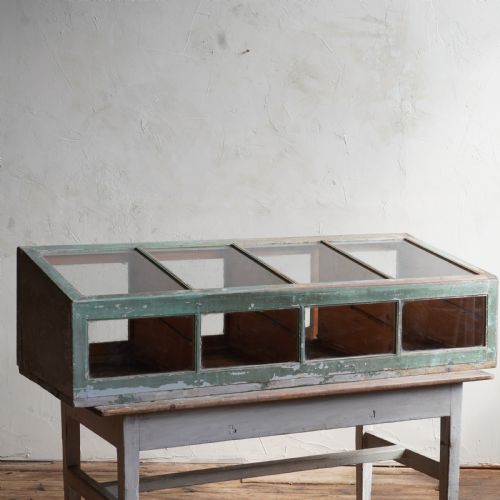
Industrial shop display items encompass trade signs, countertop cabinets, haberdashery drawers, and millinery stands sourced from commercial environments spanning the Victorian era through the Art Deco period. Buyers seeking these items will frequently encounter countertop display cabinets, glass-fronted drawer banks, and metal display stands originally built for hardware stores, drapers, and chemists.
The selection ranges from heavy cast iron and brass stands to painted pine storage units and freestanding steel cabinets. These functional commercial antiques served daily retail purposes before transitioning into domestic settings for storage and decorative display.
Materials and construction
Construction relies heavily on durable metals like cast iron, brass, steel, and aluminium combined with timber such as pine and oak. Glass panels and leather details also appear across cabinets and display cases, reflecting the practical demands of trade use.
Makers utilised cast and wrought techniques for structural metal stands, while cabinetry work involved dovetailed drawer construction and glazed wooden framing. Surface finishes typically include distressed paint, polished brass, and natural patinated wood developed through decades of commercial handling.
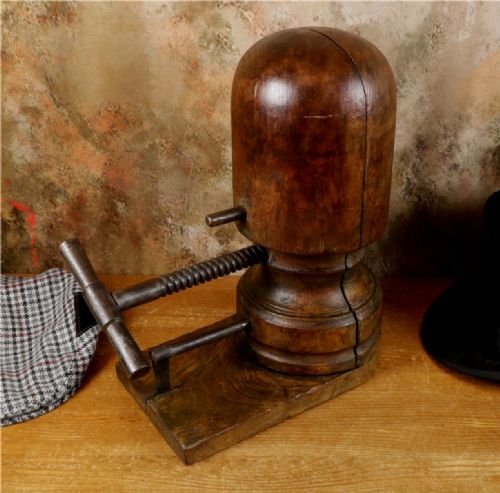
Aluminium hat blocks once shaped millinery felt in bustling workshops before retiring to domestic mantelpieces as unexpected modern sculpture.
Assessing quality
Quality in industrial shop display pieces rests upon the integrity of original mechanisms, such as working glass doors, smooth-running bank of drawers, and intact hardware. Pieces retaining their original manufacturer markings, trade lettering, or authentic patinated surface finish command higher regard among collectors.
Structural robustness distinguishes superior examples from lesser items, particularly in heavy cast iron stands, brass mountings, and glazed cabinets. The balance between utilitarian strength and fine detailing, such as moulded cornices or cast insignia, defines the upper tier of the range.
Gerwin & Co Birmingham·Josef Herzog·Siegel
The Industrial Shop Display Glossary
- Haberdashery
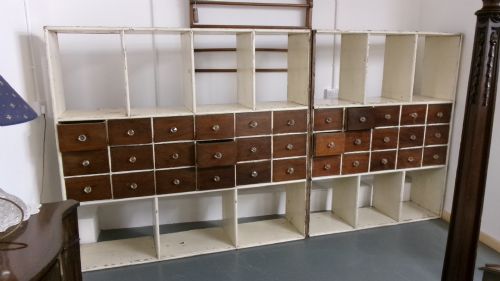
- Commercial storage furniture featuring numerous shallow drawers with glass fronts or brass card holders designed for small textiles and notions. These banks of drawers allowed shopkeepers to sort and display small wares efficiently.
- Milliner's hat stretcher
- A wooden or aluminium device used to shape and size hats in a maker's workshop. They often feature adjustable mechanisms and double as sculptural display stands.
- Trade sign
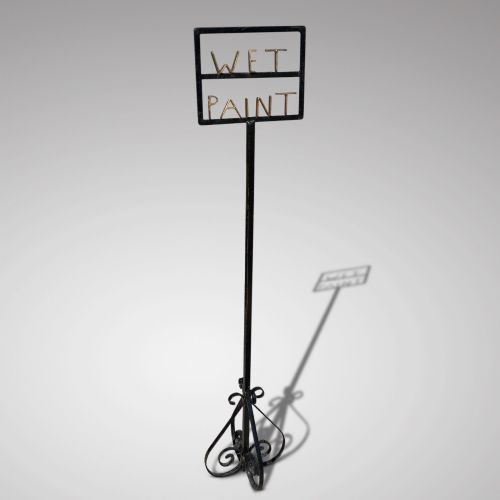
- A painted or metallic sign intended to advertise a specific commercial business or profession from the street or interior wall. Examples range from wrought iron wet paint notices to large double-sided pocket watch clocks.
- Countertop display cabinet
- A glazed enclosure placed on a shop counter to protect small merchandise while keeping it visible to customers. These cabinets often feature timber frames and hinged rear doors.
Industrial Shop Display: Frequently Asked Questions
What were industrial shop displays used for?
These pieces functioned as practical commercial fixtures in nineteenth and early twentieth-century shops, including chemist stores, drapers, and milliners. They organised stock, housed hardware samples, and presented goods directly to customers.
Over time, commercial spaces modernised, and these durable fittings transitioned into residential homes where they serve as storage cabinets, shelving units, and decorative focal points.
How do I date an industrial display piece?
Dating relies on stylistic clues, manufacturing techniques, and materials associated with specific eras such as the Victorian period, Edwardian era, or Art Deco movement. Signage typography, patent marks, and maker plaques also provide reliable chronological markers.
Comparing construction methods, such as early cast iron framing versus later steel fabrication, helps narrow down the decade of production between the late nineteenth century and the 1930s.
How should I clean aged brass and iron?
Preserving the historic patina is essential, so heavy chemical cleaning or aggressive polishing should generally be avoided on antique metalwork. A gentle dusting with a dry cloth or light application of microcrystalline wax helps protect exposed steel, brass, and cast iron from further oxidation.
Painted surfaces benefit from minimal intervention, keeping the original distressed layers intact without stripping away the history of the object.
Can I use haberdashery drawers in a modern kitchen?
Bank of drawers and shop counters from drapers' shops adapt exceptionally well to domestic interiors like kitchens, studies, and living rooms. Their shallow compartments provide practical storage for cutlery, stationery, or craft supplies while adding strong architectural character.
Ensuring the timber is clean and stable makes these industrial units fully functional for everyday modern living without losing their historic commercial identity.