






Vintage Store Fittings
Vintage store fittings are the counters, cabinets and banks of drawers that once furnished traditional shops, sought after for their robust commercial practicality.
Vintage Store Fittings
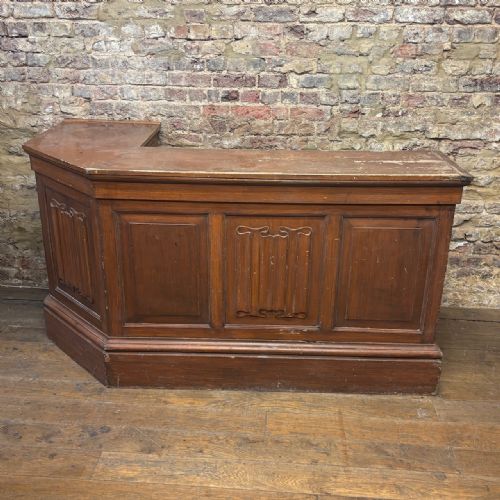
Vintage store fittings encompass the heavy commercial furniture designed for nineteenth and early twentieth century retail spaces, from haberdashery chests to large shop counters. Buyers seeking these pieces will find solid timber items built to withstand daily trade.
The selection here draws heavily on counters and display cabinets from the Victorian and Edwardian eras, alongside later pieces from the 1920s and 1930s. Oak, mahogany and pine form the backbone of these listings, often paired with glass and brass.
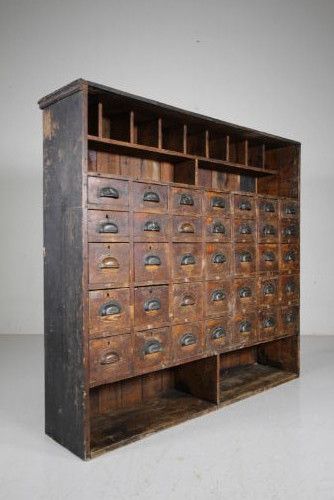
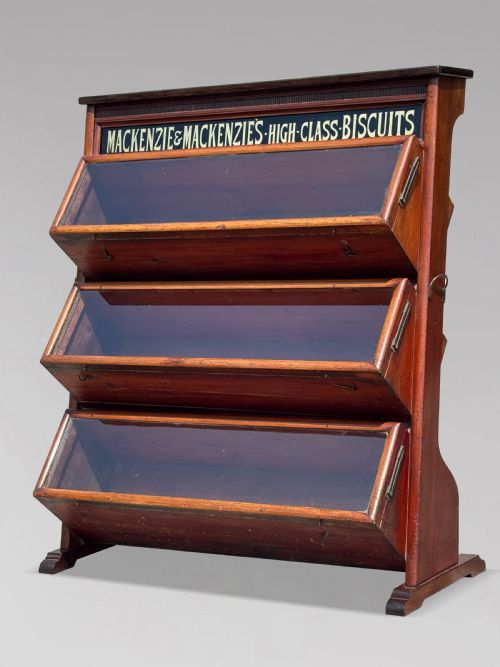
Specialist forms such as banks of drawers and display stands appear alongside library ladders and countertop dispensers. These utilitarian objects now find a second life in domestic and commercial interiors alike.
How they were made
Makers utilised dense hardwoods such as mahogany, oak and fruitwood alongside pine carcasses to build furniture capable of enduring heavy commercial use. Brass framing and iron hardware reinforced structural points on counters and display cases.
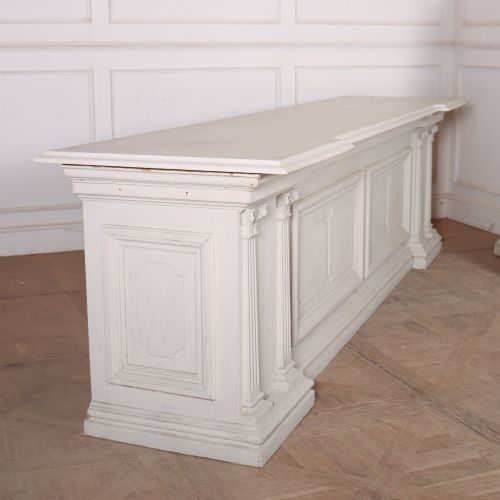
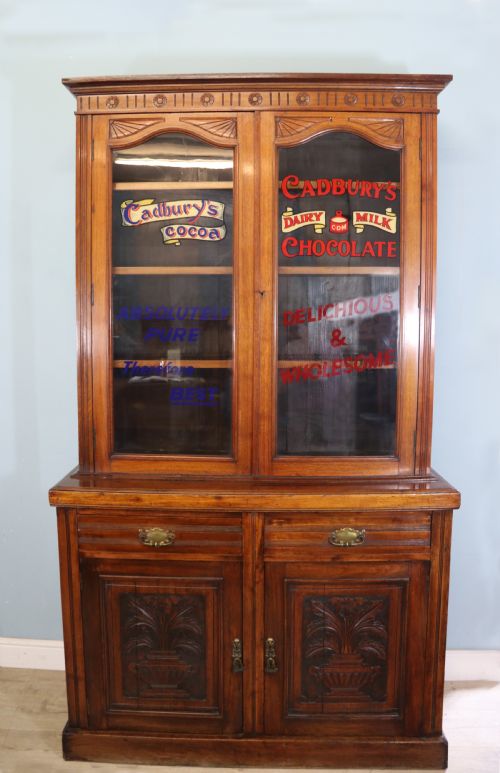
Glass panels were integrated into cabinets and counters to showcase wares while keeping them protected from dust and handling. Painted finishes on pine and Italian counters provided a durable surface layer that took on character through decades of use.
A solitary paper roll dispenser waits on the counter, ready for a shop assistant who finished their shift a century ago.
What varies in quality
Quality in store fittings rests upon the integrity of the original timber and the retention of working brass or iron hardware. Pieces retaining original glazing and functional elements command greater interest than those altered over time.
The scale of a bank of drawers or a shop counter dictates its presence in a room, with larger items requiring substantial workshop construction to remain stable. Maker attribution, visible in brass plaques or branded drawer pulls, distinguishes standard utility pieces from documented workshop output.
Saml. Elliott & Sons
The Vintage Store Fittings Glossary
- Haberdashery cabinet
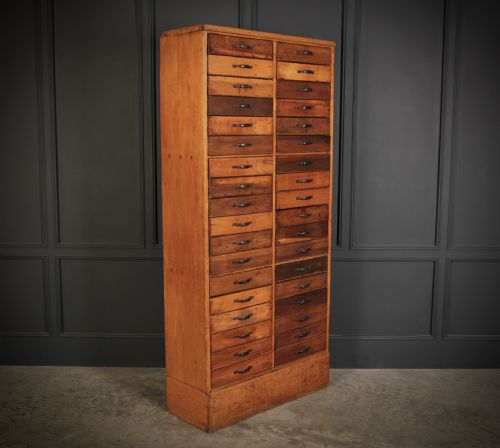
- A multi-drawer chest with glass fronts or pull-out trays designed for storing small sewing goods and ribbons. These pieces are prized for their numerous small compartments.
- Shop counter
- A long timber surface used for serving customers and displaying goods, often fitted with drawers or shelving to the rear. They form the central workspace of traditional retail interiors.
- Display counter
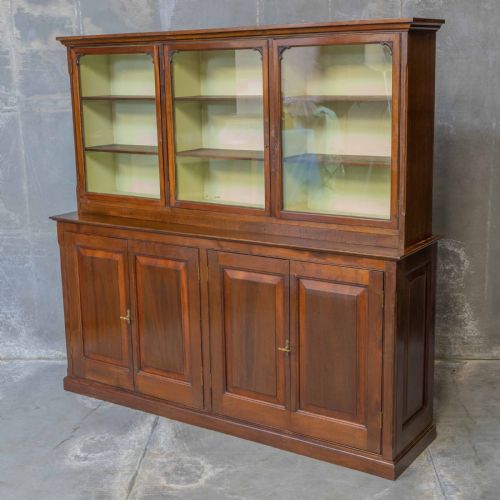
- A glazed cabinet top mounted on a wooden base that allows customers to view merchandise from above. They were common in jewellers and drapers shops.
- Bank of drawers
- A large assembly of small storage drawers stacked in rows, originally used behind a counter or in a workshop for stock organisation. Their repetitive arrangement creates a strong visual grid.
Vintage Store Fittings: Frequently Asked Questions
What rooms suit a shop counter?
Large shop counters function well as kitchen islands or reception desks, providing an expansive timber working surface and built-in storage underneath. Their substantial depth requires an open room with ample clearance on all sides.
Shorter counters or display stands fit into smaller dining spaces or hallways as console tables. The weathered patina of the timber adds warmth to contemporary and traditional interiors alike.
How do I maintain oak furniture?
Solid oak surfaces respond best to occasional cleaning with a damp cloth followed by natural beeswax to nourish the dry timber. Avoid placing these items near direct heat sources that can cause old wood to split.
Protecting the surface from excessive moisture preserves the original polish and painted finishes. Gentle care ensures the historic patina remains intact without stripping away the marks of past trade.
How do I date a cabinet?
Dating relies on timber choice, construction methods, and hardware styles visible across the piece. Victorian and Edwardian examples often feature heavy brass pulls, dovetailed drawer construction, and thick timber carcases.
Later pieces from the 1920s and 1930s incorporate lighter metal framing and distinct art deco or industrial lines. Examining the interior linings and maker marks provides further clues to the manufacturing era.
Were these used in homes?
These pieces were built exclusively for commercial environments such as drapers, grocers, and hardware stores. They spent decades supporting daily retail trade before entering the antiques market.
Their heavy-duty construction made them durable enough to transition into residential settings once old high street shops closed. Today, domestic buyers repurpose them for practical storage and display.