




1930s Shop Fittings
These 1930s shop fittings bring commercial utility and distinct interwar style straight into domestic interiors.
1930s Shop Fittings
1930s shop fittings comprise utilitarian commercial furniture and display pieces designed for retail environments during the interwar period. Buyers searching this phrase look for authentic fixtures that served merchants and department stores across the era.
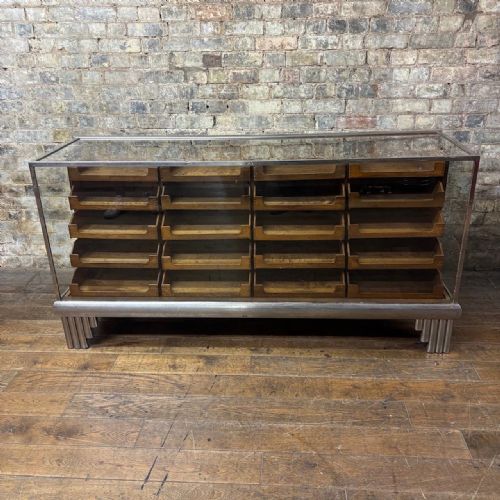
The selections available here lean heavily into practical retail forms like haberdashery counters, display cabinets, and display tables. Alongside these large fixtures, smaller items such as mannequin busts, hat stands, and vending machine mirrors appear.
Origin and design influences span both British commercial production and 1930s French styling. Pieces often combine structural timber frames with transparent glazing to maximise visibility for merchandise.
How they were made
Construction relies upon a robust combination of hard timbers such as oak, mahogany, and burr walnut for the primary frames and cabinetry. These woods provide the structural strength required for heavy daily commercial use.
Metal components play a major role in framing and detailing, utilising brass, chrome, aluminium, bronze, and general metalwork to create clean geometric lines. Glass panels and painted plaster elements complete the typical material palette.
Even a vending machine mirror from this era managed to look like an intentional piece of commercial art.
What varies in quality
The tier of a piece depends heavily on the ambition of its commercial maker and the sophistication of its material combination. Simple utility builds contrast sharply with signed examples bearing the marks of established outfitters.
Material selection dictates much of the distinction between standard units and high-end retail displays. The integration of fine hardwoods like burr walnut or mahogany alongside polished chrome and brass elevates a piece above basic shop inventory.
Dudley & Co·Saml. Elliott & Sons·E. Pollard & Co. Ltd.
The 1930s Shop Fittings Glossary
- Haberdashery counter
- A long display unit traditionally featuring multiple drawers with glass fronts or tops for viewing small goods. These counters allow customers to inspect items while keeping stock organised.
- Art Deco
- A design style characterised by sleek geometric shapes, streamlined forms, and modern industrial materials. It heavily influences the aesthetic of interwar commercial fittings.
- Display cabinet
- An enclosed piece of furniture with glass panels designed to showcase merchandise or objects securely. They utilise internal shelving to maximise vertical presentation space.
- Mannequin bust
- A sculptural upper-body form used historically for displaying garments, hats, or accessories in shop windows. They are typically rendered in painted plaster or similar moulded materials.
1930s Shop Fittings: Frequently Asked Questions
What are 1930s shop fittings?
These pieces are commercial fixtures and furniture built for retail spaces during the 1930s, designed to store and display merchandise.
They encompass large items like haberdashery counters and display cabinets, as well as smaller advertising figures and mirrors.
How were haberdashery counters used?
Merchants used haberdashery counters to hold small textiles, buttons, and accessories in view of customers while keeping stock secure.
The glass fronts and drawer configurations allowed shoppers to browse goods without handling them directly.
How do I style shop fittings at home?
Display cabinets and counters suit large kitchens, living spaces, or hallways where they provide practical surface and storage area.
Their utilitarian design pairs well with contemporary interiors by introducing industrial timber and metal textures.
How do I identify French pieces?
French pieces from this period often display specific styling traits associated with 1930s French design and advertising culture.
Items like stacking bookcases and advertising mannequin busts reflect distinct continental retail aesthetics.