


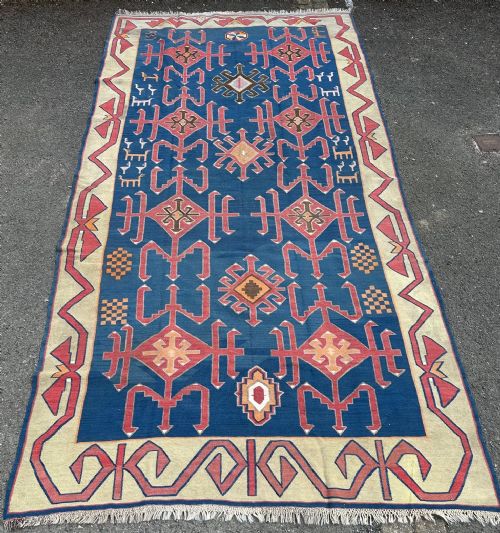
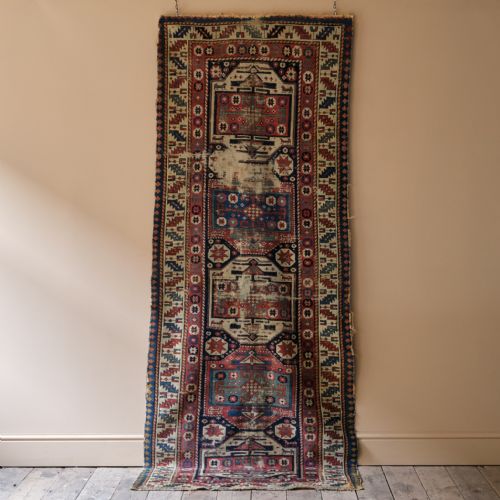


Indigo Wool Runner
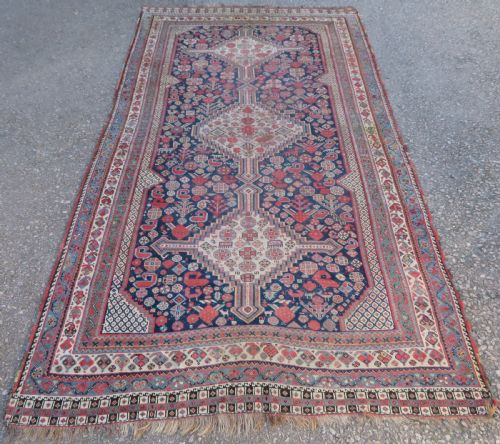
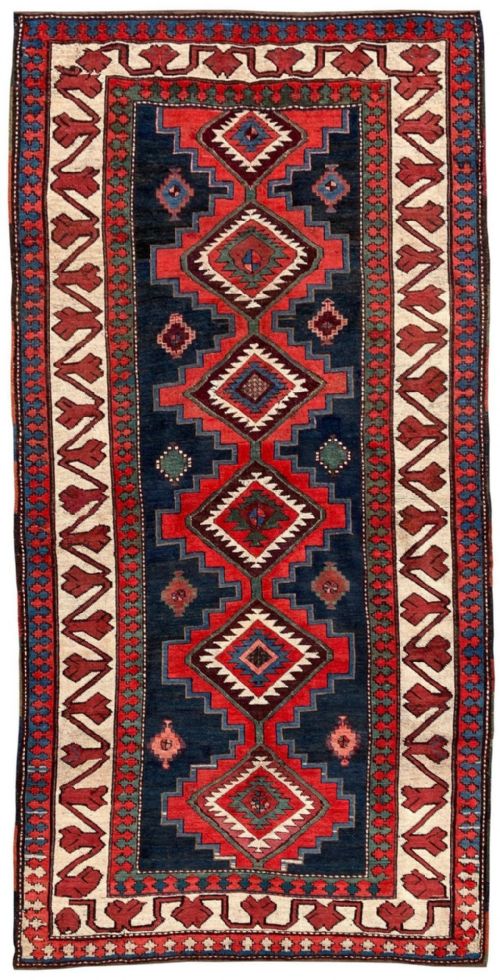
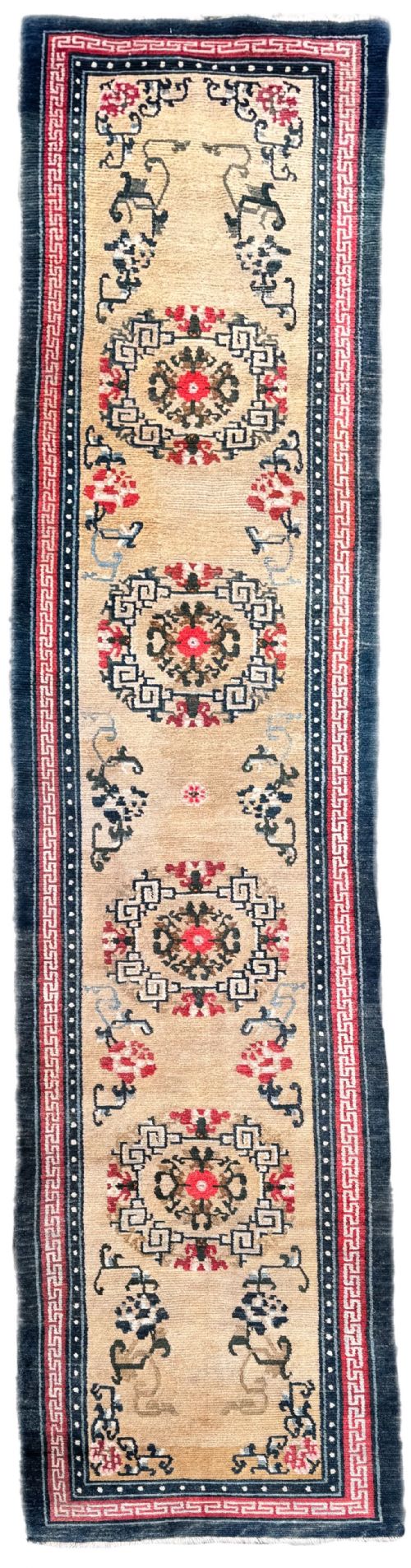
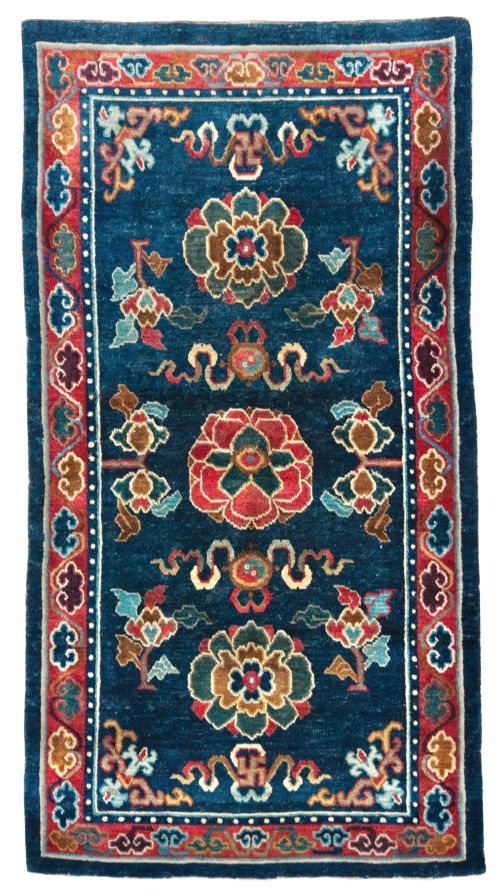
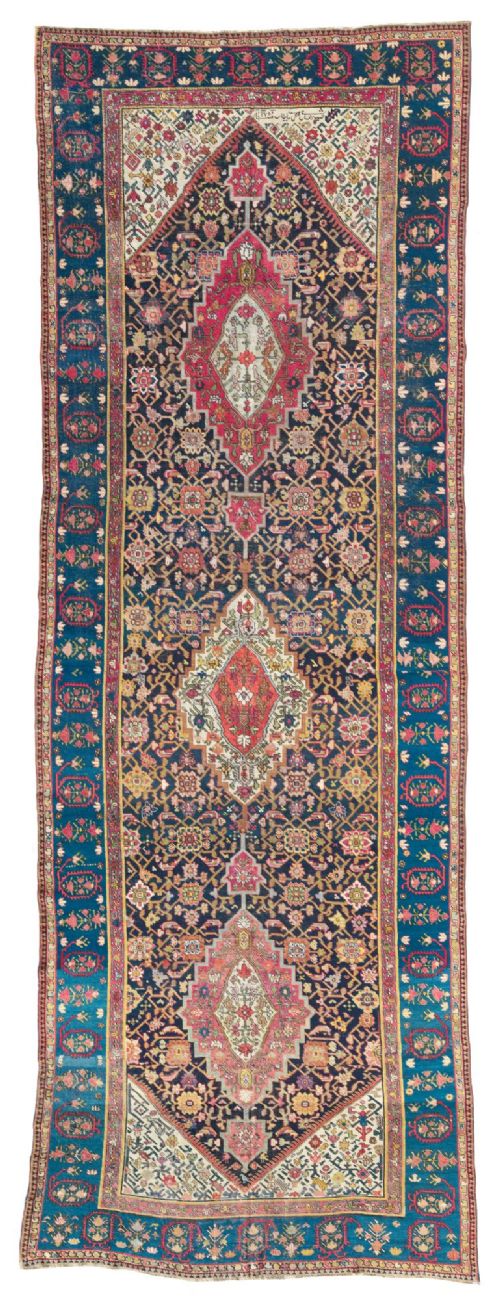
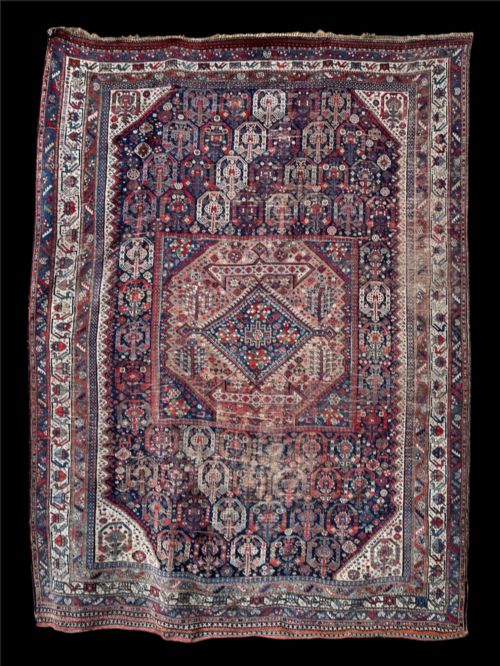
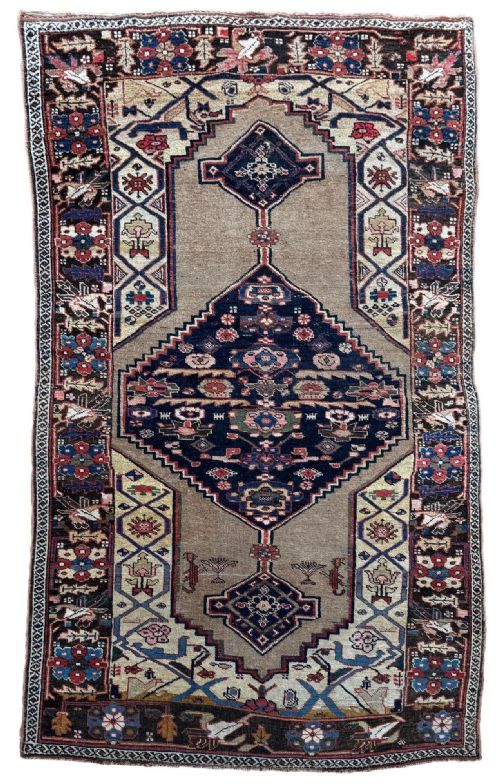
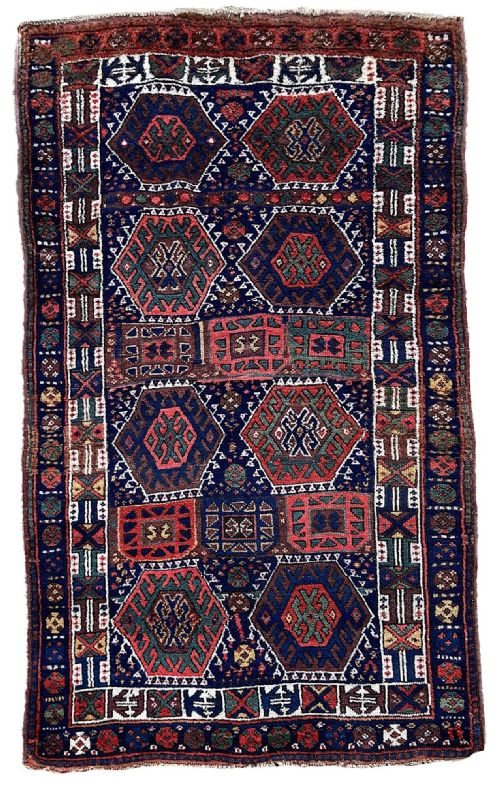
An indigo wool runner brings deep vegetal blue tones and tribal warmth to a hallway, grounding a floor with centuries of nomadic artistry.
Indigo Wool Runner
An indigo wool runner encompasses elongated tribal and village woven floor coverings defined by deep blue hues and narrow proportions suited for corridors. The selections on this page draw from Persian, Caucasian, and Central Asian weaving traditions spanning the nineteenth and early twentieth centuries.
Buyers encounter long formats woven by Kurdish, Baluch, Caucasian, and Tibetan makers, utilising traditional geometric medallions, repeated stars, and stark field patterns. These textiles served practical purposes in nomadic tents and village homes before finding appreciation as decorative elements in modern interiors.
How they were made
Weavers relied on hand-spun wool and occasionally goat hair, knotting or flat-weaving the foundations by hand on horizontal or vertical looms. Natural dyes provided the characteristic palette, utilising plant-derived indigo for the deep blues alongside madder reds and earth tones.
The construction combined sturdy wool warps and wefts to withstand heavy foot traffic in domestic spaces. Detail work often incorporated supplementary weft-wrapping or flat-weave kilim techniques to create crisp geometric borders and motifs.
One listed Kazak rug proudly bears the label of being crooked, proving that historic village weavers embraced charming imperfections.
What varies in quality
Quality rests primarily in the saturation and depth of the natural indigo dye and the clarity of the drawing. Subtle variations in shade, known to collectors as abri, signal genuine natural dyeing processes rather than uniform synthetic coloration.
The integrity of the wool handle, the tightness of the knotting or weave, and the preservation of the original outer borders dictate the longevity and collector standing of each piece. Finer tribal examples display precise symmetry within their rustic village geometry.
The Indigo Wool Runner Glossary
- Abri
- A natural variation of colour in a rug, caused by differences in dye batches or hand-spun wool taking up dye unevenly. This tonal shading is highly prized by collectors for its organic depth.
- Kelleh
- A large, room-size or elongated carpet format, typically longer than it is wide, originating from Persian and Caucasian weaving centres. These pieces often serve as extended hallway runners.
- Kelim
- A flat-woven carpet or rug made without a pile, produced by tightly interweaving warp and weft strands. They are lightweight and traditionally used as floor coverings or tent dividers.
- Pushti
- A small scatter rug or mat, often used as a cushion or small floor covering by nomadic tribes. They frequently feature intricate regional medallions.
- Warp
- The vertical foundation threads stretched lengthwise on a loom before weaving begins. The density of these threads determines the structural backbone of the rug.
Indigo Wool Runner: Frequently Asked Questions
Where should I place a long runner?
These narrow textiles suit high-traffic transitional zones such as hallways, corridors, and galley kitchens where a splash of historic colour anchors the floor.
Their elongated proportions also function effectively alongside narrow beds or in spacious entryways, protecting wooden floorboards while adding warmth.
How do I clean an antique wool rug?
Regular gentle vacuuming without a rotating beater bar prevents dust accumulation in the wool pile. Professional specialist cleaning remains essential for addressing deeper soil.
Avoid harsh chemical detergents or excessive water immersion, which can damage natural dyes and weaken fragile hand-spun foundations.
Are natural dyes easy to spot?
Natural indigo and plant-based colours display a rich, multifaceted quality under natural light. They mellow gracefully over decades rather than fading flatly like synthetic counterparts.
Subtle tonal shifts within a single field of colour often indicate artisan dyeing methods utilising organic materials.
How do I date an older tribal runner?
Dating relies on assessing the wool quality, the chemical composition of the natural dyes, and the structural characteristics of the weave. Regional design motifs also provide clues to the specific decade or century of production.
Comparative study of known tribal weaving traditions helps narrow the period of origin when documentation is absent.