

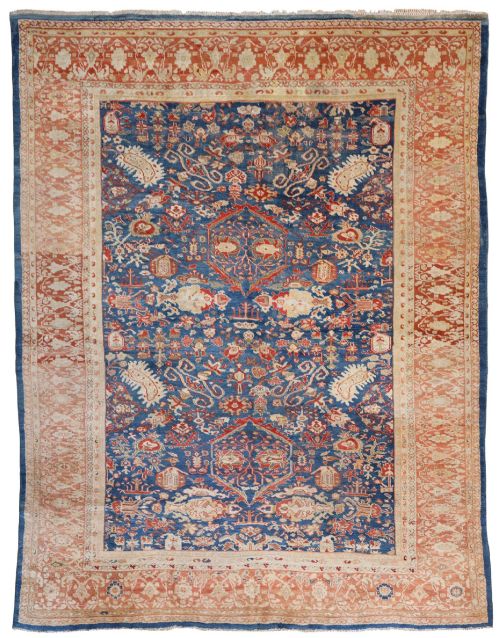
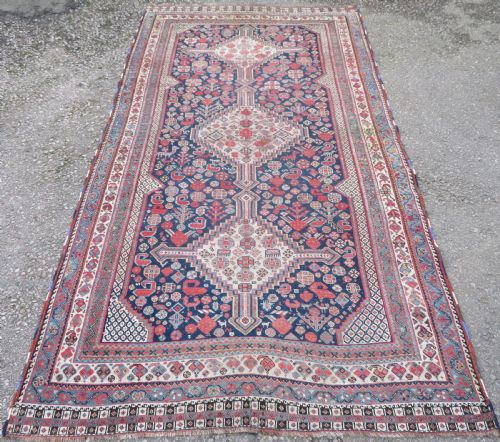
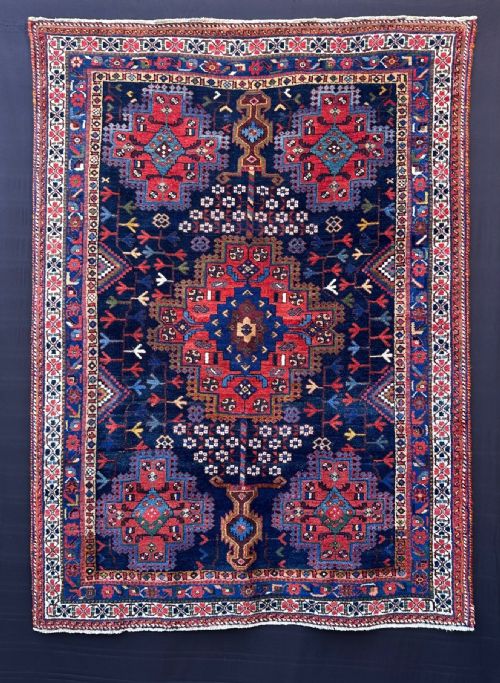
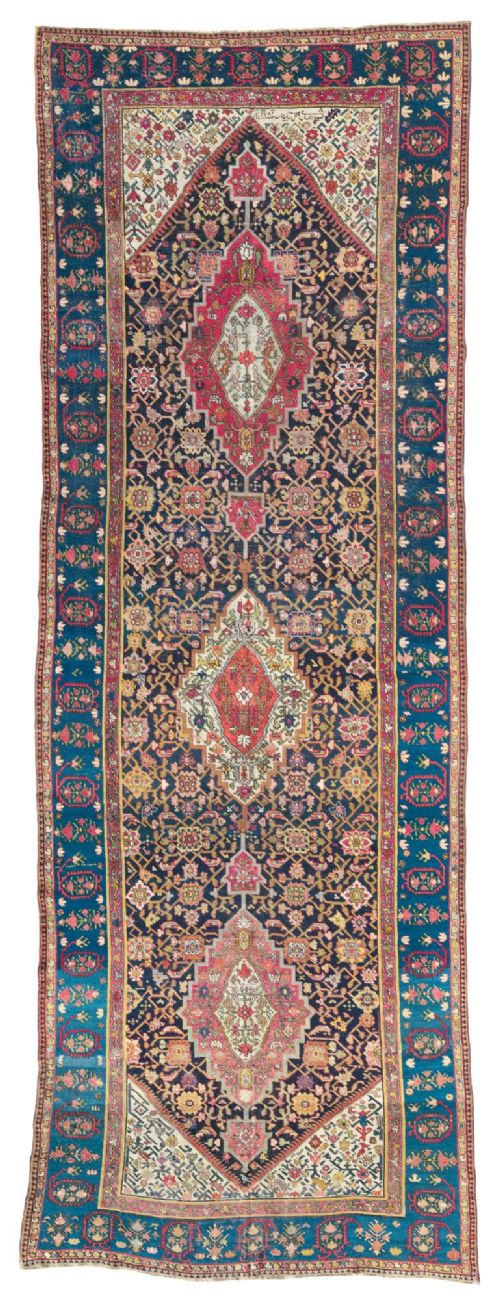




Indigo Wool Persian Carpet
An indigo wool persian carpet brings deep saturated blues and nomadic village patterns into a room, grounding the space with centuries of weaving heritage.
Indigo Wool Persian Carpet
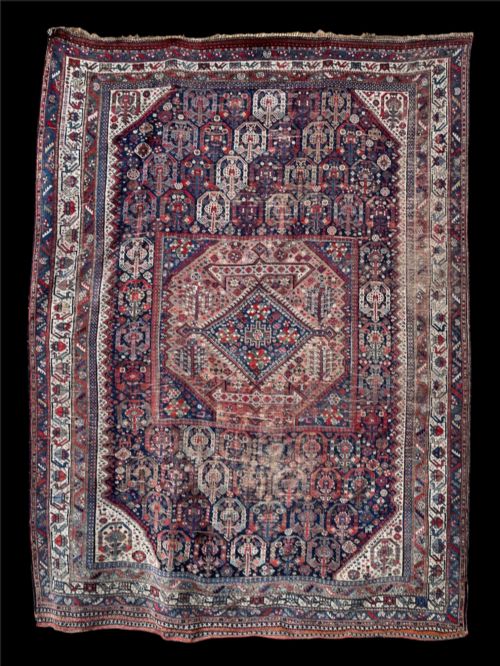
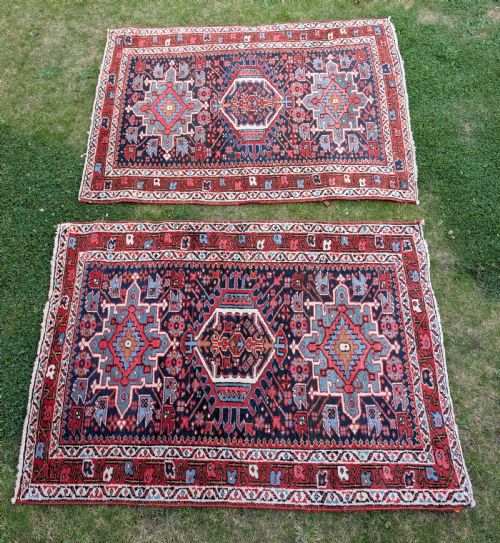
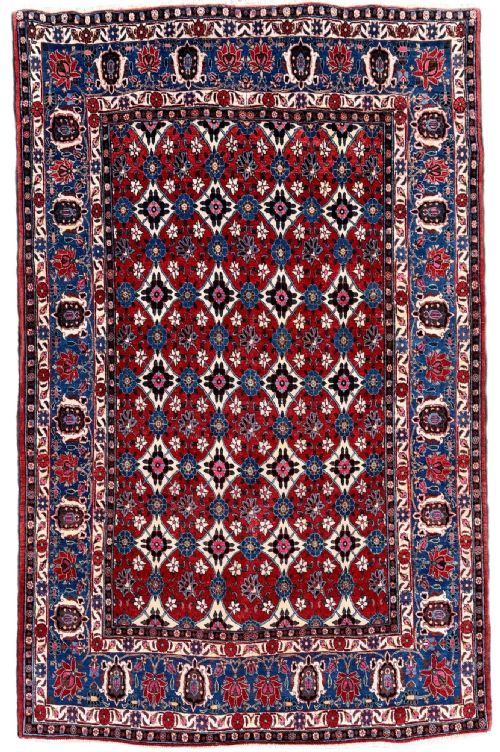
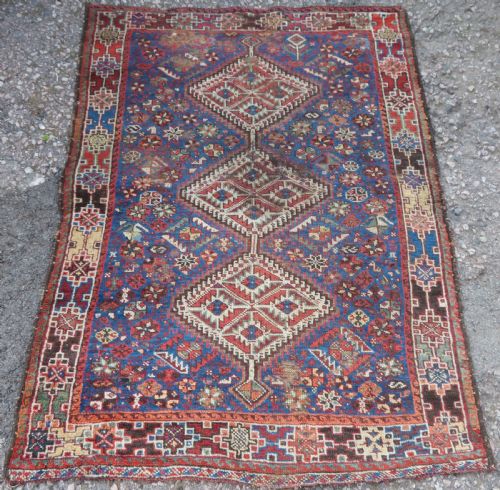
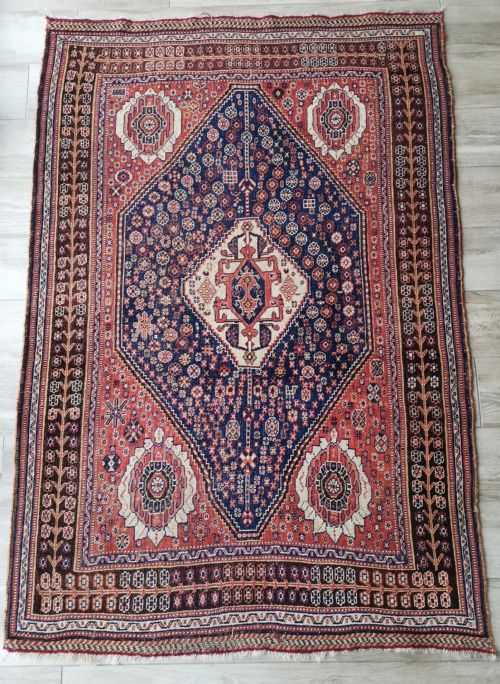
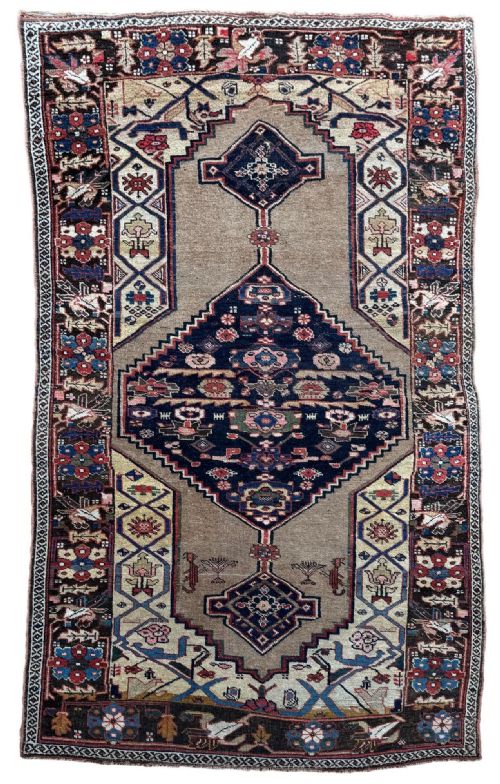
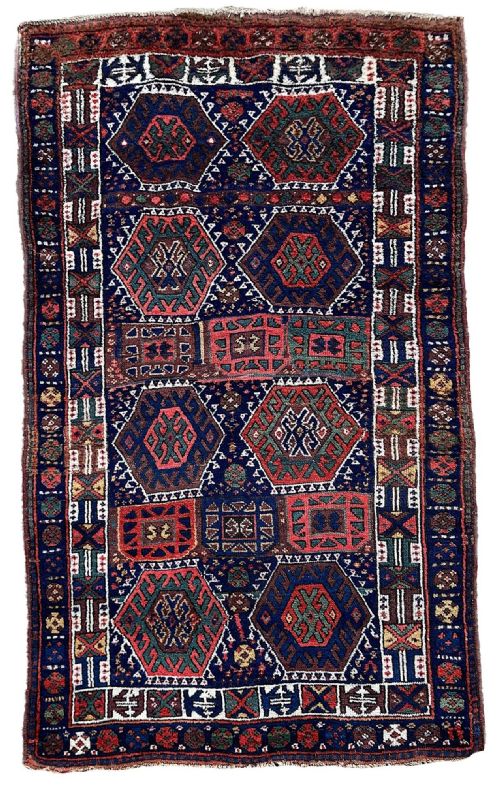
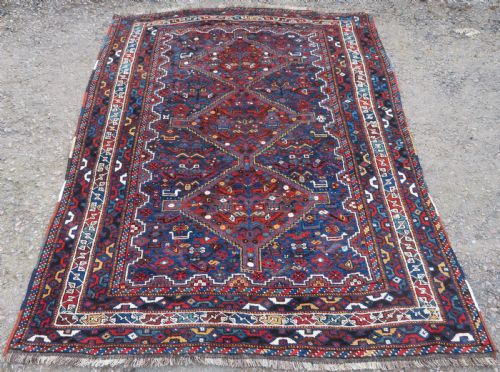
When you search for an indigo wool persian carpet, you examine hand-knotted village and tribal textiles originating from various regions of Persia and the Caucasus during the nineteenth and early twentieth centuries. These pieces encompass regional formats such as runner rugs, long kelleh carpets, and compact area rugs produced by tribal confederacies including the Khamseh, Qashqai, and Kurdish groups. The selection on this page leans heavily toward authentic tribal rug production, featuring distinct geometric layouts, medallions, and nomadic motifs.
Makers ranged from settled village workshops in Bidjar and Karaja to nomadic weavers carrying looms across tribal territories. The forms vary from intimate prayer rugs to expansive carpets designed for heavy domestic use. Each piece reflects the specific visual vocabulary of its origin, whether that is the boteh patterns of Afshar weavers or the bold geometry of Baluch traditions.
Materials and construction
Weavers relied principally on sheep wool and cotton foundations, often utilising hand-spun wool for the pile to achieve resilient, tactile surfaces. Goat hair also appears in the construction, frequently utilised for durable selvedges and binding edges. Natural dyes provide the enduring palette, yielding rich indigo blues alongside contrasting earthy tones.
The knotting technique secures the pile firmly to the warp and weft threads, creating a dense textile designed to withstand generations of foot traffic. Artisans built these floor coverings entirely by hand on vertical or horizontal looms without modern mechanical assistance.
Indigo Wool Persian Carpet Retail Price Guide 2026
Typical asking prices for indigo wool persian carpet among the pieces listed under this phrase on Sellingantiques today, from the lower quarter to the upper quarter. They describe what is for sale here now, not the wider market.
Listings span production dates from eighteen-fifty through nineteen-thirty, highlighting traditional wool and cotton materials across Persian tribal styles.
Distinctions in quality
Quality in these textiles rests upon the density of the knotting and the purity of the wool utilised in the pile. Tighter knots allow for sharper definition in geometric motifs and finer execution of intricate field patterns.
The depth and saturation of the natural dyes dictate visual success, with complex indigo variations setting superior examples apart from simpler pieces. Structural integrity, including the retention of original borders and secure foundation threads, also governs the standing of an individual carpet.
The Indigo Wool Persian Carpet Glossary
- Kelleh
- A long, narrow carpet format traditionally used in Persian domestic interiors. These rectangular floor coverings often measure significantly longer than they are wide.
- Boteh
- A traditional decorative motif resembling a curved almond or pear shape. Artisans frequently repeat this ancient symbol across the field of tribal carpets.
- Warp
- The stationary vertical foundation threads stretched tightly on the loom before knotting begins. Weft threads pass across these structural elements to hold the knots in place.
- Selvedge
- The reinforced outer edge of a rug running parallel to the warp threads. This finished border protects the textile from fraying and unraveling.
- Medallion
- A prominent central ornamental design motif placed in the middle of the carpet field. Village weavers often used symmetrical medallions to anchor the composition.
Indigo Wool Persian Carpet: Frequently Asked Questions
What is an indigo wool persian carpet?
It is a hand-knotted nomadic or village floor covering woven in Persia using natural wool and deep blue dye derived from plant sources.
These textiles showcase traditional tribal designs created by regional groups such as the Kurds, Afshars, and Baluch weavers during the nineteenth and early twentieth centuries.
How were these rugs used originally?
Nomadic and village communities utilised these heavy woolen textiles as floor coverings, sleeping mats, and seating areas inside tents and permanent homes.
Their dense pile provided essential insulation against cold earth floors while adding decorative status to the living space.
How do I care for an antique rug?
Protect the wool pile by vacuuming gently without a rotating brush bar and keeping the textile away from direct, harsh sunlight.
Professional specialist cleaning is recommended every few years to remove embedded dust without damaging the fragile natural dyes.
How do I identify different tribal styles?
Regional styles reveal themselves through specific structural traits, colour palettes, and repeating geometric motifs unique to each weaving group.
Comparing border designs, knot density, and wool characteristics helps attribute a piece to specific tribal confederacies like the Qashqai or Khamseh.