


Impressionist Tree Artwork
Impressionist tree artwork captures light and foliage through loose brushwork, offering buyers a evocative window into woodland and pastoral scenes.
Impressionist Tree Artwork
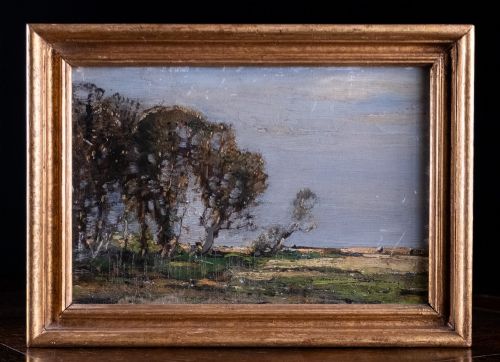
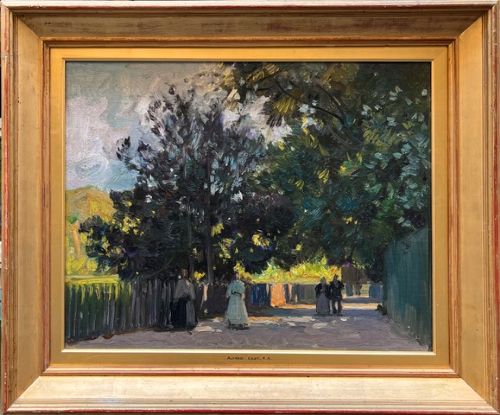
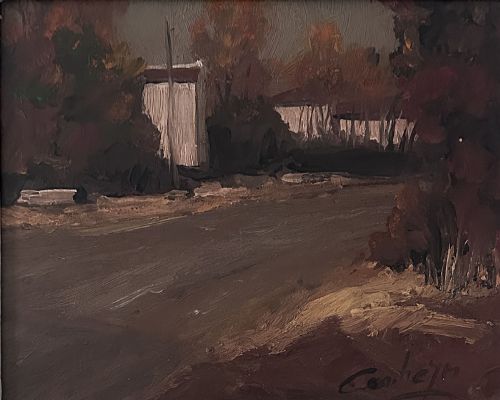
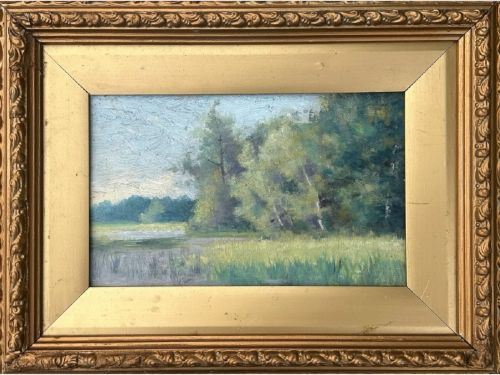
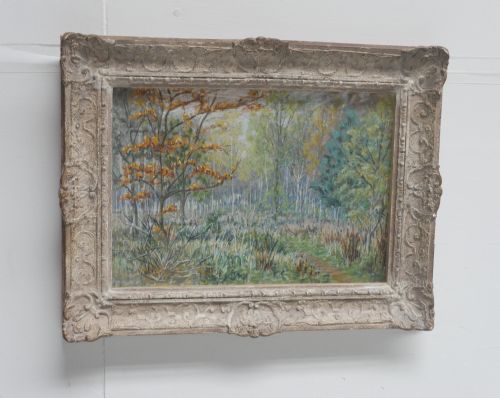
Impressionist tree artwork encompasses paintings and watercolours focused on arboreal and landscape subjects, created across various decades of the nineteenth and twentieth centuries. These pieces record rural lanes, riverside paths, orchards, and woodland interiors through expressive paint handling rather than rigid academic precision.
The selections encountered here range from nineteenth-century French and Barbizon school examples to British Impressionism and mid-century interpretations. Common compositions feature single prominent specimens like olive trees alongside dense forest canopies and blossoming branches near rivers.
Most examples originate from British and French artistic traditions, employing media that translate natural light directly onto a flat support. Buyers encounter works attributed to named regional painters as well as unsigned studies of country lanes and winter parks.
Materials and technique
Artists deployed oil paint and watercolour across supports including canvas, wooden panels, board, and heavy paper. Oil formulations allowed for impasto application and layered colours, whilst watercolours utilised fluid washes to capture transient atmospheric effects.
Makers built their imagery through broken brushstrokes and juxtaposed tones rather than blended gradients, prioritizing the overall sensation of light over microscopic detail. Many panels and canvases remain housed in period gilt frames that complement the painted surfaces.
Materials documented across the selection include oil paint, watercolour, and pastel.
Evaluating the work
Quality rests upon the confidence of the mark-making and the artist's ability to suggest atmosphere and depth with minimal descriptive clutter. Superior examples demonstrate a deliberate control of tone and colour harmony, successfully capturing shifting daylight upon foliage and bark.
The relationship between the subject and the framing edge matters greatly, as does the preservation of the paint layer without disruptive retouches. Works that retain a vivid sense of immediacy outshine stiffer, more literal renderings of the same landscape.
Kershaw Schofield·Lucy Pratt·Sir Alfred East·Maud Raphael Jones·William JB Jenkins·Owen Bowen·Henri Joseph Harpignies·Herbert Royle·Rowland Henry Hill·Berthe des Clayes·Ernest Higgins Rigg·Frederick W Jackson·Alois Arnegger·George Harrison·John J Hamer·Hermoine Hammond·Antoine Bouvard·George Graham
The Impressionist Tree Artwork Glossary
- Impressionism
- A nineteenth-century painting movement prioritising the visual impression of the moment, especially shifting light and colour. Practitioners utilised rapid, visible brushstrokes.
- Barbizon School
- A mid-nineteenth-century French art movement dedicated to naturalistic landscape painting. Artists worked directly from nature, focusing on forests and rural views.
- Impasto
- Paint applied thickly to a canvas or board, standing out in relief from the surface. This technique emphasises the physical texture of the medium.
- Provenance
- The documented history of ownership surrounding a work of art. It helps establish authenticity and traces the path of the piece from the artist's studio onward.
Impressionist Tree Artwork: Frequently Asked Questions
What periods do these paintings span?
The available selection spans from the late nineteenth century through the mid-twentieth century, capturing shifting regional styles across several decades. Periods represented include British Impressionism, Post-Impressionism, and mid-century modernism.
Buyers will find works dated across the 1900s, 1910s, 1920s, 1930s, 1940s, 1950s, and 1960s, alongside nineteenth-century examples. Each era brings distinct interpretations of light and woodland scenery.
Which materials were used by the artists?
Artists utilised oil paint, watercolour, and pastel applied to various supports such as canvas, wood panels, board, and paper. These traditional media allowed creators to achieve diverse textural effects.
Oils provided rich impasto and depth, while watercolours offered luminous, transparent washes. Many works retain their original period frames.
How should I display these artworks?
These pieces suit domestic interiors where natural light can illuminate their varied brushwork and colour palettes. Placing them away from direct sunlight preserves the integrity of the pigments.
Matching the frame to your room's aesthetic enhances the viewing experience, whether the piece is an oil on canvas or a delicate watercolour.
How do I identify a regional style?
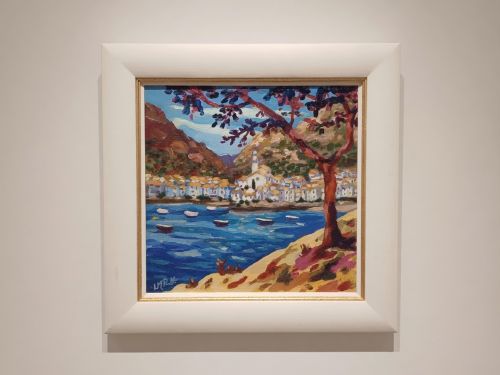
Regional styles emerge through specific colour choices, brush handling, and subject matter distinct to British or French traditions. French works often embrace bright Mediterranean light or expressive colourist palettes.
British examples frequently explore local countryside, farmyards, and wooded river paths with softer, atmospheric tones.