



Impressionist Rose Still Life
Impressionist rose still life paintings capture the fleeting play of light on petals through loose brushwork and vibrant colour.
Impressionist Rose Still Life
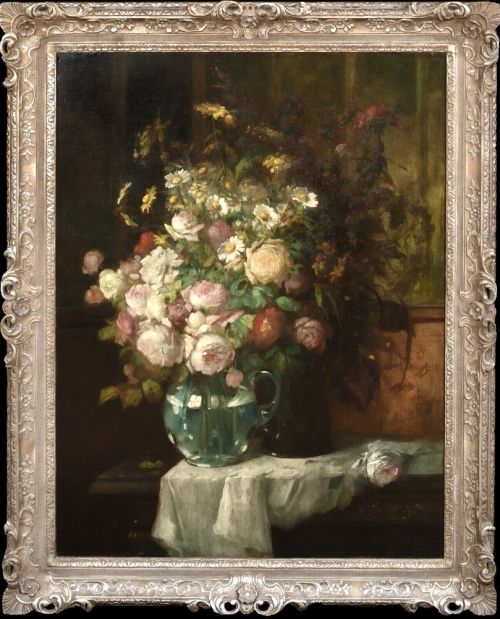
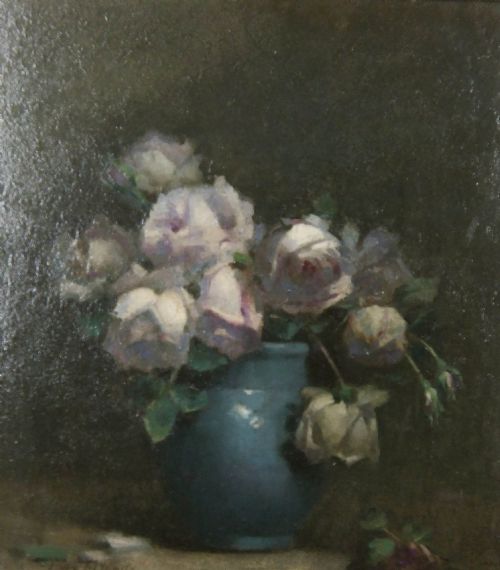
An impressionist rose still life brings together natural floral subjects and the expressive techniques developed in the late nineteenth and twentieth centuries. These works concentrate on baskets, vases, or casual arrangements of roses rather than strict botanical illustration.
The selections span British, French, American, and Austrian schools, showing how artists across different regions interpreted the floral theme. Works range from nineteenth-century academic foundations through to mid twentieth-century interpretations on canvas, board, and panel.
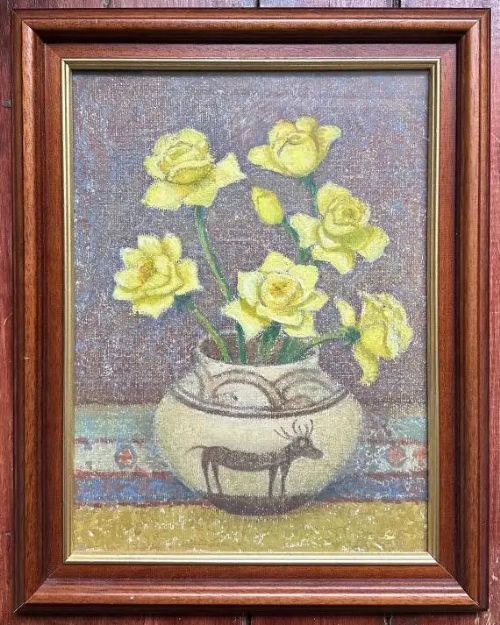
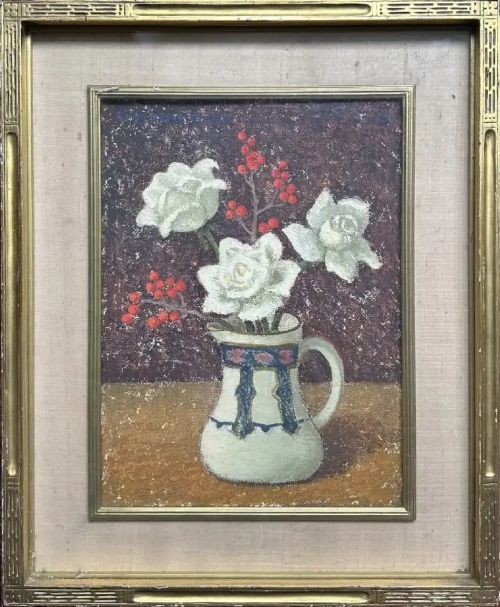
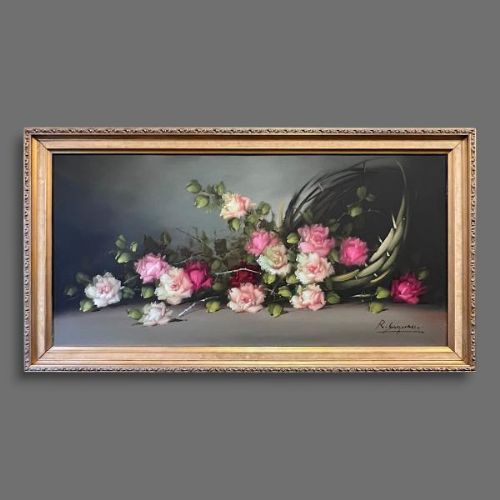
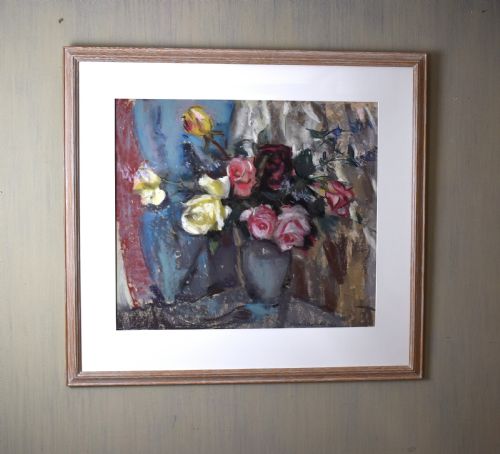
Compositions often feature roses displayed simply in pots, wicker baskets, or upon draped cloth to emphasise light and texture. Collectors encounter varied palettes, from bright yellow blossoms to soft pinks and deep reds set against contrasting backgrounds.
How they were made
Artists relied primarily on oil paint applied to prepared canvas, wood panels, or boards to build up rich surface textures. Some pieces incorporate visible impasto brushwork, laying down thick pigment to give physical depth to the petals and foliage.
Frames frequently complement the artwork using gilded wood and gold leafing, adding a traditional architectural border to the painted surface.
Materials recorded in these works include oil paint on canvas, wood panels, and boards, frequently housed within gilded wood frames.
What varies in quality
Quality rests on the confidence of the brushwork and the artist's ability to render light shifting across the floral forms. Stronger pieces demonstrate a purposeful handling of paint that defines the volume and softness of the blooms without relying on rigid outlines.
The integration of the background and the container holds equal weight, where spatial depth and tonal harmony elevate the composition. Weaker examples can feel flat, treating the individual petals as static patterns rather than living forms caught in a specific moment.
Konstantin Stoitzner·Emma Fordyce MacRae·William Thomas Wood·Lena M Alexander·Ernest Higgins Rigg·Owen Bowen·Jules Felix Ragot
The Impressionist Rose Still Life Glossary
- Impasto
- Paint applied thickly to a canvas or panel so that it stands out from the surface. This technique allows the physical marks of the brush or palette knife to catch the light.
- Panel
- A flat piece of wood used as a rigid support for painting instead of stretched fabric. Artists often favoured panels for smaller studies and direct outdoor work.
- Gilt
- A thin layer of gold leaf applied to wood or other materials to create a decorative metallic finish. It was commonly used on frames to enhance the visual warmth of the artwork.
- Still life
- A work of art depicting mostly inanimate subject matter, typically commonplace objects which may be either natural or man-made. In these examples, the focus centres specifically on gathered floral arrangements.
- Post impressionism
- An art movement that extended impressionism while rejecting its limitations, favouring more symbolic content and heavier structure. Works in this category retain loose brushwork while exploring new emotional depth.
Impressionist Rose Still Life: Frequently Asked Questions
What periods do these paintings cover?
The selections span from the nineteenth century through the 1910s, 1920s, 1930s, 1950s, and into the 1960s. This timeline shows the enduring appeal of floral subjects across different decades of artistic development.
Earlier pieces often reflect nineteenth-century academic training, while later examples embrace looser modernist interpretations and brighter palettes.
What materials are used for the supports?
Artists painted on various grounds including traditional stretched canvas, wooden panels, and sturdy boards. Each support type influenced how the paint was applied and how the finished work aged over time.
Wooden panels often provide a rigid base for heavier impasto techniques, whereas canvas yields a slight spring under the brush.
How were these floral still lifes displayed?
These paintings were traditionally hung in domestic interiors, drawing rooms, and studies to bring natural warmth into living spaces. They served as decorative focal points above mantelpieces or along principal reception walls.
Many retain their original gilded wood frames, which were specifically chosen to complement the tones within the painted composition.
How do regional styles differ?
British, French, American, and Austrian artists each brought distinct tonal preferences and handling of light to their floral subjects. Some traditions favoured muted, harmonious atmospheres while others explored vibrant, direct sunlight.
Regional groups, such as the Staithes Group, developed specific local approaches to outdoor observation and paint application.