


Impressionist River Artwork
Impressionist river artwork captures shifting light and water across British and French scenes using loose brushwork on canvas.
Impressionist River Artwork
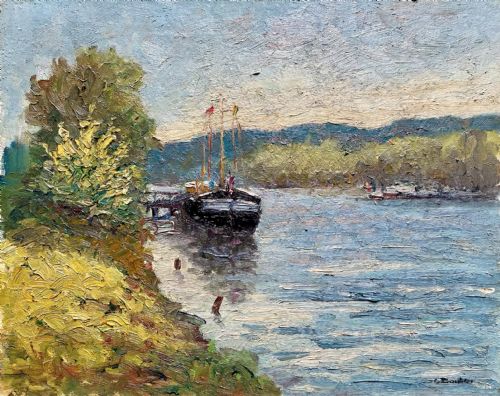
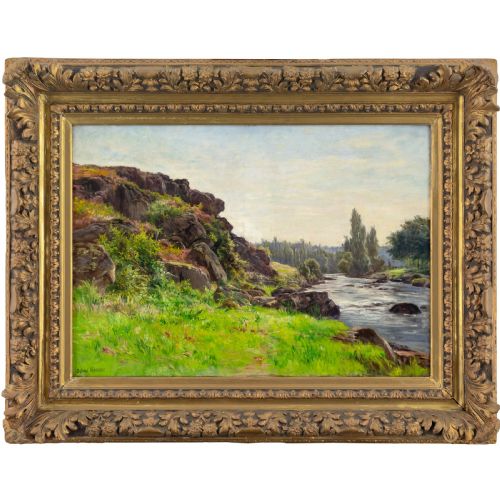
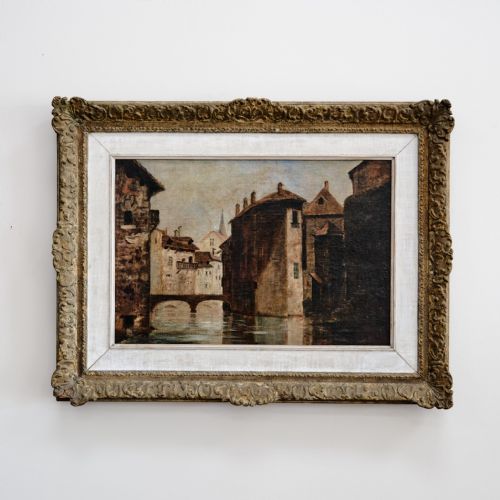
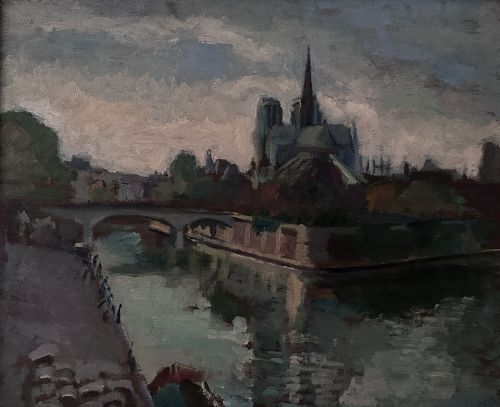
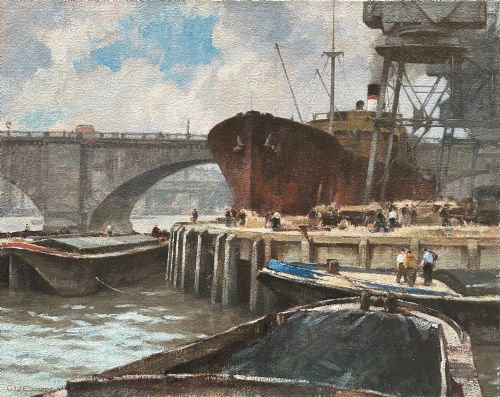
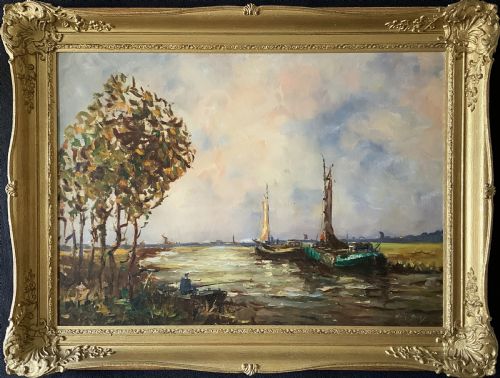
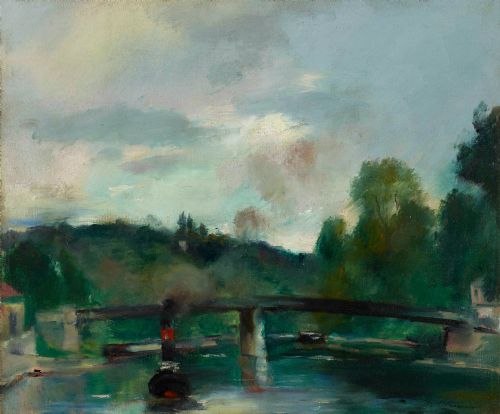
When someone searches for impressionist river artwork, they encounter oil paintings and watercolours depicting scenes along waterways, canals and bridges. These pieces originate from the nineteenth and twentieth centuries, spanning periods such as the Victorian era, the Belle Epoque and mid-century movements. British and French artists dominate the selection, alongside Dutch and Flemish examples.
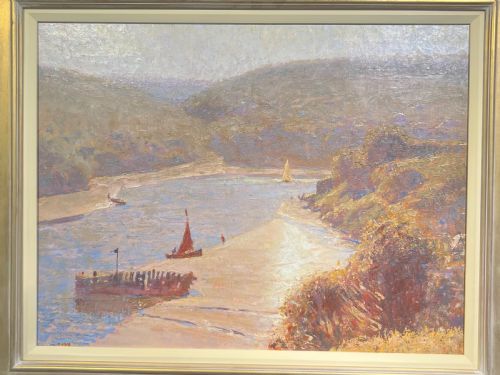
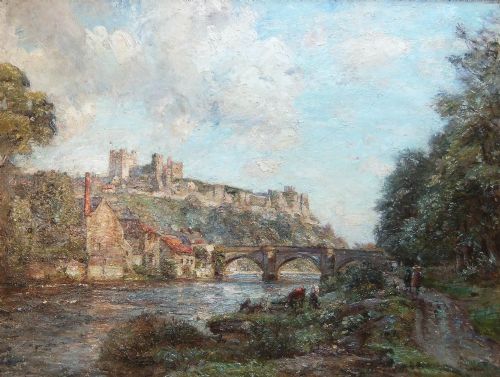
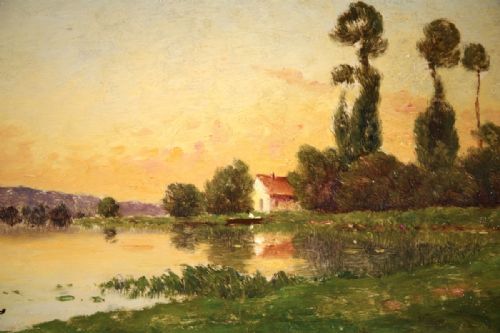
The most common formats met here are oil on canvas and oil on wood panel, portraying rural riversides in Yorkshire or bustling urban waterways like the Seine. Works range from intimate panel paintings to large panoramic canvases showing figures fishing or walking by the water.
Materials and Technique
Artists painted primarily with oil paint on stretched canvas or prepared wood panels, applying pigment with visible, energetic brushstrokes. Gesso and gilt frames frequently accompany these works, providing structural support and decorative borders.
Watercolour paint on paper appears in specific landscape examples, capturing translucent effects of light upon water. Panels made of wood offer a rigid support utilised by painters working outdoors or in smaller formats.
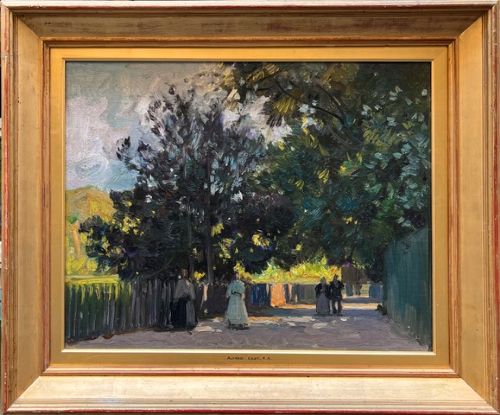
Several artists captured quiet moments of figures fishing, sunbathing, and strolling beside European waters.
Assessing Quality
Quality rests upon the handling of light and atmosphere across the water surface, where confident brushwork separates accomplished compositions from static ones. The dexterity of mark-making defines whether a landscape evokes movement or merely records a scene.
The integration of colour harmonies and tonal balance dictates the visual success of the piece, particularly in capturing reflections on rivers and canals. Ground preparation and pigment preservation further influence the enduring clarity of the surface.
Gabriel Mathieu·Cyril Walduck Edwards·Willem Bos·Henri Ottmann·Sir Alfred East·Cecil Allan Mould·Herbert Royle·Florence Adelina Hess·John Horace Hooper·Hubert Wellington·Honore Cavaroc·Archibald Kay·Charles Clair·Henri Jaques Delpy·Sir David Murray·Arthur Reginald Smith·Mario Pinetti·Arthur Herbert Rigg·Ron Folland·Owen Bowen·E A Minardo·David Watts·Maud Raphael Jones·Fred Stead·Phyllis Morgans
The Impressionist River Artwork Glossary
- Canvas
- A heavy woven fabric stretched across a wooden frame to serve as a support for oil painting. It provides a textured surface that interacts with applied layers of pigment.
- Wood Panel
- A flat wooden board utilised as a rigid base for oil paintings. These supports frequently appear in smaller landscape works.
- Gesso
- A plaster-like mixture applied to wood panels or canvases to prepare the surface for painting. It creates a smooth, absorbent ground for oil colours.
- Gilt
- A thin layer of gold leaf applied to frame surfaces for decorative effect. This finish enhances the presentation of antique paintings.
- Impasto
- Paint applied thickly to a canvas, standing out in relief from the plane. This technique gives texture and physical presence to water and foliage.
Impressionist River Artwork: Frequently Asked Questions
What is impressionist river artwork?
These pieces are oil paintings and watercolours depicting natural waterways, canals, and bridges created during the nineteenth and twentieth centuries.
They capture changing atmospheric conditions and reflections upon water using expressive brushwork and varied colour palettes.
How were these paintings displayed?
Works typically reside within decorative frames, often featuring gilt or gesso finishes suited to period interiors.
Collectors hang them in living spaces and studies where natural light complements the painted surface.
Where do these pieces originate?
The selection includes works by British, French, Dutch, and Flemish painters depicting familiar landscapes and urban riverbanks.
Locales range from Yorkshire rivers to Parisian bridges along the Seine.
How do I identify the period?
Dating relies upon stylistic markers such as post-impressionist handling or mid-century impasto techniques, alongside artist signatures and panel construction.
Victorian and Belle Epoque examples exhibit distinct palettes and framing conventions characteristic of their respective eras.