





Impressionist Marine Landscape
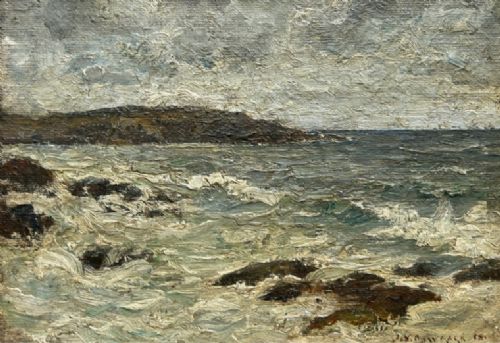
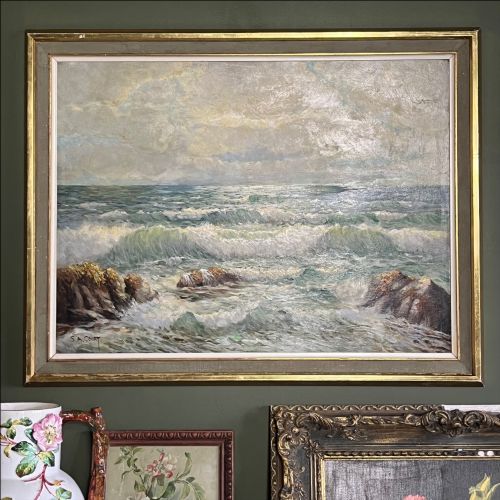
An impressionist marine landscape captures the transient light, weather, and motion of coastal water through loose brushwork and direct observation.
Impressionist Marine Landscape
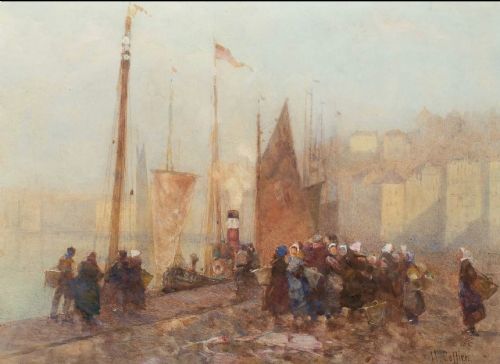
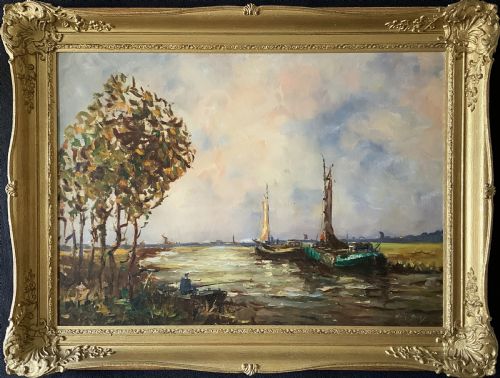
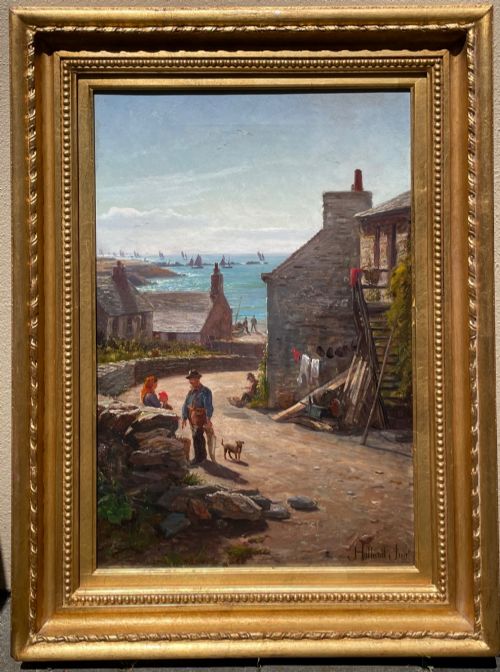
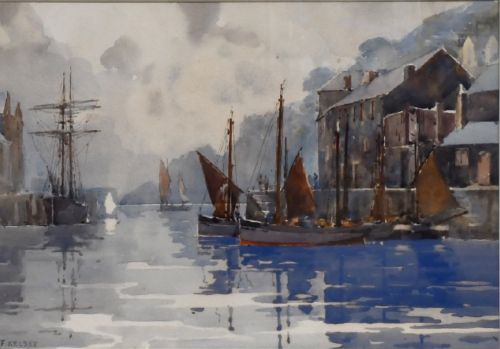
An impressionist marine landscape focuses on harbours, estuaries, open seas, and rocky shores painted from the nineteenth century through the mid-twentieth century. Buyers encounter oil paintings on canvas and board alongside watercolour paintings on paper, spanning British, French, and Dutch schools.
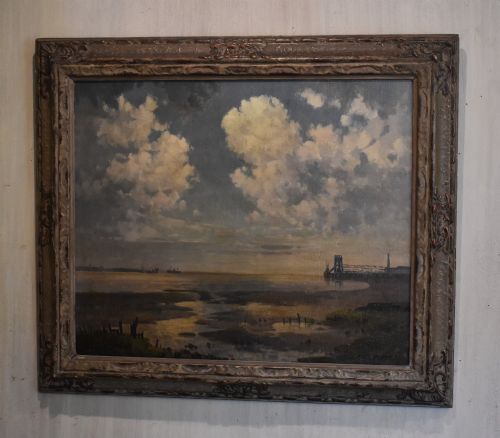
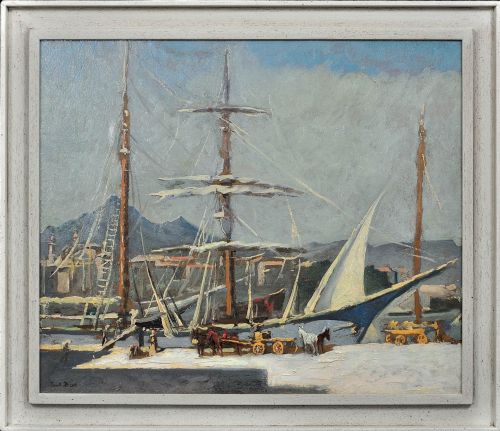
The selection ranges from early twentieth-century coastal views executed en plein air to post-impressionist interpretations of French and British fishing ports. Works often document specific maritime locations, from Cornish harbours to Norman estuaries and Mediterranean ports, rendered in varied regional styles.
Paintings typically present scenes of daily maritime life, including fishing boats, unloading vessels, and tidal mudflats, recorded with visible brushwork and atmospheric tonal control. These works reflect the period shift towards capturing immediate optical effects outdoors rather than producing academic studio compositions.
How they were made
Artists built these compositions primarily using oil paint on canvas or wood panels, alongside watercolours applied to heavy paper stock. Pigments were frequently worked with energetic, impasto strokes or fluid washes to record shifting light on water and sky.
En plein air methods allowed painters to work directly in coastal environments, capturing changing weather conditions and marine light without the constraints of indoor studio completion. This direct approach often left the brushwork visible and immediate, preserving the spontaneity of the initial observation.
The listings show oil paintings and watercolours spanning the nineteenth century through the 1960s, featuring British, French, and Dutch coastal views.
What varies in quality
The strength of an impressionist marine landscape depends on the artist's command of light, atmosphere, and spatial depth within water and sky. Superior works maintain a convincing sense of movement and volume without relying on tight academic outlines.
Handling of medium also distinguishes the range, with skilled practitioners utilising impasto or watercolour transparency to create genuine texture and luminosity. Compositional economy and confident brushwork separate more dynamic coastal studies from formulaic topographical views.
Clifford Hanney·Sidney A Court·William Banks Fortescue·Clive Browne·Paul Bret·Hector Caffieri·Willem Bos·John Holland·Frank Kelsey·Louis Suire·Gustave Vidal·Raymond Picque·William Lee Hankey·Fred Pailhes·Norman Lloyd·Fred Lawson·Edward Seago·William Greaves·Charles Malfroy·Roger de la Corbiere·Donald McIntyre·Marc Aldine·Frederick William Hattersley·Clara Montalba·Ernest F Hill
The Impressionist Marine Landscape Glossary
- En plein air
- Painting outdoors on location to capture the direct effects of light and weather on the subject. This method became central to impressionist landscape practices in the nineteenth century.
- Impasto
- Paint applied thickly to a canvas or panel, leaving distinct brush or palette knife marks that stand out in relief. This technique adds tactile texture and catches physical light across the surface.
- Seascape
- A work of art depicting the sea, coastal views, ships, or maritime activity. These subjects allowed artists to experiment with vast expanses of water, sky, and changing atmospheric conditions.
- Post-Impressionism
- A diverse artistic movement extending impressionism while rejecting its limitations, favouring more structured forms, expressive colour, and symbolic content. Painters in this tradition explored bolder palettes and simplified marine geometries.
Impressionist Marine Landscape: Frequently Asked Questions
How do I identify an impressionist marine landscape?
Look for visible brushstrokes, a focus on natural light and atmospheric conditions, and subjects involving coastal water, boats, or harbours. The emphasis rests on capturing a fleeting moment rather than recording precise topographical details.
Palettes often feature natural blues, greys, and earthy tones applied directly on canvas or paper to convey weather and movement.
Were these paintings created outdoors?
Many works from this period were painted en plein air directly on location by the shore, allowing artists to observe shifting tides and changing light firsthand. Other coastal scenes were developed in studios using preliminary watercolour sketches made on the spot.
Both methods aimed to preserve the spontaneity and immediacy of the initial coastal encounter.
What subjects are most common in these works?
Common subjects include working fishing ports, moored boats, rocky coastlines, estuaries, and open sea views under various weather conditions. Popular locations feature prominently in British, French, and Dutch coastal regions known for maritime communities.
Artists frequently recorded daily activities such as gathering seaweed, landing the catch, or navigating tidal rivers.
How should I frame and display these watercolours and oils?
Oil paintings on canvas or wood generally suit simple wooden or gilt frames that complement the period without overpowering the brushwork. Watercolours on paper require acid-free mounts and glass protection to prevent fading from light exposure.
Display them away from direct sunlight and fluctuating humidity to preserve the stability of the paint and paper.