





Impressionist Marine Artwork
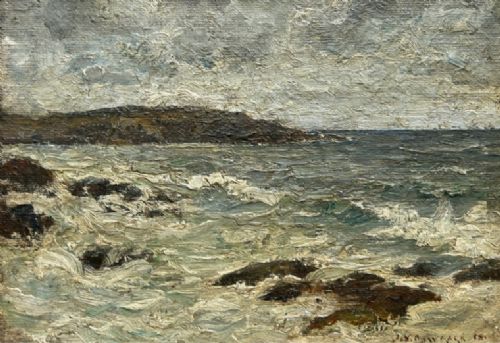
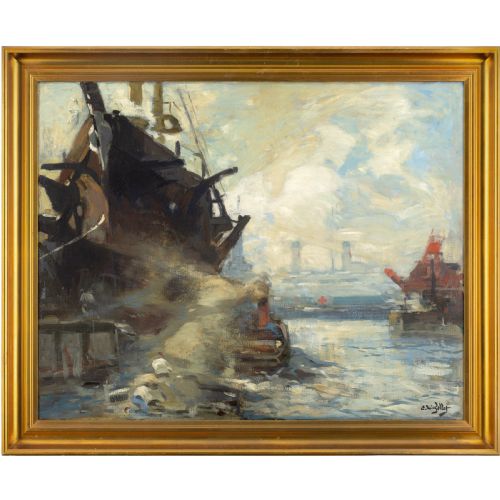
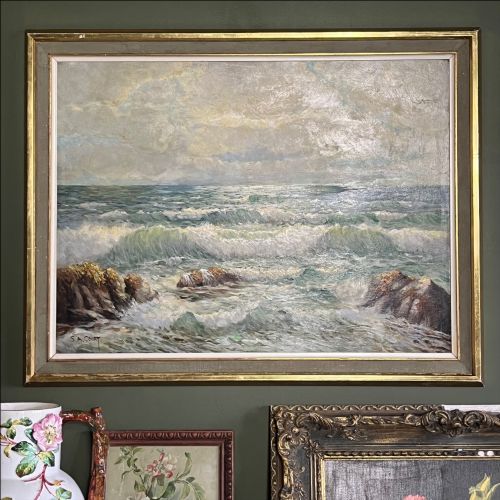
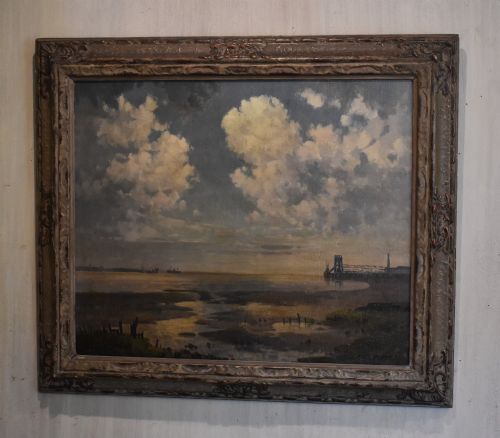
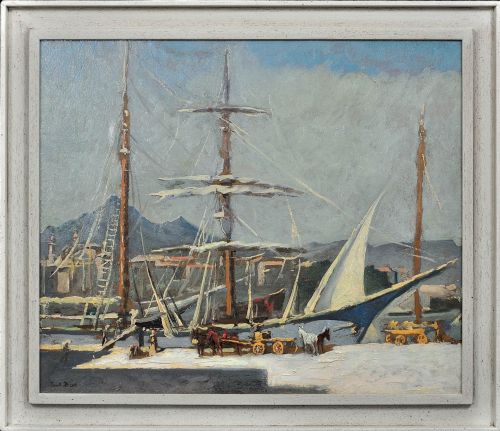
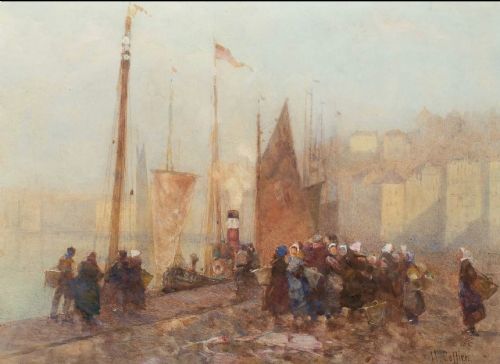
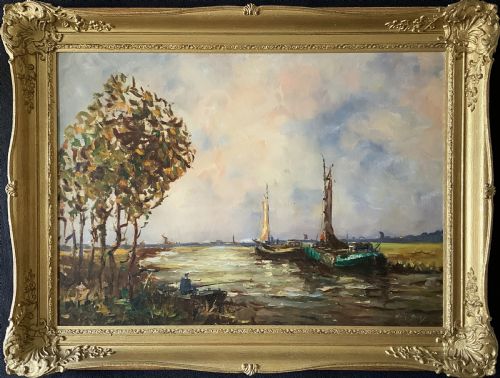
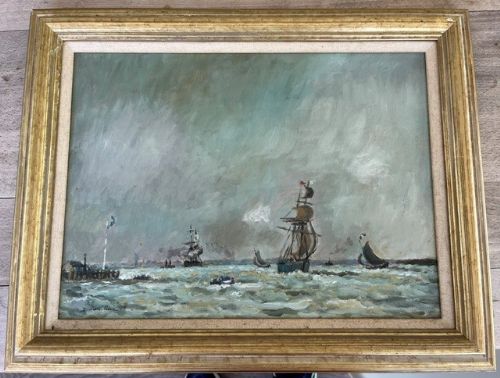
Impressionist marine artwork captures coastal light, harbours and open water through loose brushwork.
Impressionist Marine Artwork
Impressionist marine artwork encompasses paintings and watercolours depicting coastal scenes, harbours, and open water through the lens of late nineteenth and twentieth-century movements. Buyers seeking these pieces encounter works spanning from the nineteenth century to the mid-twentieth century, originating primarily from British and French regional schools.
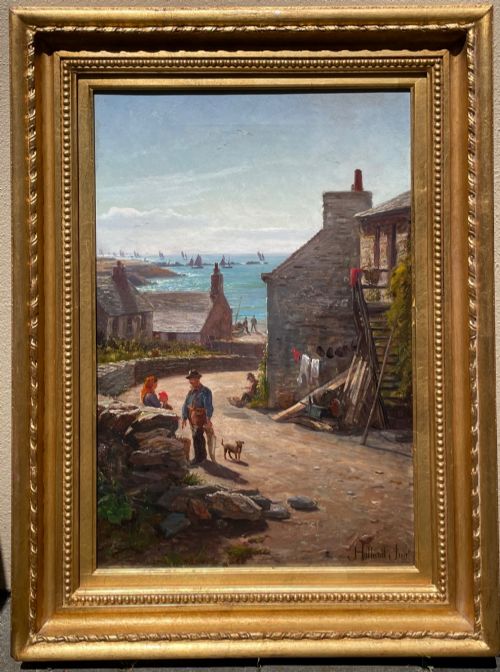
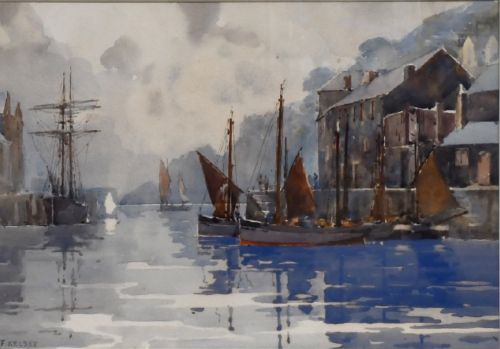
The selection on this page relies heavily on oil paintings on canvas and board alongside watercolours on paper. Most examples capture specific European shores, from Cornish fishing ports to the Normandy coastline and Venetian canals.
The subjects range from bustling harbour activities involving fishing boats and cargo ships to quiet moonlit seascapes and sunlit cliffs. These compositions reflect an abiding interest in recording transient effects of weather, tide, and atmospheric light.
Determinants of quality
Quality rests upon the artist's ability to manipulate paint handling and colour relationships to convey the movement and weight of water without relying on rigid delineation. Stronger examples demonstrate confident spatial control within complex harbour compositions filled with rigging and architecture.
The vitality of the brushwork distinguishes superior works from more formulaic topographical records. Capturing transient marine light convincingly requires an economy of mark-making that separates accomplished hands from lesser practitioners.
Condition and originality play significant roles in evaluation, particularly regarding the preservation of delicate watercolour washes or the stability of thick impasto oil layers on older canvas supports.
Several artists clearly preferred getting salt spray on their easels while recording harbours full of hardworking fishing boats.
Clifford Hanney·Eugène-Louis Gillot·Sidney A. Court·William Banks Fortescue·Clive Browne·Paul Bret·Hector Caffieri·Willem Bos·John Holland·Frank Kelsey·Elisabeth Bardon·Louis Suire·Gustave Vidal·Raymond Picque·William Lee Hankey·Fred Pailhes·Norman Lloyd·Fred Lawson·Edward Seago·William Greaves·Charles Malfroy·Roger de la Corbiere·Donald McIntyre·Antoine Bouvard Senior·Frederick William Hattersley
The Impressionist Marine Artwork Glossary
- Impressionism
- A nineteenth-century painting movement focused on capturing the visual impression of the moment, particularly shifting light and ordinary subject matter. Practitioners abandoned smooth studio finishes in favour of visible, rapid brushstrokes.
- En plein air
- The practice of painting outdoors directly from life rather than in a studio. This approach allowed artists to observe natural light and weather conditions firsthand.
- Impasto
- Paint applied thickly to a canvas or panel, standing visibly above the surface. This technique creates a textured, tactile quality that catches light.
- Seascape
- A work of art depicting the sea, coastal views, or marine vessels. These compositions often focus on the interaction between water, sky, and shore.
- Post-Impressionism
- An artistic development following Impressionism that retained luminous colour palettes and rapid application while exploring structure and symbolic content further.
Impressionist Marine Artwork: Frequently Asked Questions
What defines impressionist marine artwork?
These pieces focus on coastal views, harbours, and open water using loose brushwork and varied colour to capture atmospheric conditions.
They rely on direct observation of light and weather rather than strict academic detail.
Where were most of these scenes painted?
The works frequently depict working ports, cliffs, and estuaries across Britain and France, including Cornish fishing villages and Normandy shores.
Venice and other European coastal locations also appear regularly among the subjects.
How should these paintings be framed?
Traditional gilt wooden frames are common choices that complement the palette and period of the oil paintings and watercolours.
Selection depends on the specific era of the work and personal taste regarding framing styles.
How do I care for oil and watercolour pieces?
Oil paintings on canvas or wood require stable indoor humidity away from direct sunlight to prevent cracking or warping of the support.
Watercolours on paper demand protection behind glass with UV-filtering properties to avoid fading of the pigments.