

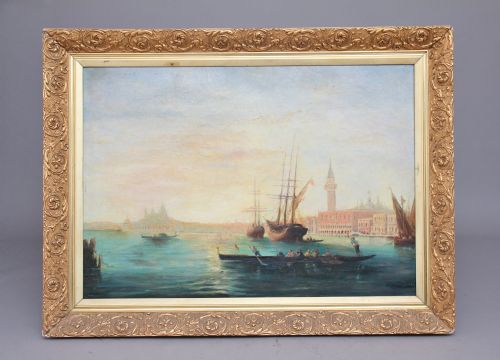
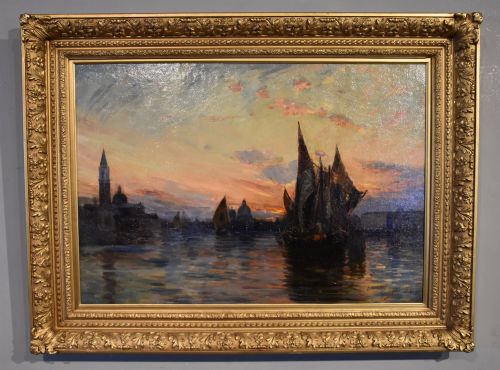


Impressionist Harbour Canvas
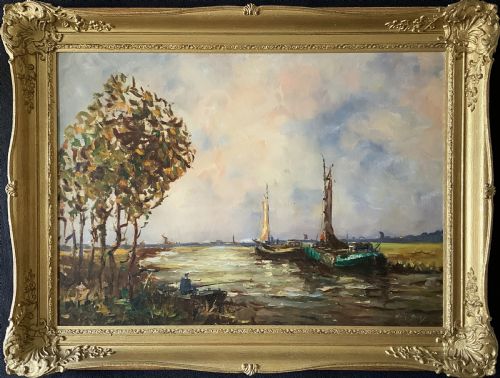
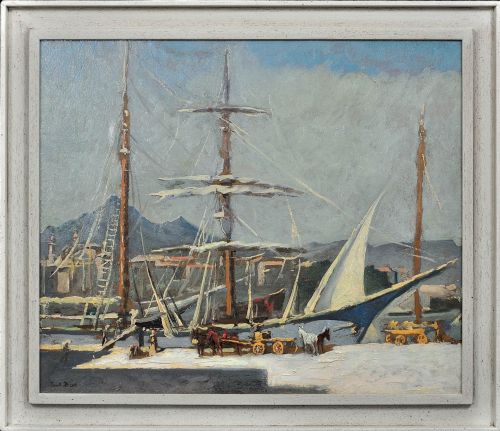
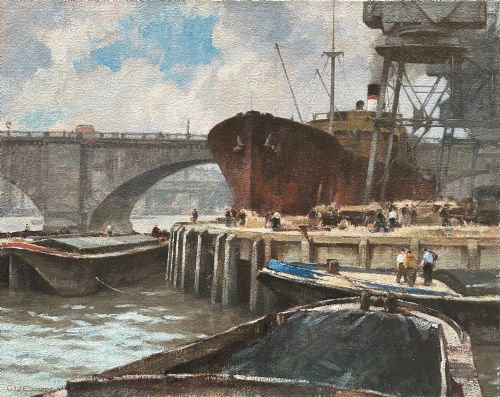
An impressionist harbour canvas captures the shifting light and maritime bustle of coastal life through expressive brushwork.
Impressionist Harbour Canvas
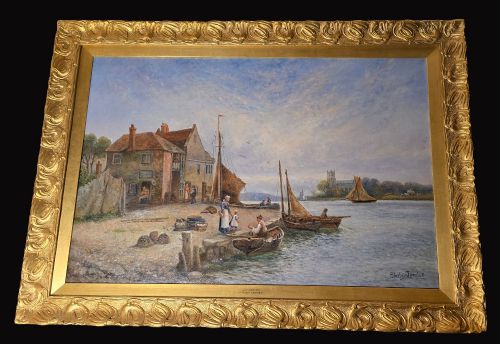
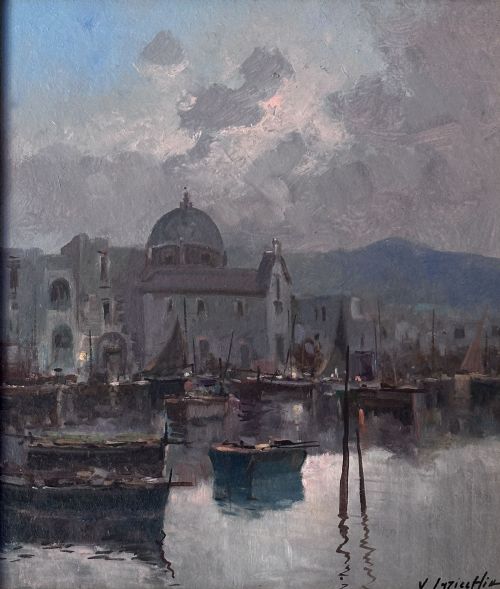
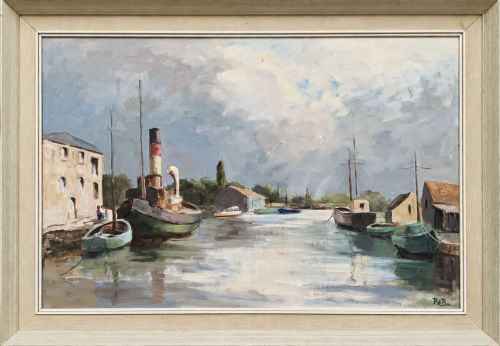
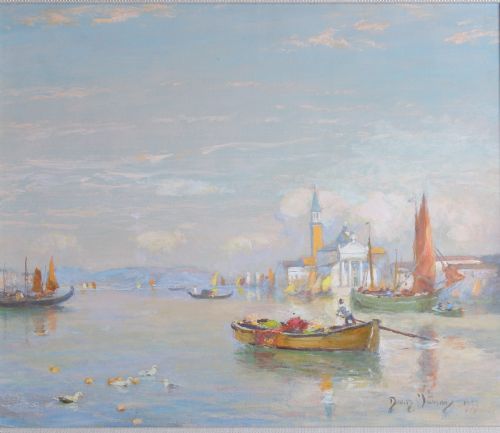
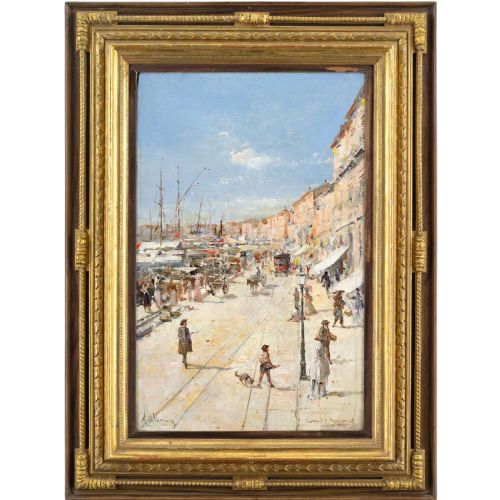
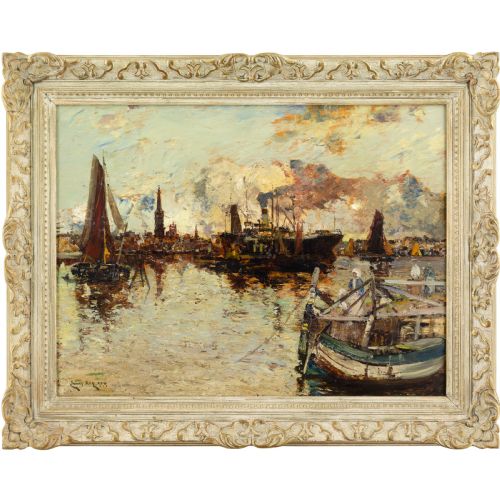
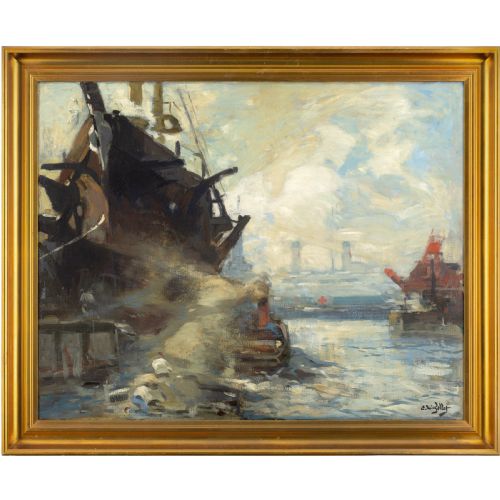
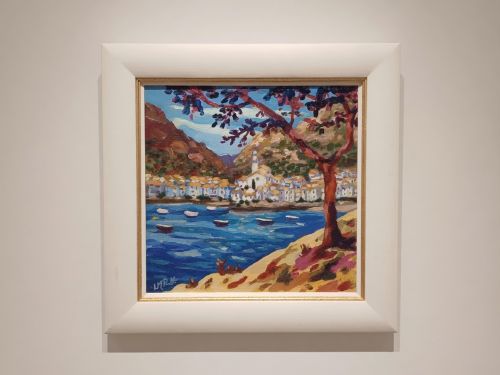
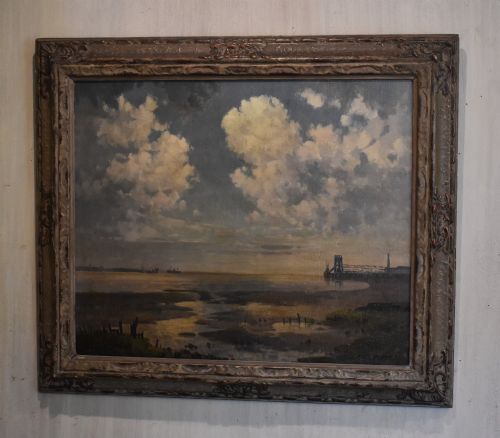
An impressionist harbour canvas brings together coastal scenes, maritime activity, and loose, painterly brushwork from the late nineteenth century into the mid twentieth century. Buyers seeking this subject matter encounter depictions of bustling ports, fishing boats, and serene estuaries ranging from British and French coastal villages to Mediterranean and tropical waterfronts.
The works available reflect various movements including British Impressionism, Post-Impressionism, and Mid-Century Modern interpretations. Pieces frequently focus on specific locations such as Cornish fishing ports, Scottish harbours, and continental European waterways.
Materials and construction
These artworks are executed primarily in oil paint on woven canvas supports, capturing texture and depth through layered pigment. Many examples retain their original wood frames, sometimes accented with gold leaf or gilt finishes.
Artists utilised varied brush techniques and palette knife applications to render the play of light upon water and sky, relying on the tactile quality of oil paint to build surface relief.
Impressionist Harbour Canvas Retail Price Guide 2026
Typical asking prices for impressionist harbour canvas among the pieces listed under this phrase on Sellingantiques today, from the lower quarter to the upper quarter. They describe what is for sale here now, not the wider market.
Materials recorded across the selection consist of oil paint, canvas, wood frames, and gold leaf.
Elements of quality
Quality in these maritime works rests on the artist's ability to command light, atmosphere, and spatial depth within a loose compositional style. Superior examples demonstrate confident handling of pigment that conveys the movement of water and air without losing structural clarity.
The relationship between the canvas and its period wood frame also influences the overall integrity of the piece, as well-preserved original mountings maintain the historic context of the artwork.
Eugène-Louis Gillot·James Kay RSW·Augusto Alberici·Paul Bret·Willem Bos·Paul-Jean Anderbouhr·Edward Matthew Elliott·Gyrth Russell·Jean-Baptiste Olive·Raymond Picque·Fred Pailhes·George Turland Goosey·Owen Bowen·William Lambert Bell·James Torrington Bell·Herbert Royle·Jack R Mould·Antonio Godoy·H. Hadfield Cubley·John Sanderson Wells·Ernst Louizor·Hendrik Yan Wolter
The Impressionist Harbour Canvas Glossary
- Impressionism
- A nineteenth-century art movement characterised by relatively small, thin, yet visible brush strokes and an emphasis on accurate depiction of light. It forms the stylistic foundation for many coastal and maritime works.
- Post-Impressionism
- A predominantly French art movement that developed from Impressionism, extending its limitations while retaining the use of vivid colours and thick application of paint. Artists often explored more symbolic content or structural forms.
- Gilt
- Covered thinly with gold leaf or gold paint. This finish frequently appears on the wood frames housing mid-century and earlier canvases.
- Estuary
- The tidal mouth of a large river, where the tide meets the stream. This setting provides a common subject for maritime painters depicting boats and shifting water levels.
Impressionist Harbour Canvas: Frequently Asked Questions
How do I date an impressionist harbour canvas?
Dating relies on stylistic clues, framing materials, and artist records. Works from the early twentieth century often employ traditional tonal palettes, while mid-century examples lean towards bolder abstract or post-impressionist applications.
Signatures, exhibition labels on the reverse, and the construction of the wood stretcher frame also provide reliable chronological markers for these paintings.
Where should I hang a maritime oil painting?
These canvases suit spaces with stable humidity and indirect natural light to protect the oil paint and canvas fibres. Placing the artwork away from direct heat sources ensures the longevity of both the painting and its wood frame.
Consider wall spaces that allow adequate viewing distance, as impressionist brushwork is designed to resolve visually from a few paces away.
What distinguishes British Impressionism from French works?
British coastal paintings often engage with specific local light and tidal conditions found around Cornwall and Scotland, maintaining a distinct atmospheric subtlety. French examples from the same eras frequently explore brighter Mediterranean palettes or industrial port activity.
Both traditions utilise oil on canvas to capture maritime movement, differing primarily in geographical focus and tonal atmosphere.
Are these paintings supplied with frames?
Many listings include period wood frames, occasionally featuring gilt or gold leaf details that complement the era of the canvas. The framing often reflects the decade in which the painting was completed.
Buyers should examine specific item descriptions to confirm whether the artwork retains its original period housing or a later complementary mount.