
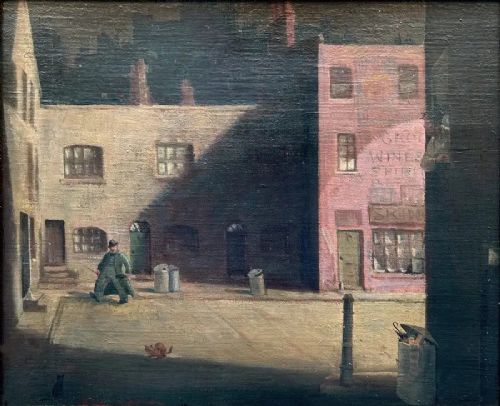
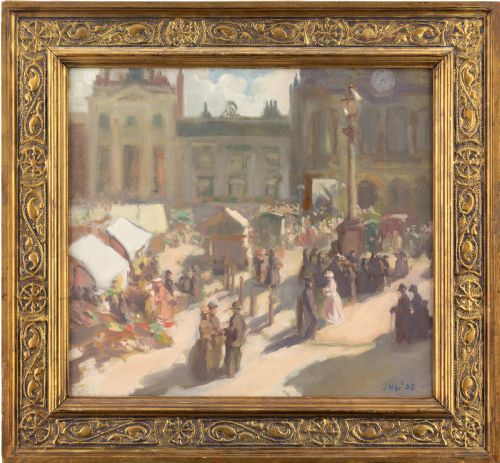
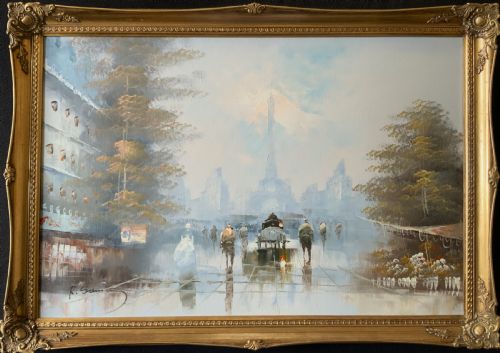
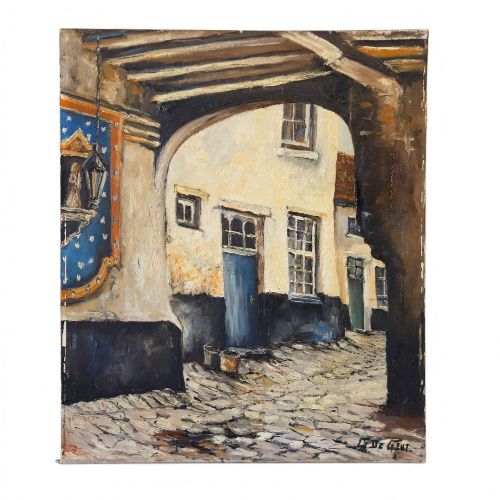


Impressionist City Scene Painting
Impressionist city scene painting captures the movement and light of metropolitan life on canvas or paper.
Impressionist City Scene Painting
An impressionist city scene painting brings the bustling energy of urban life into interior spaces through loose brushwork and atmospheric light. Buyers seeking an impressionist city scene painting typically encounter works executed in oil paint or watercolour across periods spanning the nineteenth century through the mid-twentieth century.
The subjects range from busy London squares and Venetian canals to Parisian boulevards featuring iconic landmarks like the Eiffel Tower and the Pont Neuf. These pieces reflect diverse regional approaches, encompassing British Impressionism, French Impressionism, Flemish Impressionism, and Post-Impressionism.
Domestic and continental streetscapes dominate the selection, often presented within period frames of gilt wood or plain wood. The compositions capture fleeting moments of daily existence, from market interactions to evening commutes.
Evaluating Quality
Quality rests upon the artist's ability to manipulate light and spatial depth within a busy urban composition. Superior works manage colour harmony to suggest weather, time of day, and movement without relying on rigid lines.
The handling of the medium itself distinguishes finer examples, where confident brushwork creates texture and atmosphere. Additionally, the harmony between the painting and its original wood or gilt frame influences the overall integrity of the piece.
Materials represented include oil paint, watercolour, canvas, paper, wood, and gilt wood frames.
Francisco Sancha·John Hodgson Lobley·L. De Gent·Albert Ludovici Jnr·Caroline Burnett·Victor Gabriel Gilbert·Charles James Lauder·Ron Folland·Merio Ameglio·Eduard Leon Cortes·Henry Sanders·Rowland Henry Hill·Matthew Hale
The Impressionist City Scene Painting Glossary
- Impressionism
- A nineteenth-century art movement characterised by relatively small, thin, yet visible brush strokes and an emphasis on accurate depiction of light. It prioritises the capture of transient visual impressions.
- Gilt Wood
- Wood that has been covered with a thin layer of gold leaf or gold paint. This finish frequently appears on frames designed to complement nineteenth and twentieth century fine art.
- Watercolour
- Paint consisting of water-soluble pigments dissolved in a gum binder. Painters utilise this medium on paper supports for rapid studies and finished urban views alike.
- Post-Impressionism
- A predominantly French art movement that developed from Impressionism while extending its limitations. Artists rejected its traditional reproduction in favour of symbolic content and heavier weight.
- Canvas
- A closely woven heavy cloth used as a support surface for oil paintings. It is typically stretched over a wooden frame before application of the ground and pigment.
Impressionist City Scene Painting: Frequently Asked Questions
What defines an impressionist city scene painting?
These works focus on urban environments such as Paris, London, and Venice, rendered with loose brushwork to capture light and movement.
They record metropolitan life through the lens of various regional movements active from the nineteenth century into the mid-twentieth century.
How should I care for an oil painting?
Keep the piece away from direct sunlight and dramatic shifts in room humidity to protect the canvas and paint layers.
Dust the surface gently with a soft, dry brush and avoid applying liquid cleaners directly to the painted areas.
Are watercolours framed differently than oils?
Watercolour paintings on paper require glass protection and acid-free mounts to prevent atmospheric damage over time.
Oil paintings on canvas or wood remain unglazed to let the texture of the paint and support remain visible.
How can I identify the period of a painting?
Examine the materials of the support, the style of the frame, and the signature or recorded dates of the artist.
Stylistic markers such as Belle Epoque clothing or mid-century architectural details also help narrow down the decade of creation.