



Impressionist Boat Seascape Art
Impressionist boat seascape art captures coastal light and maritime movement across canvas and paper through expressive brushwork.
Impressionist Boat Seascape Art
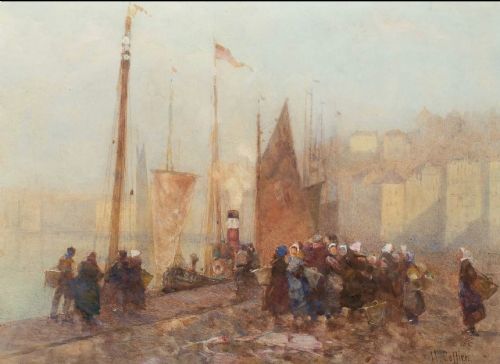
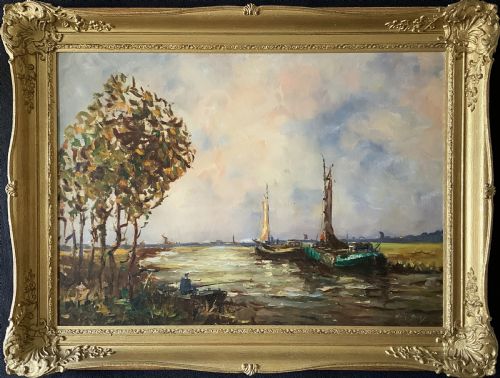
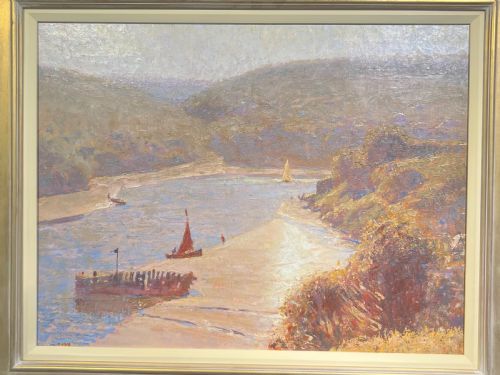
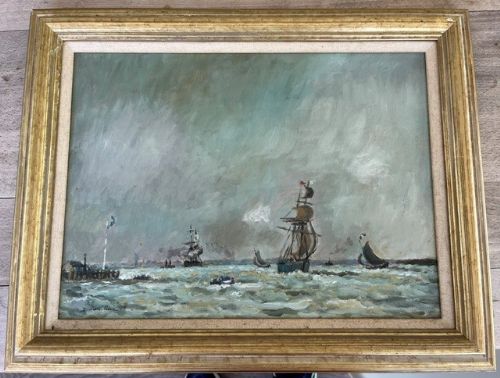
Impressionist boat seascape art encompasses oil and watercolour paintings focused on vessels, harbours, and coastal waters. These works capture specific light conditions and atmospheric effects along maritime locations rather than strict architectural or topographical detail.
The pieces on this page originate predominantly from the nineteenth and twentieth centuries, spanning British, French, and Dutch schools. Common subjects include fishing boats moored in tidal harbours, sailing yachts on open water, and urban canals.
Collectors encounter framed oils on canvas or board alongside delicate watercolour and gouache works. These paintings range from small cabinet watercolours to large harbour scenes executed by regional and continental artists.
Materials and technique
Artists painted primarily with oil paint on canvas, wood panels, or heavy paper supports, often building texture through thick impasto applications. Watercolours on paper utilise fluid washes and gouache highlights to render shimmering reflections on water and open skies.
Support materials shifted over decades from traditional stretched canvas to board and panel during the mid-twentieth century. Frames typically consist of gilt or painted wood moulding chosen to complement the tonal palette of the maritime scene.
Subjects cover tidal harbours, commercial ports, and open coastal waters executed in impressionist, post-impressionist, and maritime styles.
Qualities of execution
Quality rests in the handling of light, brush economy, and spatial depth rather than mere scale or subject matter. Superior works demonstrate confident command of tonal relationships, rendering water and atmosphere with direct, purposeful marks.
Compositional strength separates standard output from exceptional pieces, where horizon placement and the integration of vessels dictate the rhythm of the canvas. The preservation of the original pigment layer and frame integrity also influence the standing of an individual work.
HECTOR CAFFIERI·Willem Bos·Cecil Allan Mould·Elisabeth Bardon·Edward Matthew Elliott·Jean-Baptiste Olive·Raymond Picque·William Lee Hankey·Edward Seago·Donald McIntyre·FREDERICK WILLIAM HATTERSLEY·Ernest F. Hill·Owen Bowen·FRANK WASLEY·Herbert Royle·Fred Mayor·Hendrik Yan Wolter·Frances E Nesbitt·Frank Myers Boggs·Alec Caruthers Gould·Bertram Priestman·John W. Gilroy·J De Breanski
The Impressionist Boat Seascape Art Glossary
- Impasto
- Paint applied thickly to a canvas or panel, leaving visible brush or palette knife strokes that catch the light. This technique adds tactile dimension to churning seas and white sails.
- Seascape
- A painting depicting the sea, coastal views, or marine activity. These works focus heavily on water, weather, and light.
- Gouache
- An opaque water-based medium often combined with watercolour. It provides solid highlights and dense colour blocks in maritime studies.
- Provenance
- The documented history of ownership of an artwork. Clear origin records support attribution and dating.
- Post-Impressionism
- An art movement extending impressionist methods with a greater emphasis on geometric forms and expressive colour. Works in this style show individualistic approaches to light and surface.
Impressionist Boat Seascape Art: Frequently Asked Questions
What defines impressionist maritime art?
Impressionist maritime art focuses on capturing transient effects of light, weather, and movement upon water rather than precise topographical rendering. Artists utilise loose brushwork and direct observation to evoke the atmosphere of harbours, estuaries, and open seas.
These pieces record coastal life from the nineteenth and twentieth centuries through oil and watercolour mediums. The emphasis remains on chromatic harmony and the interplay of water and sky.
How do I date these paintings?
Dating relies upon stylistic markers, framing methods, and artist biographical records documented in signatures or exhibition labels. Canvas types and stretcher construction also provide chronological clues for works lacking explicit inscriptions.
Comparative analysis with dated examples from the same regional school helps narrow the period of creation. Many pieces carry exhibition dates or artist life spans that anchor their creation era.
Where were these coastal scenes painted?
Coastal scenes originate from active fishing ports, commercial harbours, and picturesque estuaries across Britain, France, and the Netherlands. Locations range from Cornish fishing villages to Mediterranean ports along the French Riviera.
Artists frequently travelled to established art colonies and coastal communities to paint working vessels and tidal landscapes directly from life. Specific harbours are often noted in titles or verso inscriptions.
How should I display these paintings?
Display these works away from direct sunlight and fluctuating humidity to protect canvas supports, watercolours, and traditional gilt frames. Adequate wall spacing allows natural light to reveal the texture of oil impasto and watercolour washes.
Mounting paintings on stable interior walls ensures the preservation of both the artwork and its historical frame. Proper ambient conditions prevent warping in wood panels and paper acidification.