

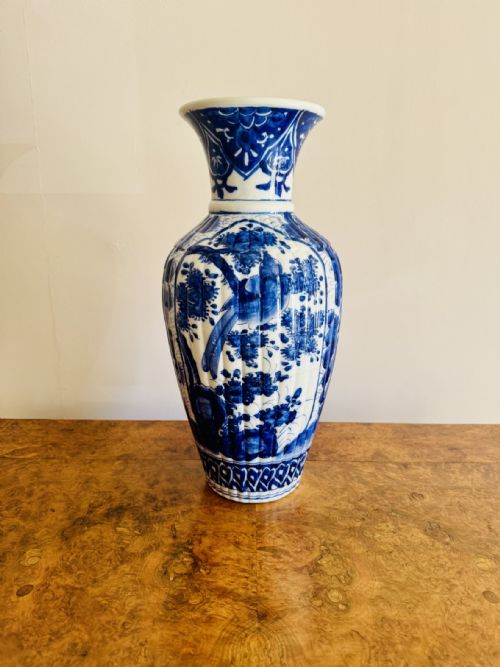
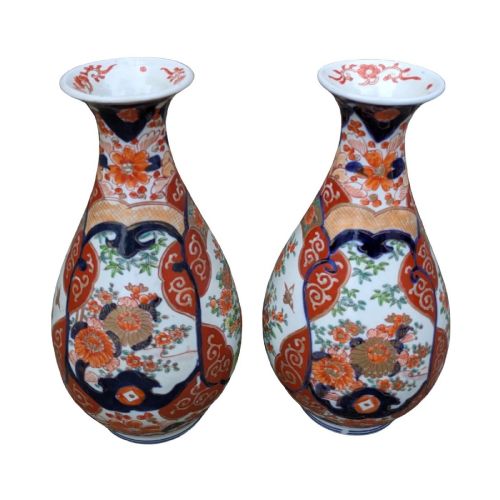

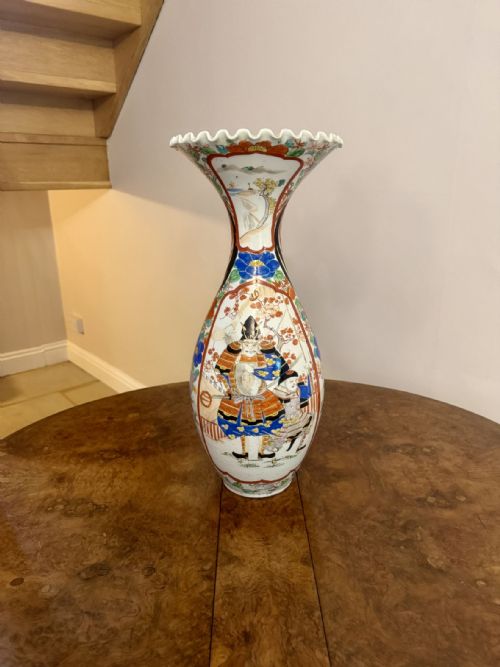
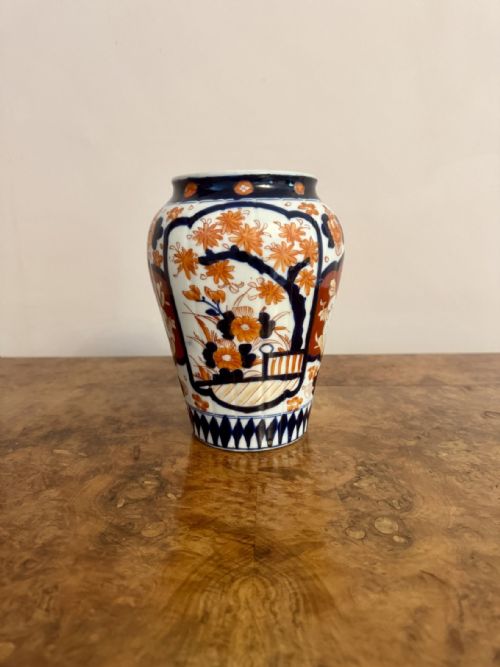
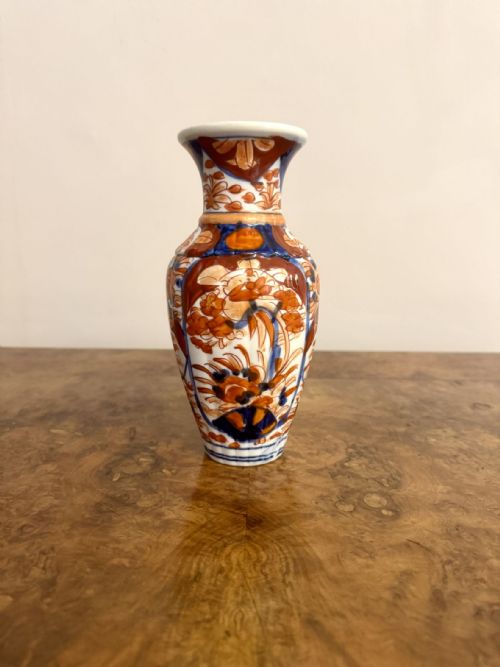


Imari Ware Urns
Imari ware urns are striking ceramic vessels defined by rich cobalt and iron-red palettes, offering an instant touch of historic colour.
Imari Ware Urns
When searching for imari ware urns, buyers encounter a distinct selection of decorative vases, ginger jars, and incense burners originating from Japanese export traditions alongside later British interpretations. The pieces span the eighteenth century through the Edwardian era, with Meiji period examples and late nineteenth-century items appearing most frequently.
Forms range from single large display vases and covered jars to matched pairs and three-piece garnitures. Surviving examples demonstrate diverse silhouettes, including shaped bodies, handled vessels, and lidded koro designs.
Materials and methods
Makers shaped these vessels from ceramic and porcelain, applying underglaze cobalt blue and enamel pigments directly onto the body. Artisans then integrated gold leaf, gilt, and detailed gold gilding to highlight the intricate surface patterns.
Firing techniques fused the vibrant ceramic glaze with metallic highlights, producing the characteristic glossy finish seen across eighteenth-century, Meiji, and Edwardian productions.
Imari Ware Urns Retail Price Guide 2026
Typical asking prices for imari ware urns among the pieces listed under this phrase on Sellingantiques today, from the lower quarter to the upper quarter. They describe what is for sale here now, not the wider market.
Object forms represented include ginger jars, covered koro, and multi-piece garnitures alongside standard decorative vases.
Distinctions in standard
Superior examples display precise brushwork within the cobalt and enamel designs, coupled with cleanly applied gold leaf or gilding that remains intact across the ceramic surface. The crispness of the porcelain moulding and the balance of the shaped vase or ginger jar contribute significantly to the overall standing.
Scale and complexity also define the range, where large pairs, lidded koro, and matched garnitures of three demonstrate greater ambition in production than standard single bud vases.
The Imari Ware Urns Glossary
- Imari palette
- A traditional decorative scheme utilising cobalt blue, iron red, and gold on a white ceramic background. This distinctive combination unites Japanese export pieces with subsequent European adaptations.
- Koro
- A traditional Japanese incense burner typically featuring a removable pierced cover and three or more feet. These vessels often utilise the full imari palette across their porcelain surfaces.
- Garniture
- A coordinated set of three or more vases designed for symmetrical display on a mantelpiece or sideboard. These matched groups are frequently found among nineteenth-century Japanese exports.
- Ginger jar
- A high-shouldered storage vessel with a domed lid, originally used for spices. In imari ware, these jars serve purely decorative functions.
Imari Ware Urns: Frequently Asked Questions
How do I date imari ware urns?
Dating relies on examining the porcelain body, the depth of the cobalt blue, and the style of the enamel painting. Eighteenth-century pieces typically show different potting characteristics compared to Meiji period exports or Edwardian British interpretations.
Examining the glaze consistency and any pattern numbers helps narrow the production era further.
Where were these vessels made?
The majority originate from Japanese kilns, particularly during the Edo and Meiji periods, created specifically for export markets. Other examples stem from British factories, such as Royal Crown Derby, which adopted the palette during the Edwardian period.
Each origin region brings distinct technical traits to the porcelain body.
How were imari ware urns used?
These pieces served primarily as decorative display items within period interiors, placed on mantelpieces, tables, or within multi-piece garnitures. Lidded variations like ginger jars and koro also functioned as covered containers or incense burners.
Their vibrant palette was intended to catch the light in formal reception rooms.
How do I care for antique porcelain?
Maintenance requires gentle dusting with a soft, dry cloth to protect the delicate enamel and gold leaf decorations. Avoid using chemical cleaners or immersing the ceramic in water, particularly where gilt details are present.
Displaying pieces away from direct sunlight preserves the intensity of the iron-red and cobalt pigments.