

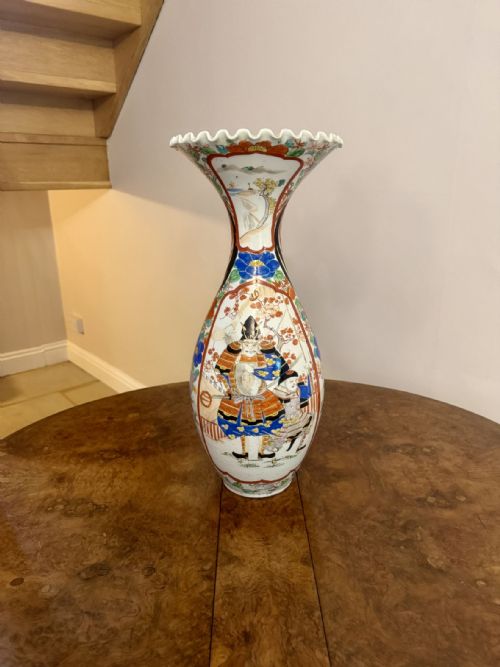


Imari Porcelain Floor Vase
An imari porcelain floor vase brings bold palette work and grand scale to a room, offering immediate visual presence through traditional Japanese Meiji period design.
Imari Porcelain Floor Vase
An imari porcelain floor vase represents a striking category of large scale decorative vessels created during the nineteenth century and the Meiji period.
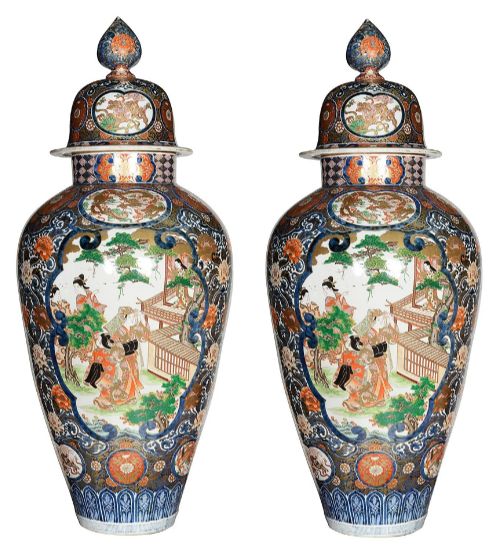
Most examples encountered here are substantial floor standing or large scale vases, frequently appearing as matched pairs or individual grand statement pieces.
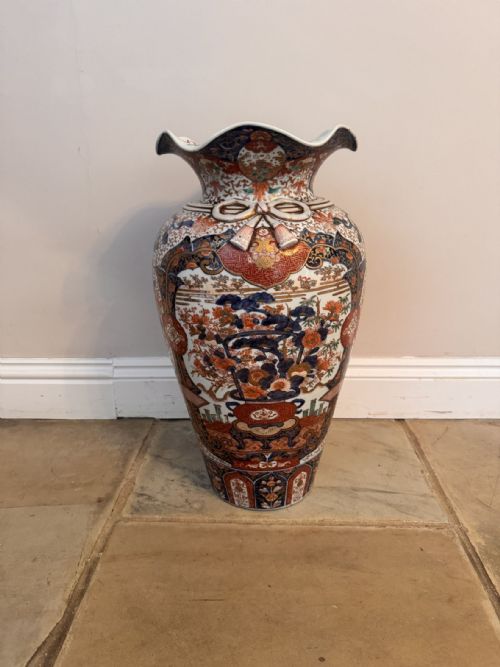
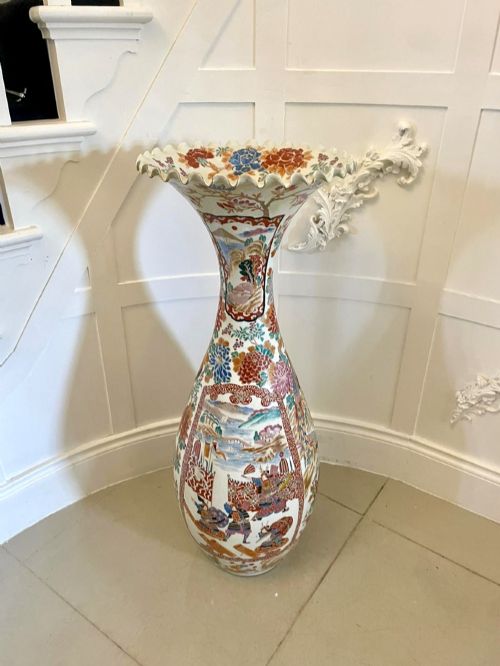
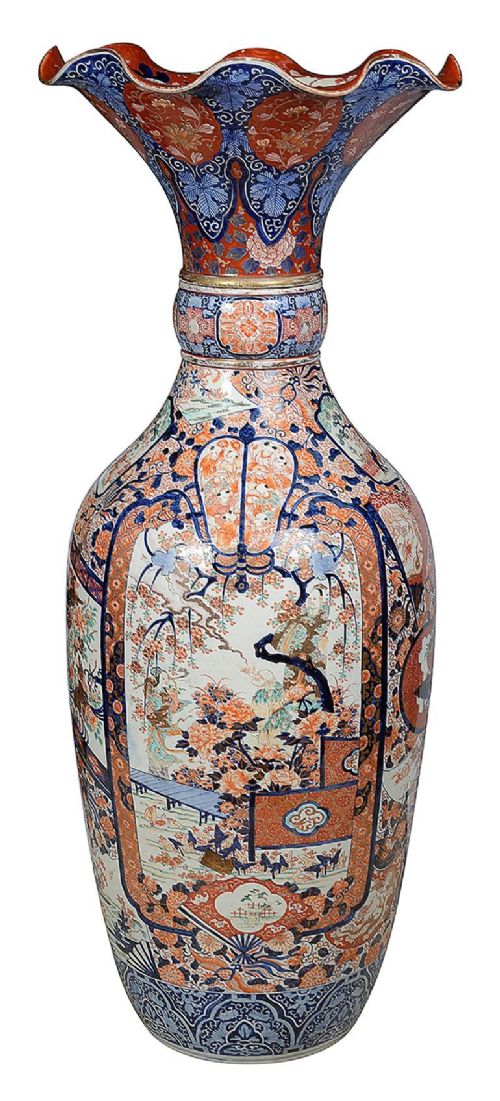
The aesthetic draws directly upon Japanese Imari traditions, combining robust porcelain forms with characteristic surface decoration.
Materials and construction methods
Makers shaped these large vessels from white porcelain, applying detailed enamel work and gold leaf over glaze to build the dense traditional palette.
Selected pieces incorporate wooden elements or gilt highlights to complement the ceramic body and support their significant height.
Imari Porcelain Floor Vase Retail Price Guide 2026
Typical asking prices for imari porcelain floor vase among the pieces listed under this phrase on Sellingantiques today, from the lower quarter to the upper quarter. They describe what is for sale here now, not the wider market.
All listed pieces date from the nineteenth century through the early twentieth century, spanning specific years including eighteen eighty, eighteen ninety, nineteen hundred, and nineteen ten.
Distinctions in craftsmanship
The refinement of the painted enamel and the precision of the gold leaf application distinguish exceptional examples from standard production.
Scale and proportion dictate much of the visual success, particularly on monumental floor standing pieces where balance remains crucial to the overall impact.
The Imari Porcelain Floor Vase Glossary
- Imari palette
- A traditional decorative scheme utilising iron red, cobalt blue, and gold upon a white porcelain ground. This distinctive colour combination defines the visual character of the ware.
- Meiji period
- The era of Japanese history spanning from eighteen sixty eight to nineteen twelve. Pieces from this time demonstrate remarkable technical accomplishment in large scale ceramics.
- Glaze
- A glassy coating fused to the porcelain body through firing. It provides a smooth, protective surface beneath the painted enamel decoration.
- Spill vase
- A tall, slender vessel originally designed to hold wooden spills for lighting fires or candles. These appear in larger domestic scales within the current selection.
- Enamel
- Opaque coloured glass fused to the ceramic surface during secondary firing stages. It creates the rich, raised patterns characteristic of these vessels.
Imari Porcelain Floor Vase: Frequently Asked Questions
How were these large vases used?
These substantial vessels were primarily intended as grand decorative statements for principal rooms, halls, and galleries. Their imposing height allowed them to stand directly upon the floor as architectural focal points.
While some smaller variants functioned as spill vases or lidded containers, the larger floor standing examples served strictly to display wealth, taste, and an appreciation for Japanese craftsmanship.
How do I date an imari porcelain floor vase?
Dating relies heavily on stylistic indicators, manufacturing techniques, and recorded periods such as the nineteenth century or the Meiji era. Close examination of the porcelain body, glaze consistency, and enamel wear helps establish the approximate age.
Makers often produced these pieces without explicit signatures, meaning stylistic alignment with late nineteenth century Japanese export standards remains the primary method for determining chronology.
Where should I place a floor vase?
A floor vase requires a secure, prominent location with adequate clearance to protect its fragile ceramic body from accidental knocks. Hallways, wide landings, and spacious reception rooms provide ideal settings.
Because many examples in this category exist as matched pairs, positioning them symmetrically around a fireplace or architectural feature creates a balanced and traditional interior arrangement.
What defines the imari style?
The style is defined by a specific palette dominated by deep cobalt blue and iron red, frequently enriched with extensive gold leaf details. The surface designs typically incorporate intricate floral and geometric motifs.
Originating in Japan, this aesthetic was widely exported to Europe during the nineteenth century, where it heavily influenced interior decoration and the production of grand decorative ceramics.