


Imari Porcelain Figure
An imari porcelain figure brings bold cobalt underglaze, iron red enamel, and gold leaf into a room.
Imari Porcelain Figure
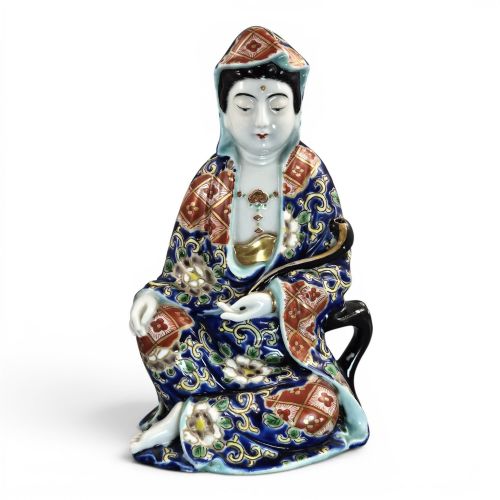
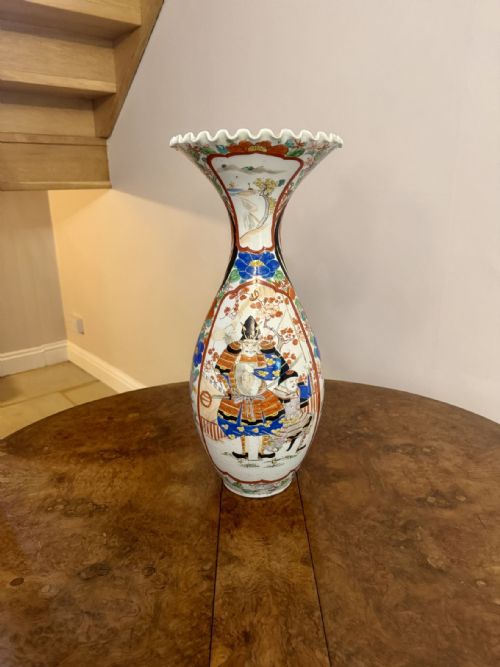
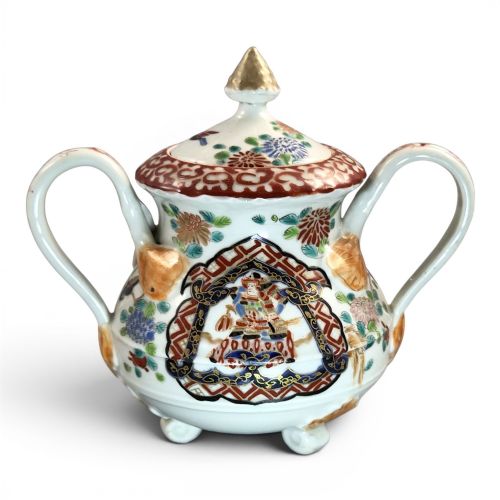
An imari porcelain figure is a ceramic representation shaped in human form, painted in the distinctive palette associated with Japanese and Chinese export wares. When you search for an imari porcelain figure, you encounter works spanning from the Edo and Kangxi periods through the Victorian, Edwardian, Meiji, and Taisho eras, alongside related vessels like vases, lidded jars, sugar bowls, and chargers.
The selections on this page bridge figurative ceramics and decorative tableware, bringing together ceramic figurines, decorative figures, and figures of monks or courtesans alongside larger vessels decorated in the same palette. The pieces include Japanese Arita figures, Japanese imari sugar bowls with samurai motifs, and pieces bearing marks such as the Fukagawa mark.
Buyers meet works from the seventeenth century up through the early twentieth century, showing how the palette persisted across generations. The range shifts between ornamental figurines and utilitarian forms painted with human figures, uniting diverse object types under the shared technical vocabulary of cobalt, enamel, and gilt decoration.
How they were made
The foundation rests on hard-paste ceramic porcelain, shaped into figures or vessels and fired at high temperatures. Cobalt underglaze is applied directly to the body before the initial glaze firing, creating the deep blue tones characteristic of the tradition.
Overglaze enamels, chiefly iron red, are painted on top of the fired glaze alongside gold leaf or gold gilt highlights. Certain examples incorporate mounts of ormolu, combining metalwork with the decorated ceramic body.
Kiln methods from the Edo, Kangxi, and Meiji periods dictate the density of the ceramic paste and the adherence of the enamel and gilt layers. Firing temperatures and hand-painting techniques determine how cleanly the cobalt underglaze sits beneath the transparent glaze.
The hell courtesan makes an appearance.
What varies in quality
The distinction between ordinary and superior work lies in the precision of the hand-painting and the richness of the palette. Crisp cobalt underglaze lines, cleanly contained iron red enamel, and abundant gold leaf distinguish finer pieces from simpler production.
Sculptural definition separates basic vessels from expressive ceramic figurines and named subjects like the hell courtesan or the Japanese monk. The presence of specific workshop indicators, such as the Fukagawa mark, adds documentation of origin.
Scale and ambition separate standard decorative items from large lidded vases, chargers, and detailed figures. The survival of the original gilding and the stability of the overglaze enamels across centuries determine the visual impact of each surviving piece.
Fukagawa mark
The Imari Porcelain Figure Glossary
- Cobalt underglaze
- A blue pigment applied to the raw ceramic body before glazing and firing, producing deep tones that cannot wear off because the transparent glaze seals them.
- Enamel
- Opaque coloured glass fused to the surface of fired porcelain during a secondary low-temperature kiln session, commonly supplying the signature iron red hues.
- Gold leaf
- Hammered gold beaten into extremely thin sheets and applied to the finished ceramic surface with an adhesive medium to create metallic highlights.
- Ormolu
- Cast brass or bronze finished with a gold wash, frequently employed as decorative mounts on European and export porcelain pieces.
- Charger
- A large ornamental plate intended for display on a wall or sideboard rather than for dining use.
Imari Porcelain Figure: Frequently Asked Questions
What is an imari porcelain figure?
An imari porcelain figure is a ceramic sculpture or decorated vessel created in the traditional Japanese or Chinese export style, using cobalt underglaze, iron red enamel, and gold gilt.
These pieces depict figures such as monks, samurai, and courtesans, or take the form of decorated tableware and vases painted in the same palette.
How old are these figures?
The pieces seen here range from the late seventeenth century, through the Victorian and Edwardian eras, up to the early twentieth century.
Dates span from Kangxi and Edo periods to Meiji, Taisho, and 1920s production.
How do I display them?
These decorative objects work well on tabletops, shelves, and sideboards where their bright red, blue, and gold decoration is visible.
Larger chargers and lidded vases provide strong focal points in traditional or eclectic interiors.
How do I identify periods?
Periods are identified through painting style, potting techniques, glaze characteristics, and specific workshop marks like the Fukagawa mark.
Differences in the cobalt blue depth and the application of gold leaf help distinguish earlier Kangxi and Edo examples from later Meiji and Edwardian pieces.