


Hunting Hound Artwork
Hunting hound artwork captures canine athleticism and sporting heritage through oil paintings, watercolours, and engravings spanning multiple centuries.
Hunting Hound Artwork
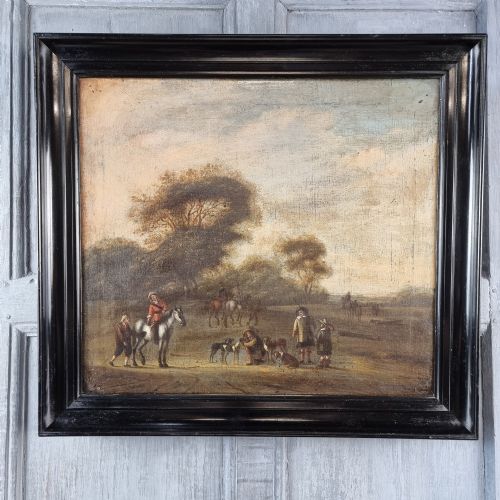
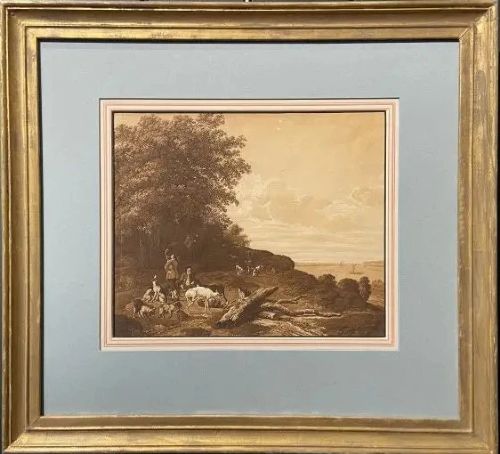
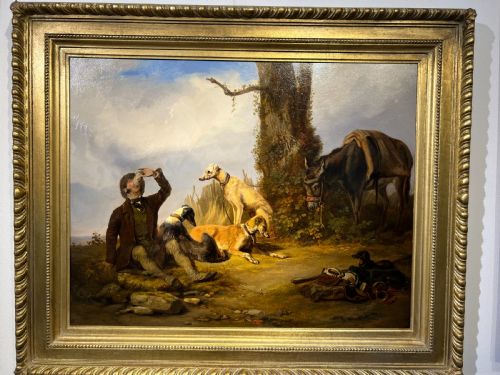
Hunting hound artwork encompasses paintings, watercolours, prints, and framed art depicting dogs engaged in rural pursuits, field sports, and canine portraits. The pieces seen here span from the 17th century through the Georgian and Victorian eras up to the mid-20th century.
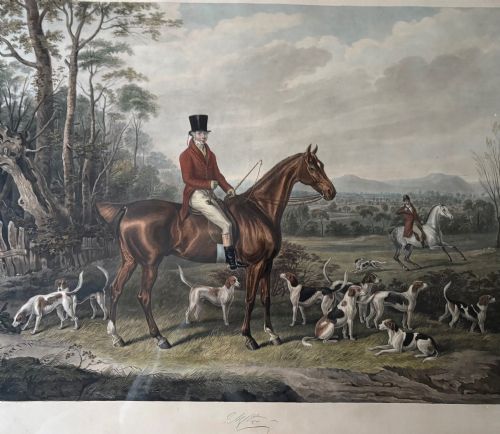
Oil paintings on canvas and wood board dominate the selection, alongside detailed watercolours and hand-coloured engravings. Collectors encounter individual dog portraits alongside sweeping field landscapes featuring packs in full pursuit.
British sporting art forms the core of the available material, reflecting traditions of fox hunting, coursing, and rural life. Pieces range from intimate portrayals of named hounds to large-scale depictions of historic hunts.
Materials and Techniques
Artists worked primarily in oil paint on canvas or wooden boards, applying rich pigments to build depth in canine coats and winter landscapes. Watercolours on paper offer a lighter touch, often utilised for preparatory sketches and detailed studies of form.
Engravings provide printed records of sporting scenes, sometimes finished with hand-colouring to add vibrancy to riders and hounds. Gold leaf occasionally frames the work, enhancing the presentation of period oil paintings.
Several hounds in these paintings are named directly in the titles, preserving the individual identity of a favourite working dog from centuries past.
Assessing Quality
Quality rests upon the artist's anatomical precision in rendering hound muscle structure, movement, and individual expression. Master sporting artists capture the tension of the chase and the specific breed characteristics with greater conviction than anonymous jobbing painters.
The handling of light and atmospheric depth separates superior landscape integrations from stiffer, formulaic compositions. Preservation of the original canvas, paper support, and period framing also influences the integrity of the surviving piece.
Johannes Lingelbach·Sir Edwin Henry Landseer·Arthur Wardle·Samuel Raven·F Marie Huet Villiers·Colin Graeme Roe·Fannie moody·Jules Chardigny·John Sanderson-Wells·Alfred Duke·Henri Schouten·Ludolf de Jongh·Tom Carr·Guillaume Urban Régamey·George Goodwin Kilburne·Thomas Blinks·Henry Frederick Lucas-Lucas·Edward B Herberte·Wilfred Bailey
The Hunting Hound Artwork Glossary
- Aquatint
- A printmaking technique that produces tones resembling watercolours by using acid to etch the copper plate. It allows artists to achieve subtle tonal variations in sporting prints.
- Sporting Art
- Genre of painting and illustration dedicated to depicting field sports, horses, dogs, and rural pursuits. This tradition flourished in Britain throughout the Georgian and Victorian periods.
- Oil on Board
- A painting executed on a rigid wooden panel or stiff pasteboard rather than stretched canvas. It provides a stable surface that was frequently favoured for smaller outdoor studies.
- Full Cry
- The vocalisation of a pack of hounds when they have scented and are actively pursuing quarry. It represents a dynamic moment often chosen by animal painters.
- Wax Seal
- An impression pressed into molten sealing wax to authenticate or close documents. These personal signet impressions sometimes accompany historical sporting archives.
Hunting Hound Artwork: Frequently Asked Questions
What periods do these pieces date from?
The works span multiple centuries, beginning with 17th-century Dutch and landscape traditions and extending through the Georgian and Victorian eras.
Later examples reach into the mid-20th century, showing continuity in British sporting art subjects.
How were these artworks originally displayed?
Period pieces were typically hung in country houses, sporting lodges, and estate libraries to celebrate local packs and prized hunting dogs.
Today they serve similar decorative roles in traditional interiors and rural homes.
What is the difference between an oil painting and a watercolour?
Oil paintings utilise pigment suspended in drying oils on canvas or wood, offering rich textures and deep colour layering suited to substantial compositions.
Watercolours use water-soluble pigments on paper, yielding transparent effects and delicate line work favoured by illustrators.
Are these works signed by the artists?
Many pieces feature visible signatures, attributions to named painters, or historical documentation linking them to established sporting artists.
Others remain unsigned work from period studios, identified instead by style, technique, and subject matter.