


Hunter Horse Oil Portrait
A hunter horse oil portrait captures the power and presence of these prized animals, offering a direct window into traditional equestrian life.
Hunter Horse Oil Portrait
A hunter horse oil portrait is an equine painting depicting the sturdy mounts used for field sports and hunting. The examples you encounter on this page span the nineteenth century into the twentieth century, reflecting the enduring popularity of equestrian art.
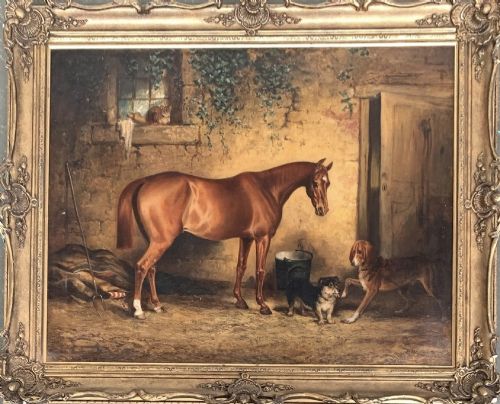
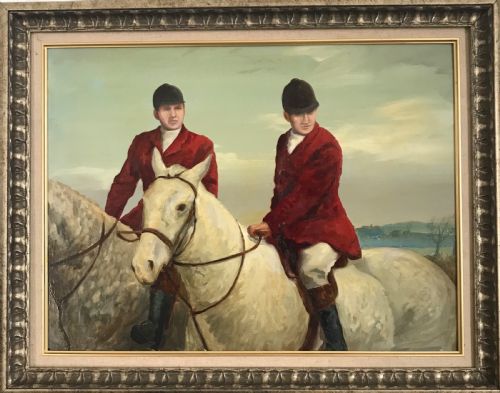
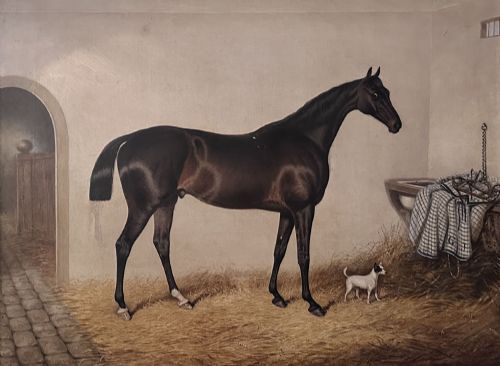
The subjects are frequently shown standing in stables, courtyards, or open landscapes, sometimes accompanied by grooms or terriers. Bay and chestnut hunters predominate, alongside grey roans and specific named animals linked to historical hunts.
These works belong to traditional British sporting art and Victorian fine art traditions. They record individual animals valued for their stamina and conformation rather than generic livestock.
How they were made
Artists utilised oil paint applied to canvas, wood panels, or oak boards to build up rich tones and textures. Canvas stretched over wooden frames is common, while earlier or smaller studies often appear on prepared wooden supports.
Many works retain their original gilt wood or giltwood frames, which provide a heavy, decorative border suited to domestic display. The application of oil allowed painters to render the glossy sheen of horse coats and the textures of stable straw with precision.
Several stable scenes quietly include a small terrier keeping watch beside the hunter's hooves.
What varies in quality
Quality in a hunter horse oil portrait rests on the painter's anatomical accuracy and the handling of light across the animal's musculature. Finer examples capture the alertness in the eye and the specific conformation of the hunter, whereas lesser works treat the subject with rigid stiffness.
The depth of the background and the integration of the horse within its stable or landscape setting also separate standard decorative pieces from accomplished fine art. Signed works by recognised practitioners command greater attention for their assured brushwork and composition.
Henry Barraud·Benjamin Cam Norton·Edwin Frederic Holt·Alfred Moginie Bryant·Alfred Grenfell Haigh·Abraham Cooper RA·Charles Bilger Spalding RA·James Barenger·John Herring Senior·George Brownlow·John Atkinson
The Hunter Horse Oil Portrait Glossary
- Bay
- A coat colour of horses characterised by a reddish-brown body with black mane, tail, and lower legs. It is the most frequently recorded horse colour in these painting titles.
- Giltwood
- Wood carved and covered with a thin layer of gold leaf or gilt. These frames often accompany nineteenth-century oil paintings.
- Conformation
- The physical build and bodily structure of a horse. Sporting artists prioritized accurate depiction of these traits in hunters.
- Stable interior
- A common setting for equestrian portraits, showing the animal indoors with straw and harness details. It places the hunter in its everyday working environment.
Hunter Horse Oil Portrait: Frequently Asked Questions
What is a hunter horse?
A hunter is a sturdy riding horse bred and trained for fox hunting and field sports, possessing the stamina to clear obstacles and gallop across varied terrain.
In these portraits, they are depicted with strong shoulders and powerful hindquarters suited to their working role.
Are these paintings signed?
Several pieces on this page bear the names of notable nineteenth-century and early twentieth-century painters, while others remain unsigned.
Attributions are drawn from visible signatures, archival records, or stylistic comparisons with known sporting artists.
Why are stables a common setting?
Stables provided a sheltered environment where owners could showcase their prized hunters alongside working tack and attendants.
Artists used the dark interiors of stables to create dramatic contrast with the glossy coats of bay and chestnut horses.
How do I care for an oil on canvas?
Oil paintings on canvas require stable indoor humidity and protection from direct sunlight to prevent cracking of the paint layer.
Dusting should be done gently with a soft, dry brush without applying pressure to the canvas.