

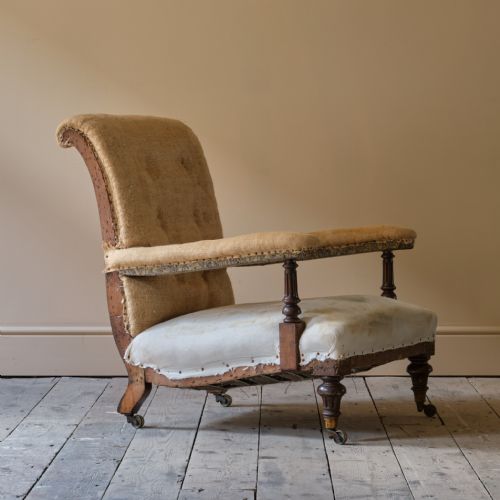


Howard Style Arm Chair
A howard style arm chair delivers unmatched seating comfort with deep proportions and structured upholstery.
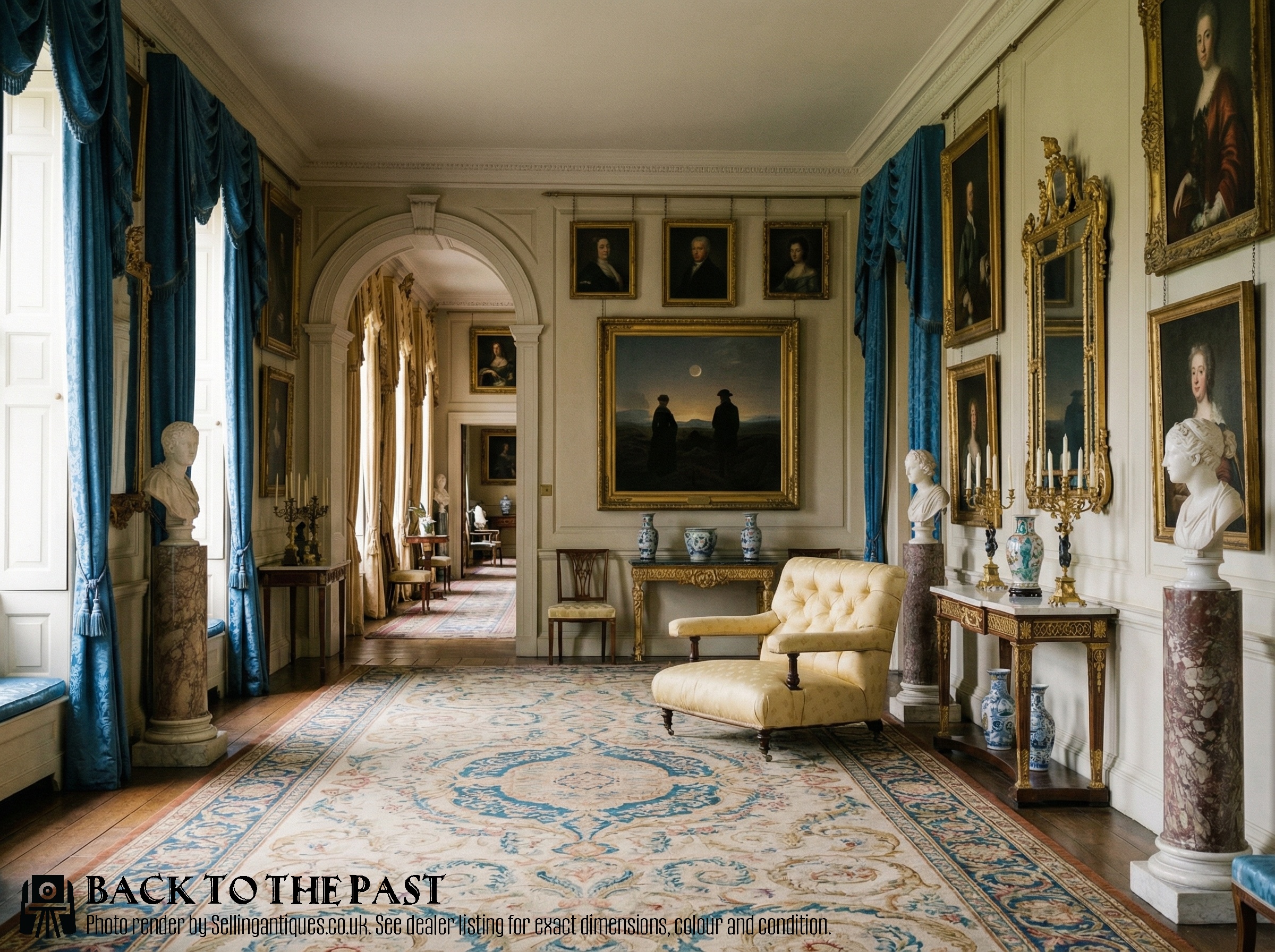
Howard Style Arm Chair
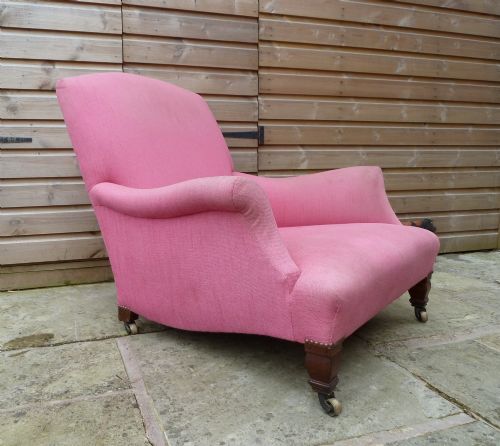
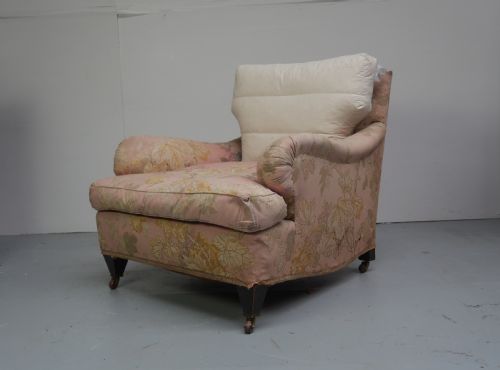
A howard style arm chair represents the pinnacle of Victorian and Edwardian lounging comfort, defined by deep seats and low profiles. These pieces emerge predominantly from the nineteenth and early twentieth centuries, reflecting the relaxed elegance of the English country house aesthetic.
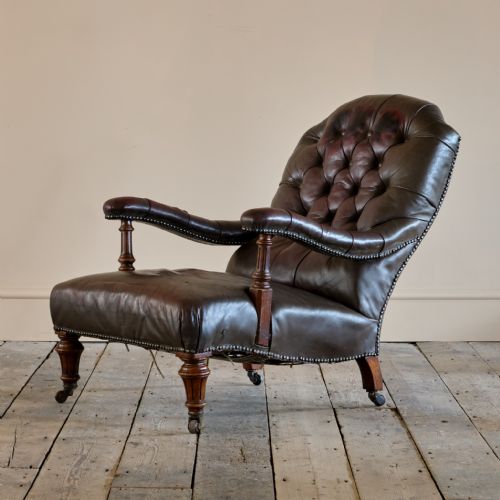
Buyers encountering this selection will find standard upholstered models alongside open armchair variations and specific iterations like the Bridgewater and Woodstock. The most common examples date from the Victorian period through the Edwardian era, often retaining generous proportions designed for relaxation.
Originating from the renowned firm Howard and Sons alongside contemporary makers, these chairs set a standard for upholstered seating. The design balances formal presence with an inviting sink-in quality that defined nineteenth-century domestic comfort.
Construction and Materials
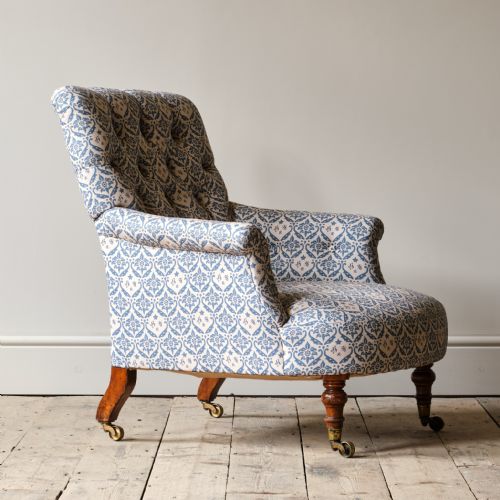
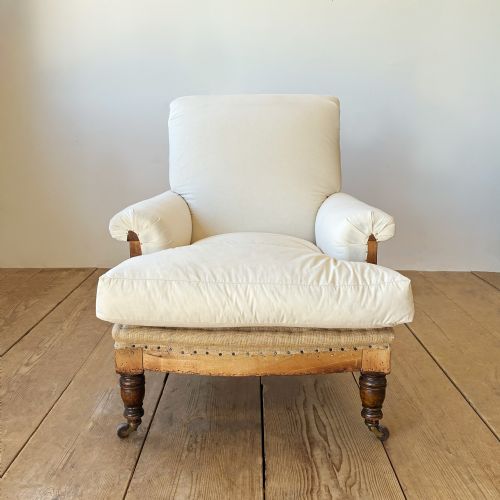
The foundation relies on robust timber frames, constructed from hardwood, mahogany, and walnut to ensure structural longevity beneath the padding. Exposed woodwork is frequently minimal, appearing chiefly on the legs which often terminate in brass castors.
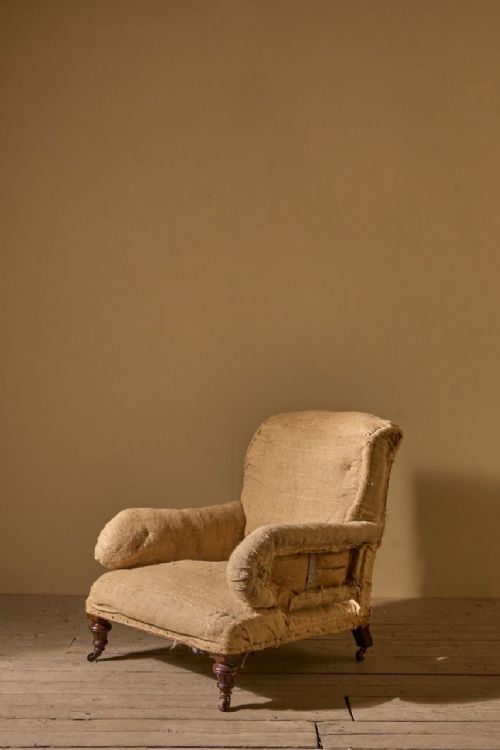
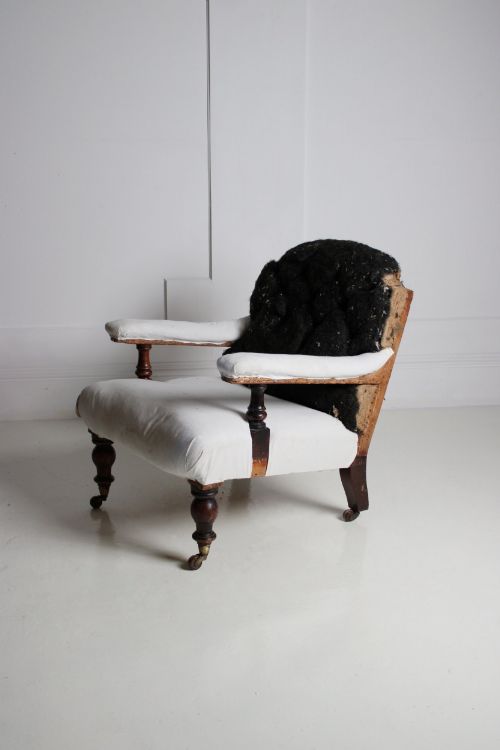
Traditional upholstery techniques utilise calico, hessian, and ticking as base layers beneath exterior fabrics such as velvet, wool, and kilim. These concealed layers provide the characteristic firmness and resilience of the seat and back.
Some chairs arrive wearing their working clothes underneath, hidden beneath decades of upholstery like secret layers of nineteenth-century history.
Assessing Craftsmanship and Integrity
Quality rests in the structural integrity of the timber frame and the preservation of the original internal stuffing methods. Pieces retaining their foundational calico or ticking demonstrate a higher degree of authenticity.
The subtlety of the arm contour and the depth of the sprung seat separate superior examples from standard workshop productions. Proportions that maintain visual balance despite generous padding indicate expert nineteenth-century design.
Howard And Sons·Trollope And Sons·Waring And Gillow
The Howard Style Arm Chair Glossary
- Bridgewater armchair
- A specific form with low recessed arms and deep cushioning, frequently associated with Howard designs. This model prioritises relaxed seating angles.
- Calico
- A plain-woven cotton fabric utilised as the foundational inner upholstery layer. It tightly encases the stuffing before the decorative top cover is applied.
- Ticking
- A heavy, tightly woven cotton or linen material traditionally used to contain mattress and upholstery stuffing. Original ticking adds historical value to a piece.
- Castor
- A small wheel attached to the base of the legs to facilitate movement across carpets and flooring. These are commonly cast in brass.
Howard Style Arm Chair: Frequently Asked Questions
What defines a howard style arm chair?
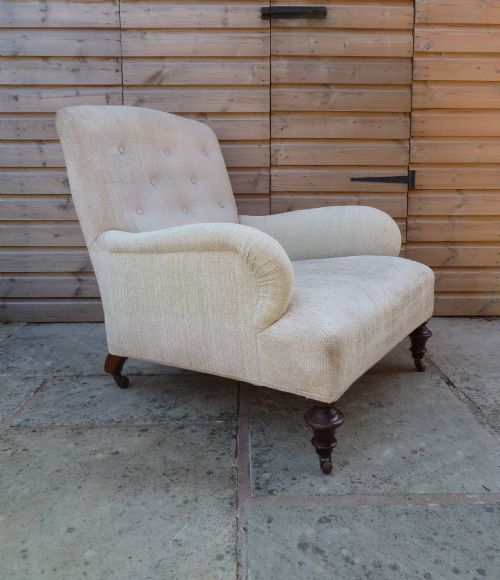
These seats are defined by deep proportions, low rolled arms, and substantial sprung padding designed for comfort.
They emerged strongly during the Victorian and Edwardian periods as luxurious additions to English country houses.
How do I identify original ticking?
Original ticking appears beneath the outer decorative fabric as a tightly woven, striped cotton or linen inner cover. It was utilised to hold the traditional stuffing securely in place.
Finding intact foundational fabric indicates that the upholstery has retained its historical integrity over the decades.
Where were these chairs used?
They were principal furnishings in libraries, drawing rooms, and studies of large nineteenth-century residences. Their design was intended for long hours of reading and relaxation.
Today, they adapt easily to both traditional interiors and modern living spaces as statement reading seats.
What is a Bridgewater model?
The Bridgewater is a distinct armchair variation featuring notably low, set-back arms that create an open seating area. It shares the deep proportions characteristic of the wider group.
This specific form became a staple of comfortable domestic seating from the late nineteenth century onward.