


Hoop Back Wooden Armchairs
These hoop back wooden armchairs are vernacular seating pieces combining steam-bent frames with solid timber seats, offering enduring comfort and honest construction.
Hoop Back Wooden Armchairs
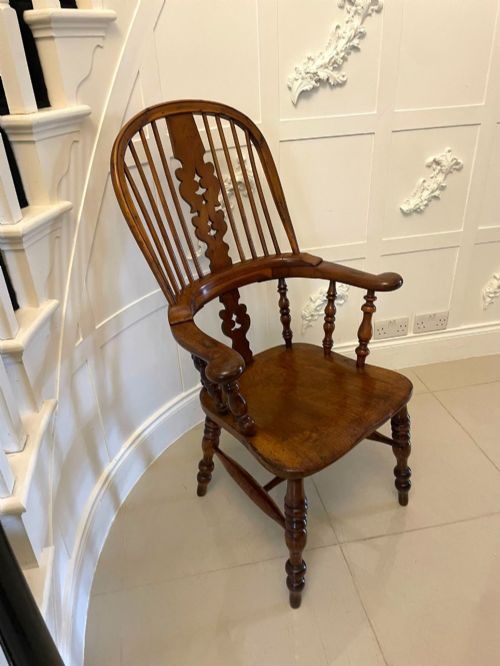
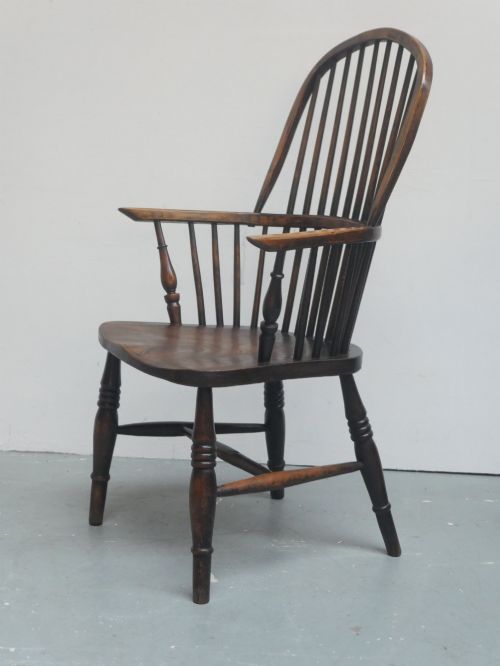
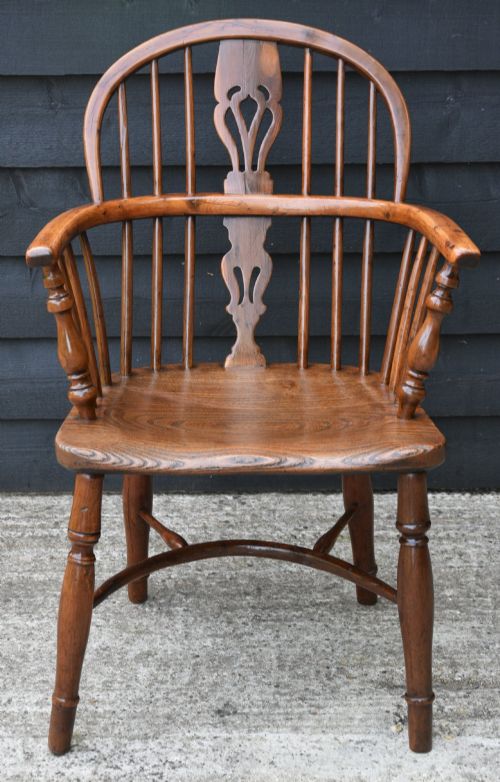
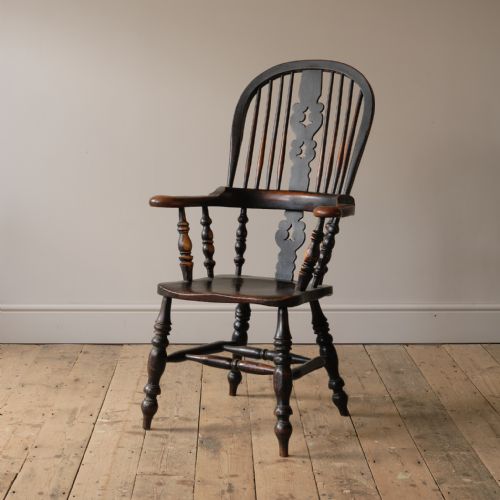
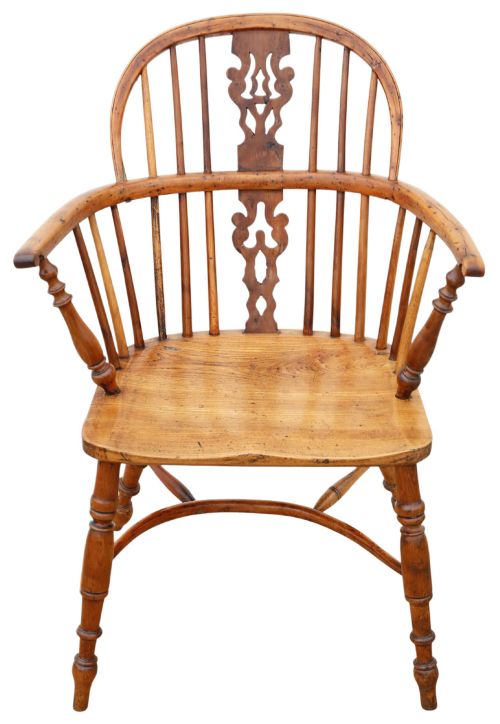
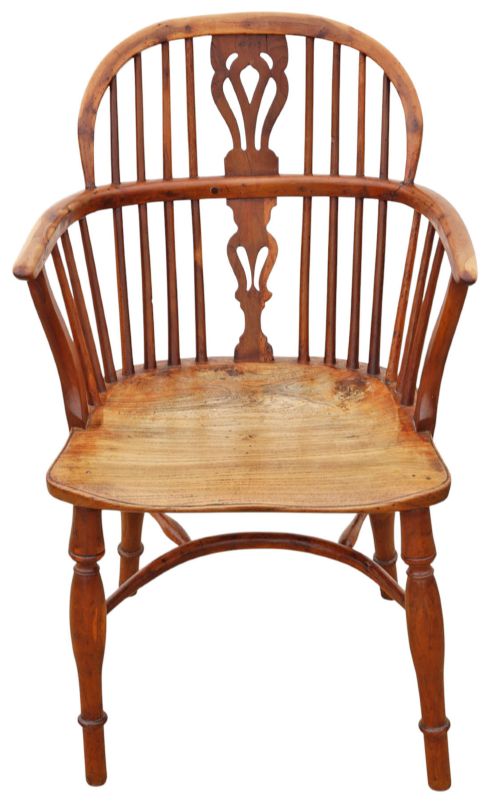
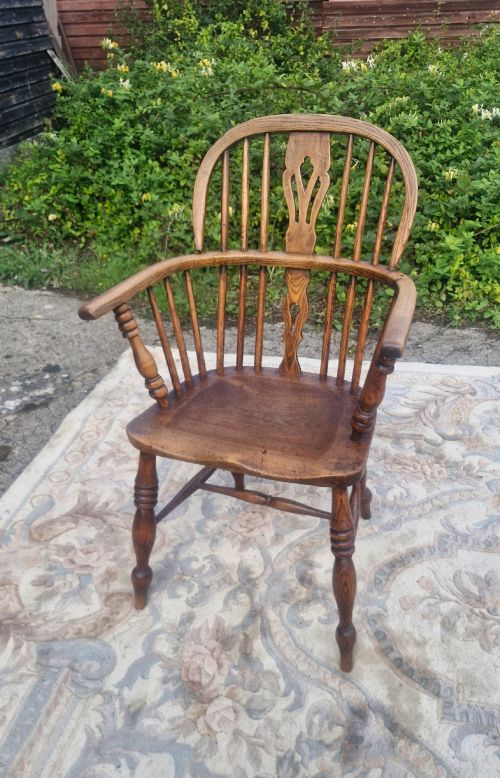
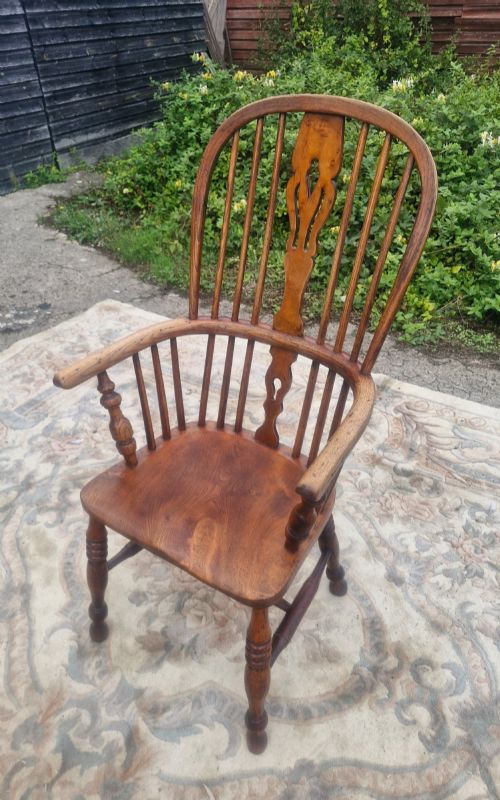
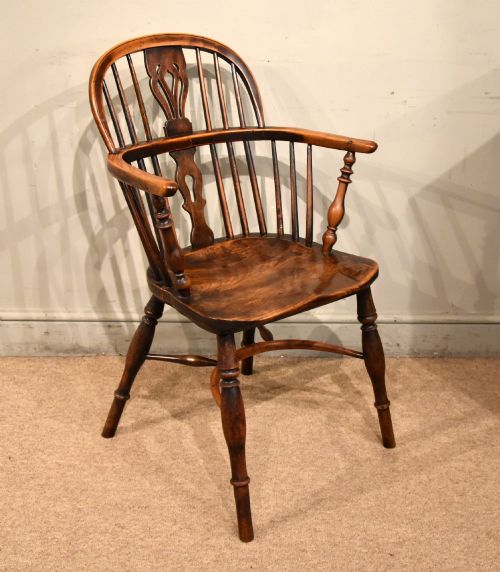
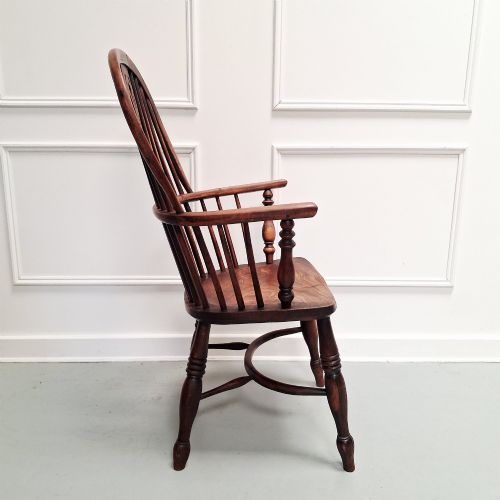
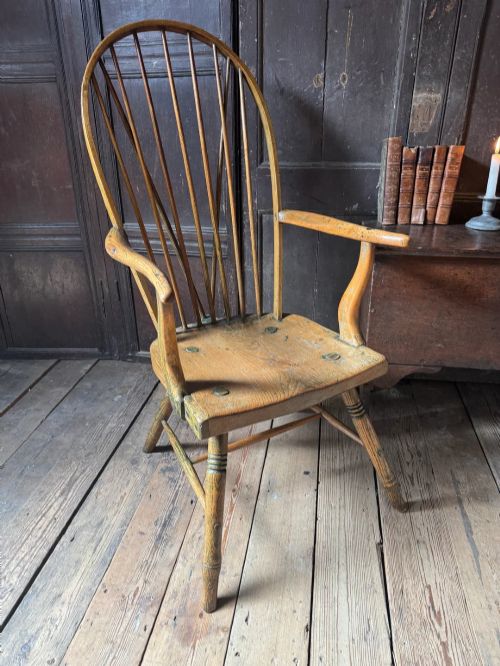
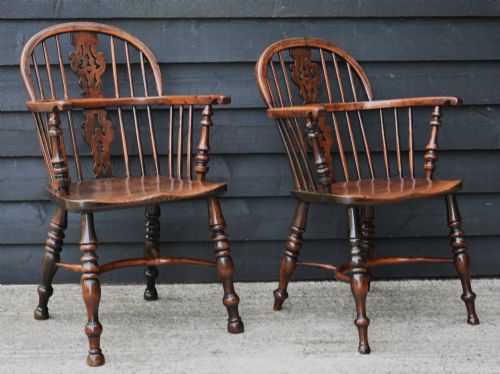
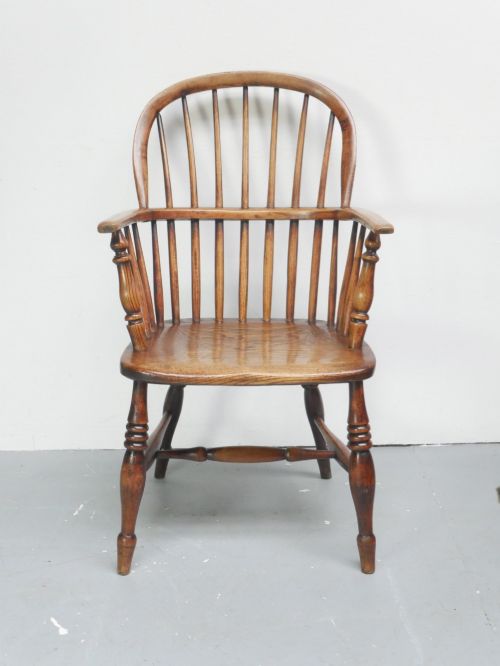
Hoop back wooden armchairs appear primarily as Windsor chairs originating from English country traditions across the Georgian, Victorian, and nineteenth-century periods. These seating pieces typically combine a continuous curved backrest with a solid carved wooden seat and distinct arm supports.
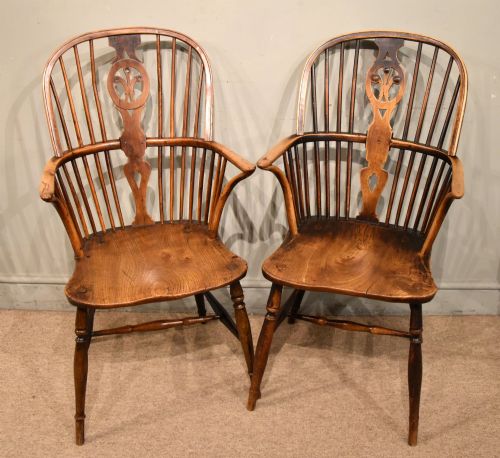
Makers produced various configurations including high-back, low-back, rocking, and child-sized variants, alongside matched sets for dining or parlour use. The listings on this page demonstrate regional differences such as Scottish, Welsh, and West Country origins shaping the local vernacular forms.
How they were made
Craftsmen built these chairs using a combination of timber species, pairing elm seats with ash, beech, oak, fruitwood, or yew for the spindles, bent hoops, and legs. The thick wooden seat served as the central anchor into which the legs and back spindles were wedged and tenoned.
Makers utilised steam-bending techniques to curve straight lengths of wood into the characteristic continuous hoop backrest. Additional structural support often came from turned stretchers, including crinoline styles connecting the legs underneath.
Listings feature eighteenth-century and nineteenth-century pieces built from elm, ash, yew, beech, oak, and fruitwood.
What varies in quality
The visual appeal and structural integrity of these chairs depend heavily on the selection and figuring of the timber, particularly in yew and elm grain patterns. Master makers created harmonious proportions where the rake of the legs and the sweep of the arm bow achieved balanced elegance.
Originality of surface finish and the retention of early patination distinguish finer examples from heavily restored pieces. Details such as well-turned arm supports, crisp spindle turnings, and maker stamps elevate particular seating forms.
J SPENCER
The Hoop Back Wooden Armchairs Glossary
- Windsor chair
- A chair built with a solid wooden seat into which all other components - legs, back, and arms - are independently inserted. This construction method creates a sturdy, resilient form typical of country furniture.
- Hoop back
- A continuous bentwood rail forming the back and armrests of a chair in one sweeping curve. This design distributes weight evenly and provides robust upper back support.
- Crinoline stretcher
- A bent metal or wooden arched brace connecting the legs of a chair beneath the seat for added stability. It derives its name from the hoop skirts worn during the Victorian era.
- Elm
- A durable, tough timber with an interlocking grain that resists splitting, frequently selected for chair seats. Its natural strength allows the thick wooden seat to support wedged joints securely.
- Vernacular
- Objects designed by traditional craftsmen for practical local use rather than following formal academic design rules. These pieces reflect regional materials and building methods.
Hoop Back Wooden Armchairs: Frequently Asked Questions
What is a hoop back wooden armchair?
These seating pieces are traditional Windsor chairs featuring a single bentwood rail that forms the upper back and armrests, mounted onto a solid wooden seat.
Craftsmen built them using vernacular woodworking techniques, combining different native timbers for the seat, legs, and spindles.
How do I date a Windsor chair?
Dating relies on observing construction methods, timber choices, tool marks, and overall stylistic evolution from the eighteenth through the nineteenth centuries.
Early pieces often display distinct regional traits, simpler turning profiles, and heavy use of yew or elm.
Where were these country chairs made?
Regional workshops across England, Wales, and Scotland produced these chairs to supply local rural and domestic markets using locally accessible timber.
Distinct geographic styles emerged, reflecting the preferences and raw materials available in places like the West Country or Lincolnshire.
How do I care for antique wooden armchairs?
Maintain these chairs by keeping them away from direct heat sources and sudden humidity changes to prevent timber shrinkage and splitting.
Applying occasional appropriate wax preserves the historic surface patination without building up heavy chemical residues.