





Historical Bronze Figure
A historical bronze figure captures monarchs, soldiers, and classical heroes in enduring metal, offering tactile weight and narrative depth to a room.
Historical Bronze Figure
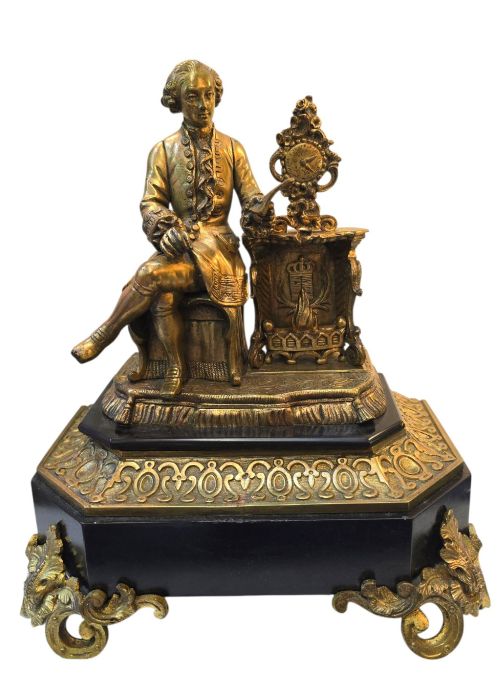
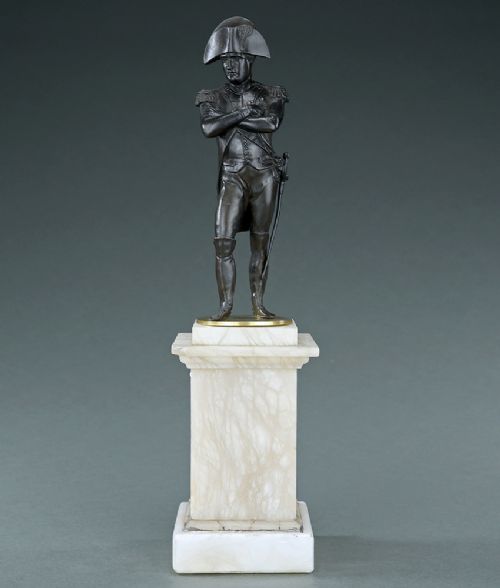
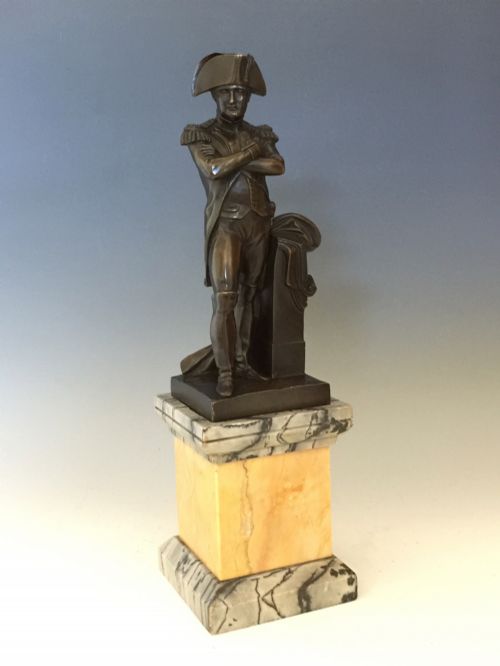
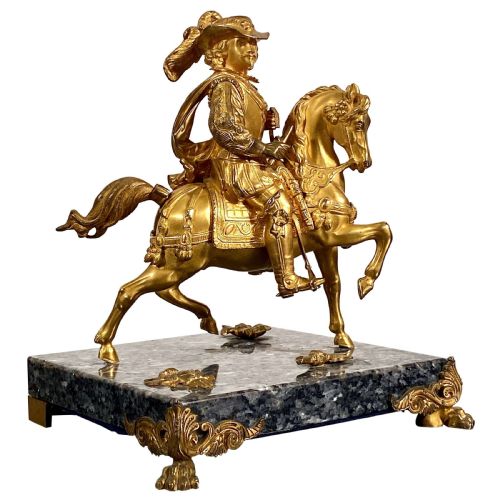
A historical bronze figure brings notable historical and mythological characters into three-dimensional form, ranging from Napoleonic soldiers and French monarchs to equestrian figures on horseback. These works frequently draw on periods such as the nineteenth century, French Empire, and Regency, capturing subjects like Napoleon Bonaparte, Louis XIV, and Queen Boadicea in solid metal or mounted on marble bases.
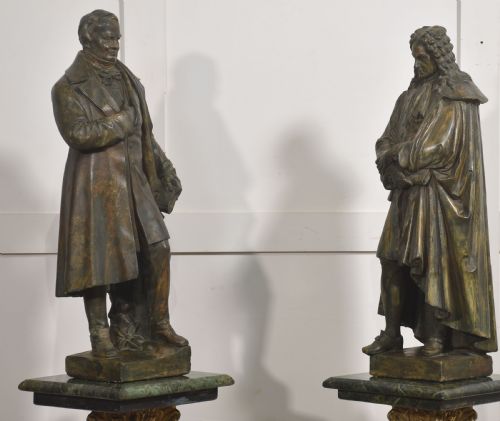
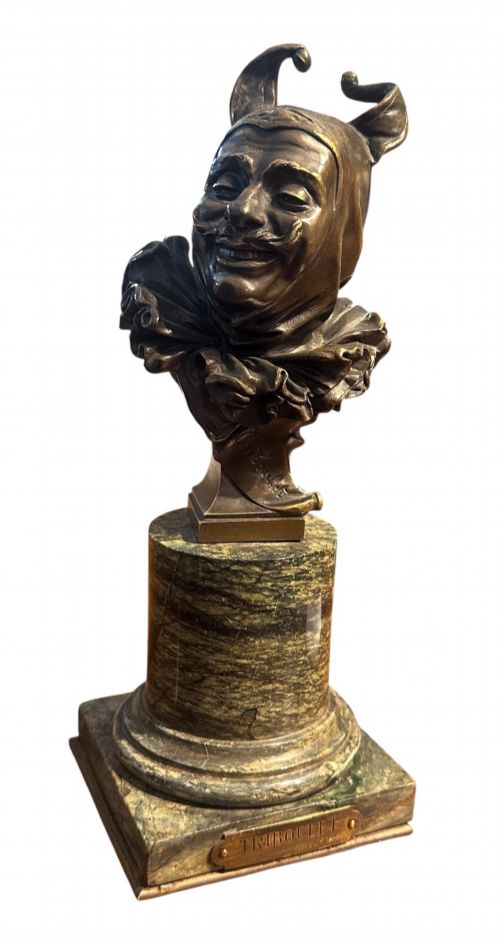
The objects appearing here span mantel clocks, portrait busts, statuettes, and large library sculptures. Makers and foundries of the nineteenth century dominate the selection, often working within French academic realism, neoclassical, and baroque revival styles.
Buyers encounter subjects both standing and on horseback, alongside paired figures such as Assyrian rulers. Patinated and gilt surfaces define the visual vocabulary of these pieces, preserving historical personas through careful foundry work.
Judging Quality and Execution
The richness of the patina and the quality of the supporting base, whether veined marble or matched ormolu mounts, indicate the original investment in the piece. Stamped foundry marks and known artist signatures further distinguish workshop output.
Listings feature nineteenth-century figures rendered in bronze, patinated bronze, marble, ormolu, and chalkware across neoclassical and baroque revival styles.
Pierre-Augustin Caron de Beaumarchais·Emile Guillemin·Dopmeyer·E.H. Dumaige·Jean Jules Salmson·Barbedienne·Willems·James Pradier·C.Anfrie
The Historical Bronze Figure Glossary
- Patinated bronze
- Bronze treated with chemical solutions to produce a specific surface colour, commonly dark brown or black. This finish protects the metal and defines sculptural contours.
- Ormolu
- Gilt bronze mounted on decorative objects or furniture. The technique involves applying finely ground gold mercury amalgam to a bronze base.
- Electrotype
- A replica produced through electroplating metal onto a mould. This method creates detailed metal figures without traditional casting.
- Regency
- An English stylistic period spanning the early nineteenth century. Pieces from this era often incorporate neoclassical motifs and military themes.
Historical Bronze Figure: Frequently Asked Questions
How do I clean a bronze figure?
Dust the surface regularly with a soft, dry brush to prevent particle buildup. Avoid using water, soap, or chemical polishes, which can strip the original patina.
Apply a microcrystalline wax sparingly if the metal requires protection, buffing it gently with a clean cloth. Professional conservation is advisable for valuable or delicate pieces.
Where were these figures displayed historically?
Nineteenth-century interiors often featured these sculptures on library desks, mantelpieces, and dedicated pedestals within studies and formal reception rooms. Smaller statuettes served as scholarly ornaments or desk accessories.
Clock garnitures integrated bronze figures directly into timepieces, combining functional mechanics with historical narrative in domestic spaces.
How can I identify the subject of a figure?
Inscriptions on the base or cast titles on the plinth frequently name the historical or mythological character depicted. Attributes such as military uniforms, crowns, or specific animals offer direct clues to their identity.
Reference books on nineteenth-century sculpture and foundry catalogues help match facial types and costume details to specific historical figures.