

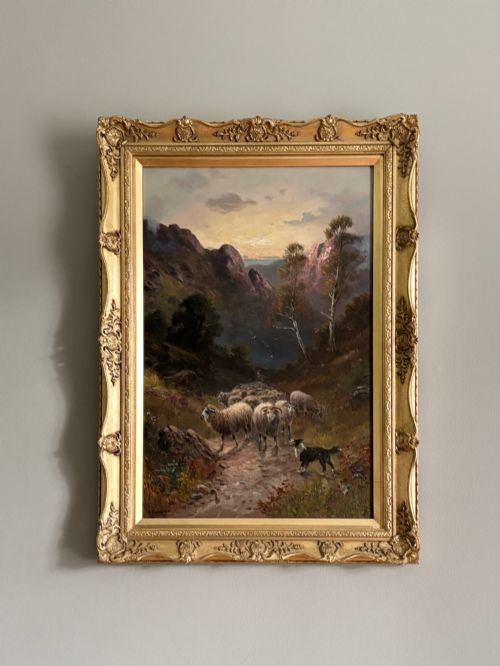
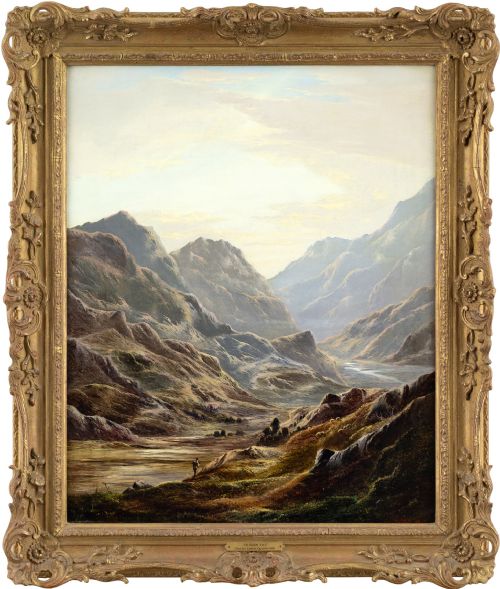
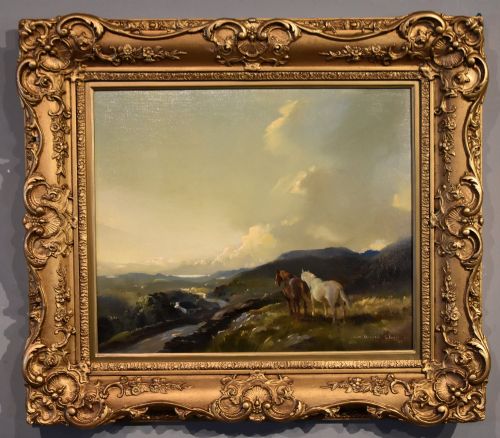
Highland Landscape Artwork
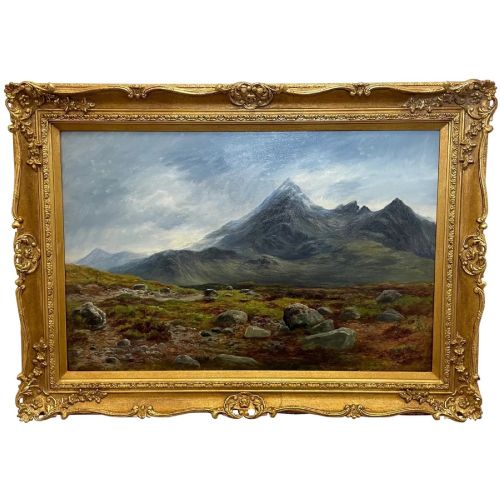
Highland landscape artwork captures remote Scottish terrain through historical painting traditions, offering atmospheric scenes of lochs, mountains, and cattle.
Highland Landscape Artwork
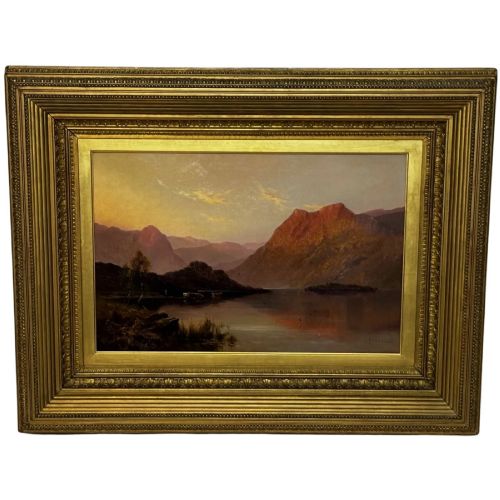
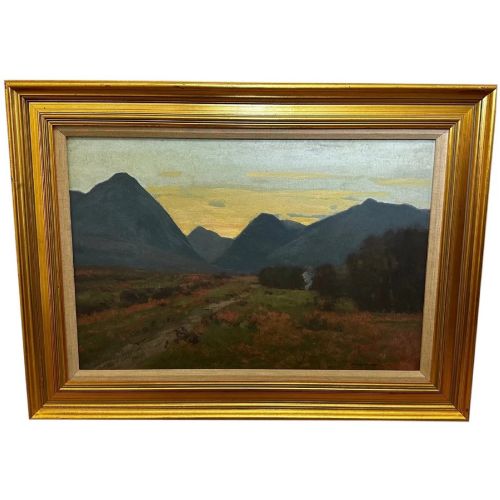
Highland landscape artwork encompasses nineteenth and early twentieth-century depictions of mountainous terrain, tranquil lochs, and pastoral scenes across Scotland.
Buyers frequently encounter oil paintings on canvas or wood panels, alongside watercolours on paper, framed within period giltwood and gesso surrounds.
The selections span Victorian academic realism and Scottish Impressionism, reflecting changing artistic approaches to northern scenery over several decades.
Materials and construction
Makers utilised oil paint applied to stretched canvas or prepared wood panels, building up rich textures to depict Highland mist, water, and rugged terrain.
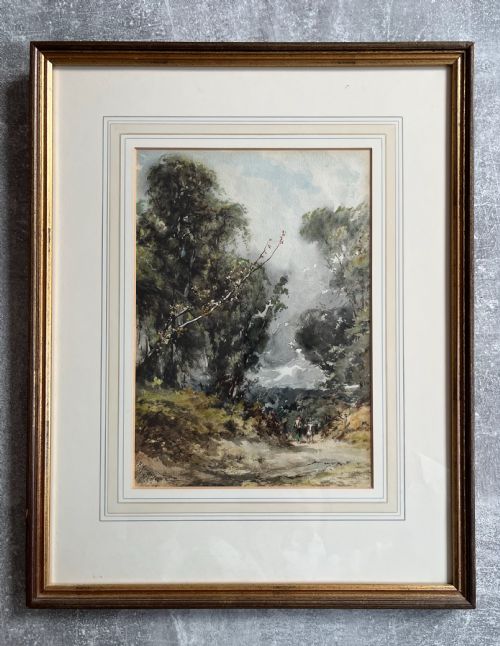
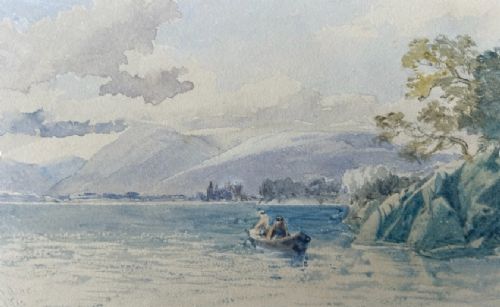
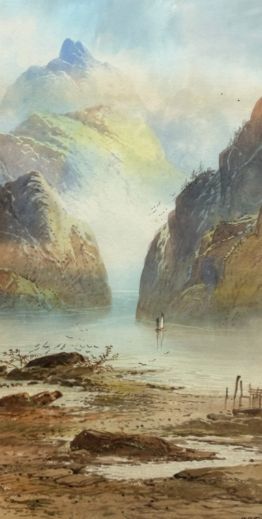
Watercolour paintings on paper capture lighter atmospheric effects, often finished with detailed brushwork for architectural or natural elements.
Frames incorporate carved gesso moulded over wood foundations, frequently finished with gilt layers to complement the paintings within.
Listings feature works spanning the nineteenth century through to the mid-twentieth century, executed in oil and watercolour.
Markers of quality
Quality rests in the handling of natural light and atmospheric depth, distinguishing ordinary topographical records from accomplished artistic interpretations of weather and terrain.
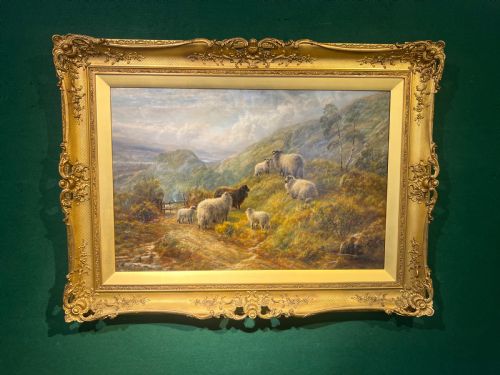
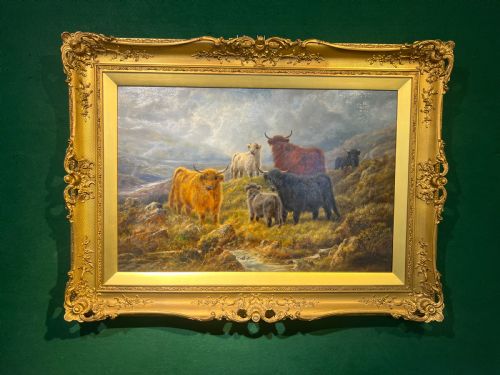
The precision in rendering animal anatomy, such as Highland cattle and sheep, separates accomplished academic works from simpler compositions.
Frame craftsmanship contributes significantly, where deep-moulded gesso and original gilt surfaces preserve the intended presentation of the period.
William Beattie-Brown RSA·George Fotherly Hargitt·Thomas Miles Richardson Jnr·William Henry Earp·Tom Campbell·Alfred Fontville de Breanski Jr·George Houston RSA RSW·Robert Watson·William Watson Jnr·Robert Cleminson·Douglas Cameron·Charles Leslie·Vernon DeBeauvoir Ward·Alexander Wellwood Rattray·Everett Watson Mellor·Joseph Knight·William George Tennick·Archibald Kay RSA·Henry Robinson Hall·William Henry Mander·Henry Hillier Parker·William Grant Murray·Tom Seymour·James Bell Anderson·Stanley Orchart
The Highland Landscape Artwork Glossary
- Giltwood
- Wood carved and coated with gold leaf or metallic powder. This finish provides a reflective border popular in Victorian framing.
- Gesso
- A plaster-like mixture applied to wood frames before gilding. It creates a smooth base for intricate moulded decoration.
- Scottish Impressionism
- A painting style focusing on light and spontaneous brushwork. Practitioners captured northern landscapes with looser application than traditional academic painters.
- Wood Panel
- A rigid flat support used instead of canvas. Artists painted directly onto prepared timber surfaces during the nineteenth century and earlier.
Highland Landscape Artwork: Frequently Asked Questions
What subjects feature in highland landscape artwork?
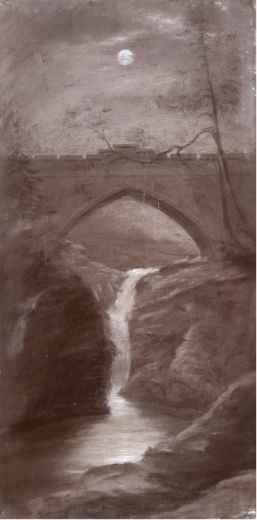
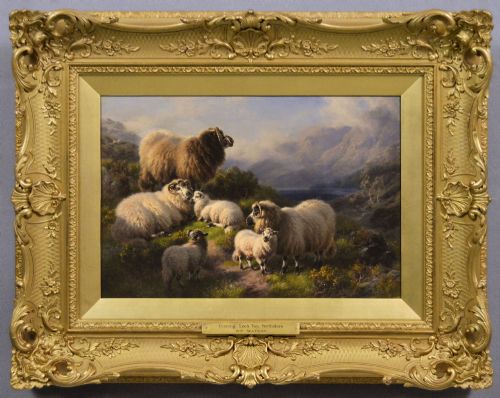
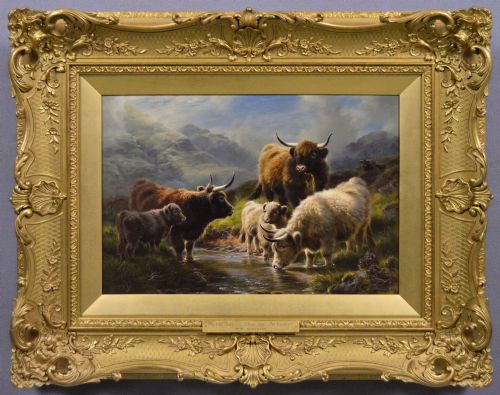
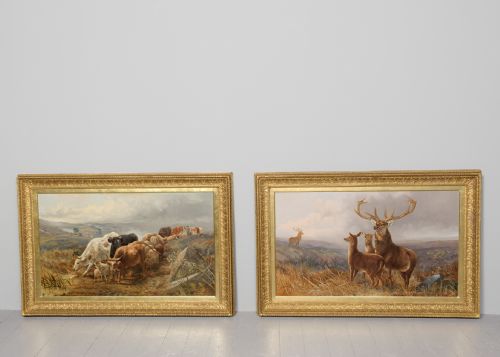
These works typically depict remote Scottish scenery, including mist-shrouded mountains, expansive lochs, and rocky river valleys. Painters frequently included domestic animals such as Highland cattle and sheep within pastoral compositions.
Human figures occasionally appear as solitary travellers or crofters navigating rural paths. The focus remains on the atmospheric qualities of northern weather and terrain.
How do oil and watercolour pieces differ?
Oil paintings utilise heavy pigment on canvas or wood panels, allowing for rich textures and deep tonal contrasts. These works suited large formal displays in Victorian interiors.
Watercolours on paper offer a lighter, more transparent medium suited to delicate atmospheric effects. They require protective glass framing to prevent moisture damage.
How can I date these paintings?
Dating relies on stylistic clues, framing techniques, and artist documentation recorded on canvas reverse sides or exhibition labels. Victorian works often display heavier academic precision and elaborate gilt frames.
Later pieces from the early twentieth century show looser brushwork influenced by impressionist movements. Signatures and dates inscribed by the artist provide definitive chronological markers.
Where should I hang these paintings?
These artworks require stable wall environments away from direct sunlight and damp conditions to preserve canvas integrity and watercolours. Well-lit spaces enhance the tonal depth of oil paintings and dark gilt frames.
Consider room humidity levels, particularly for wood panel supports that react to environmental changes. Proper picture wire and wall fixings safely support heavier framed pieces.