
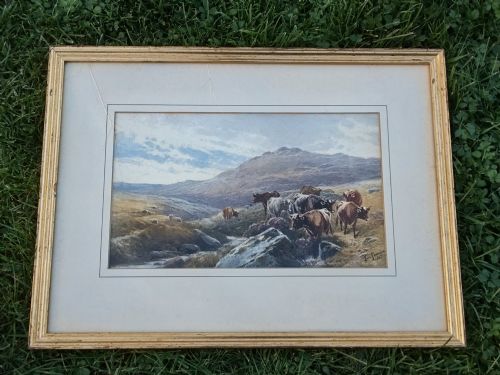
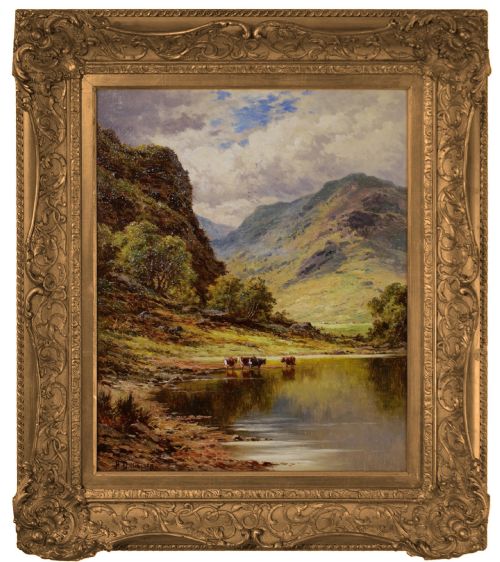
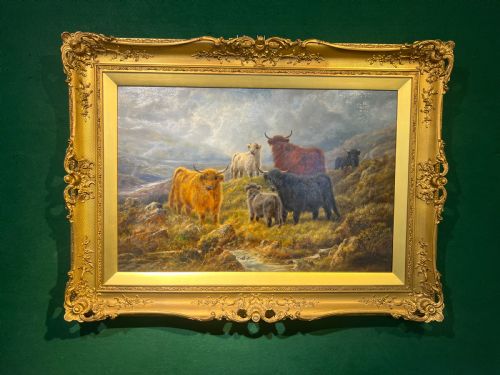
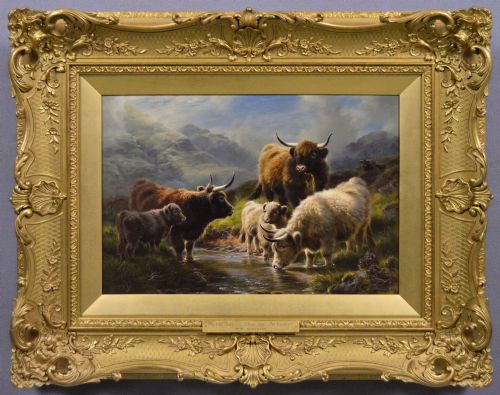
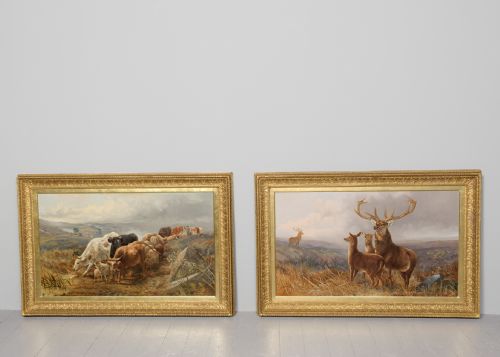


Highland Cattle Landscape Painting
A highland cattle landscape painting brings the atmospheric romance of the Scottish mountains and lochs directly into a room.
Highland Cattle Landscape Painting
A highland cattle landscape painting captures the rugged beauty of Scottish terrain alongside pastoral herds, reflecting 19th-century and early 20th-century artistic fascination with the Highlands. Buyers searching this phrase most frequently encounter traditional oil paintings on canvas depicting misty lochs, mountains, and longhorn cattle.
The works span the Victorian, Edwardian, and late 19th-century periods, often categorised under styles such as Victorian Pastoral and the Highland School. Alongside oil paintings, the selection includes related decorative arts featuring identical pastoral subjects, including porcelain vases and cabinet plates.
These pieces serve as windows into romanticised Scottish scenery, dominated by atmospheric weather, still water, and detailed animal portraiture. The enduring appeal lies in the combination of expansive landscape realism and the quiet presence of the cattle.
How they were made
Artists built these oil paintings using canvas stretched over wooden frames, applying oil paint to capture the textures of animal coats, heather, and water. Rich layers of pigment allowed painters to manipulate light and shadow, particularly in depictions of sunrise, sunset, or misty morning weather over lochs.
Many surviving works retain their original giltwood frames, which frequently incorporate ornate gesso moulding finished with gold leaf to complement the pastoral subject matter. In addition to canvas, some works utilise board or watercolour, while ceramic pieces incorporate finely detailed hand-painted porcelain overglazes.
Listings feature works spanning the nineteenth century through the Edwardian period, executed in oil on canvas, watercolour, and hand-painted porcelain.
What varies in quality
The distinction between standard works and finer examples rests on the precision of brushwork and the anatomical accuracy of the cattle and surrounding wildlife. Superior pieces demonstrate subtle control over atmospheric light, rendering morning mist or sunset reflections with depth rather than relying on formulaic backgrounds.
Provenance and attribution elevate individual works, particularly those bearing signatures of established painters associated with the Highland School or Royal Worcester porcelain studios. The execution of the surrounding frame, especially original heavy giltwood and gesso ornamentation, also influences the overall standing of a piece.
Henry H. Parker·Robert Watson·William Watson Jnr·Robert Cleminson·Henry Robinson Hall·Charles Jones·George Turner·John W Morris·Daniel Sherrin·Alfred de Breanski Snr·Harry Stinton·Henry Birtles·Louis Bosworth Hurt·Sidney Richard Percy
The Highland Cattle Landscape Painting Glossary
- Giltwood
- Wood carved and coated with gold leaf or gold paint, frequently used for traditional picture frames. This finish was designed to reflect ambient light and enhance the richness of the oil painting within.
- Gesso
- A plaster-like mixture applied to wooden frames before gilding, allowing craftsmen to carve intricate decorative reliefs. It provides a smooth, stable surface for gold leaf application.
- Spill vase
- A small decorative container historically placed on mantelpieces to hold slender wooden spills used for lighting fires. In ceramic manufacturing, these items were frequently hand-painted with pastoral scenes.
- Cabinet plate
- A decorative ceramic plate intended for display in a cabinet or on a wall rather than for dining. These items often feature detailed hand-painted artist scenes.
- Highland School
- A regional artistic movement focusing on the romantic scenery, lochs, and livestock of Scotland during the nineteenth century. Practitioners emphasised realistic depictions of weather and cattle against mountainous backdrops.
Highland Cattle Landscape Painting: Frequently Asked Questions
What periods do these paintings come from?
The available works predominantly date from the nineteenth and early twentieth centuries, spanning the Victorian and Edwardian eras. This period represents the height of British landscape realism and pastoral art.
Collectors will find dates ranging from the mid-nineteenth century through to the 1920s. The styles reflect the romantic artistic interpretation of the Scottish Highlands popular during those decades.
How were these landscape scenes used historically?
These oil paintings were created primarily for interior display in domestic drawing rooms and formal reception spaces. They brought the grandeur of the Scottish countryside into urban homes during the Victorian period.
Smaller ceramic pieces, such as vases and cabinet plates decorated with identical cattle motifs, served as ornamental objects for mantelpieces and display cabinets.
How should I live with an antique oil painting?
Antique oil paintings require stable environmental conditions away from direct sunlight and excessive humidity. Keeping them on interior walls protects the canvas and the delicate oils from rapid temperature fluctuations.
Original giltwood frames should be dusted gently with a dry, soft brush. Avoid using liquid cleaners or chemical polishes on either the canvas surface or the historic frame.
How do I tell different Victorian painting styles apart?
Victorian landscape realism focuses on accurate topographical details and everyday rural life, often including figures or livestock at work or watering. Pastoral works tend to idealise the natural environment, bathing the mountains and lochs in warm, dramatic light.
Brushwork also offers clues, with some artists employing tight, precise detail while others use looser, more atmospheric applications of paint to capture mist and weather.