




High Relief Urn
These high relief urn pieces are striking decorative vessels and vases formed with prominent raised ornament, desired for their dramatic surface depth and sculptural presence.
High Relief Urn
When you search for high relief urn, you encounter substantial decorative vessels, baluster vases, and jardinières created during the nineteenth and early twentieth centuries. The form spans Japanese Meiji period bronze works alongside Chinese copper-alloy and stoneware examples.
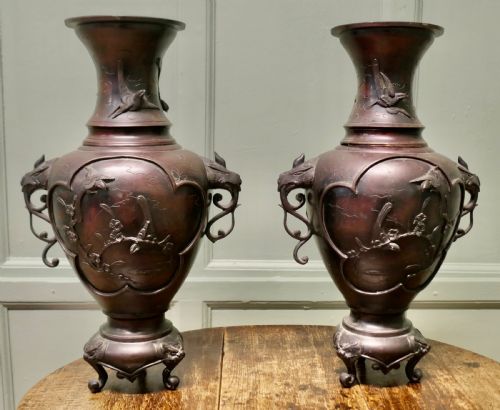
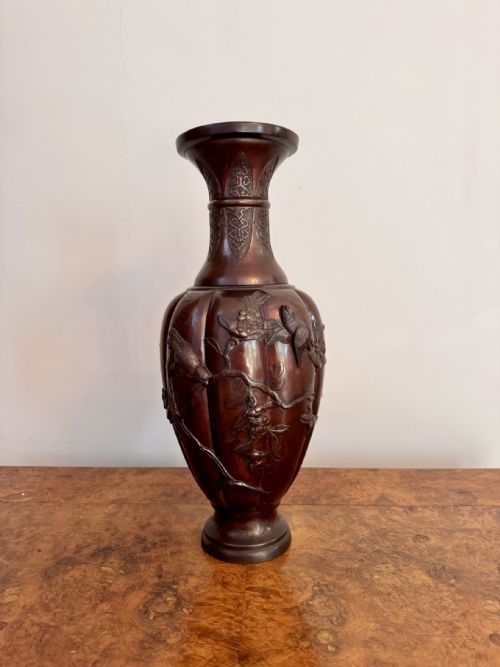
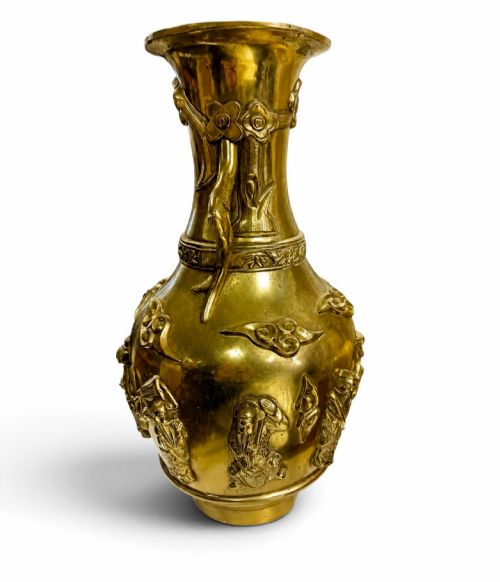
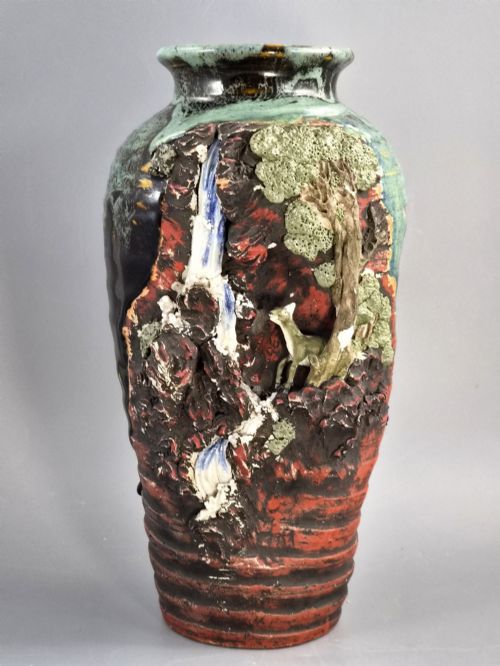
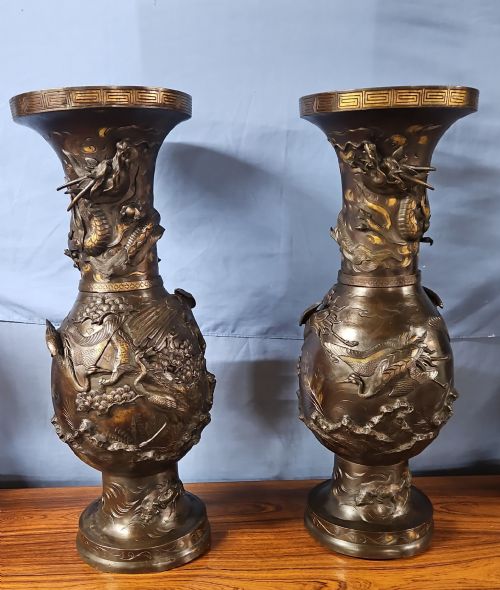
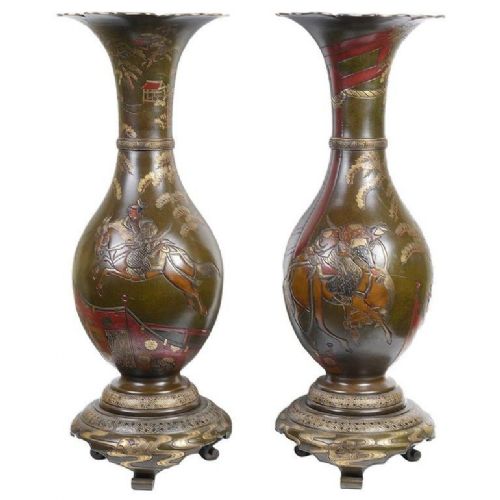
You meet pairs of large bronze vases and single sculptural landscape pieces most often on this page. These vessels utilise pronounced raised details, depicting figures, floral motifs, and mythical subjects across the body.
The objects originate from distinct periods including the Victorian era, the Meiji period, and the early twentieth century. Makers fashioned these decorative pieces to serve as prominent centrepieces within interiors.
How they were made
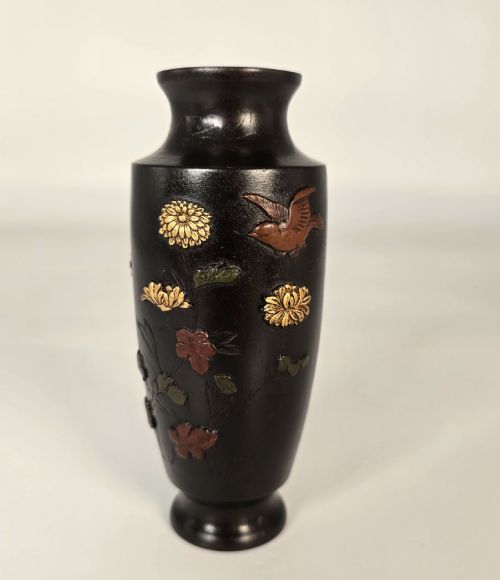
Artisans utilised bronze, copper, and copper alloy as the primary metallic substances for casting these substantial vessels. Metalworkers incorporated mixed metal elements, gold inlay, and enamel to add colour and contrast to the raised surfaces.
Craftsmen built up the ornamentation in high relief, shaping intricate landscapes, birds, floral bouquets, and figures directly onto the body of the vase. Certain ceramic examples employed stoneware, moulding and ribbing the clay before firing.
Daoist immortals and wandering stags share the metal landscapes with dragons, proving that nineteenth-century artisans enjoyed populating their vases with proper company.
What varies in quality
The precision and depth of the sculptural metalwork dictate the standard of the piece, separating standard production from exceptional artistry. Crisp definition in the raised motifs and the integration of mixed metals indicate superior craftsmanship.
Scale and proportion also influence the standing of these vessels, with exceptionally large pairs commanding greater presence. The presence of signatures or maker marks further distinguishes individual works within the range.
Genryusai Seiya·Galle
The High Relief Urn Glossary
- High relief
- Sculptural decoration that projects prominently from the background surface. This technique creates strong shadows and a tactile, three-dimensional effect across the vessel.
- Meiji Period
- The era in Japanese history spanning from 1868 to 1912, characterised by opening trade and exceptional metalwork. Pieces from this time frequently display detailed naturalistic motifs.
- Baluster
- A tall vase or architectural form with a rounded lower body and a slender neck. The shape provides a balanced foundation for extensive surface decoration.
- Jardiniere
- An ornamental pot or receptacle designed to hold plants or flowers. These large vessels often share the same decorative metalwork techniques as display vases.
- Copper Alloy
- A mixture of metals where copper forms the principal component, including bronze and brass. Artisans cast sturdy urns and vases from these durable metallic compositions.
High Relief Urn: Frequently Asked Questions
What is a high relief urn?
A high relief urn is a decorative vessel featuring sculptural ornamentation that projects substantially from the main body. These pieces showcase intricate scenes, flora, and figures rendered in bronze or copper alloy.
Craftsmen produced these works primarily during the nineteenth and early twentieth centuries, focusing on visual depth and tactile surface texture. They function as distinct ornamental centrepieces for interior spaces.
How do I identify Meiji period bronze?
Meiji period bronze works originate from Japanese workshops operating between 1868 and 1912. They often feature characteristic patination, mixed metal highlights, and precise raised naturalistic scenes.
Examining the base and surface can reveal artist signatures or foundry marks. The craftsmanship combines traditional casting methods with innovative surface treatments specific to this era.
Where should I display a large bronze vase?
Large bronze vases require a sturdy surface capable of supporting considerable weight, such as a heavy console table or a dedicated plinth. Placing them in areas with balanced natural light accentuates the dimensional raised details.
Because many examples were created as balanced pairs, arranging them symmetrically enhances their visual impact within a room. Ensure the surroundings complement the dark patinated or mixed metal tones of the metalwork.
How do I care for patinated bronze?
Patinated bronze surfaces require gentle dusting with a soft, dry cloth to prevent the accumulation of particles. Avoid using chemical polishes or abrasive cleaners that can strip the original surface finish.
Maintaining a stable indoor environment away from excessive moisture preserves the integrity of the metal and any applied enamel or inlay. Regular, minimal maintenance keeps the historical surface secure.