


High Backed Wooden Bench
A high backed wooden bench offers solid timber seating designed to block draughts and anchor a room.
High Backed Wooden Bench
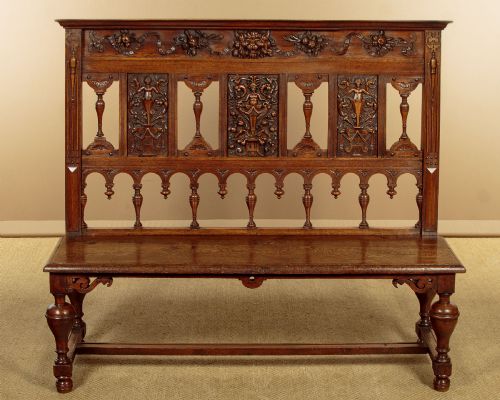
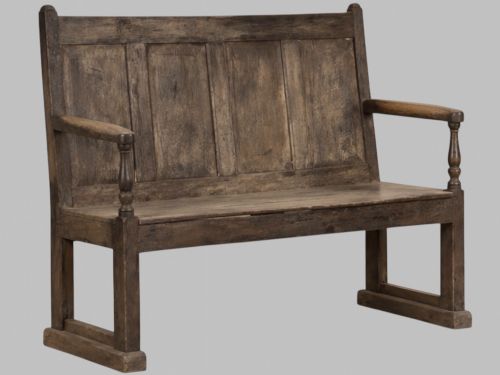
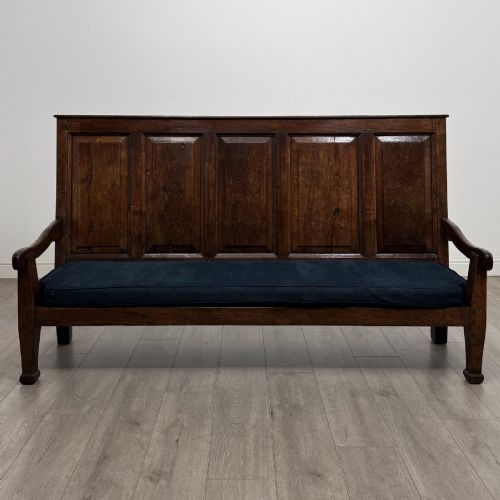
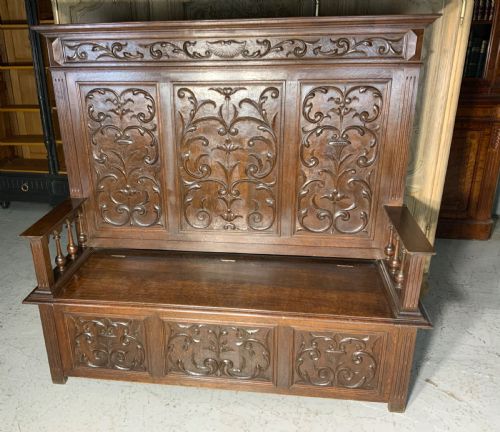
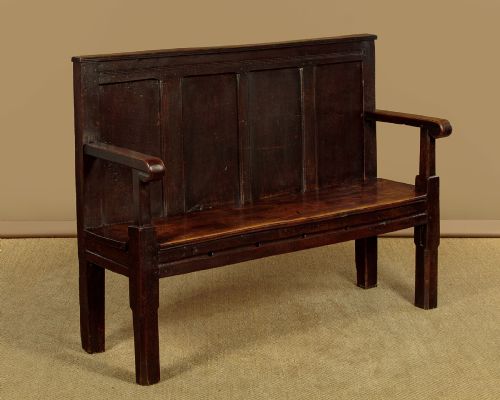
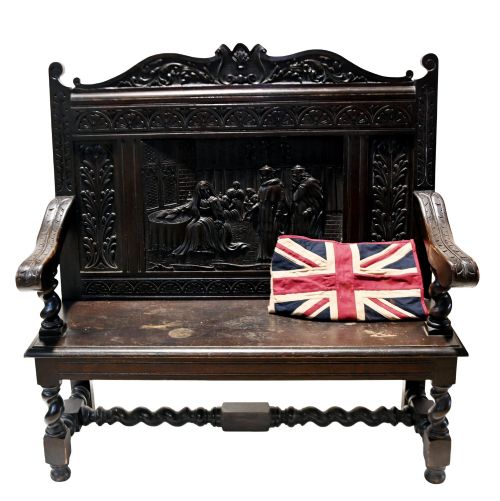
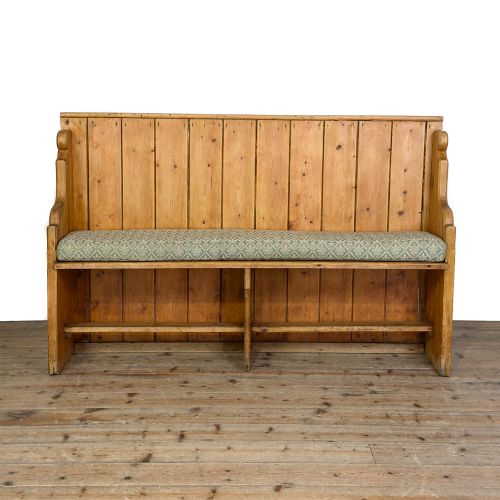
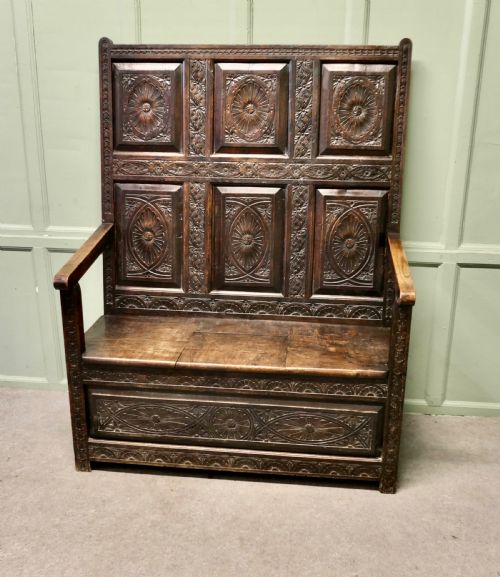
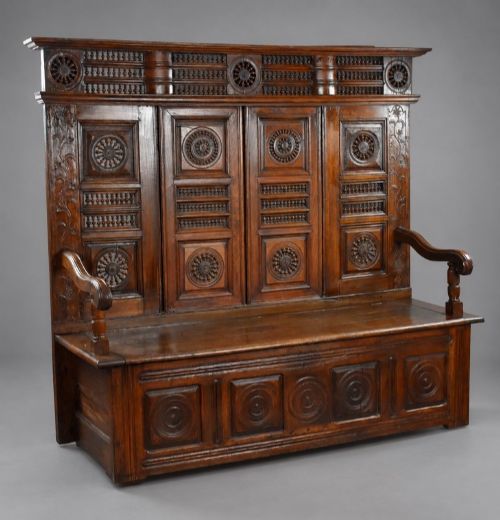
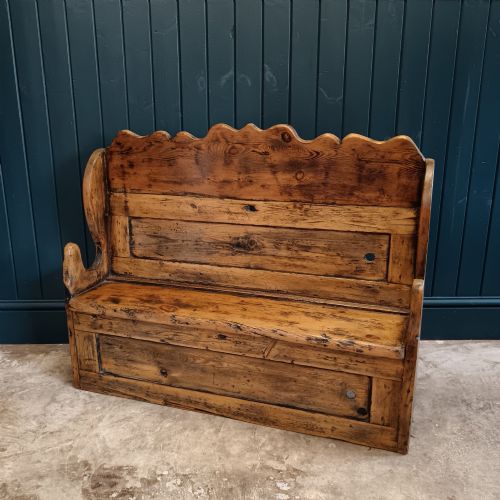
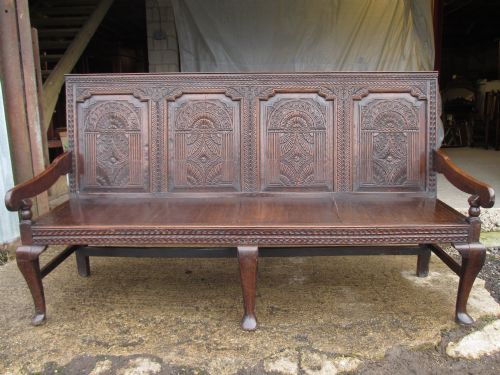
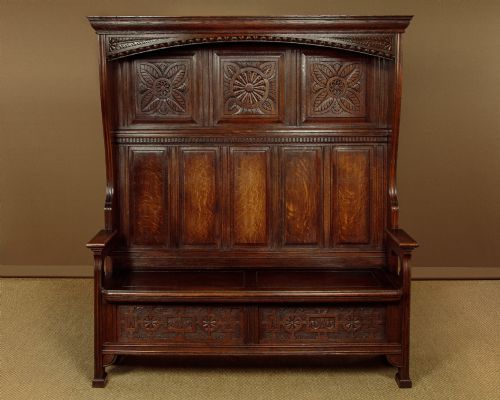
A high backed wooden bench primarily takes the form of a settle, featuring tall timber panels and armrests designed to shield occupants from cold air in domestic interiors, farmhouses and taverns. When searching for a high backed wooden bench, buyers encounter pieces spanning from the seventeenth century through the Edwardian period, with eighteenth-century examples appearing frequently.
The materials used across these listings include solid oak, elm, pine and walnut, sometimes enhanced with fabric, leather or paint. Regional styles range from English and rustic country designs to Jacobean Revival and Arts and Crafts pieces.
Makers and workshops of note include James Shoolbred and Co and Liberty, alongside vernacular makers who built functional seating for churches, waiting rooms and country houses.
Materials and construction
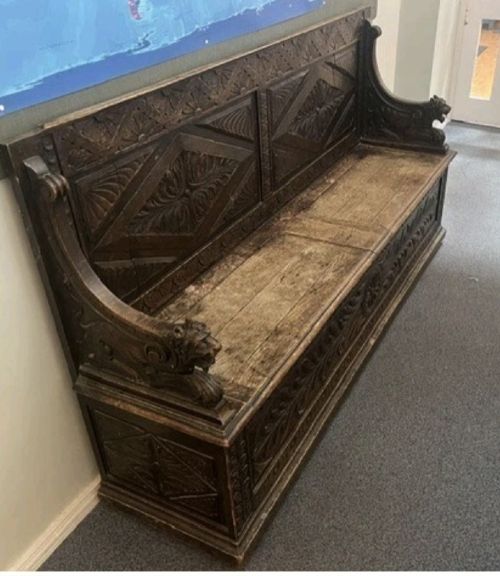
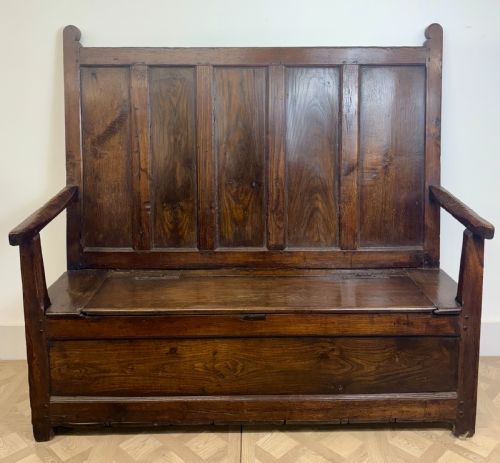
Makers constructed high backed wooden benches predominantly from native hardwoods like oak and elm, alongside softwood pine, employing mortise and tenon joints to secure the heavy upright panels. Box settles incorporate under-seat storage accessed by lifting the hinged seat, requiring sturdy framing to support daily use.
Carving and panel construction define the decorative approach, with period pieces displaying floral motifs, geometric panels or canopy tops. Surface finishes rely on natural waxes, honey brown patina or original paint layers that preserve the underlying grain of the timber.
High Backed Wooden Bench Retail Price Guide 2026
Typical asking prices for high backed wooden bench among the pieces listed under this phrase on Sellingantiques today, from the lower quarter to the upper quarter. They describe what is for sale here now, not the wider market.
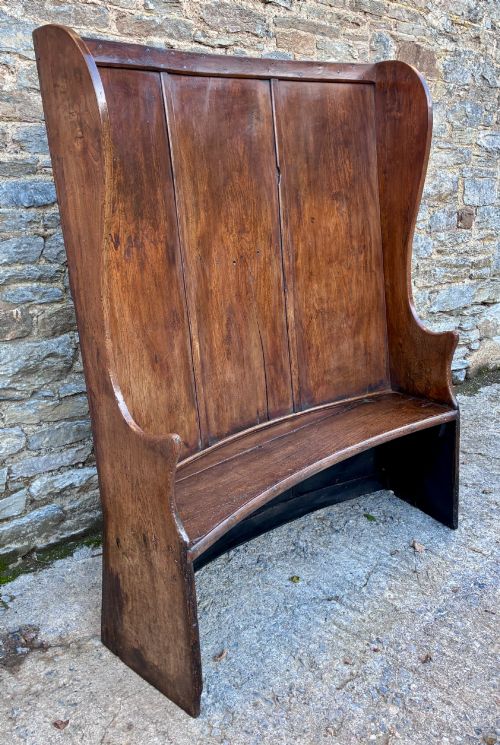
Tall elm bacon settles kept cured meat safe near the ceiling warmth.
Distinctions in standard
Quality rests upon the integrity of the timber and the retention of original structural elements, such as untouched panelwork and authentic hinges on box compartments. Pieces retaining an early surface patina or original paint finish command greater appreciation than those stripped down or heavily rebuilt.
The sophistication of the carving and the presence of documented workshop production distinguish bespoke architectural pieces from standard utility furniture meant for tavern or church use.
James Shoolbred and Co·Liberty
The High Backed Wooden Bench Glossary
- Settle
- A wooden bench with high back and arms designed to keep out draughts. Many incorporate a enclosed box base beneath the seat.
- Box settle
- A variant featuring a hinged seat lid providing storage space underneath. This form kept contents dry and secure near the hearth.
- Bacon settle
- A tall wooden settle traditionally fitted with internal hooks or rails in the upper back. Rural households used this space to cure and store meat.
- Cassapanca
- An Italian wooden bench featuring a chest base and a backrest, often elaborately carved. These pieces combined seating with storage in Renaissance and revival interiors.
- Panel back
- A construction method utilising wooden boards fitted into a grooved frame to form the backrest. This technique allowed timber to expand and contract without splitting.
High Backed Wooden Bench: Frequently Asked Questions
How were settle benches used historically?
Settle benches stood close to hearths in farmhouses, country pubs and halls to trap warmth around the seated person. The high panels and solid armrests acted as windbreaks in draughty stone buildings.
In some rural homes, the enclosed base beneath the seat held blankets, firewood or provisions.
Where should I place a high backed wooden bench?
These benches suit entrance halls, boot rooms and large dining spaces where their tall profiles can anchor a blank wall. Placing them away from direct heat sources protects the old timber from drying out.
Their enclosed backs also help partition open-plan living areas or create a defined seating nook.
How do I date an antique wooden bench?
Dating relies on observing construction methods, tool marks, timber choice and decorative styles. Seventeenth and eighteenth-century pieces often display hand-split boards, pegged mortise and tenon joints, and vernacular carving.
Later Victorian and Edwardian examples frequently show machine-sawn components, revival motifs or maker stamps from firms like Liberty.