


High Backed Pew
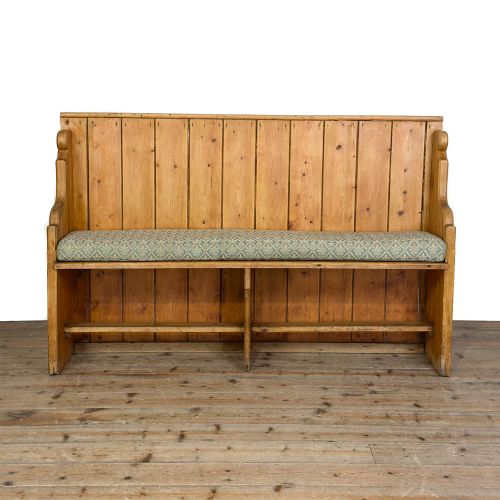
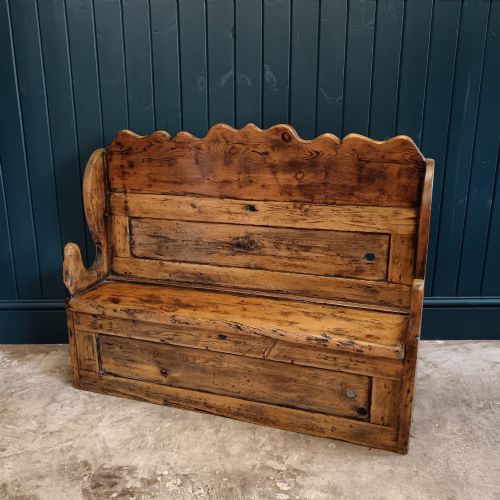
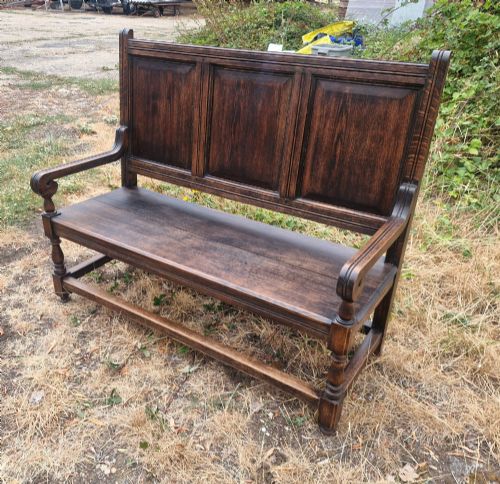
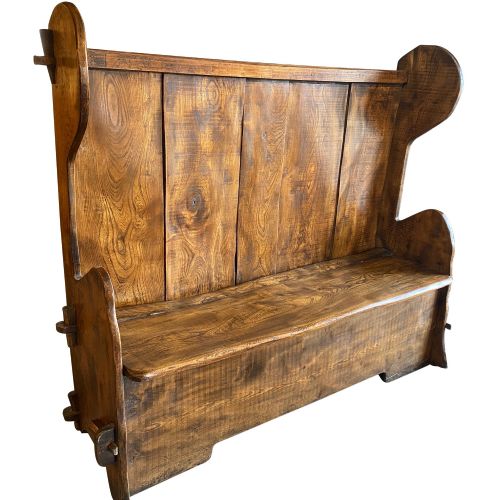
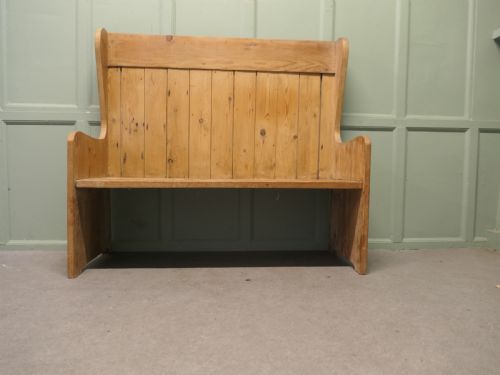
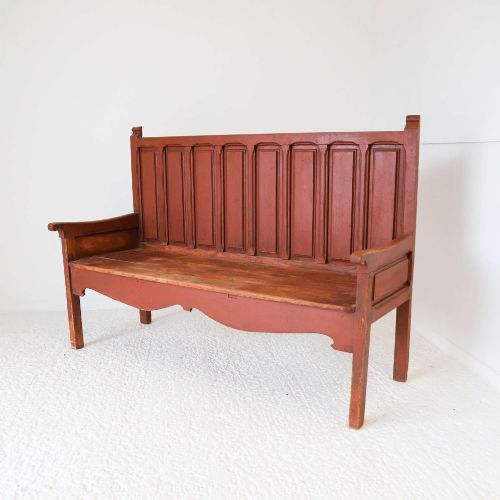
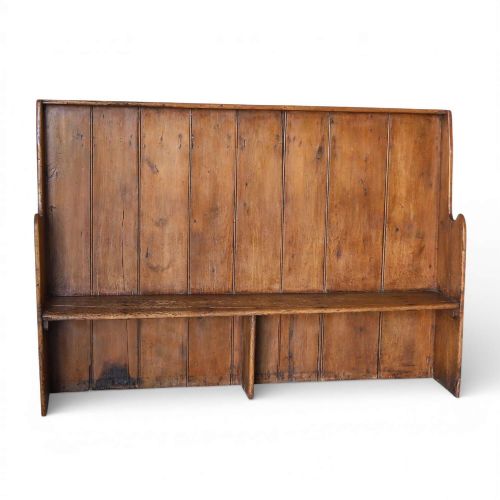
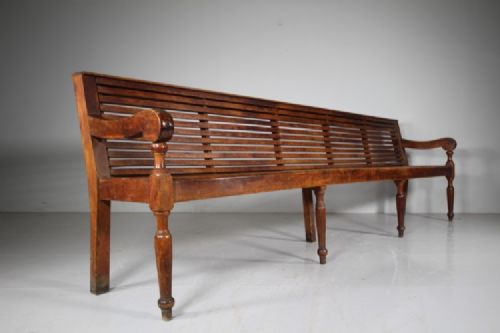
These high backed pew examples offer deep timber seating with sheltering panels, built to block draughts in public houses, churches and rural homes.
High Backed Pew
A high backed pew takes the form of a substantial wooden bench fitted with a towering rear panel and often solid wings, designed to retain hearth warmth in large rooms. When searching for a high backed pew, buyers encounter forms ranging from simple planked tavern seating to panelled oak and painted Spanish examples.
The pieces on this page span the eighteenth and nineteenth centuries, alongside early twentieth century revivals. Common variations include box settles with storage beneath the seat, barrel-backed designs, and long hallway benches fashioned from pine, oak, elm and walnut.
How they were made
Joinery for these seats relies on sturdy timber construction using native woods such as oak, pine, elm and chestnut. Panels are frequently fitted into grooved framing to accommodate natural wood movement over centuries.
Surface finishes include waxed patinas, original paint, and bleached treatments that highlight the grain. Carving and panel assembly techniques vary from rustic country craftsmanship to more formal stylistic revivals.
Listings feature woods such as pine, oak, elm, walnut, chestnut, and painted finishes across the eighteenth, nineteenth, and early twentieth centuries.
What varies in quality
Quality rests in the integrity of the timber framing and the proportion of the high back relative to the seat base. Pieces retaining their original structural elements and untouched surface patinas hold greater distinction.
Subtleties in carving detail, the presence of integrated storage boxes, and the harmonious integration of wings and canopies separate standard utility seating from finer examples.
The High Backed Pew Glossary
- Settle
- A wooden bench with high back, arms and solid sides designed to keep out draughts. It frequently includes a box compartment beneath the seat for storage.
- Barrel back
- A seating form featuring a curved, enclosing upper back that wraps around the occupant. This design provides maximum shelter from fireside winds.
- Panelling
- The construction method using fitted wooden boards held within a framework. It adds structural rigidity and decorative depth to the rear of the seat.
- Patina
- The surface sheen and colour developed through age, handling and waxing. A desirable patina shows the natural history of the timber.
- Tavern bench
- A utilitarian long seat built for public drinking houses and inns. These pieces are typically constructed from sturdy regional hardwoods.
High Backed Pew: Frequently Asked Questions
Where were high backed pews used?
These pieces originated in churches, public houses, and large rural farmhouses where keeping warm near open hearths was essential. Their high backs and solid sides acted as effective windbreaks in draughty hallways and common rooms.
Over time, they found places in waiting rooms and domestic settings as both decorative and functional seating.
How do I identify an eighteenth century settle?
Eighteenth century examples often display pegged joinery, heavy five-panel oak construction, and hand-planed boards. The timber surfaces show deep patination accumulated through decades of use.
Earlier pieces also feature vernacular regional details, such as folk art painted finishes or canopied tops.
Can I use a high backed pew in a modern hallway?
These benches fit well in entrance halls, providing a striking architectural silhouette and a practical spot for putting on shoes. Box settle variants offer hidden storage beneath the seat for everyday clutter.
Measuring the depth and height beforehand ensures the towering back fits comfortably against the chosen wall.
What is the difference between a settle and a pew?
While both provide wooden seating, settles traditionally feature enclosed sides, arms, and high panelled backs designed for domestic or tavern warmth. Pews are more commonly associated with long, open church seating without individual arm enclosures.
In marketplace terminology, the terms frequently overlap depending on the regional style and form.