
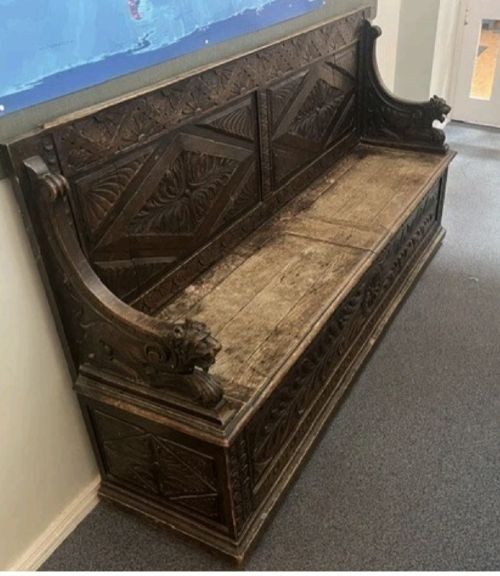
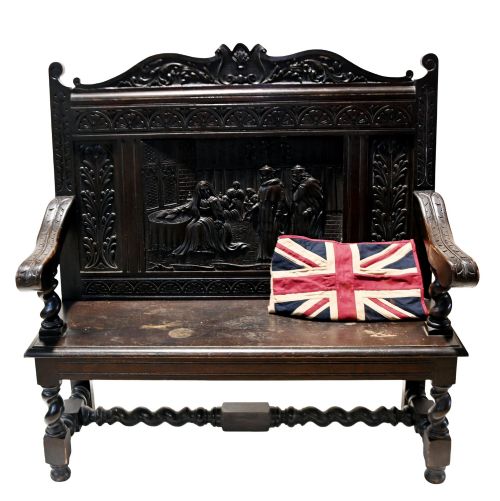
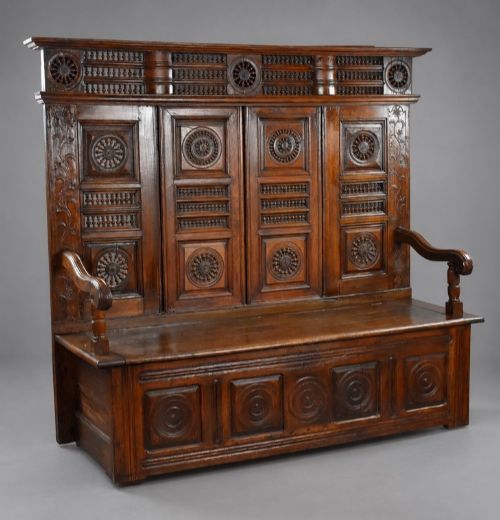
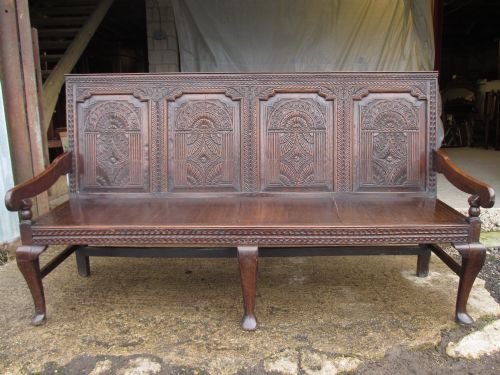
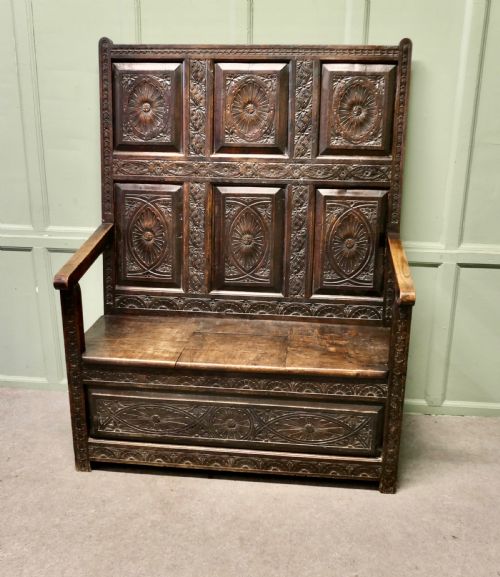
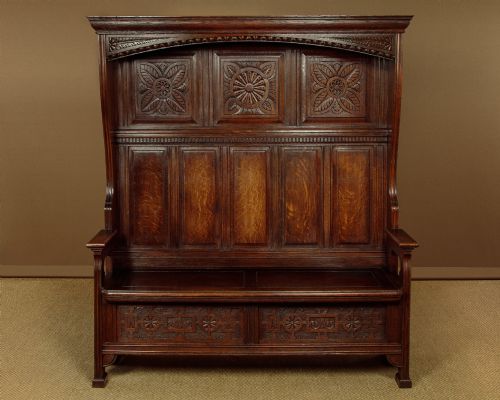
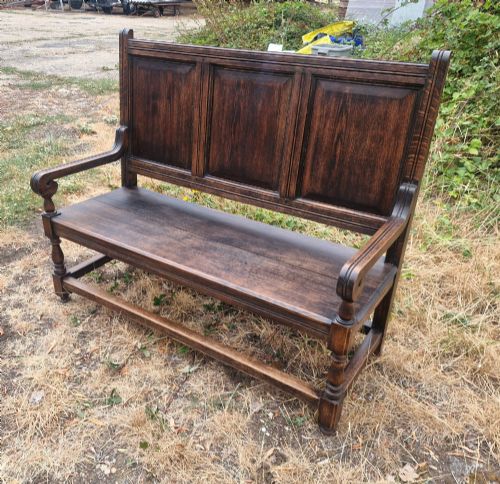
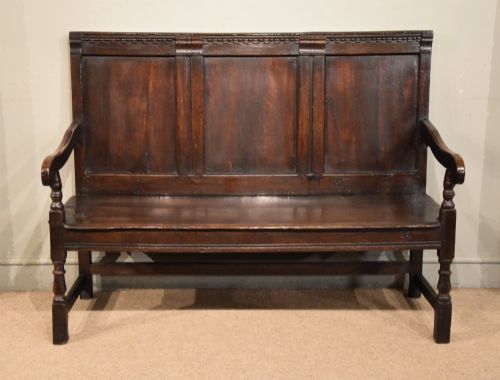
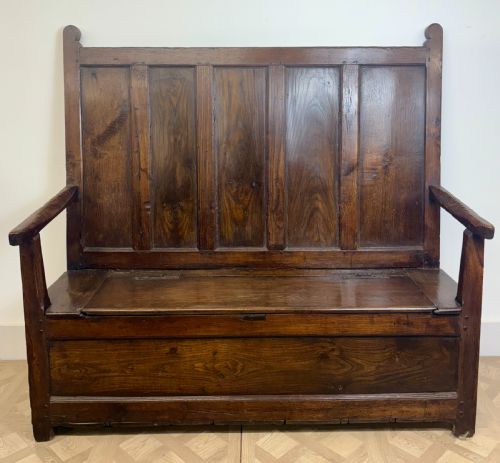
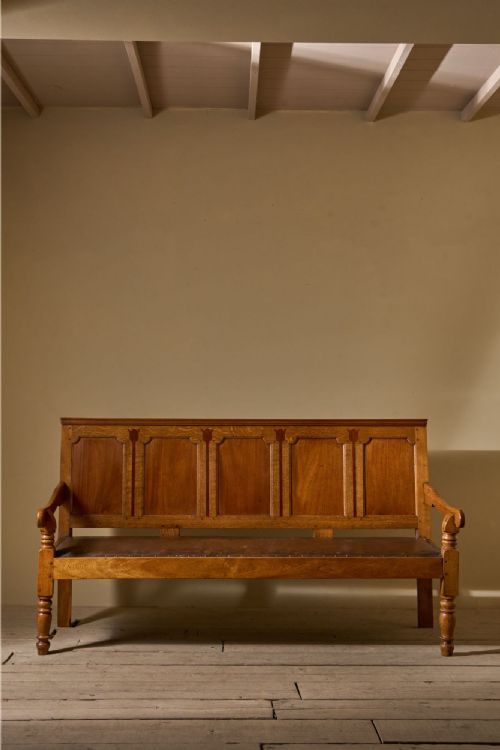
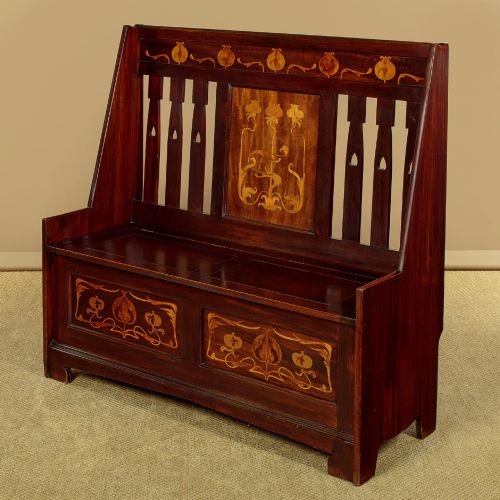
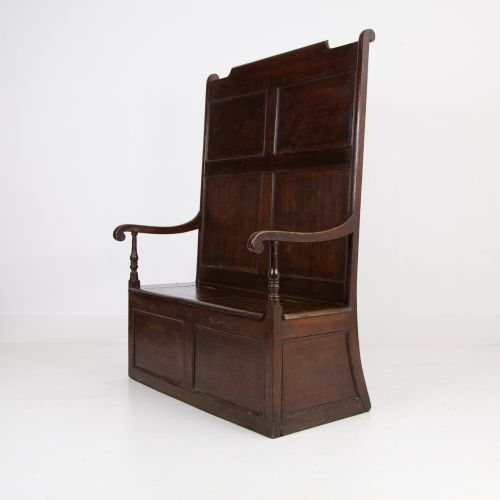
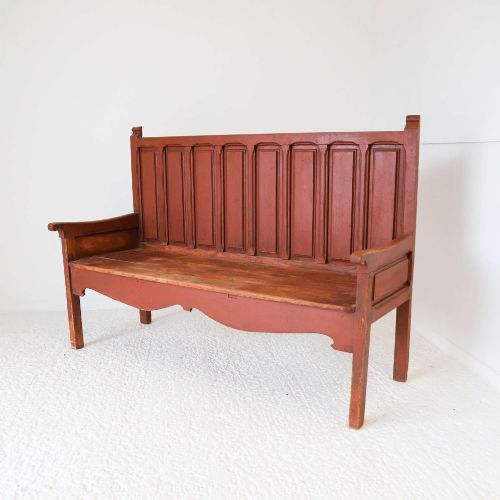
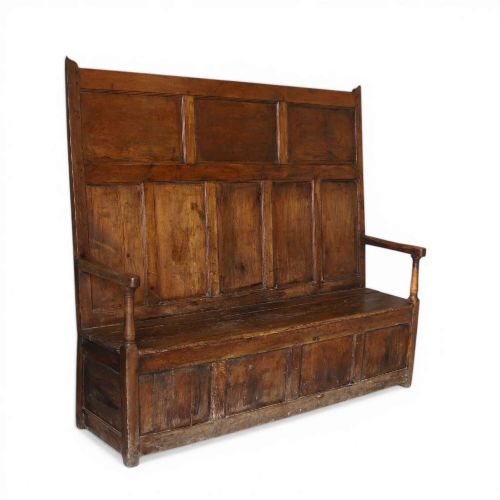
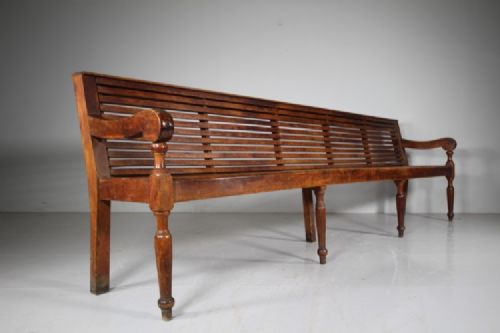

High Back Hall Settle
A high back hall settle creates a draught-free seat by the door and stores boots beneath.
High Back Hall Settle
A high back hall settle stands as a principal piece of vernacular furniture designed to block cold draughts in entrance passages and kitchens. Most examples found on this page date from the seventeenth, eighteenth and nineteenth centuries, spanning Georgian, Victorian and Arts and Crafts periods.
The most common form is the box settle, which combines a high panelled back with a hinged seat opening to a storage chest below. Variations include winged barrel backs, carved oak panels, and simpler pine or ash country versions.
Materials and Construction
Solid oak provides the primary structural timber for these benches, joined with traditional framing and panel techniques alongside pegged mortise and tenon joints. Pine, ash, walnut and painted surfaces also appear across regional English, Welsh, French, Spanish and Italian examples.
Joiners constructed the high backs using multiple fitted panels to prevent warping, while box seats required sturdy hinges and internal bracing to support daily sitting and heavy storage.
Listings feature oak, pine, walnut, ash, iron, brass, leather and fabric across seventeenth, eighteenth and nineteenth-century periods.
Design Integrity and Joinery
Quality rests in the integrity of the timber framing and the proportion of the high back relative to the seat base. Early joined pieces demonstrate tighter grain and deeper panel carving than later revival items.
Original hinges, undisturbed pegging, and untouched surfaces or old paint finishes separate pieces with genuine domestic history from heavily restored examples.
James Shoolbred & Co.·Liberty
The High Back Hall Settle Glossary
- Box settle
- A wooden bench featuring a high panelled back and a enclosed chest beneath the seat used for storage.
- Barrel back
- A curved high back designed to wrap around the seated person and block cold air from every side.
- Wainscot
- A style of wooden panelling utilising pegged frames that often forms the backrest of early seats.
- Vernacular
- Regional furniture built by local craftsmen using traditional methods rather than following metropolitan fashion.
- Cassapanca
- An Italian wooden bench incorporating a large storage chest in the base.
High Back Hall Settle: Frequently Asked Questions
What is a high back hall settle used for?
These tall benches served to keep inhabitants warm in draughty medieval and early modern hallways by blocking wind from open doors. The enclosed base also provided secure storage for household goods, blankets or boots.
Today they function effectively in modern entrance halls, boot rooms and kitchens as both practical seating and focal points.
How do I tell an 18th-century settle from a Victorian one?
Seventeenth and eighteenth-century pieces typically display hand-split oak panels, pegged joints, and surface wear consistent with centuries of domestic use. Victorian and later items often feature machine-sawn timber, crisper carved motifs like green men, or deliberate revival styles.
Examining the underside and interior boards reveals tool marks and construction methods unique to each period.
Can I use a box settle for daily seating?
Box settles were built robustly from solid hardwoods like oak and pine to withstand generations of heavy domestic use. They handle daily sitting easily, though adding a loose squab cushion provides extra comfort on the wooden seat.
The hinged lid also allows easy access to everyday items stored inside.
Where should I place a high back settle?
The tall back makes these benches ideal against a hallway wall or in a large kitchen diner where they can divide an open space. Placing them away from direct heat sources protects the old timber and finish from drying out.
Ensure there is enough clearance for the seat lid to open fully if you choose a box storage model.