



Dark Wood Box Settle
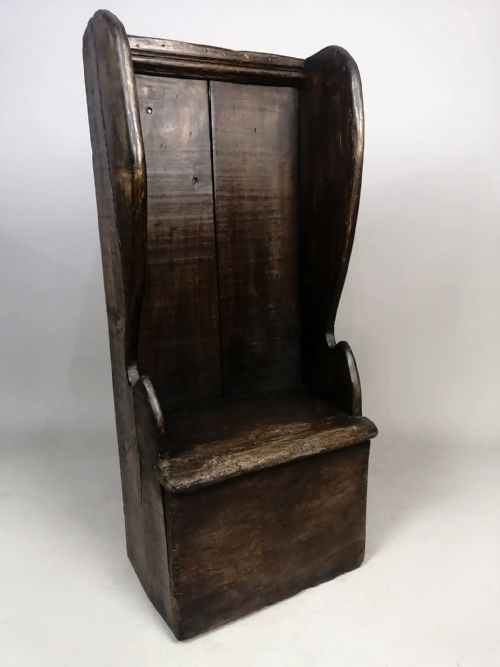
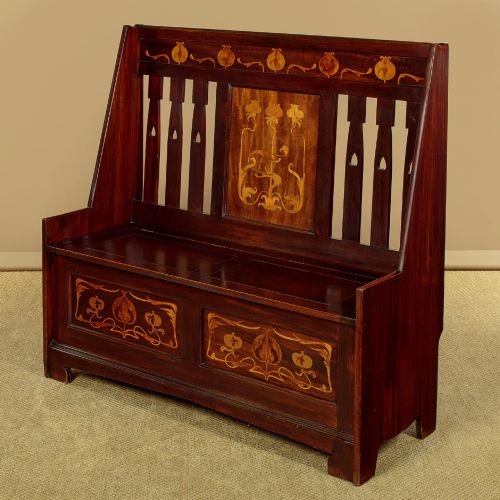
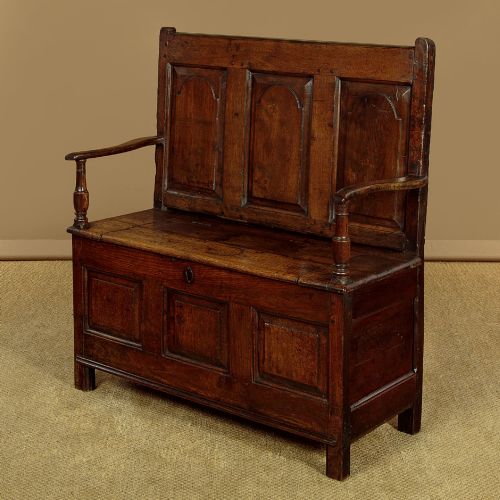
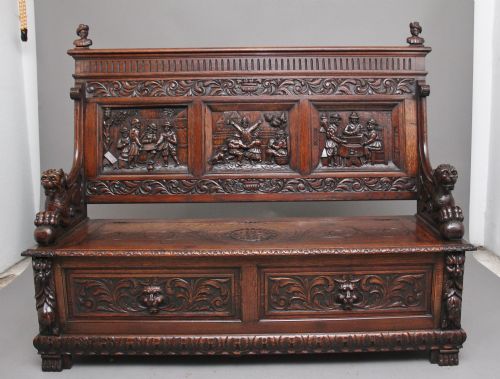
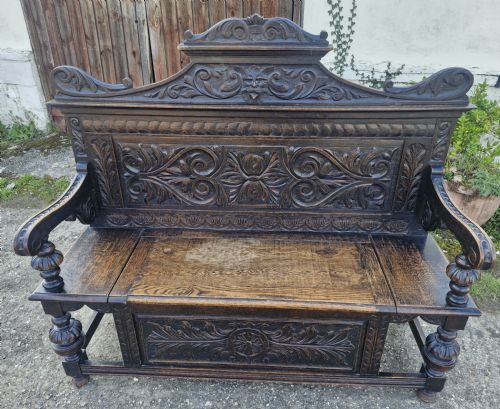
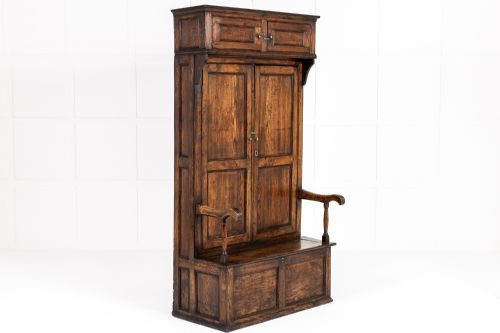
These dark wood box settles are sturdy domestic seats with integrated storage, offering both high-backed draught protection and a concealed compartment beneath.
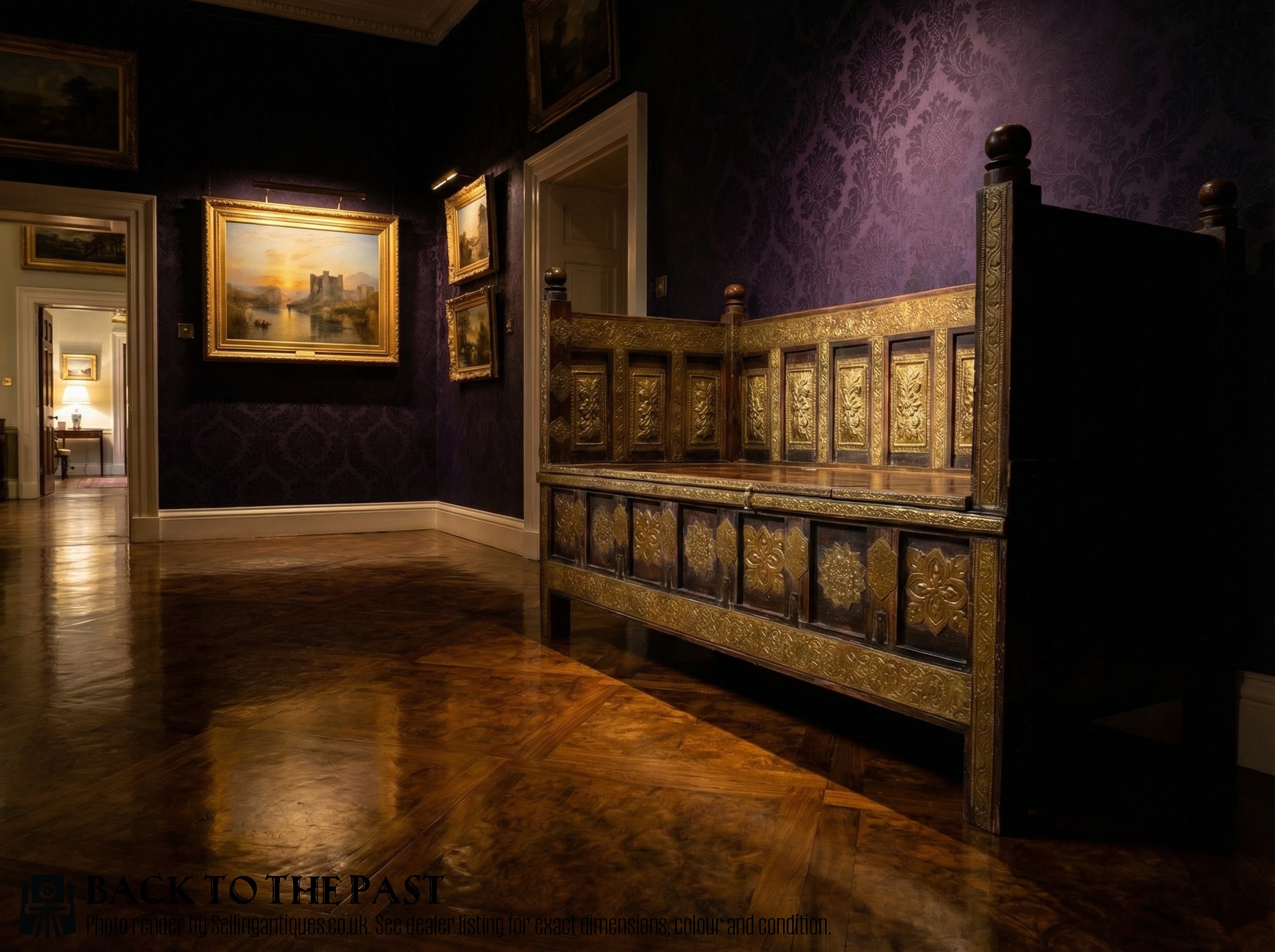
Dark Wood Box Settle
A dark wood box settle combines a traditional wooden bench with a built-in chest beneath the seat, serving as both seating and enclosed storage. These items originated in vernacular and period domestic settings where space and warmth were at a premium.
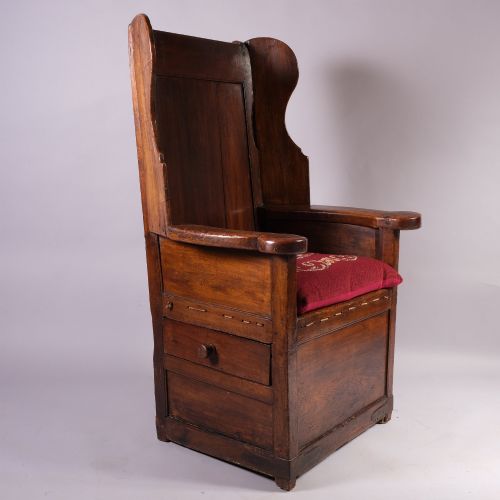
The versions most frequently met on this page span the seventeenth, eighteenth, and nineteenth centuries, alongside later revival pieces. They appear in forms such as compact oak hall seats, carved mahogany panelled settles, and elm bacon settles.
Makers and regional joiners utilised timber such as oak, elm, fruitwood, and mahogany to construct these heavy benches. They often feature high panelled backs designed to keep out household draughts near an open hearth.
How they were made
Joiners and cabinetmakers constructed these settles using solid timber boards assembled with pegged mortise and tenon joints to withstand heavy daily use. The box base was integrated directly into the frame, providing structural rigidity while forming a deep chest accessible via a lift-up lid.
Surfaces were frequently finished with hand-carved panels, geometric mouldings, or occasionally boxwood inlay, reflecting the prevailing style of the period from seventeenth-century vernacular to Jacobean revival. Timber selection determined the grain depth, with dense native oak and imported Brazilian mahogany dominating the construction.
Materials documented across these listings include oak, mahogany, elm, fruitwood, teak, iron, fabric, and boxwood inlay.
What varies in quality
The distinction between standard utility furniture and superior examples lies in the selection of timber and the depth of hand-carved detailing. Thick, well-figured oak boards and substantial Brazilian mahogany panels indicate a higher standard of original craftsmanship.
Proportion and structural integrity separate robust period pieces from later adaptations. Settles retaining their original lift-up lids, untouched hinges, and uncompromised joinery demonstrate superior preservation and materials.
James Shoolbred & Co.
The Dark Wood Box Settle Glossary
- Box settle
- A high-backed wooden bench featuring a storage compartment concealed beneath a hinged seat. This form kept draughts away from the sitter while maximising domestic storage.
- Bacon settle
- A specific regional variant featuring a high panelled back, traditionally used in farmhouse kitchens for air-drying cured meats. These pieces are typically fashioned from native timbers like elm or oak.
- Lambing chair
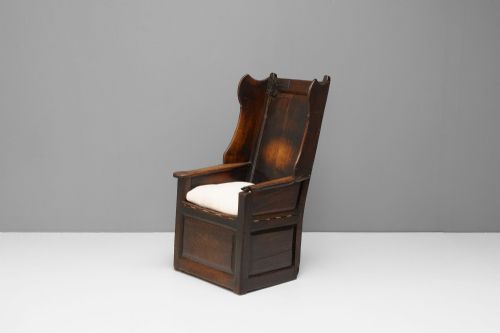
- An enclosed wooden seat with wings designed to shield the occupant from cold air, often incorporating a small storage box under the seat. They share a close functional lineage with the settle.
- Mortise and tenon
- A traditional woodworking joint where a projecting tongue fits snugly into a corresponding cavity, secured with wooden pegs. This method holds the heavy frame of a settle together without relying on modern metal fasteners.
Dark Wood Box Settle: Frequently Asked Questions
What is a box settle used for?
A box settle provides dual functionality as both a high-backed seating bench and a secure chest. The enclosed base stores household goods while the tall back blocks cold draughts in traditional rooms.
Historically placed in hallways or kitchens, these benches served as central pieces of heavy furniture for daily domestic life.
How do I tell an old settle from a revival piece?
Examine the timber shrinkage, joinery methods, and wear patterns across the seat and arms. Period pieces display hand-cut pegs and natural patina built up over centuries of use.
Revival furniture often exhibits machine tooling or uniform surface textures that differ from eighteenth or seventeenth-century construction.
Where should I place a dark wood settle?
These large benches suit spacious hallways, boot rooms, or large living areas where their dark timber and high backs can anchor the room. Ensure adequate wall space to accommodate their substantial depth and height.
The interior box also offers practical storage for blankets, boots, or bulky items.
What woods were used for settles?
Cabinetmakers and vernacular joiners relied primarily on native hardwoods such as oak, elm, and fruitwood for early regional pieces. Later nineteenth-century workshops also utilised imported Brazilian mahogany and teak.
These dense materials ensured the frame could support heavy daily use without warping.