
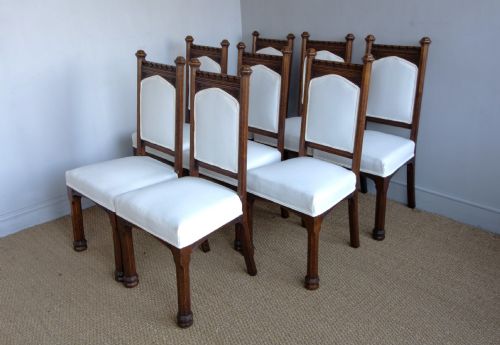
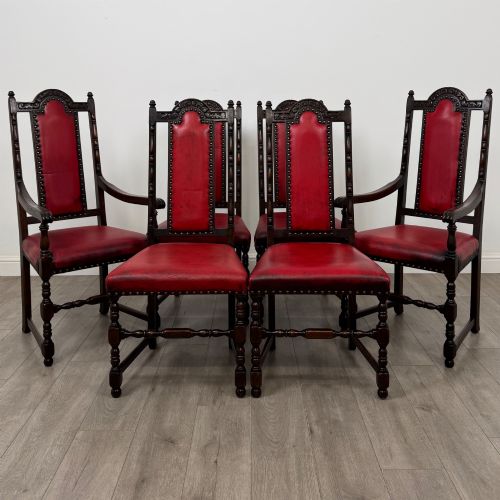
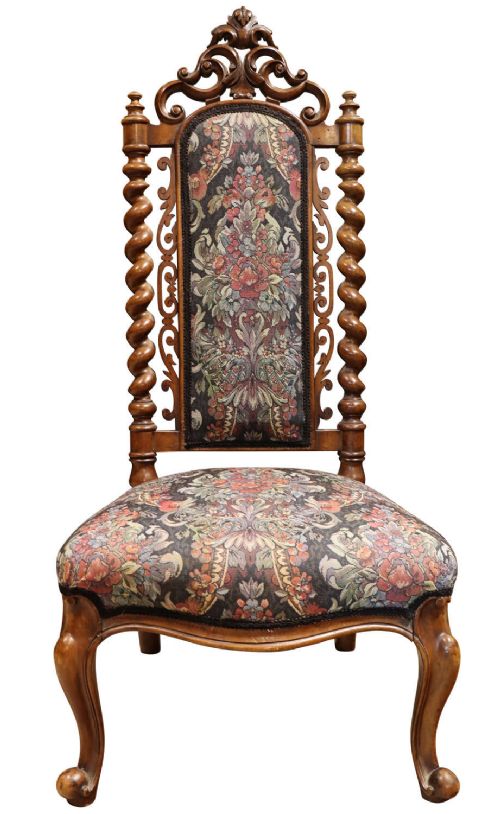
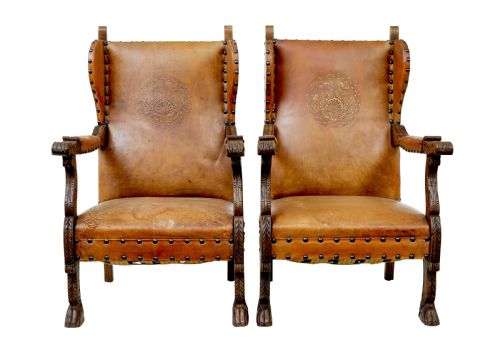


High Back Gothic Chair
A high back gothic chair brings striking architectural presence and commanding verticality into a room.
High Back Gothic Chair
A high back gothic chair draws on medieval architectural forms, translating stone tracery, pointed arches and soaring proportions into timber seating. These seating options emerge most frequently from the Victorian era and the nineteenth century, reflecting a profound cultural revival of medieval design.
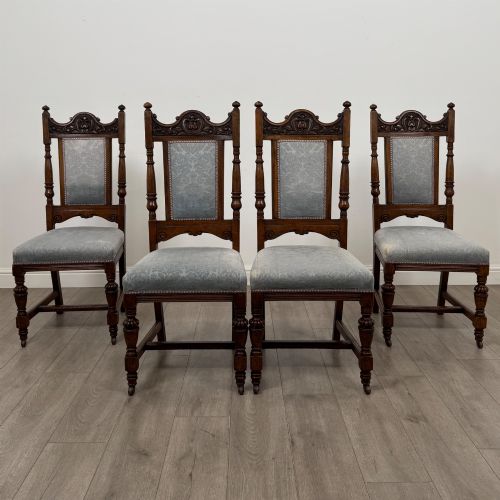
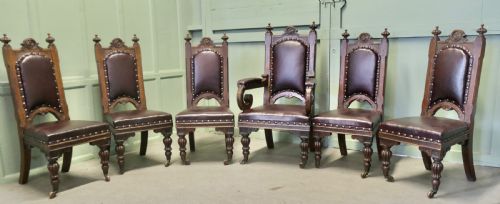
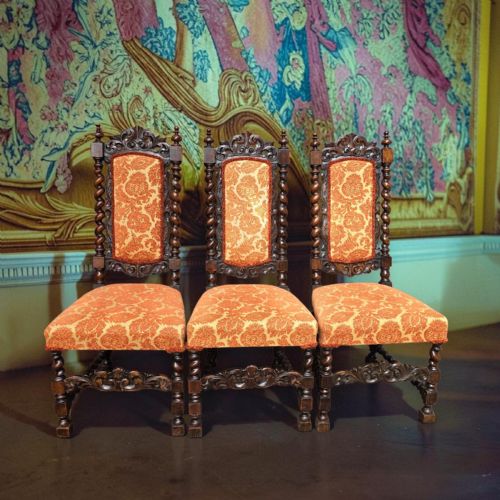
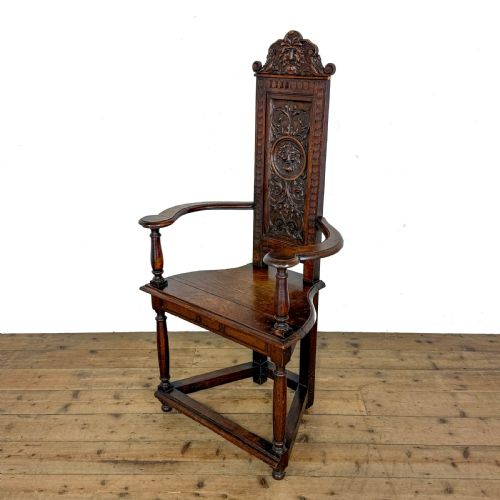
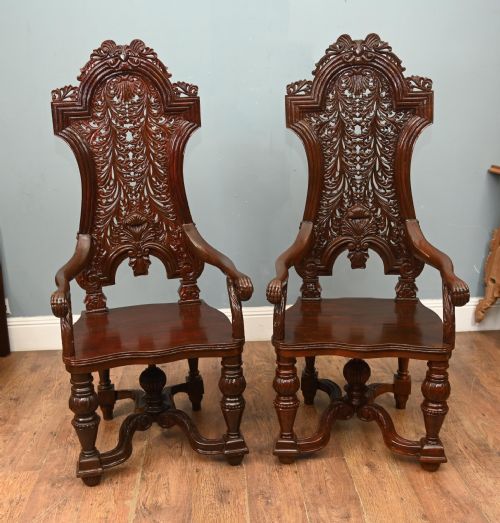
Buyers encounter diverse iterations across this page, ranging from grand throne chairs with carved crests to more restrained side chairs and sets of dining chairs. Oak serves as the principal timber, often accompanied by walnut, rosewood and fruitwood in forms designed to anchor a hallway, library or dining space.
Makers adapted these medieval motifs for domestic comfort, producing armchairs, hall chairs and specialised prayer chairs that balanced austere ecclesiastical styling with padded leather or upholstered panels.
Materials and construction
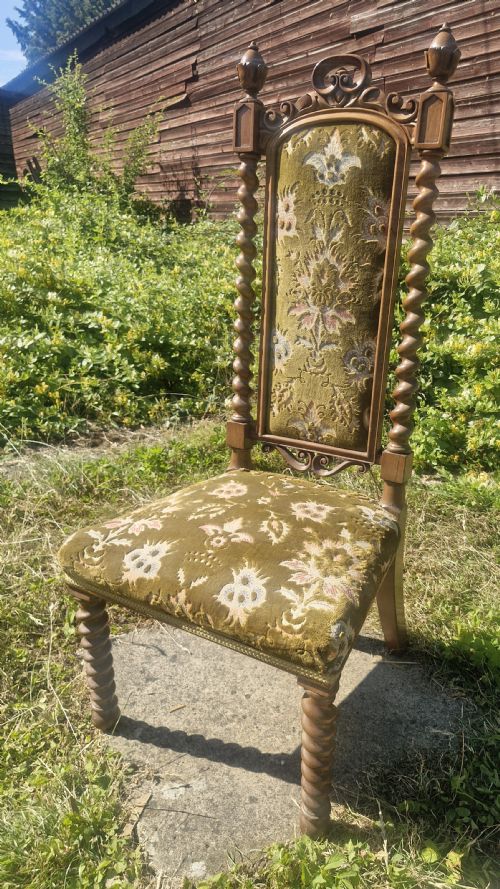
Craftsmen relied heavily on solid oak, carving deep linenfold patterns, geometric strapwork and elaborate tracery directly into the dense grain of the wood. Frameworks frequently incorporated structural turned elements such as barley twists alongside pegged mortise and tenon joints.
Seating surfaces and back panels relied on contrasting textures, integrating embossed leather, tapestry, textile upholstery and brass detailing to soften the rigid timber frames. Specialised pieces utilised rosewood and walnut, allowing for crisper chisel work on intricate crest rails and heraldic carvings.
Listings span from seventeen hundred through the early twentieth century, with the nineteenth century dominating the selection.
Distinguishing quality
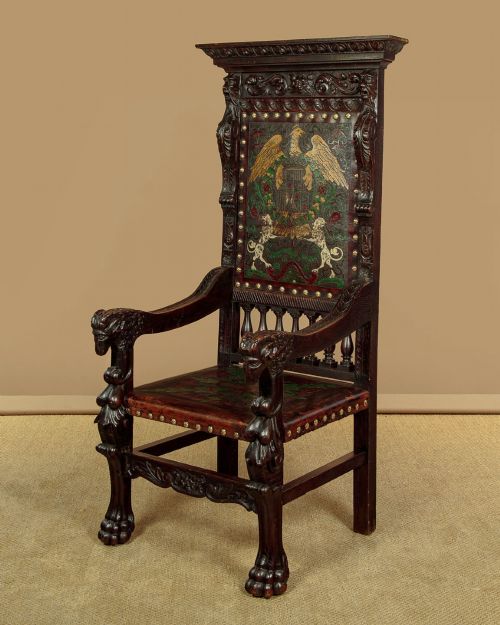
Quality rests primarily in the ambition and depth of the carving, distinguishing mass-produced commercial seating from exhibition pieces sculpted with spirited figures, hounds or Green Man motifs. Crisp undercutting in the woodwork and timber selection dictate the visual weight and longevity of the piece.
Subtlety of proportion and the integrity of the original upholstery materials, whether buttoned leather or period tapestry, elevate certain examples. Pieces retaining untouched timber surfaces and unified suites command greater interest than assembled sets or heavily altered frames.
Liberty & Co·R Whytock of Edinburgh·A.W.N. Pugin·Norwich Maker
The High Back Gothic Chair Glossary
- Gothic Revival
- An architectural and decorative style popular during the nineteenth century that revived medieval forms, pointed arches and ecclesiastical motifs. It manifested across domestic architecture and furniture design.
- Prie-Dieu
- A low devotional prayer chair featuring an elevated upholstered armrest or shelf designed for kneeling. These items frequently display rich walnut or rosewood construction.
- Throne Chair
- A large, imposing armchair with an exceptionally tall back and substantial arms, often embellished with heraldic carving. Such seats functioned as focal points in nineteenth-century halls and libraries.
- Barley Twist
- A spiral-turned wooden column or leg resembling a twisted rope. This turning technique appears frequently on nineteenth-century chair supports.
- Linenfold
- A style of wood carving that mimics the appearance of folded vertical linen fabric. It is commonly found on panelled chair backs within gothic revival furniture.
High Back Gothic Chair: Frequently Asked Questions
Where should I place a high back gothic chair?
These imposing seats suit spaces with sufficient vertical clearance, such as a high-ceilinged hallway, a study or library. Their architectural backs allow them to anchor an empty corner or function as a dramatic desk chair.
Avoid placing them in cramped rooms where their vertical proportions might overwhelm the surrounding furniture. Instead, let them stand alone or pair them with complementary revival pieces to showcase their carved details.
How do I care for leather and wood on these chairs?
Maintain the timber by applying a traditional beeswax polish sparingly to nourish the grain without building up a heavy residue. Keep the chair away from direct heat sources and strong sunlight to prevent the timber from splitting.
Treat original leather panels with specialised leather balms to maintain flexibility. Avoid modern chemical cleaners that might strip the historic patina from the surface.
Are these chairs comfortable for daily seating?
Many examples prioritize architectural presence and upright posture over deep relaxation. The high backs offer excellent support for the shoulders and head, though padded leather or upholstered variations provide softer seating.
Dining chairs and side chairs from this grouping function well for formal seating around a table rather than lounging. Consider adding a subtle, period-appropriate cushion if you intend to use them for extended periods.
How can I tell a Victorian gothic chair from an earlier piece?
Examine the construction marks, tool signatures and timber preparation, as nineteenth-century workshops utilised mechanised sawing alongside hand carving. Most high back gothic chairs on the market date from the Victorian revival rather than the medieval period.
Look at the style of the hardware, upholstery techniques and secondary woods used in the frame. These indicators help establish whether a piece belongs to the nineteenth-century gothic revival or an earlier era.