
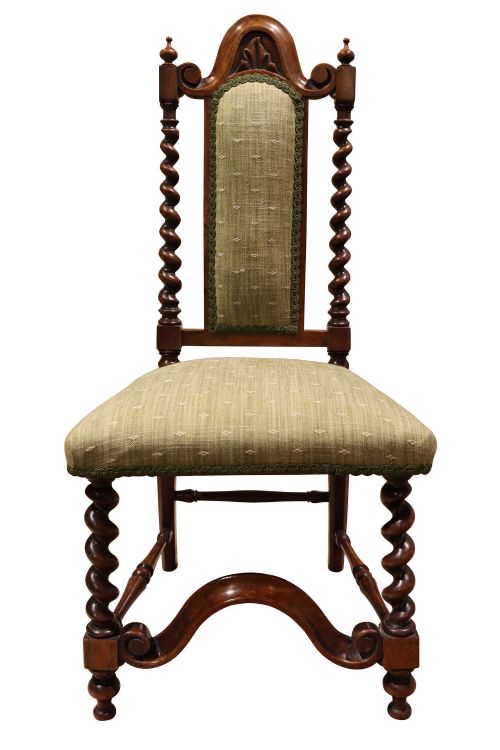


High Back Child Chair
These high back child chair examples are scaled-down vernacular seating built for young children across the eighteenth, nineteenth, and early twentieth centuries.

High Back Child Chair
A high back child chair sits on this page as a varied group of smaller-scale seating forms originating from the Georgian period through to the Edwardian era and the 1930s. Buyers encountering these pieces will find high chairs, armchairs, side chairs, and correction chairs built for domestic use.
The selection encompasses rustic vernacular styles, English country designs, and formal Victorian walnut or Edwardian elm and beech pieces. Many examples utilise high hoop backs, ladder backs, or spindle backs to support the child.
Origins range from naive nineteenth-century ash and elm workshop items to refined mahogany inlaid pieces and pairs of High Wycombe children's chairs. Each object reflects the domestic seating requirements of its respective period.
How they were made
Maker workshops utilised native timbers including elm, ash, walnut, oak, beech, and yew, often combining woods within a single high back child chair for structural strength. Turnery techniques produced decorative elements such as barley twists and crinoline stretchers.
Seating areas incorporated solid wood panels alongside woven rush and cane work. Frames relied on traditional joinery methods suited to country vernacular and formal Victorian cabinet making.
Listings feature pieces spanning the Georgian period, 1800, 1850, 1860, 1900, Edwardian, 1920, and 1930 eras.
What varies in quality
Quality separates through the selection of timber and the precision of the turnery, moving from naive domestic utility work to refined cabinet maker output in walnut or mahogany. The presence of specific structural details, such as crinoline stretchers or fine inlay work, elevates certain examples.
The integrity of the original materials, whether rush seats, cane panels, or turned spindles, distinguishes well-preserved seating from heavily altered pieces.
The High Back Child Chair Glossary
- Vernacular
- Everyday objects made by regional craftsmen rather than high-style urban cabinet makers. These pieces utilise local timbers and traditional construction methods.
- Crinoline stretcher
- A bent metal or wood support rod fitted beneath chair legs for added stability. It curves outward from the centre beneath the seat.
- Correction chair
- A specialist nineteenth-century seating form designed to encourage straight posture in children. They typically feature tall backs and rigid seats.
- Ladderback
- A chair back constructed with horizontal wooden slats resembling the rungs of a ladder. These slats are set between two upright posts.
- Hoopback
- A continuous bentwood or steam-formed frame that forms the backrest and arm rail of a Windsor chair. It provides curved structural support.
High Back Child Chair: Frequently Asked Questions
How do I date a high back child chair?
Dating relies on identifying the timber species, construction techniques, and stylistic markers associated with periods from the Georgian era through to the Edwardian period. Naive ash and elm work often points toward the early nineteenth century, while mahogany inlay and specific turned elements align with later Victorian production.
Comparing the joinery and overall form with dated examples in the archive helps narrow the decade of manufacture.
Were these chairs used daily?
These pieces served practical domestic functions in nurseries and dining rooms, supporting children during meals and lessons. Correction chairs specifically aimed to enforce upright posture during Victorian times.
Their survival through generations indicates they were valued household items built with robust native timbers like oak, beech, and elm.
What is a correction chair?
A correction chair is a nineteenth-century seating form featuring a tall back and rigid seat designed to promote straight posture. Victorian households utilised them to instil disciplined sitting habits in children.
They often appear with cane seats and backs supported by slender turned framework.