




Hexagonal Japanese Ceramic
These hexagonal Japanese ceramic pieces bring six-sided geometry and intricate Meiji era craftsmanship straight into your home.
Hexagonal Japanese Ceramic
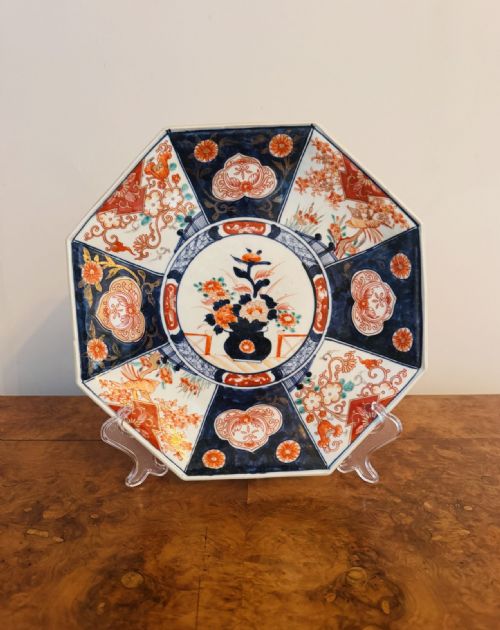
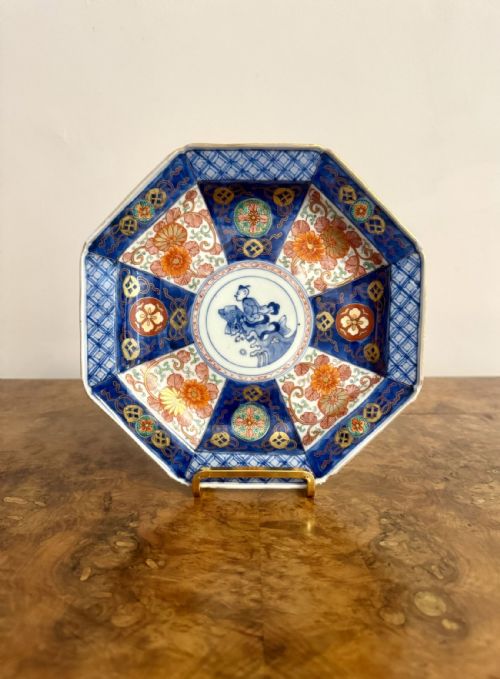
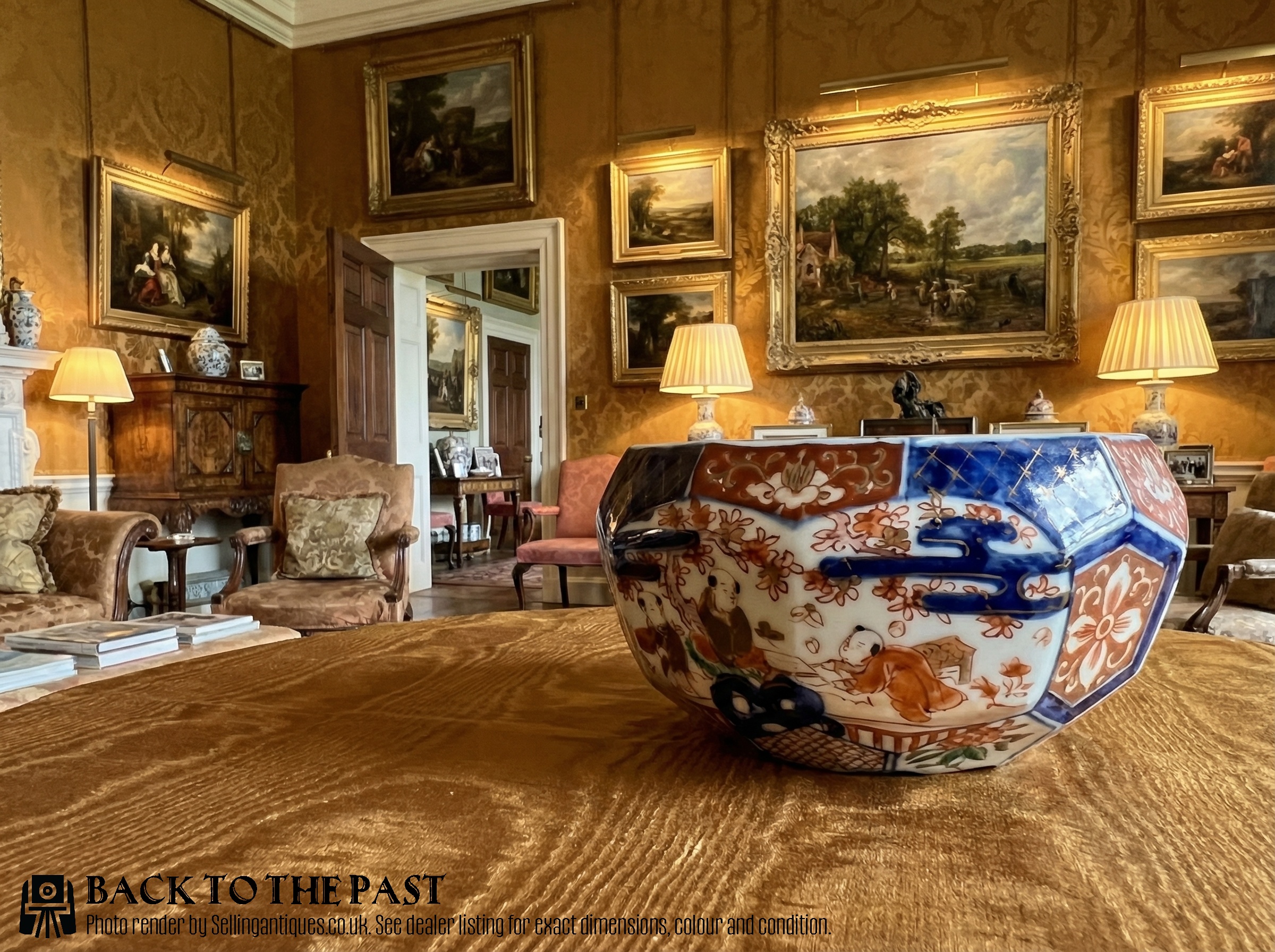
When you search for hexagonal Japanese ceramic, you look for six-sided vessels and plates originating from the late nineteenth and early twentieth centuries. These objects span the Meiji and Taisho periods, showcasing rigid geometric forms alongside flowing pictorial scenes. The selection here leans heavily towards Imari porcelain and Satsuma earthenware, offering both robust tableware and decorative display items.
Vessels take many shapes on this page, including vases, tea caddies, bowls, and decorative plates. Makers utilised the six-sided format to display distinct panels of decoration, often alternating between figures such as Rakan, dragons, and dense floral motifs. Collectors encounter these works as single showpieces or in matched pairs.
How they were made
Potters shaped porcelain and earthenware into precise six-sided forms before applying foundational glazes. Artisans then built up complex surface designs using colourful enamels and rich gold leaf, requiring multiple firings to fix the pigments. Wood components occasionally appear as supplementary fittings or bases for tea caddies.
Decoration relied on hand-painted mastery, with specific workshops employing distinct palettes of cobalt blue, iron red, and gilt. The interaction between the porcelain or earthenware body and the heavy enamel layers created a textured, tactile surface across each panel.
Hexagonal Japanese Ceramic Retail Price Guide 2026
Typical asking prices for hexagonal japanese ceramic among the pieces listed under this phrase on Sellingantiques today, from the lower quarter to the upper quarter. They describe what is for sale here now, not the wider market.
Rakan figures peer out from the glaze, guarding the tea caddy.
What varies in quality
Quality rests in the crispness of the six-sided moulding and the precision of the hand-painted detailing across each panel. Finer examples display meticulous brushwork in the depiction of figures like Rakan and dragons, alongside lavish and well-preserved applications of gold leaf.
The density and depth of the enamels also distinguish superior pieces from standard production wares. Stronger works maintain balanced proportions across all six sides, while lesser examples show crowding in the painted narrative scenes or uneven glaze pooling.
Kizan·Hattori (zo)
The Hexagonal Japanese Ceramic Glossary
- Imari
- A style of Japanese porcelain featuring cobalt blue underglaze and iron red overglaze, frequently enriched with gold.
- Satsuma
- A type of Japanese earthenware characterised by a crackle glaze and ornate polychrome enamel decoration.
- Meiji
- The historical period spanning from 1868 to 1912, noted for opening Japanese crafts to international markets.
- Natsume
- A small Japanese tea caddy used in the chanoyu tea ceremony, named after its resemblance to a jujube fruit.
- Rakan
- Enlightened followers of Buddha, frequently depicted in traditional painting and ceramic ornamentation.
Hexagonal Japanese Ceramic: Frequently Asked Questions
What periods do these ceramics cover?
The listings span the late nineteenth century and the early twentieth century, encompassing the Victorian era and the Meiji through Taisho periods.
Most items date from the decades around 1900, capturing a period of intense export production for Western markets.
How do Imari and Satsuma differ?
Imari ceramics use hard porcelain bodies with characteristic deep blue and red pigments under and over the glaze. Satsuma pieces utilise a softer earthenware body covered in a distinctive fine crackle glaze.
Satsuma items generally feature dense polychrome enamels and extensive gilding depicting figures and landscapes.
How should I display hexagonal ceramics?
The six-sided geometry allows these vessels and plates to present different pictorial panels depending on the angle of view. Placing them in well-lit areas helps catch the reflective gold leaf and enamel details.
Pairs look balanced on mantelpieces or cabinets, while single larger vases function well as focal points.