
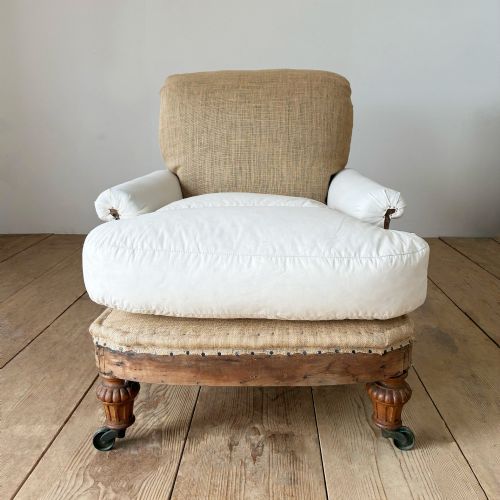

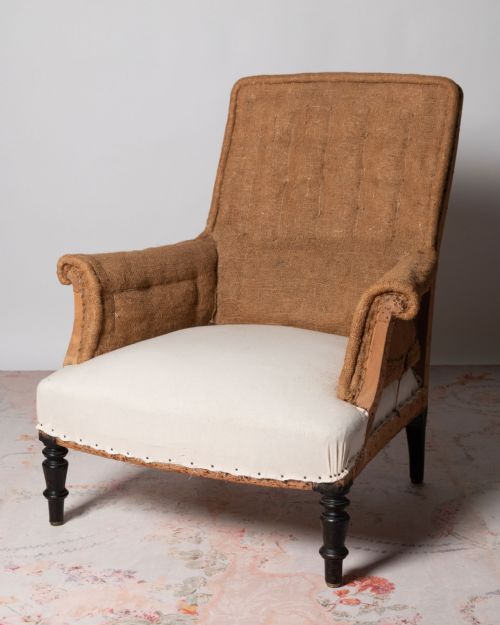
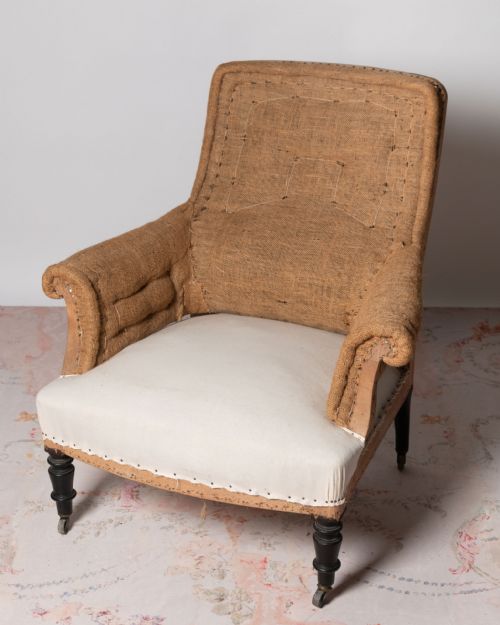


Hessian Armchair Frame
These hessian armchair frame pieces offer the essential structural foundation of period seating, stripped back to reveal the craftsmanship before final upholstery.
Hessian Armchair Frame
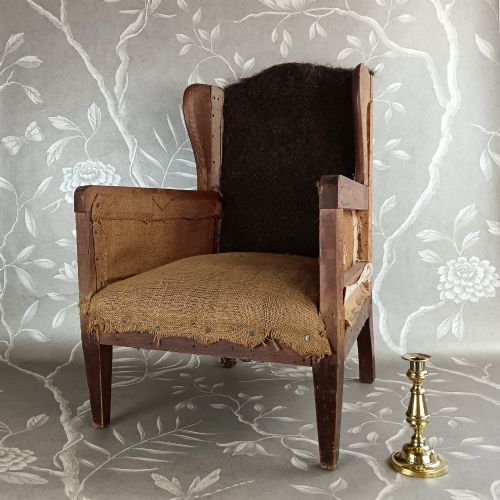
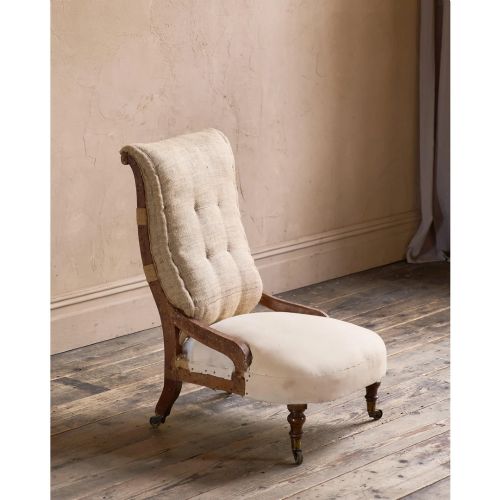
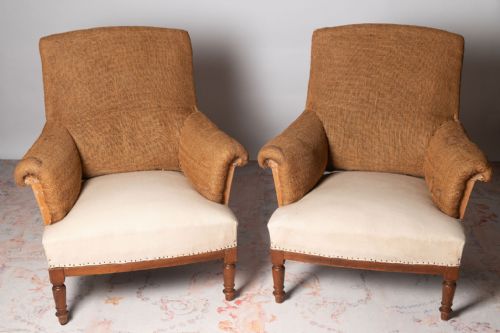
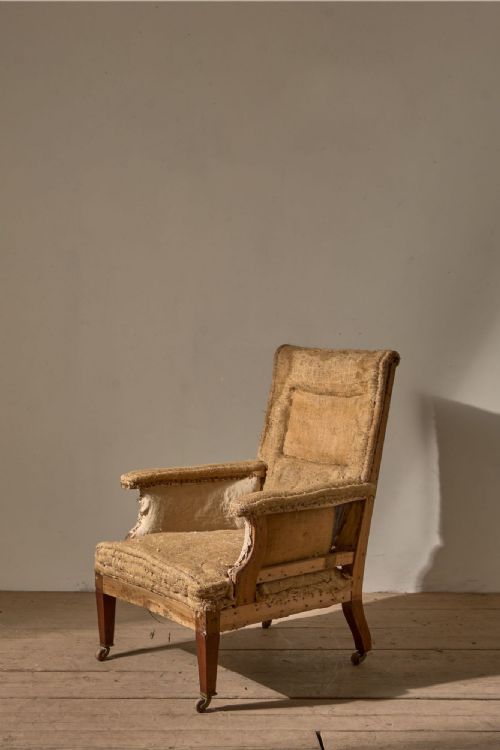
A hessian armchair frame provides the naked skeleton of nineteenth-century and early twentieth-century seating, ready for traditional stuffing and top covers. These items span Victorian, Edwardian, and Napoleon III periods, capturing English and French country sensibilities.
The forms listed include children's wingbacks, library chairs, deep-seated models, and classic French chairs. Buyers encounter these foundational pieces when seeking authentic period woodwork and traditional upholstery projects.
Makers such as Gillows and Howard and Sons appear within the evidence, alongside Howard style pieces and French country examples. The dominant materials include exposed timber frames paired with utilitarian hessian, calico, and cotton.
How they were made
Makers constructed these skeletons from hardwoods like mahogany, beech, and oak, often reinforced with brass details. Timber frames were shaped to create deep seats, wingbacks, and open arms intended for heavy domestic use.
Hessian fabric and calico were stretched tightly across the internal webbing and springs to contain the traditional stuffing materials. This coarse woven layer formed the crucial base over which decorative outer covers were eventually secured.
Some frames wait quietly in their coarse sacking, like ghosts of Victorian parlours dreaming of their next velvet suit.
What varies in quality
The distinction between ordinary workshop production and premier cabinet-making rests in the precision of the timber joints and the grace of the carved silhouette. Pieces bearing attribution to distinguished makers display superior woodwork under the coarse fabric.
Proportion and structural integrity dictate the standing of each example, from simple country pieces to elegant shapely library armchairs. The resilience of the original wood grain and the balance of the frame shape separate standard seating from exceptional examples.
Howard and Sons·Gillows
The Hessian Armchair Frame Glossary
- Hessian
- A dense, coarse woven fabric typically made from jute fibres, utilised as the foundational layer to hold internal upholstery stuffing.
- Calico
- A plain-woven cotton textile applied over the hessian layer to create a smooth, clean surface before the final decorative fabric is attached.
- Wingback
- An armchair featuring side panels attached to the back to shield the sitter from draughts, prominent in nineteenth-century designs.
- Napoleon III
- A French nineteenth-century stylistic period known for eclectic revivals and comfortable, deeply sprung seating forms.
Hessian Armchair Frame: Frequently Asked Questions
Why buy a bare armchair frame?
Purchasing a frame stripped to its hessian allows a restorer to inspect the timber integrity and choose bespoke upholstery.
It ensures traditional hand-tied springs and stuffing methods can be applied from the inside out.
How do I date a frame?
Dating relies on timber choice, such as mahogany or beech, alongside characteristic nineteenth-century and Edwardian silhouettes.
Maker attributions and stylistic clues from French or English workshops also help narrow the period.
Are these frames ready for upholstery?
Most examples retain their foundational hessian and webbing layers, though the internal stuffing may need professional renewal.
Buyers should examine the structural woodwork to confirm it remains stable enough for daily use.
What styles of armchair are available?
The selection encompasses Victorian wingbacks, open-arm library chairs, deep-seated armchairs, and French country chairs.
Each form reflects the specific domestic requirements of the nineteenth and early twentieth centuries.