


Heriz Style Rug
A heriz style rug brings bold geometric motifs and rich colour to a room, offering durability and enduring design.
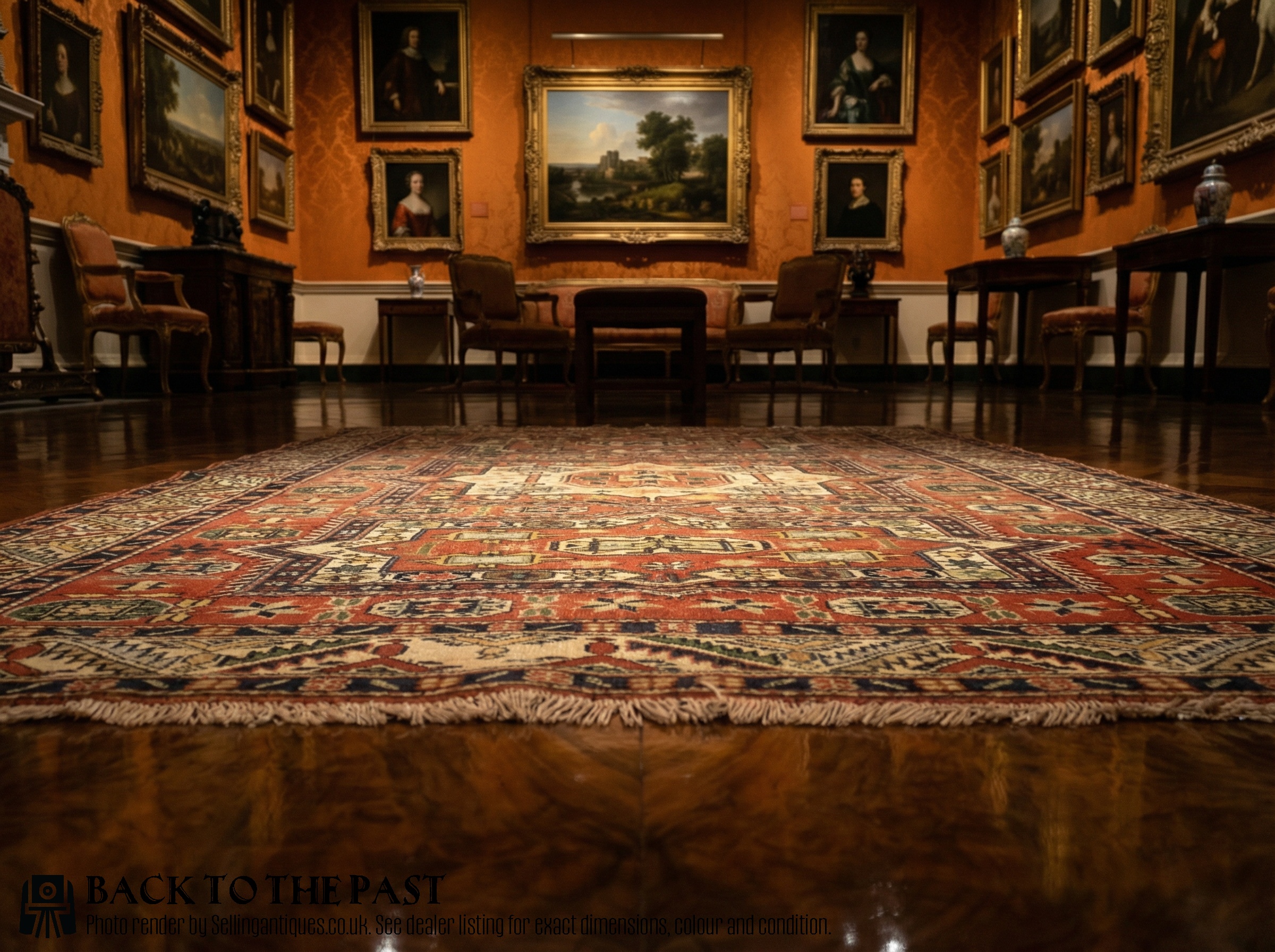
Heriz Style Rug
A heriz style rug represents a distinct tradition of northwest Persian weaving, noted for large-scale geometric medallions and robust construction. These floor coverings range from compact scatter formats to substantial room-size carpets.
The selection includes specific regional variants from the same cultural sphere, such as Gorevan, Karaja, Bakshaish, and Sarab carpets and runners. Examples date from the late nineteenth century through to the early decades of the twentieth century.
Buyers encounter everything from square room formats with central medallion layouts to long hallway runners and all-over pattern carpets. Traditional Persian tribal influences shape the decorative vocabulary across these pieces.
How they were made
Weavers constructed these textiles using hand-knotted wool pile secured onto cotton foundations, ensuring a dense and resilient structure suitable for heavy domestic use. Artisans utilised vegetable and early synthetic dyes to achieve deep terracotta, navy, and ivory tones.
The technique relies on sturdy knotting traditions particular to northwest Persian village workshops, producing firm handles and distinct rectilinear patterns. Natural materials account for both the soft pile and the underlying warp and weft threads.
Listings feature hand-knotted wool and cotton pieces spanning from the 1880s through to the 1930s, encompassing traditional Persian and northwest regional styles.
What varies in quality
Quality depends upon the fineness of the wool and the precision of the knotting density across the foundation. Finer village examples display crisper geometric outlines and more subtle variations in dye saturation.
The visual balance of the central medallion and the integrity of the border guards distinguish superior room-size carpets from simpler utilitarian runners. Preserved pile height and structural soundness further elevate the standing of an individual piece.
The Heriz Style Rug Glossary
- Medallion
- The central ornamental motif dominating the field of the rug. It typically dictates the symmetrical arrangement of the surrounding geometric corners.
- Warp
- The vertical threads stretched tightly on the loom that form the structural skeleton of the rug. The exposed fringe at either end consists of these extension threads.
- Weft
- The horizontal threads passed between the warp rows to bind the knots in place. This material remains hidden beneath the wool pile.
- Pile
- The dense surface layer of knotted wool that provides the tactile texture and colour of the textile. Higher knot densities generally create a firmer pile.
- Runner
- A long, narrow carpet format designed specifically for corridors, hallways, and staircases. These pieces repeat geometric motifs along an elongated axis.
Heriz Style Rug: Frequently Asked Questions
How do I clean a heriz style rug?
Regular gentle vacuuming without a beater bar removes loose dirt from the wool pile. Professional specialist cleaning remains essential for deep washing to protect the natural dyes.
Avoid household detergents and excessive moisture, which can damage the cotton foundation threads. Prompt attention to spills prevents permanent staining of the vintage fibres.
Where were these rugs made?
Weavers produced these textiles in the Heriz region and surrounding village workshops of northwest Persia. Nearby districts such as Karaja, Bakshaish, and Sarab contributed closely related weaving traditions.
These communities shared motifs, dye palettes, and knotting techniques while maintaining distinct local character in their room-size carpets and runners.
Can I place a rug in a hallway?
Long runner formats suit hallways and corridors perfectly, offering durable floor protection and graphic visual interest. The dense hand-knotted wool withstands frequent foot traffic.
Using a quality underlay keeps the textile secure on hard floors and prevents shifting during daily use.
How do I date an antique rug?
Dating relies on stylistic analysis of the geometric motifs, structural examination of the wool and cotton, and dye identification. Late nineteenth-century pieces often display specific botanical nuances and softer, more nuanced colour transitions.
Comparing knot count, palette shifts, and fringe wear against documented examples helps narrow the production period to a specific decade.