

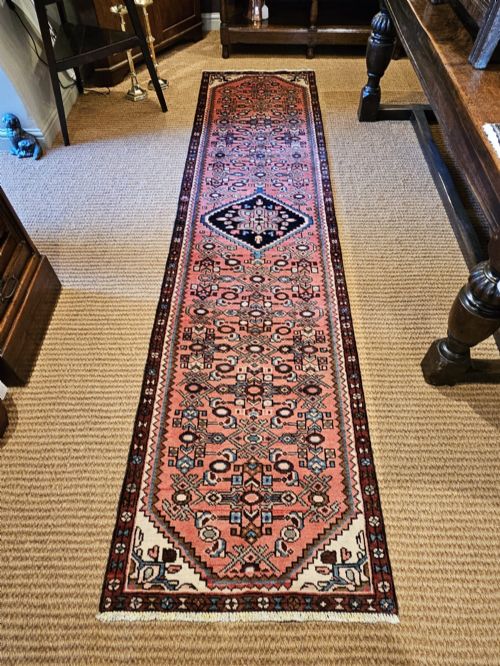
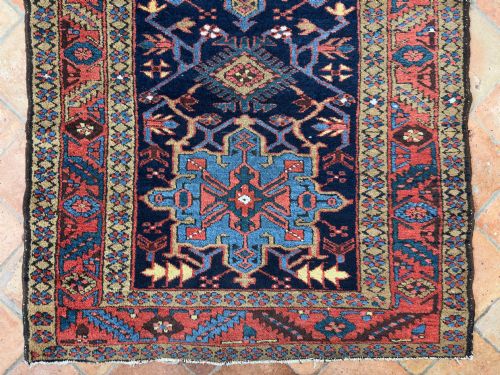


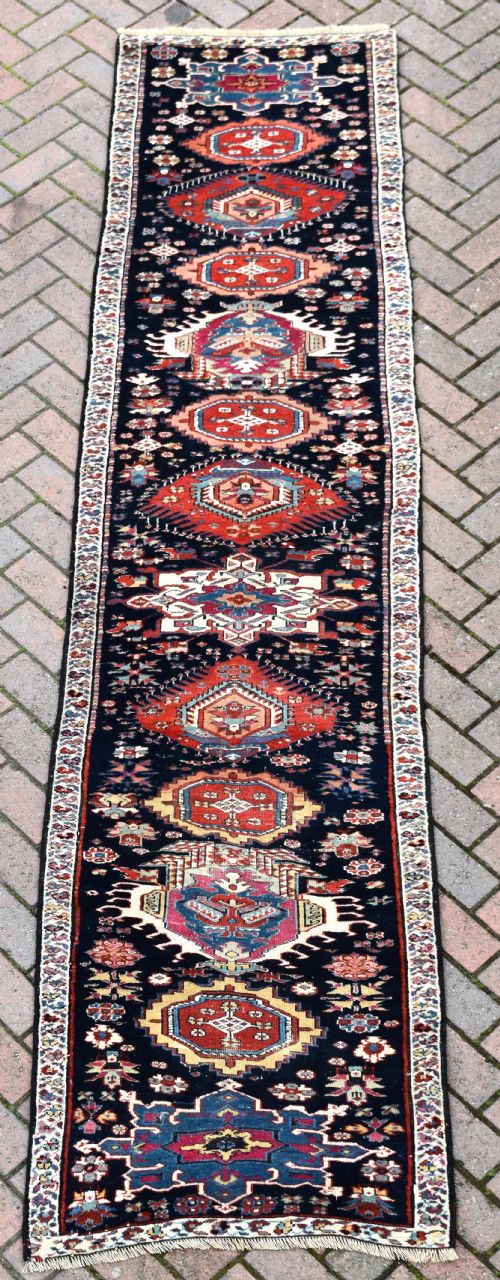

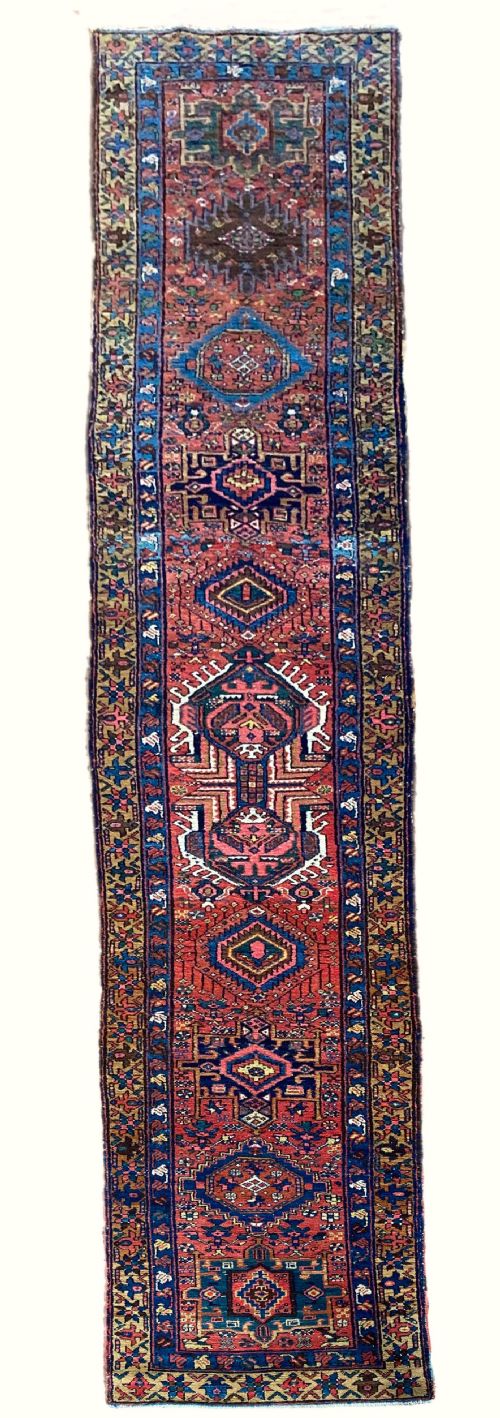

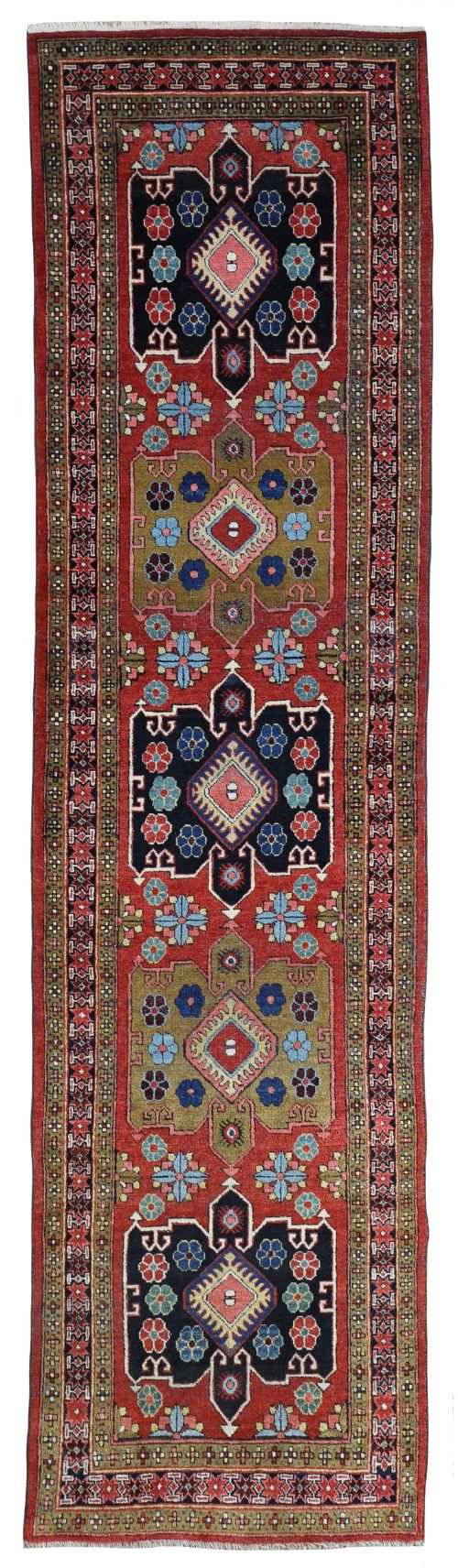
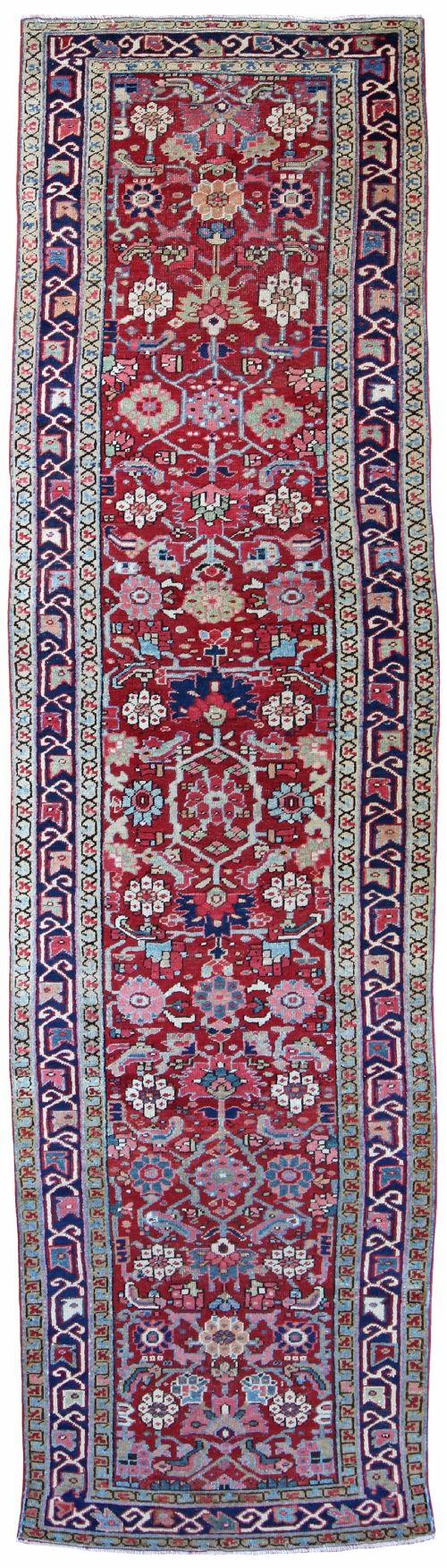


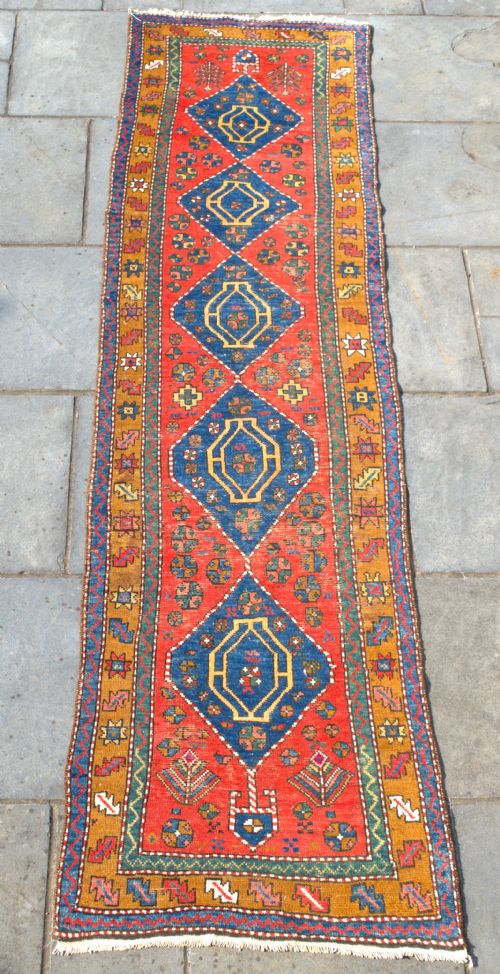
Heriz Narrow Rug
A heriz narrow rug brings grand geometric design to a long hallway, offering durable wool pile and striking village patterns.
Heriz Narrow Rug
A heriz narrow rug is a distinctive runner format originating from north west Persia, designed specifically for long hallways and corridors. These pieces combine village weaving traditions with monumental geometric medallion designs suited to extended formats.
The selections available here showcase classic runner proportions, stretching from two hundred and seventy centimetres to over five metres in length while maintaining slender widths. These elongated village carpets adapt traditional Heriz and Karaja motifs into linear formats.
Originating across several decades spanning the late nineteenth century to the early twentieth century, these runner rugs display the enduring output of Persian weavers. Collectors encounter pieces catalogued under various regional designations including Heriz, Karaja, and Gorravan.
How they were made
These carpets rely on resilient wool pile knotted tightly onto sturdy cotton foundations. This pairing provides the structural strength necessary for high-traffic hallway use while allowing crisp graphic rendering of geometric patterns.
Weavers in north west Persia utilised traditional upright looms to construct these heavy runners. The structural materials ensure the rugs lie flat and withstand decades of daily footfall.
Heriz Narrow Rug Retail Price Guide 2026
Typical asking prices for heriz narrow rug among the pieces listed under this phrase on Sellingantiques today, from the lower quarter to the upper quarter. They describe what is for sale here now, not the wider market.
Listings feature wool and cotton runners spanning production dates from 1880 through to 1930.
What varies in quality
Quality in a heriz narrow rug rests upon the precision of the geometric drawing and the balance of the field proportions. Finer examples display crisp, clear medallion outlines and harmonious colour distribution across the elongated format.
The handling of the narrow border designs relative to the central field dictates the visual success of the piece. Superior specimens maintain structural integrity and tight knotting despite the extreme dimensions.
The Heriz Narrow Rug Glossary
- Runner
- A long, narrow rug format specifically woven for hallways, corridors, and stairs. These pieces measure significantly longer than they are wide.
- Medallion
- A large, central ornamental design motif placed in the middle of the rug field. In Heriz weaving, this element usually takes a bold geometric form.
- Warp
- The vertical foundation threads that run the entire length of the rug, onto which the wool knots are tied. Cotton is the standard material for these threads in this region.
- Weft
- The horizontal threads passed between rows of knots to secure the pile in place. This material works with the warp to create the firm foundation characteristic of village rugs.
- Pile
- The soft surface layer of the rug formed by the cut ends of the knotted wool yarn. The height and density of this wool layer dictate the texture and durability.
Heriz Narrow Rug: Frequently Asked Questions
Where should a heriz narrow rug be placed?
These elongated formats suit long hallways, narrow entryways, and corridors where traditional broad carpets cannot fit. Their robust wool construction handles frequent walking traffic while adding distinct Persian character to transitional spaces.
Positioning the runner centrally allows the geometric medallions to draw the eye down the length of the passage. Ensure the chosen space accommodates the full length without folding the ends against walls or doors.
How do I distinguish Heriz from Karaja runners?
Heriz runners typically feature bold, architectural geometric medallions and strong corner spandrels rooted in larger carpet designs. Karaja pieces often display more tribal or repeated village motifs across the narrow field.
Both styles originate from the same broader north west Persian weaving region, sharing similar wool materials and sturdy cotton foundations. The visual distinction lies primarily in the rhythm and scale of the geometric patterns.
What is a Gorravan runner?
Gorravan is a village within the Heriz district of north west Persia known for producing carpets and runners with slightly more open, spaced-out geometric designs. These pieces share the same robust wool construction and village aesthetic as wider Heriz production.
Collectors look for these regional attributions to understand the specific design lineage of their runner. The materials and weaving techniques remain consistent with neighbouring workshops in the same district.
How do I care for an antique wool runner?
Regular gentle vacuuming without a rotating brush roll keeps dust from settling into the wool pile. Professional cleaning suited to antique textiles preserves the natural lanolin and dye stability of the wool.
Using a quality underlay prevents slipping in high-traffic hallways and reduces friction between the cotton foundation and the floor. This simple addition extends the working life of the rug considerably.