



Heriz Hallway Carpet
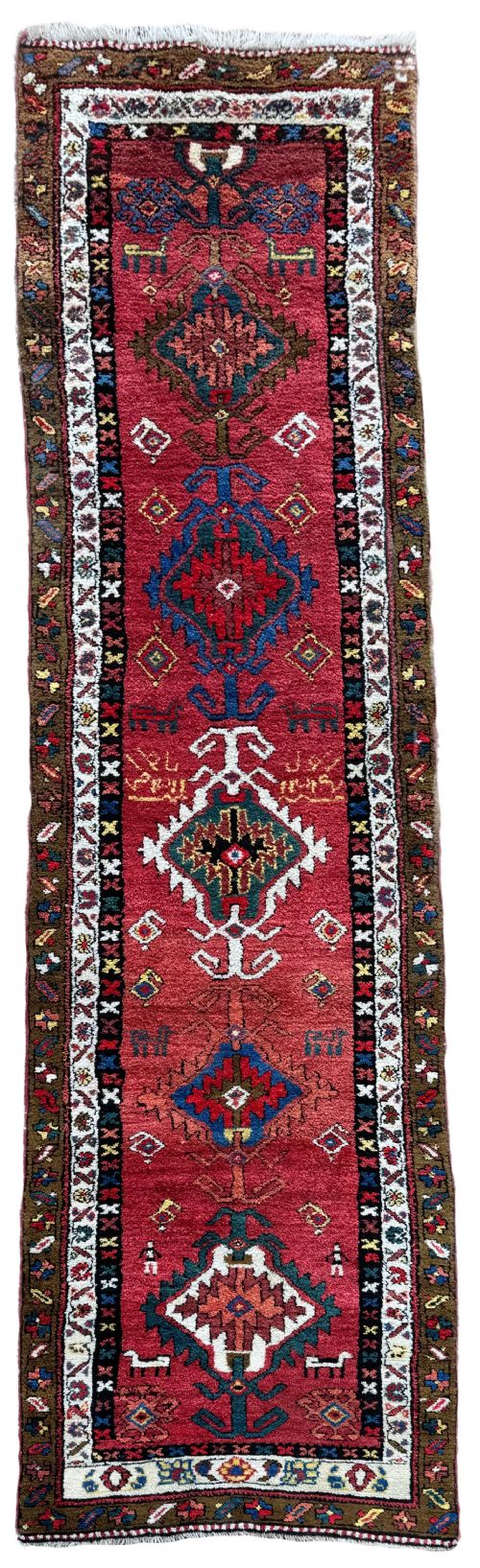
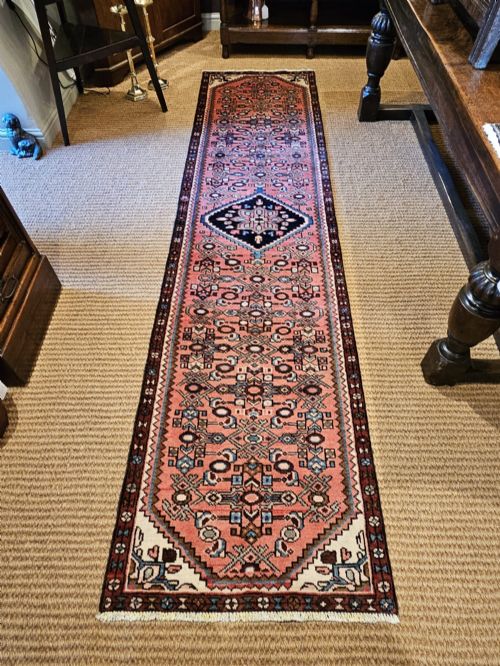
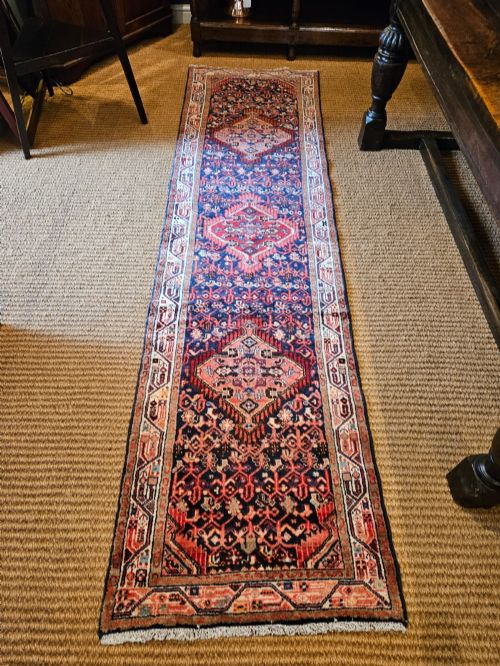
A heriz hallway carpet brings bold geometric medallions and sturdy room-anchoring length to a passage, woven in North-West Persia to endure decades of footfall.
Heriz Hallway Carpet
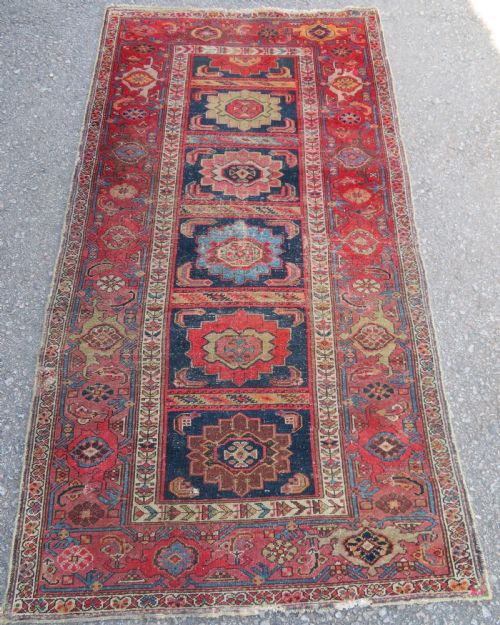
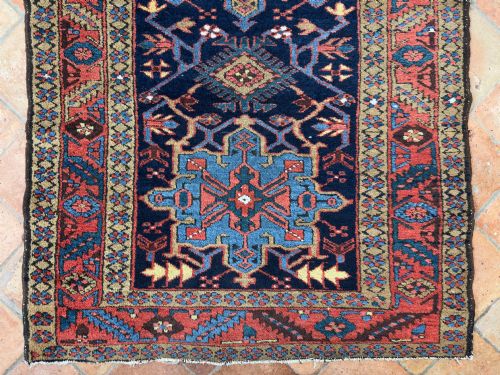
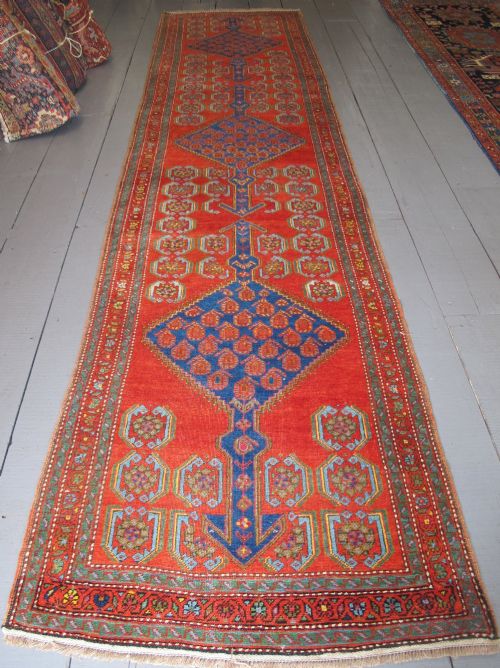
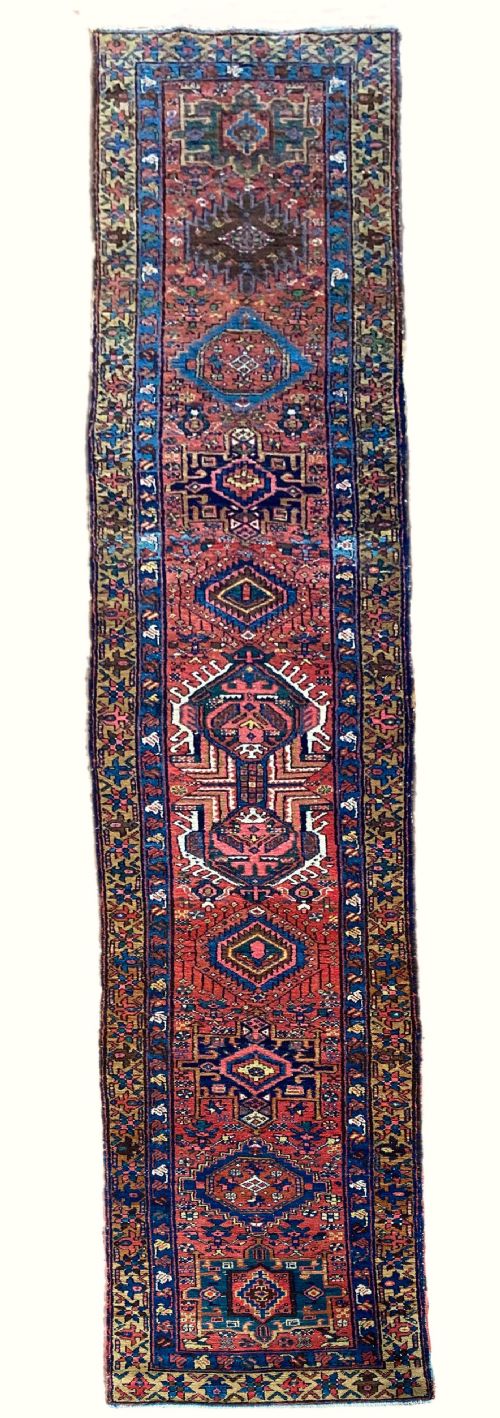
A heriz hallway carpet typically presents as a narrow runner rug originating from North-West Persia, spanning various decades from the late nineteenth century into the early twentieth century. These pieces appear under designations such as Heriz, Serapi, Gorevan, Bakshaish, Karaja, and Hastrud, reflecting the specific weaving districts of the region.
The format remains consistently elongated for corridors and galleries, measuring from modest lengths up to extensive hallway proportions. Buyers encounter traditional Persian designs characterised by geometric layouts and distinctive medallion patterns.
Most examples date across distinct production periods spanning from the eighteen-eighties to the nineteen-thirties, showing enduring regional weaving traditions. These floor coverings bridge utility and heritage, designed specifically to fit narrow spaces while providing substantial floor coverage.
Materials and construction
The foundation relies on sturdy cotton warps and wefts, providing the structural grid necessary to support heavy floor use in busy corridors. Artisans knotted dense wool pile directly onto this cotton framework.
Natural wool supplies resilience to the surface texture, while the robust cotton foundation maintains the straight, narrow geometry required for long runners without warping over time.
Some narrow runners measure a mere eighty-two centimetres wide, proving that nineteenth-century weavers understood the snug reality of narrow hallway dimensions.
Evaluating quality and condition
Quality rests in the crispness of the geometric drawing and the balance of the central medallion within the narrow border system. Tightly packed wool knots provide a firmer handle and greater resilience against daily wear.
Proportions also dictate character, with exceptionally narrow widths or unusually extended lengths showing particular weaving skill. Preservation of original edge binding and end finishes distinguishes well-kept examples from heavily restored pieces.
Waring and Gillow
The Heriz Hallway Carpet Glossary
- Heriz
- A region in North-West Persia renowned for durable carpets featuring bold geometric medallions and rectilinear floral motifs.
- Runner
- A long, narrow carpet format designed specifically for corridors, hallways, and staircases.
- Medallion
- A central ornamental design motif placed symmetrically in the middle of the carpet field.
- Warp
- The vertical threads stretched on the loom that form the foundational skeleton of the rug.
- Weft
- The horizontal threads passed across the warp threads to lock the rows of knots into place.
Heriz Hallway Carpet: Frequently Asked Questions
How do I measure for a hallway runner?
Measure the clear floor space of your corridor, leaving a uniform margin of exposed flooring around the perimeter of the carpet. Ensure doors swing freely over the thickness of the wool pile and cotton foundation.
Account for any radiators, skirting boards, or architectural obstructions that might restrict the length or width of the runner.
What underlay should I use?
Select a breathable, non-slip rug underlay designed for historic textiles to keep the carpet stable on hard hallway flooring. This prevents sliding underfoot and cushions the cotton foundation against hard impacts.
Avoid rubber-backed products that trap moisture and can damage antique wool pile over extended periods.
How do I clean an antique runner?
Vacuum gently using suction only, avoiding any rotating brush bars that pull at the wool knots along the edges. Address spills promptly by blotting with a clean, dry cloth without rubbing.
Entrust deeper cleaning to professional conservators experienced with antique Persian vegetable-dyed wool.
How do I distinguish Heriz from Karaja?
Heriz carpets generally display larger, bolder geometric medallions with substantial corner spandrels in North-West Persian village styles. Karaja runners often feature smaller, repeating geometric motifs or distinct pole medallions.
Both originate from neighbouring weaving districts in the same broader region, sharing cotton foundations and durable wool construction.