
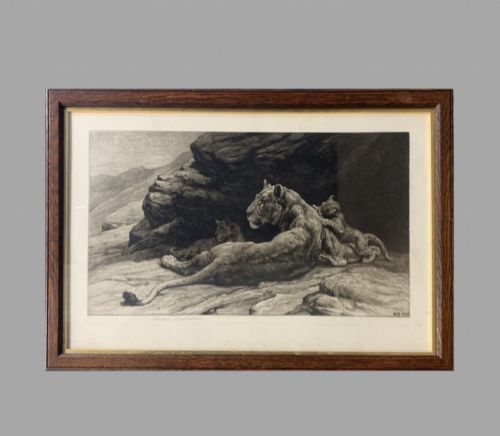


Herbert Dicksee Original
A Herbert Dicksee original brings the heavy atmosphere and intense animal study of early twentieth century printmaking directly onto the wall.
Herbert Dicksee Original
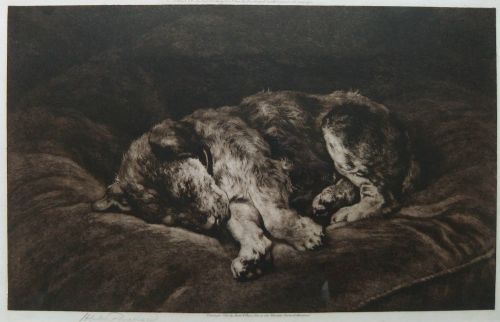
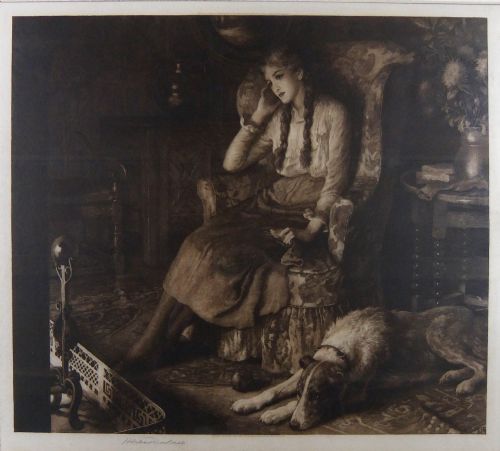
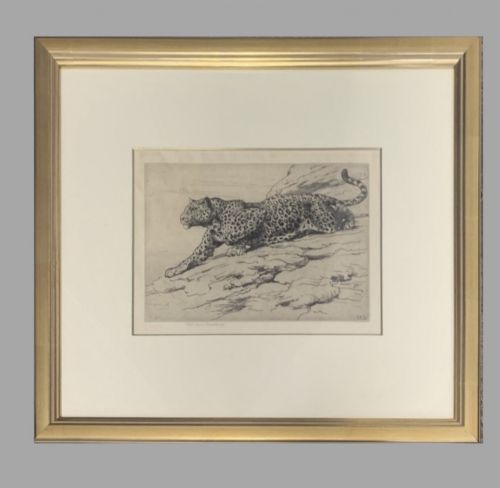
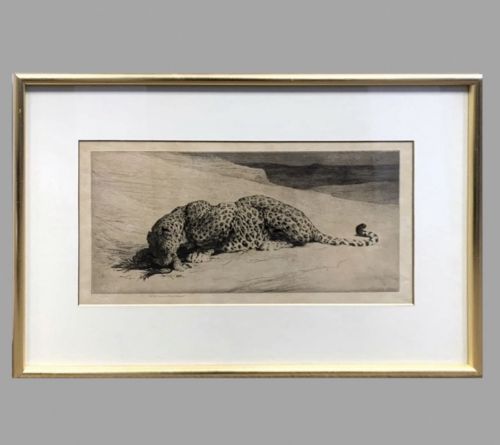
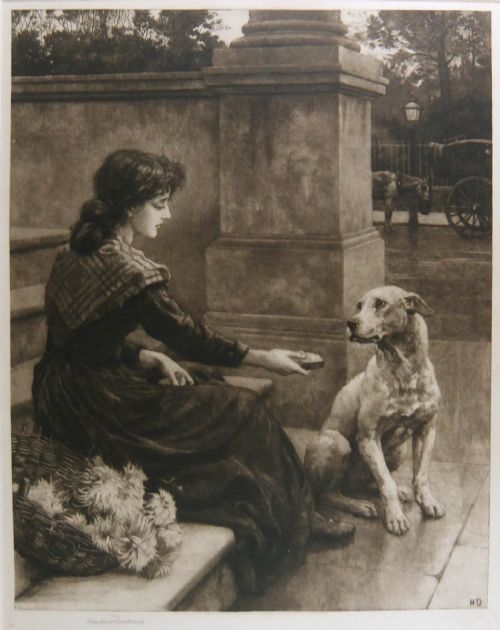
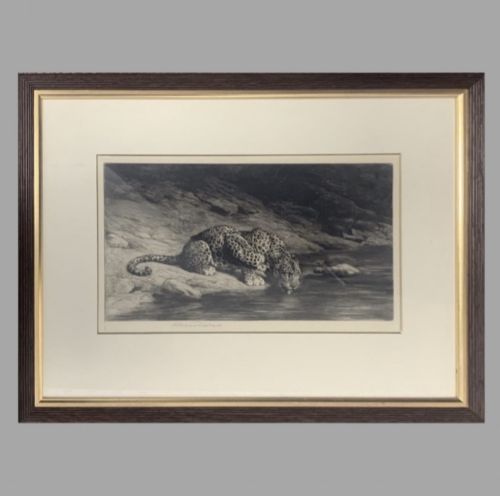
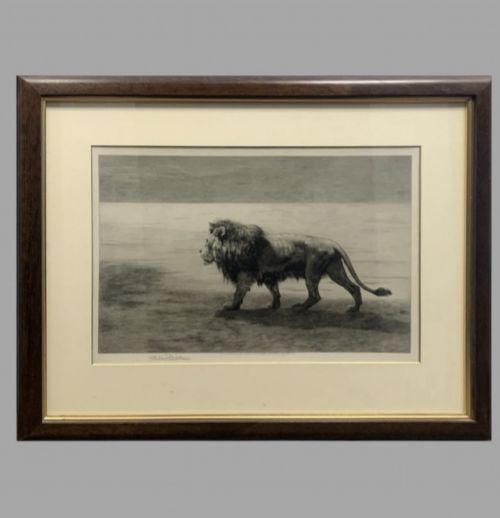
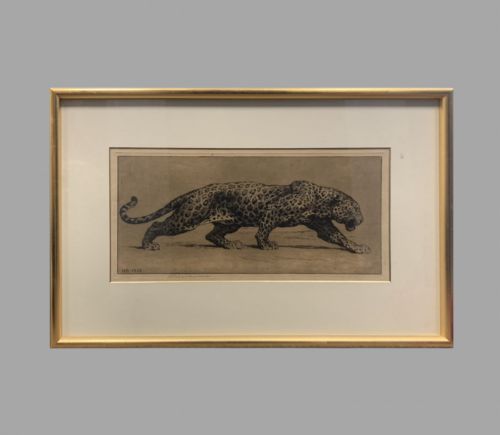
A Herbert Dicksee original consists of detailed etchings and drypoints focusing primarily on domestic dogs, large cats, and rural wildlife subjects. These works span the Victorian, Edwardian, and early twentieth century periods, capturing realistic anatomical studies with profound emotional weight.
The selections encountered here range from large cats like leopards and tigers to loyal canine companions such as Scottish Terriers, British Bulldogs, and Deerhounds. Each piece operates as a window into historical animal portraiture executed through precise intaglio printing methods.
How they were made
These works are produced primarily as etchings and drypoints on paper or vellum, utilising inked plates pressed to capture fine linear detail. Certain examples incorporate framing elements of wood, gilt wood, and glass alongside details finished in gold leaf.
The printmaker works directly into the metal plate using sharp needles or acid baths to hold ink within the recessed lines. Printing onto vellum or heavy paper yields distinct tonal depth and texture unique to the process.
Scottish Terriers and British Bulldogs share the catalogue with Siberian tigers, proving the artist appreciated fierce loyalty alongside absolute fury.
What varies in quality
Quality rests upon the crispness of the impression and the preservation of the delicate burr left by drypoint needle work on the metal plate. Early pulls retain sharper tonal contrasts and finer hair textures than later impressions taken after the plate has worn.
The choice of support material also influences the character of the work, with vellum offering a distinct luminous quality compared to standard paper. Evidence of pencil signatures and artist proof designations further distinguishes particular impressions.
Herbert Dicksee
The Herbert Dicksee Original Glossary
- Etching
- A printmaking method where acid bites lines into a metal plate to hold ink for transfer. This technique allows for fluid, highly detailed illustrative work.
- Drypoint
- A process where the artist scratches directly into the metal plate with a sharp needle rather than using acid. This raises a rough ridge of metal called a burr that catches ink to create velvety dark lines.
- Vellum
- Prepared animal skin utilised as a durable and smooth printing surface. It absorbs ink differently than paper, imparting a warm tone to the final impression.
- Artist Proof
- An impression printed outside of the standard commercial edition reserved for the creator. These typically hold strong collector interest due to their direct association with the printmaker.
- Intaglio
- A printing family where the ink lies beneath the surface of the plate rather than sitting on top. Pressure forces damp paper into the recessed grooves to pick up the pigment.
Herbert Dicksee Original: Frequently Asked Questions
What subjects appear in these prints?
The subjects focus heavily on animals, ranging from domestic dogs like spaniels, terriers, and bulldogs to wild cats including leopards, tigers, and polar bears. Many compositions tell emotional or narrative stories involving the creatures in domestic or natural landscapes.
The depictions lean toward early twentieth century realism, capturing the distinct textures of fur and the expressive postures of the animals. Each scene emphasises mood, from quiet rest to dramatic tension.
How do paper and vellum impressions differ?
Paper supports provide a traditional matte surface that accepts fine linear etching with sharp contrast and clarity. Vellum offers an organic, slightly translucent quality that mellows the ink tones and alters how light interacts with the image.
Vellum was often selected for special printings, resulting in a heavier tactile presence when framed. Both materials require careful protection from direct light to prevent fading of the ink.
What defines an artist proof?
An artist proof is an early impression pulled before the main commercial edition is finalised and numbered. These impressions were kept by the creator to check the progress of the plate.
Because they represent the earliest state of the plate, they often display superior crispness in the fine lines of the fur and whiskers. Collectors prize them for their direct connection to the printmaking process.
How should these framed works be displayed?
Framed prints require placement away from direct sunlight and excessive moisture to protect both the paper or vellum and the underlying ink. Acid-free mounting prevents the materials from yellowing over time.
Keeping the antique wood or gilt frames clean with a soft dry cloth maintains the historical context of the piece. Proper glazing with protective glass shields the delicate intaglio surface from atmospheric dust.