






Herati Pattern Oriental Rug
When you handle a herati pattern oriental rug, you touch a dense floral trellis tradition woven across Persian villages.
Herati Pattern Oriental Rug
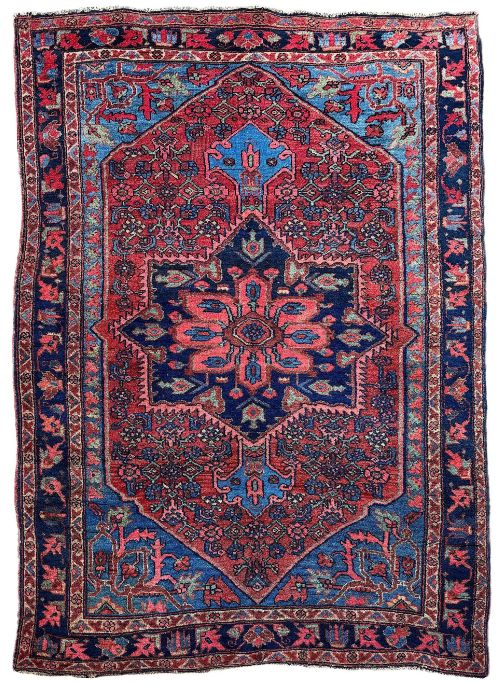
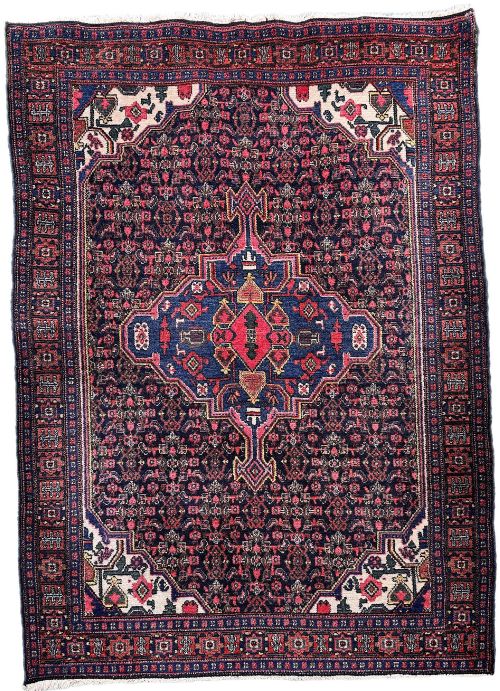
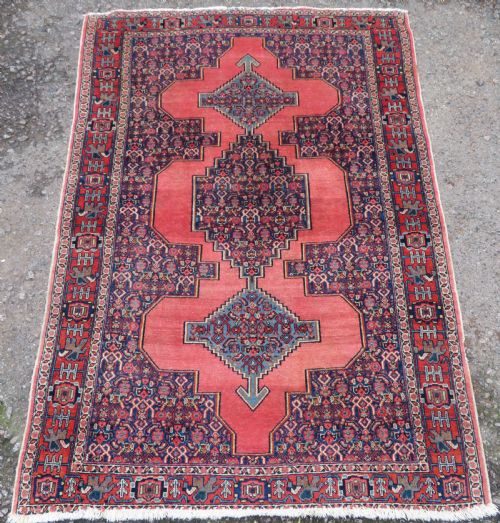
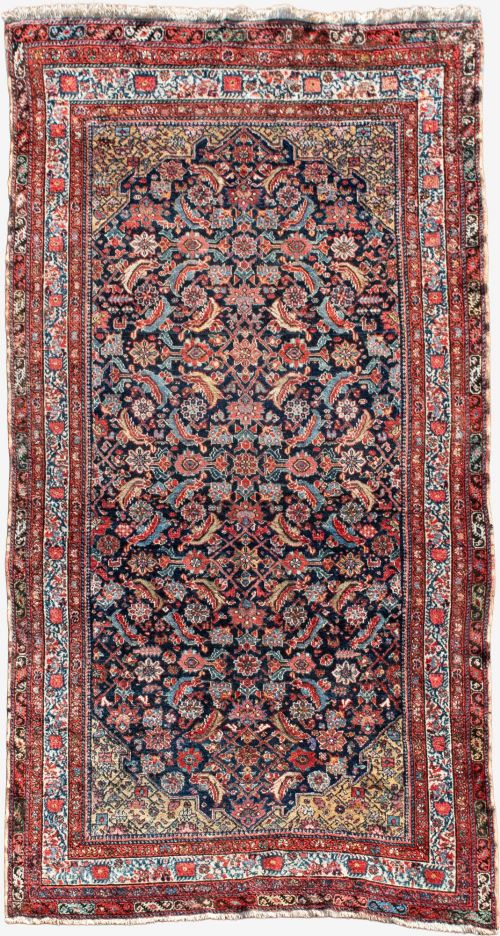
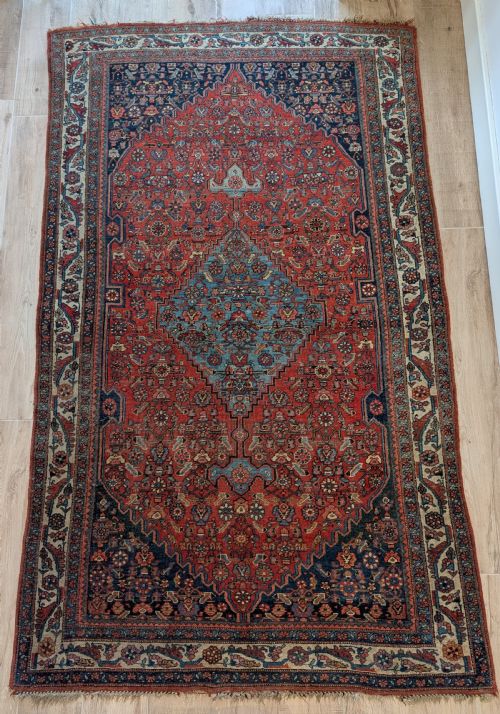
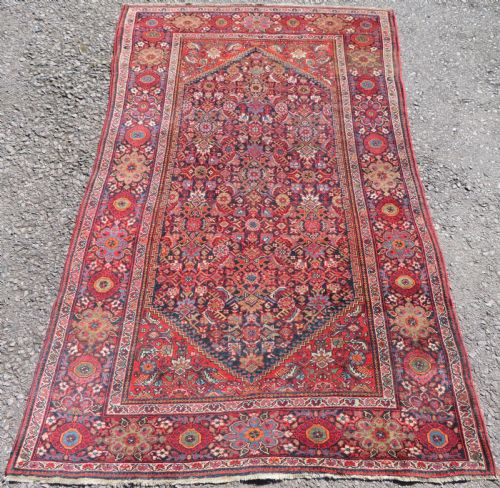
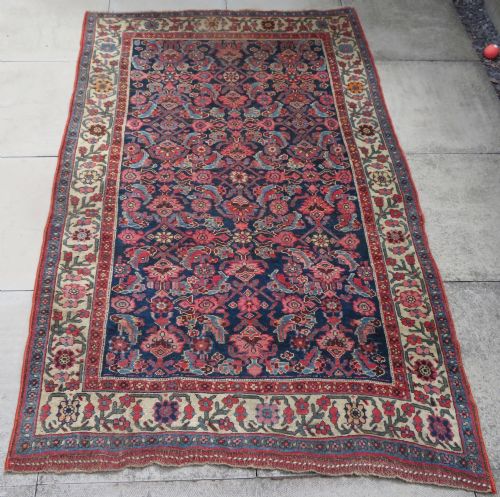
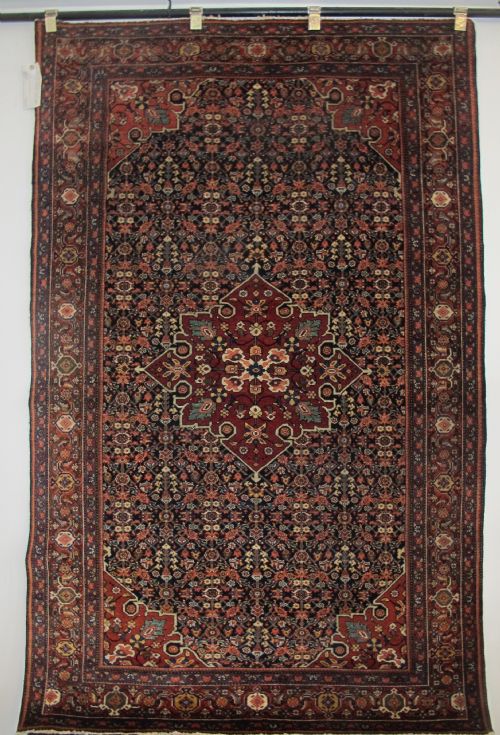
A herati pattern oriental rug displays a repeating floral motif composed of a central rosette enclosed by leaves and flanked by curved fish-like serrated leaves. These textiles arrive from Persian regions including Senneh, Malayer, Fereghan, Bidjar, Afshar, and Qashqai.
Most examples found here date from the nineteenth and early twentieth centuries, spanning periods from eighteen seventy to nineteen thirty. The selection includes area rugs, runner rugs, kelleh long rugs, and kilims.
Village weavers and tribal workshops produced these floor coverings in various formats, ranging from small pushti face pieces to large gallery carpets. Traditional Persian styles dominate the listings, reflecting regional weaving idioms.
How they were made
Weavers constructed these carpets using wool pile knotted onto cotton foundations, though flatwoven kilim structures also occur. Natural dye materials supplied the palette seen across the nineteenth and early twentieth-century examples.
Regional workshops employed distinct knotting densities and structural methods, visible in the handling of the warp and weft threads. The combination of wool and cotton provided the structural integrity required for heavy use in country houses and town residences.
Herati Pattern Oriental Rug Retail Price Guide 2026
Typical asking prices for herati pattern oriental rug among the pieces listed under this phrase on Sellingantiques today, from the lower quarter to the upper quarter. They describe what is for sale here now, not the wider market.
Object types recorded in the inventory include area rugs, runner rugs, kelleh long rugs, and flatwoven kilims.
What varies in quality
The precision of the herati motif execution separates standard village production from finer workshop output. Knot density, dye saturation, and the crispness of the curved leaf drawing dictate the standing of an individual carpet.
The integrity of the foundation and the preservation of the original selvages and ends influence the overall condition of older rugs. Balance in the proportions of the central field and the surrounding borders indicates the skill of the original weaver.
Senneh weavers·Malayer workshops·Bidjar Kurdish tribes·Afshar tribal weavers·Qashqai weavers·Salar Khani Baluch
The Herati Pattern Oriental Rug Glossary
- Herati
- A traditional repeating pattern consisting of a floral rosette framed by two curved leaves, often called the fish motif. This design appears across Persian rugs from multiple regional centres.
- Kelleh
- A long, narrow carpet format traditionally used in Persian rooms alongside larger centre carpets. These pieces offer an elongated field for continuous repeat patterns.
- Kilim
- A flatwoven rug or carpet produced without a pile by tightly interweaving warp and weft strands. These textiles display sharp geometric transitions.
- Pushti
- A small mat or rug, often used as a cushion or face piece by tribal weavers. These compact items display condensed versions of larger regional patterns.
- Warp
- The stationary vertical threads stretched on the loom that carry the tension of the rug. Cotton forms the warp foundation in the majority of these pieces.
Herati Pattern Oriental Rug: Frequently Asked Questions
What is a herati pattern?
The herati pattern is a traditional Oriental design featuring a central floral head surrounded by a diamond trellis and curved leaves. It appears frequently in Persian weaving from the nineteenth and early twentieth centuries.
Weavers repeated this motif across the field of rugs and carpets to create an all-over texture. It serves as a defining characteristic of carpets from centres such as Feraghan, Malayer, and Senneh.
How do I identify a Feraghan rug?
Feraghan rugs typically originate from the West Persia region and date from the nineteenth to early twentieth centuries. They combine fine wool pile with balanced proportions and traditional herati or lattice designs.
Examination of the foundation reveals the structural characteristics specific to West Persian village and workshop production. Their handling of natural dyes yields a distinct palette over time.
Where were Bidjar carpets made?
Bidjar carpets were produced by Kurdish tribes and villagers in and around the town of Bidjar in West Persia. These pieces are recognised for their dense construction and heavy woolen pile.
The sturdy structure earned them a reputation for durability among collectors. Their designs often incorporate bold medallions or all-over herati repeats on wool and cotton foundations.
How should I care for an antique Persian rug?
Antique Persian rugs require gentle maintenance, including regular low-suction vacuuming without beater bars. Professional cleaning suited to natural wool pile and traditional dyes preserves the fibres.
Keep these textiles away from direct sunlight to prevent uneven fading of the natural colours. Placing an appropriate underlay beneath the rug prevents slipping and reduces friction against the floor.