
Hepplewhite Style Seating
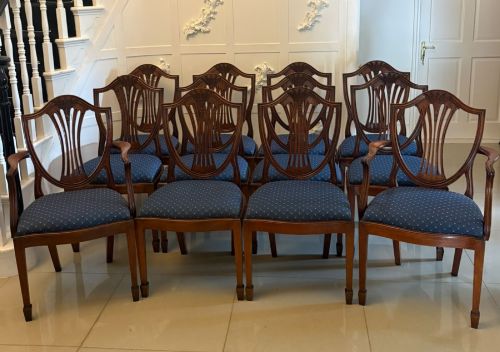
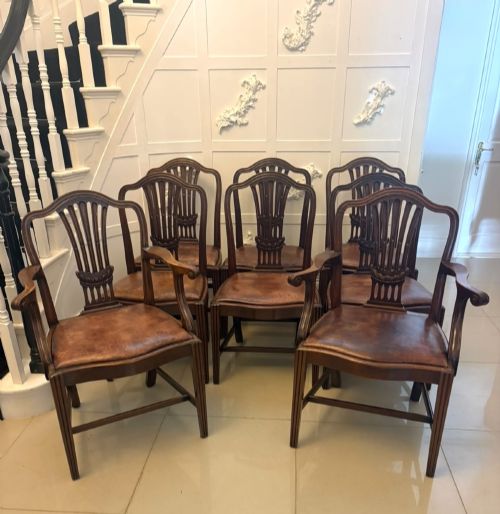
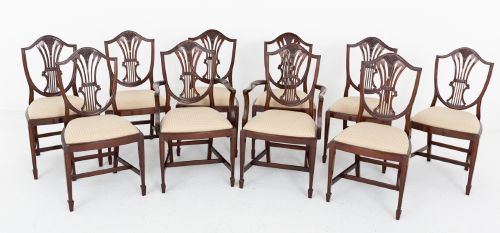
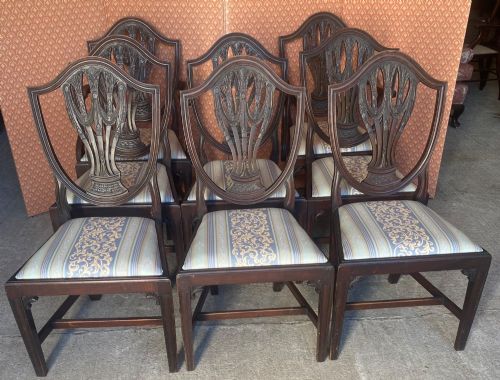
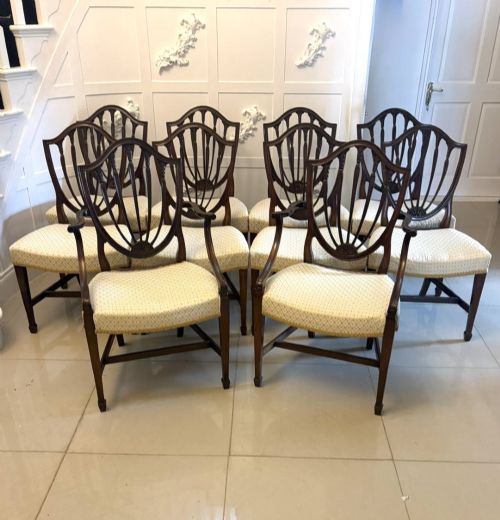
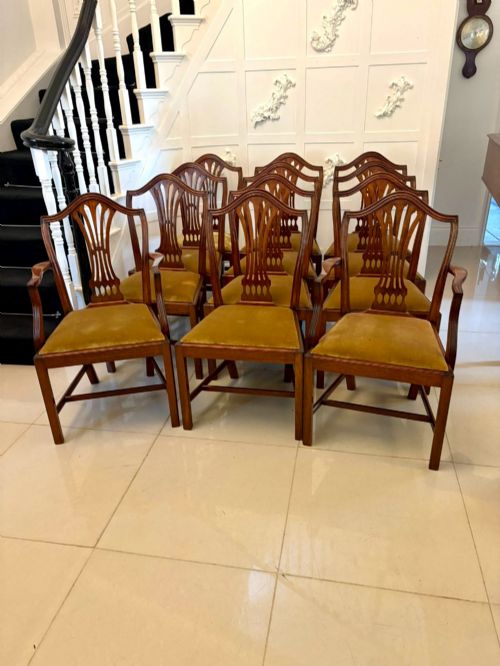
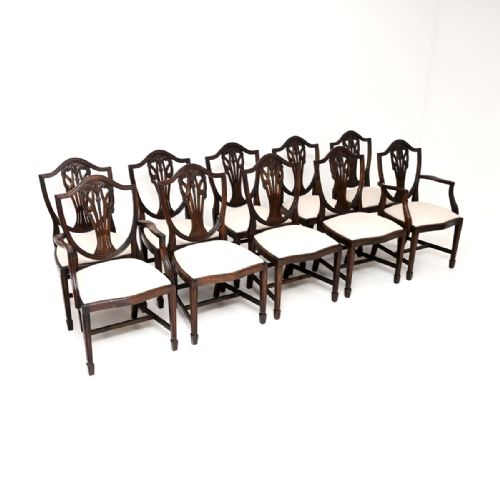
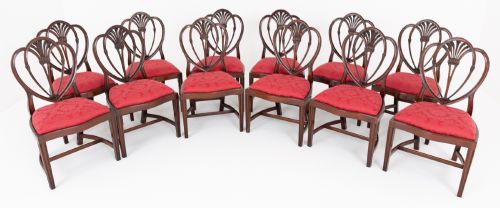
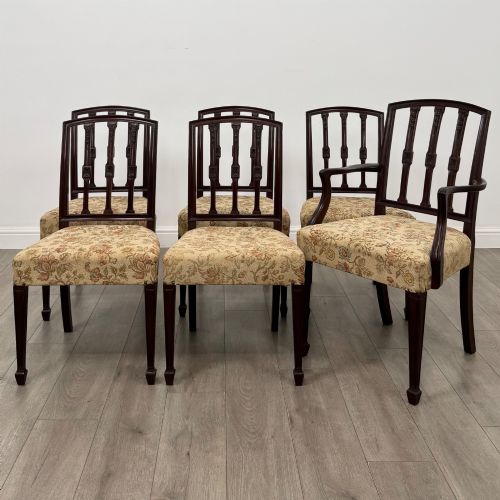
Hepplewhite style seating comprises mahogany dining chairs, armchairs and settees shaped by iconic shield backs and defined by revival periods.
Hepplewhite Style Seating
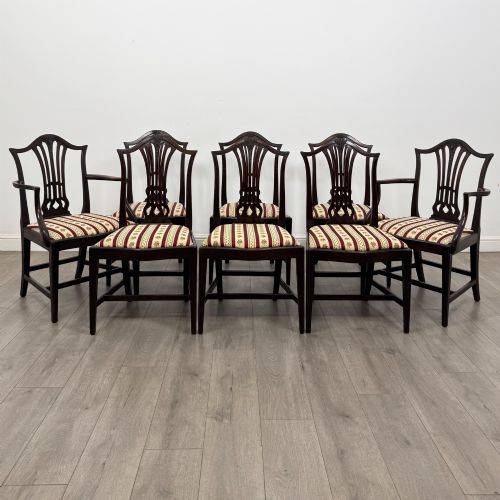
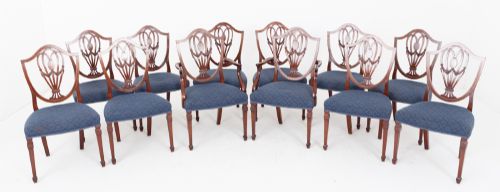
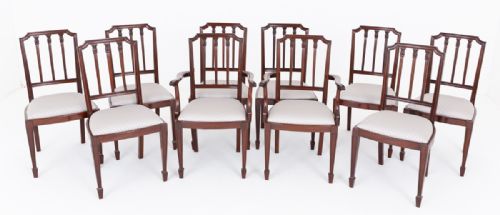
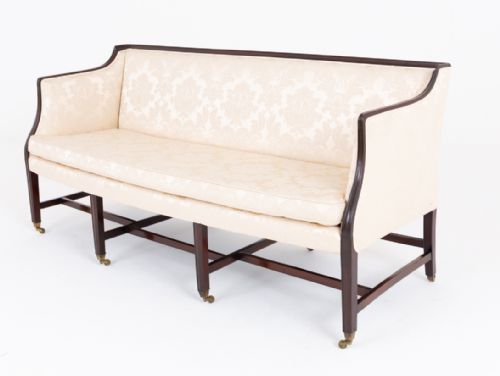
Hepplewhite style seating encompasses dining chairs, armchairs and settees built within specific historical periods including the 18th Century, Georgian era, Victorian period, Edwardian years and early 20th Century revivals. Buyers encounter everything from large dining sets numbering ten or twelve pieces to pairs of armchairs and single settees.
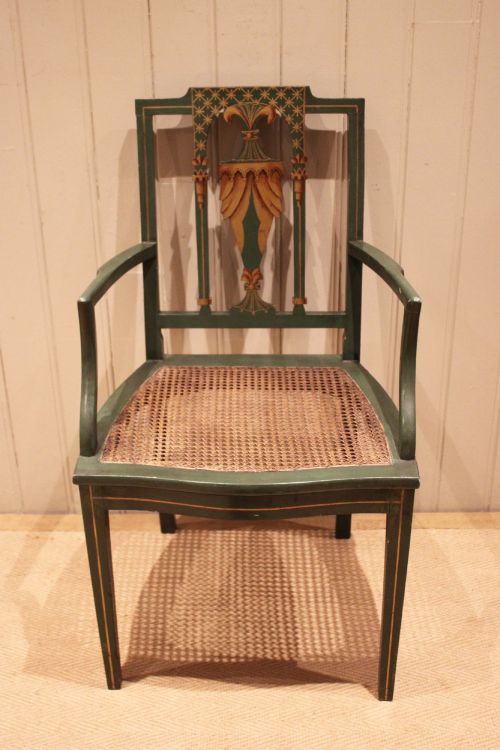
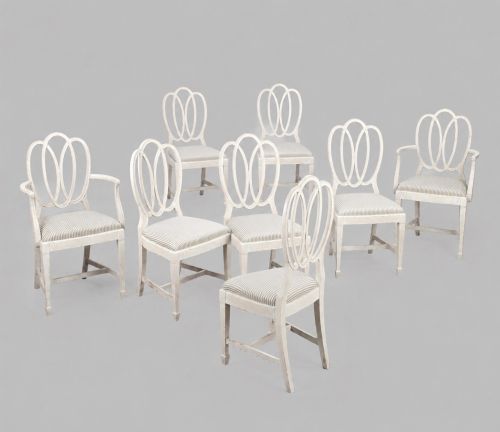
The primary forms take shape as shield back dining chairs, carvers, and painted alternatives featuring cane or upholstered seats. Mahogany dominates the physical evidence, accompanied by maple, satinwood, and painted wood finishes.
How They Were Made
Makers constructed these pieces predominantly from solid mahogany, alongside maple and satinwood, shaping the timber into distinctive shield backs and curved frames. Workshops integrated brass details and applied painted finishes to select surfaces.
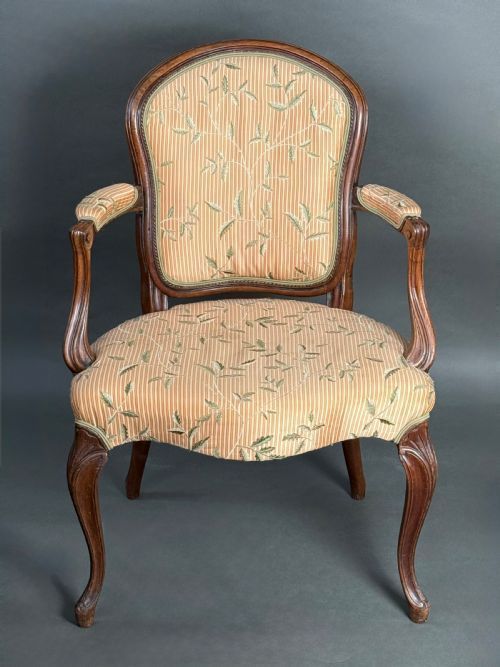
Seating areas relied on upholstery fabric, velvet, leather, and woven cane, fixed to support the wooden structures of dining chairs, armchairs, and settees.
Listings feature mahogany, satinwood, and maple woods, alongside velvet, leather, silk, and cane upholstery.
What Varies in Quality
Quality rests upon the crispness of the carved shield backs and the fidelity of the proportions across large sets of dining chairs. Cohesion within assembled sets of ten or twelve pieces determines the visual harmony of the dining group.
The selection of timber, the integrity of the joinery in the frame, and the original choice of upholstery materials such as silk or leather separate standard revival pieces from finer examples.
Maple and Co·Colefax and Fowler
The Hepplewhite Style Seating Glossary
- Shield Back
- A chair back shaped like a heraldic shield, characteristic of Hepplewhite designs. This curved outline defines the silhouette of many dining chairs.
- Carver
- An armchair designed to match a set of dining chairs, usually placed at the head of a table. These pieces often feature open arms curved for comfort.
- Settee
- A long upholstered or wooden bench with a back and arms, built to seat multiple people. Examples appear in mahogany and satinwood forms.
- Revival
- A later period style that copies or adapts the design vocabulary of an earlier century. Edwardian and 1920s workshops frequently produced revival seating.
Hepplewhite Style Seating: Frequently Asked Questions
How do I identify Hepplewhite style seating?
Look for the characteristic shield-shaped backrest, slender tapered legs, and carved details such as wheat ears or Prince of Wales feathers. These elements appear frequently across mahogany dining chairs and armchairs from various periods.
Examine the overall proportions and construction methods to distinguish original 18th-century pieces from later Edwardian and 1920s revival versions.
Were these chairs originally sold in large sets?
Makers often produced dining chairs in large sets, sometimes numbering ten or twelve pieces alongside matching carver armchairs. Surviving sets frequently combine standard dining chairs with carvers for the table ends.
Finding matched sets of twelve remains notable due to the dispersal of dining furniture over centuries of use.
What materials were used for the seats?
Seating areas utilised a variety of coverings including leather, velvet, upholstery fabric, silk, and woven cane. Original choices often reflected the prevailing taste of the manufacturing period, from Georgian upholstery to Edwardian textiles.
Many pieces retain or have been restored with traditional materials to match their initial appearance.
How do I care for antique mahogany frames?
Maintain the wood by keeping the furniture away from direct sunlight and fluctuating heat sources that dry out timber. Gentle cleaning preserves the natural finish of the mahogany.
Protect upholstered sections and leather seats by avoiding harsh chemical cleaners and maintaining stable indoor humidity.