


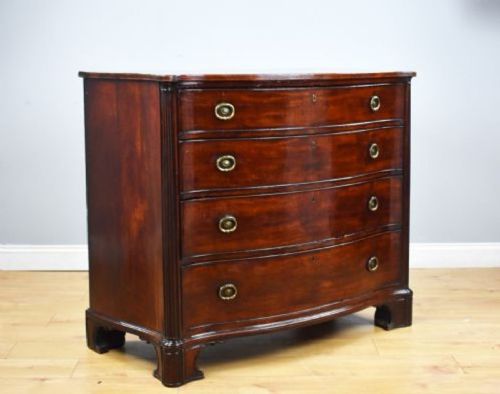


Hepplewhite Mahogany Chest
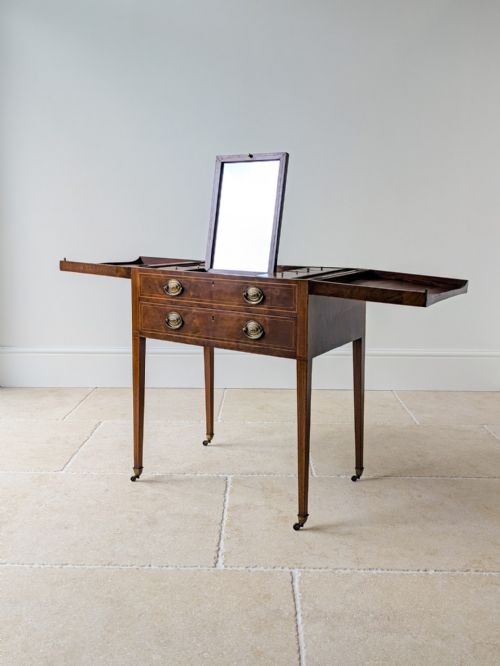
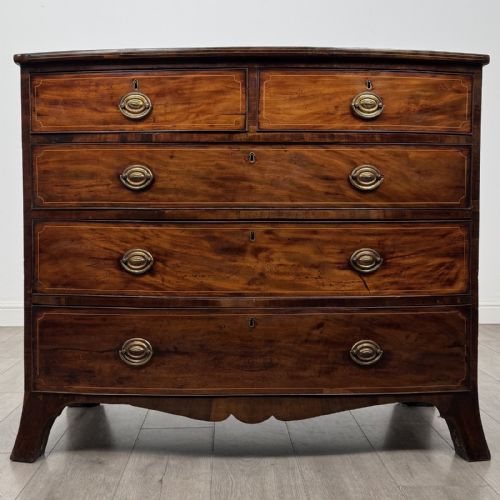
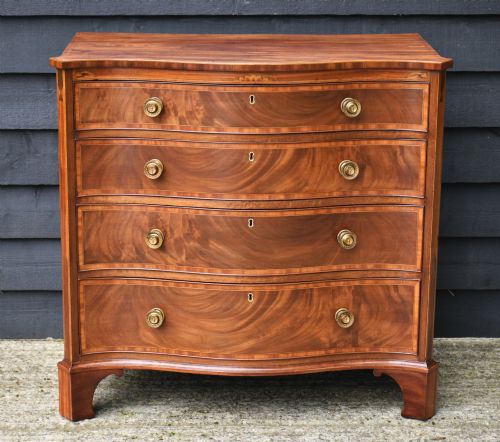
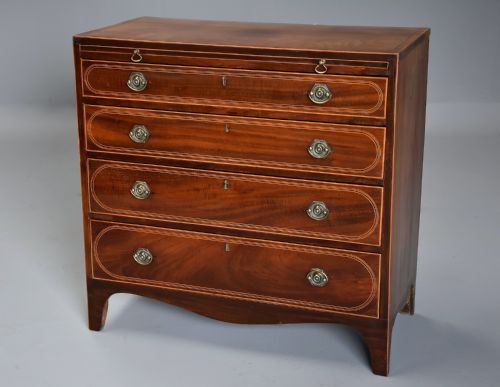
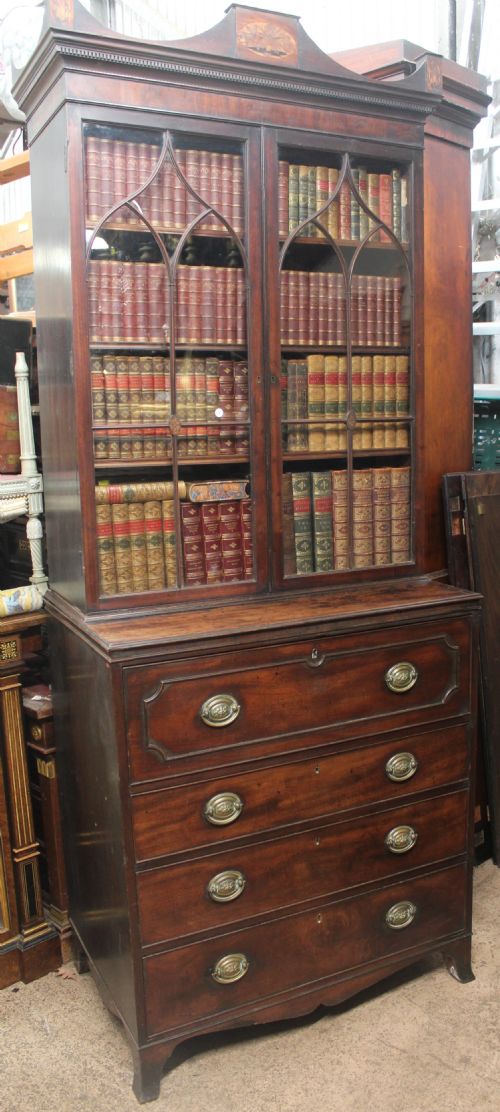
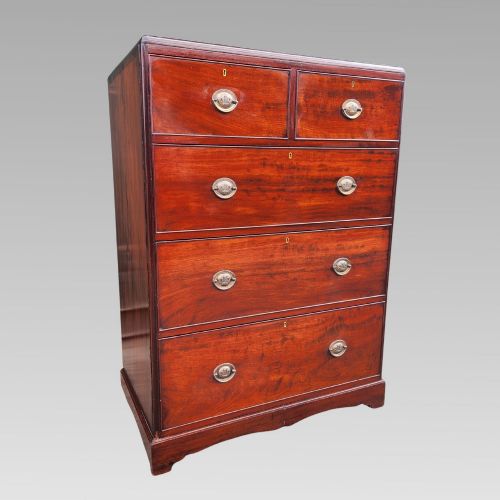
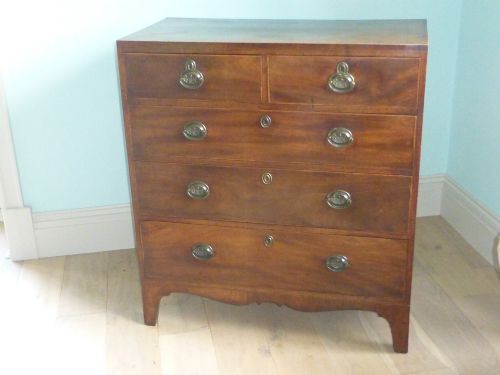
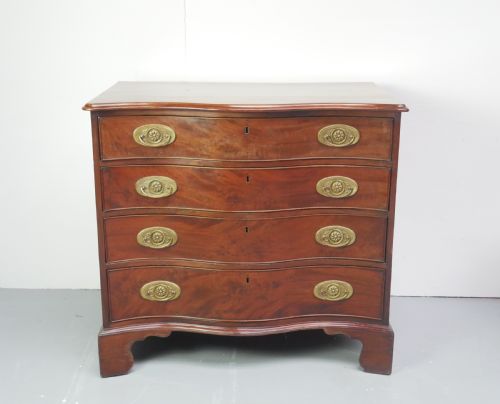
These hepplewhite mahogany chest examples bring graceful serpentine lines and rich timber into a room, offering practical storage with distinct period elegance.
Hepplewhite Mahogany Chest
A hepplewhite mahogany chest provides deep drawer storage within a refined silhouette characteristic of late eighteenth-century design. Buyers encounter both original Georgian pieces and later revival interpretations from the Victorian and Edwardian eras.
Surviving examples frequently display serpentine or bow-front shapes that soften the rigid geometry typical of earlier furniture. These forms range from compact dressing chests to larger side cabinets and commodes.
The aesthetic relies heavily on proportion and subtle curvature rather than heavy carved ornamentation. Most variations encountered maintain clean lines supported by bracket feet or slender legs.
Timber and construction methods
Cabinet makers built these pieces using solid mahogany and flame mahogany veneer over secondary timbers. The natural grain provides deep reddish-brown tones that acquire a rich patina over decades.
Detailing often incorporates contrasting boxwood and satinwood inlay to create crisp geometric borders along drawer edges and top surfaces. Brass drop handles complete the construction, secured through original bore holes.
Materials recorded across the archive include solid mahogany, flame mahogany veneer, boxwood inlay, satinwood and brass.
Distinguishing quality across periods
The standard of timber selection largely dictates the visual depth of a piece, with figured and flame veneers representing finer craftsmanship. Smooth drawer operation and tight joints indicate superior original construction.
The crispness of the boxwood inlay and the proportion of the serpentine curve distinguish exceptional pieces from simpler utilitarian versions. Original brass hardware adds integrity to the finished piece.
Druce & Co
The Hepplewhite Mahogany Chest Glossary
- Serpentine
- A front profile shaped with a convex centre flanked by concave curves. This contour requires precise woodworking skills to execute smoothly.
- Bow front
- A cabinet front that curves outward in a continuous convex arc. It provides additional interior space while maintaining a graceful exterior line.
- Boxwood inlay
- Narrow strips of pale wood inserted into flush channels to form contrasting borders. This technique highlights structural outlines.
- Flame mahogany veneer
- Thin slices of timber cut from wood where branches join the trunk to produce a flickering flame pattern. It appears on premium drawer fronts.
- Caddy top
- A tabletop style featuring moulded edges that step upward, reminiscent of tea caddy lids from the same period.
Hepplewhite Mahogany Chest: Frequently Asked Questions
How do I spot an original eighteenth-century piece?
Examine the timber underneath the drawers and the construction of the drawer sides for hand-cut dovetails. Original pieces exhibit natural timber shrinkage and consistent wear patterns appropriate for their age.
Compare the secondary woods and the patination of the brass hardware against known examples from the Georgian period. Revival pieces from later centuries often utilise different internal construction methods.
What is the difference between serpentine and bow front?
A serpentine front curves both outward and inward, creating a wave-like contour across the front of the chest. This shape demands advanced cabinet-making techniques.
A bow front follows a single outward convex curve from side to side. Both styles were utilised during the Georgian era to soften the appearance of large storage furniture.
How should I care for antique mahogany furniture?
Keep the timber away from direct sunlight and steady sources of heat to prevent the mahogany veneer from drying and splitting. Maintain consistent indoor humidity levels.
Apply traditional beeswax occasionally and buff gently with a soft cloth to nourish the grain. Avoid modern silicone sprays that build up residue on the surface.
Where do these chests fit best in a home?
These chests function effectively in bedrooms as traditional clothes storage or in hallways as statement side cabinets. Their moderate depth makes them adaptable to narrower spaces.
The warm tones of the mahogany pair well with both traditional interiors and contemporary neutral rooms. Surface space accommodates lamps, mirrors or decorative objects.