





Caddy Top Chest
These pieces known as a caddy top chest bring together the refined proportions of Georgian and Victorian cabinetry.
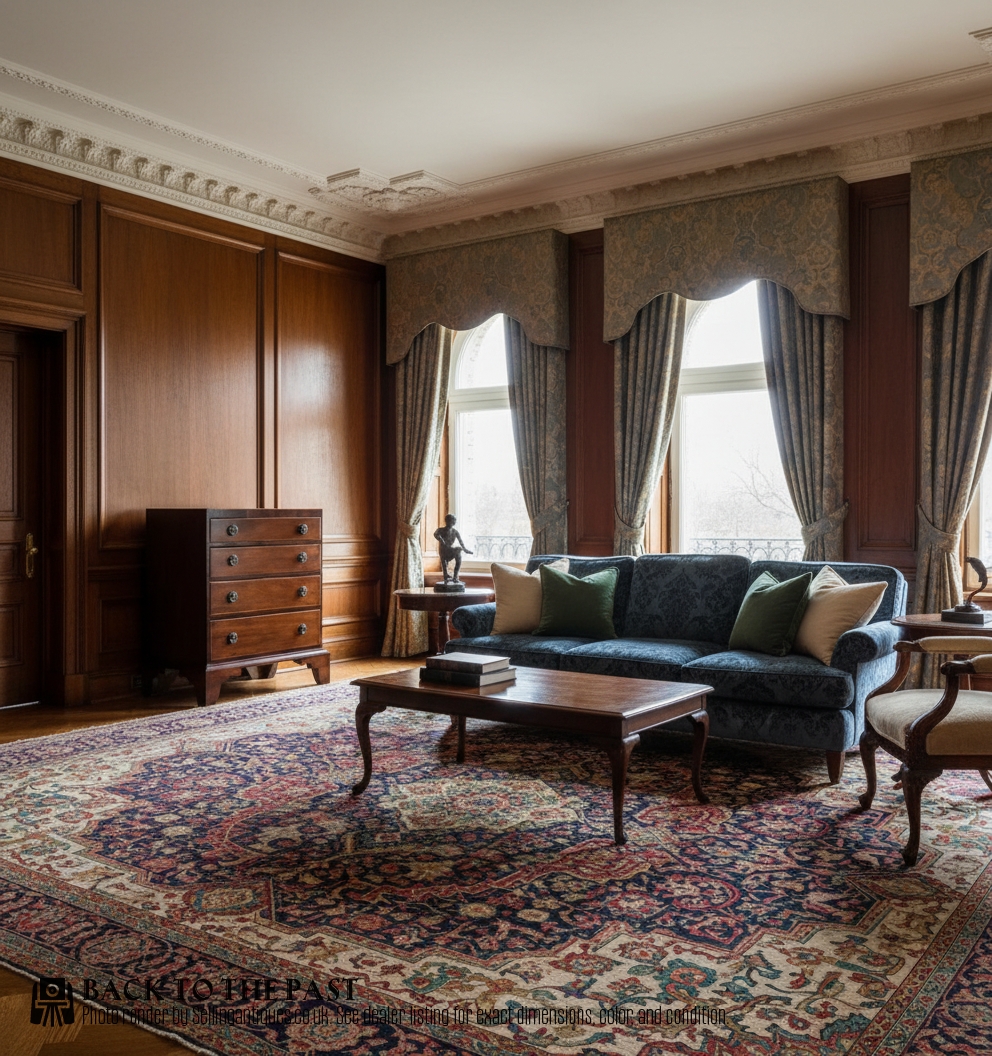
Caddy Top Chest
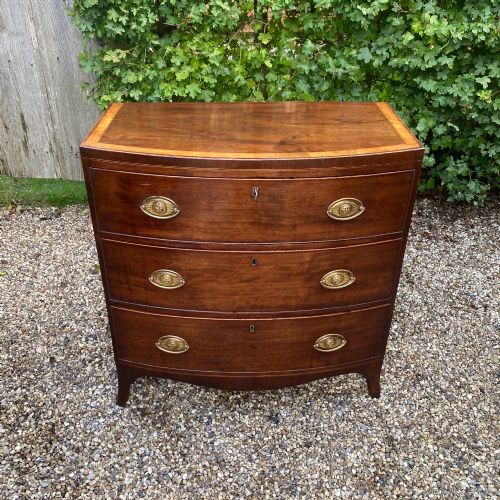
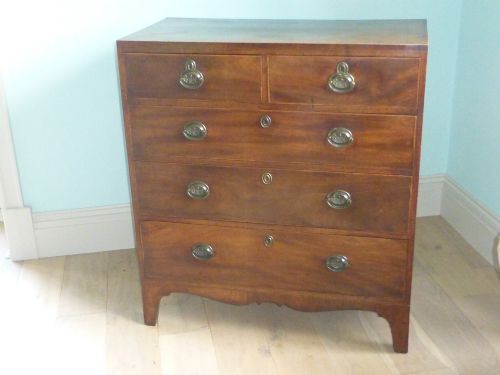
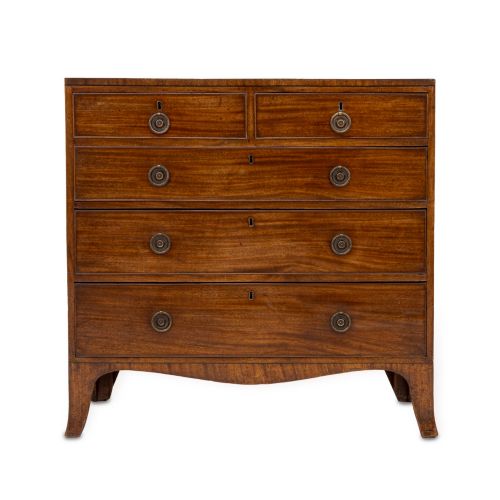
When you search for a caddy top chest, you encounter a distinct group of compact furniture and smaller receptacles spanning the Georgian, Regency, and Victorian periods. The larger items take the form of chests of drawers, bachelors chests, and mule chests, frequently constructed with bow fronts or sliding components. Alongside these case pieces sit tea caddies, decorative boxes, and table cabinets sharing the characteristic profiled lid.
The version you are most likely to meet on this page is the mahogany chest of drawers from the 18th or 19th Century, often built in smaller proportions. Examples from Georgian and Regency workshops appear alongside Victorian interpretations and later Georgian Revival pieces from around nineteen hundred. Swedish birch and oak pieces also emerge within the record alongside the predominant mahogany.
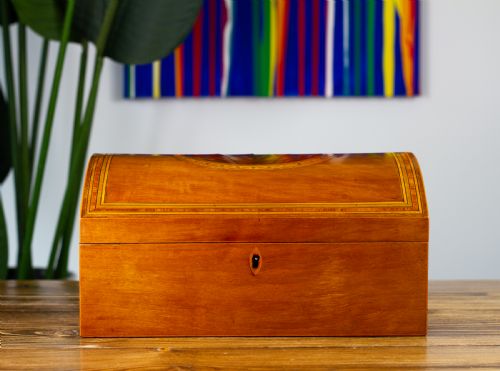
Smaller tabletop iterations appear frequently as dome top tea caddies and decorative boxes. These smaller items utilise burr walnut, rosewood, and coromandel wood, occasionally decorated with brass mounts, boxwood inlay, or mother of pearl. Whether housing tea leaves or linens, these forms maintain the characteristic moulded edge that defines the group.
Materials and Construction
Cabinet makers relied heavily upon mahogany as the primary timber for case pieces, selecting dense grain and rich figuring for prominent surfaces. Secondary woods provided structural stability inside drawers and carcases, whilst contrasting veneers such as satinwood and boxwood formed delicate stringing and geometric inlay. Oak and Swedish birch appear in specific regional examples.
Surface decoration involved meticulous timber selection and metalwork integration. Burr walnut and coromandel wood provided dramatic grain patterns for tabletop boxes, complemented by brass handles, escutcheons, and hinges. Shagreen and mother of pearl details were applied to select luxury boxes and table cabinets to accent the exterior.
Historic paperwork and spare keys occasionally turn up inside the hidden compartments of these small boxes.
Craftsmanship and Proportion
The distinction between ordinary and exceptional examples rests upon the crispness of the timber moulding and the harmony of scale. Superior pieces display finely executed dovetail joints, carefully selected veneer matching across drawer fronts, and original brass hardware that fits its station precisely. Proportion dictates value, with smaller chests of compact dimensions commanding particular attention.
Subtlety of enrichment separates standard items from the finest works. Inlaid stringing executed in boxwood or satinwood requires absolute precision, and secondary woods must match the period of the main carcase. The execution of the signature caddy top profile itself reveals the maker's hand, showing clean, uninterrupted lines and precise mitres.
The Caddy Top Chest Glossary
- Caddy top
- A moulded lid or top edge shaped to resemble the traditional profile of a tea caddy. This distinctive edge treatment defines the silhouette of both small boxes and large case pieces.
- Bachelors chest
- A small drawer chest featuring a pull-out slide used for writing or serving. These pieces date predominantly from the Georgian period and display compact proportions.
- Coromandel wood
- A dense, heavily figured exotic hardwood imported from Asia. Cabinet makers utilised its dark brown colour and contrasting black streaks for luxury Victorian boxes and tea caddies.
- Shagreen
- Untanned leather prepared from the skin of a shark or ray, possessing a granular texture. Artisans dyed and polished this material to cover decorative luxury boxes.
- Stringing
- Thin strips of contrasting timber inlaid into channels cut into the furniture surface. Makers used satinwood or boxwood stringing to create geometric borders on drawers and tops.
Caddy Top Chest: Frequently Asked Questions
What is a caddy top chest?
A caddy top chest is a piece of furniture featuring a distinctively moulded top edge that mimics the profile of a tea caddy. These items range from small tabletop boxes to large chests of drawers.
Cabinet makers applied this specific lid design across the Georgian and Victorian eras. The resulting pieces combine practical storage with refined decorative mouldings.
How do you date a caddy top chest?
Dating relies upon examining the secondary timbers, construction methods, and hardware styles. Georgian examples typically feature hand-cut dovetails and oak drawer linings.
Later Victorian and revival pieces often display machine-sawn elements and different internal woods. The evolution of the moulding profile also helps establish the period of manufacture.
Were these chests used for tea?
The term caddy top refers to the profile of the moulding rather than a specific function for storing tea. While small caddies and boxes housed tea leaves, larger chests of drawers provided general domestic storage for clothing and linens.
Bachelors chests offered multi-purpose utility with sliding boards for writing. Each form served a distinct domestic requirement within the historic interior.
How do you clean burr walnut?
Burr walnut surfaces require gentle maintenance using traditional beeswax applied sparingly with a soft cloth. Avoid modern liquid polishes containing silicone which can damage historic finishes.
Regular dusting with a dry lint-free cloth preserves the natural lustre of the grain. Protecting the timber from direct sunlight prevents fading of the delicate veneers.